Given a m x n grid. Each cell of the grid represents a street. The street of grid[i][j] can be:
- 1 which means a street connecting the left cell and the right cell.
- 2 which means a street connecting the upper cell and the lower cell.
- 3 which means a street connecting the left cell and the lower cell.
- 4 which means a street connecting the right cell and the lower cell.
- 5 which means a street connecting the left cell and the upper cell.
- 6 which means a street connecting the right cell and the upper cell.
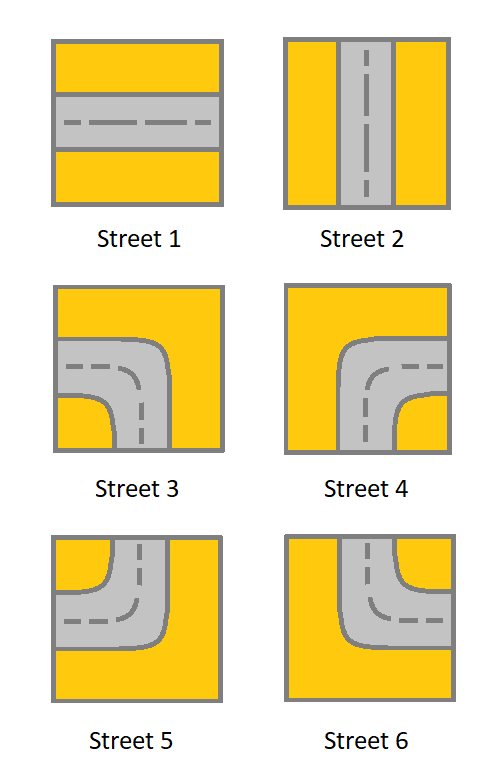
You will initially start at the street of the upper-left cell (0,0). A valid path in the grid is a path which starts from the upper left cell (0,0) and ends at the bottom-right cell (m - 1, n - 1). The path should only follow the streets.
Notice that you are not allowed to change any street.
Return true if there is a valid path in the grid or false otherwise.
Example 1:
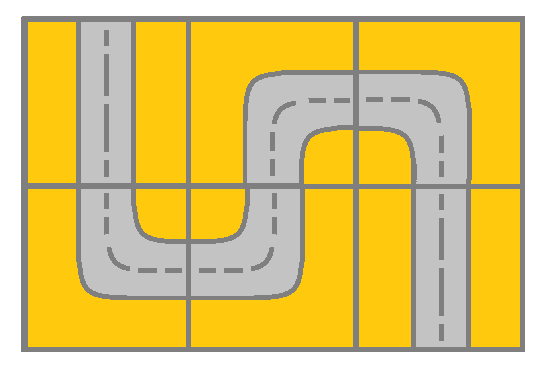
Input: grid = [[2,4,3],[6,5,2]]Output: trueExplanation: As shown you can start at cell (0, 0) and visit all the cells of the grid to reach (m - 1, n - 1).
Example 2:
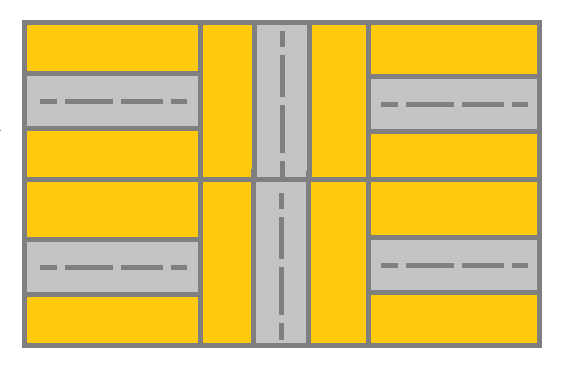
Input: grid = [[1,2,1],[1,2,1]]Output: falseExplanation: As shown you the street at cell (0, 0) is not connected with any street of any other cell and you will get stuck at cell (0, 0)
Example 3:
Input: grid = [[1,1,2]]Output: falseExplanation: You will get stuck at cell (0, 1) and you cannot reach cell (0, 2).
Example 4:
Input: grid = [[1,1,1,1,1,1,3]]Output: true
Example 5:
Input: grid = [[2],[2],[2],[2],[2],[2],[6]]Output: true
Constraints:
m == grid.lengthn == grid[i].length1 <= m, n <= 3001 <= grid[i][j] <= 6
题意
判断沿着一个由路径块组合成的路径能否从左上角走到右下角。
思路
定义4个方向:0 - 左,1 - 上,2 - 右,3 - 下。
判断能否走到一个路径块[i, j]的几个判断依据:
- i、j坐标是否有效;
- 当前路径块与来时的上一个块是否相连。
除了从第左上角的块走到下一个块有两种可能,从其他块走到下一个块都只有一种情况(即只能沿着路走且不能回头)。
使用DFS处理。
代码实现
class Solution {int m, n;// 定义沿着左上右下四个方向走时坐标的变化int[] iPlus = {0, -1, 0, 1};int[] jPlus = {-1, 0, 1, 0};int[][] path = {{0, 2}, {1, 3}, {0, 3}, {2, 3}, {0, 1}, {1, 2}};public boolean hasValidPath(int[][] grid) {m = grid.length;n = grid[0].length;if (m == 1 && n == 1) {return true;}return judge(grid, -1, 0, 0);}// pre为从上一个路径块来时的方向private boolean judge(int[][] grid, int pre, int i, int j) {// 先判断i,j是否合法if (i < 0 || i >= m || j < 0 || j >= n) {return false;}// 当前路径块的类型及它连接的两个方向int type = grid[i][j] - 1;int directionA = path[type][0], directionB = path[type][1];// 如果当前块是起点,需要向两个方向dfsif (pre == -1) {return judge(grid, (directionA + 2) % 4, i + iPlus[directionA], j + jPlus[directionA])|| judge(grid, (directionB + 2) % 4, i + iPlus[directionB], j + jPlus[directionB]);}// 判断当前块与上一个路径块是否相连if (pre != directionA && pre != directionB) {return false;}// 已经走到右下角则直接返回if (i == m - 1 && j == n - 1) {return true;}// 沿着当前路径走到下一个路径块int nextDir = pre == directionA ? directionB : directionA;return judge(grid, (nextDir + 2) % 4, i + iPlus[nextDir], j + jPlus[nextDir]);}}

若有收获,就点个赞吧
0 人点赞


