题目
Given a binary tree, we install cameras on the nodes of the tree.
Each camera at a node can monitor its parent, itself, and its immediate children.
Calculate the minimum number of cameras needed to monitor all nodes of the tree.
Example 1:
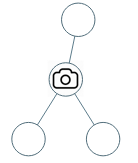
Input: [0,0,null,0,0]Output: 1Explanation: One camera is enough to monitor all nodes if placed as shown.
Example 2:
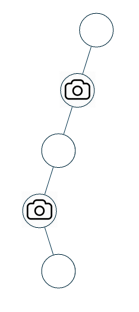
Input: [0,0,null,0,null,0,null,null,0]Output: 2Explanation: At least two cameras are needed to monitor all nodes of the tree. The above image shows one of the valid configurations of camera placement.
Note:
- The number of nodes in the given tree will be in the range
[1, 1000]. - Every node has value 0.
题意
在二叉树中选取任意个结点放上一个照相机,每个照相机能覆盖当前结点、当前结点的父结点、当前结点的直接子结点。问最少需要放几个照相机能够覆盖所有结点。
思路
贪心。从最底下的结点开始往上,对于当前结点有三种情况需要放置照相机:(1) 当前结点的左子结点未被覆盖;(2) 当前结点的右子结点未被覆盖;(3) 当前结点未被覆盖,且无父结点。其他情况无需放置,最大化每个照相机的覆盖范围。
代码实现
Java
class Solution {private int count;private Set<TreeNode> set;public int minCameraCover(TreeNode root) {count = 0;set = new HashSet<>();set.add(null);dfs(root, null);return count;}private void dfs(TreeNode root, TreeNode parent) {if (root == null) return;dfs(root.left, root);dfs(root.right, root);if (parent == null && !set.contains(root) || !set.contains(root.left) || !set.contains(root.right)) {set.add(root);set.add(root.left);set.add(root.right);set.add(parent);count++;}}}

若有收获,就点个赞吧
0 人点赞


