题目
A path in a binary tree is a sequence of nodes where each pair of adjacent nodes in the sequence has an edge connecting them. A node can only appear in the sequence at most once. Note that the path does not need to pass through the root.
The path sum of a path is the sum of the node’s values in the path.
Given the root of a binary tree, return the maximum path sum of any path.
Example 1:
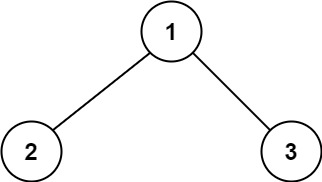
Input: root = [1,2,3]Output: 6Explanation: The optimal path is 2 -> 1 -> 3 with a path sum of 2 + 1 + 3 = 6.
Example 2:
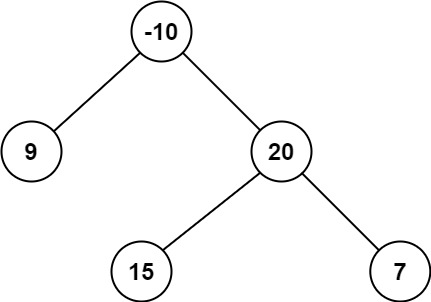
Input: root = [-10,9,20,null,null,15,7]Output: 42Explanation: The optimal path is 15 -> 20 -> 7 with a path sum of 15 + 20 + 7 = 42.
Constraints:
- The number of nodes in the tree is in the range
[1, 3 * 10^4]. -1000 <= Node.val <= 1000
题意
给定一个二叉树,在树中找到任意一条路径(起点随意,终点随意),使得这条路径上结点值的和最大。
思路
递归处理。对于一个以 root 为根结点的子树,我们计算以 root.left 为起点并向下延伸的路径的最大和 a,以及以 root.right 为起点并向下延伸的路径的最大和 b,将 a, b, root.val 相加就得到了经过 root 的路径的最大和。对每一个结点都做相同的处理,就得到了全局最大路径和。由此可以定义我们的递归函数 int dfs(TreeNode root),其返回值是以 root 为起点并向下延伸的路径的最大和,dfs(root.left) + dfs(root.right) + root.val 为经过 root 的最大路径和。注意负数值的处理。
代码实现
Java
class Solution {private int maxSum;public int maxPathSum(TreeNode root) {maxSum = Integer.MIN_VALUE;dfs(root);return maxSum;}private int dfs(TreeNode root) {if (root == null) {return 0;}int leftPathSum = Math.max(dfs(root.left), 0);int rightPathSum = Math.max(dfs(root.right), 0);maxSum = Math.max(maxSum, leftPathSum + rightPathSum + root.val);return Math.max(leftPathSum, rightPathSum) + root.val;}}

若有收获,就点个赞吧
0 人点赞


