题目
Given a binary tree, return the vertical order traversal of its nodes values.
For each node at position (X, Y), its left and right children respectively will be at positions (X-1, Y-1) and (X+1, Y-1).
Running a vertical line from X = -infinity to X = +infinity, whenever the vertical line touches some nodes, we report the values of the nodes in order from top to bottom (decreasing Y coordinates).
If two nodes have the same position, then the value of the node that is reported first is the value that is smaller.
Return an list of non-empty reports in order of X coordinate. Every report will have a list of values of nodes.
Example 1: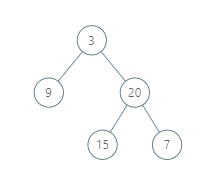
Input: [3,9,20,null,null,15,7]Output: [[9],[3,15],[20],[7]]Explanation:Without loss of generality, we can assume the root node is at position (0, 0):Then, the node with value 9 occurs at position (-1, -1);The nodes with values 3 and 15 occur at positions (0, 0) and (0, -2);The node with value 20 occurs at position (1, -1);The node with value 7 occurs at position (2, -2).
Example 2: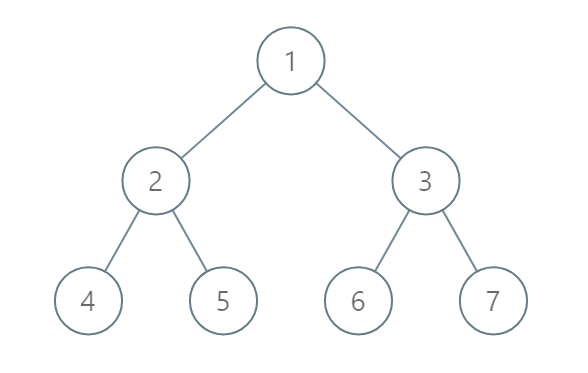
Input: [1,2,3,4,5,6,7]Output: [[4],[2],[1,5,6],[3],[7]]Explanation:The node with value 5 and the node with value 6 have the same position according to the given scheme.However, in the report "[1,5,6]", the node value of 5 comes first since 5 is smaller than 6.
Note:
- The tree will have between 1 and
1000nodes. - Each node’s value will be between
0and1000.
题意
定义二叉树中一个结点的横坐标为x,纵坐标为y,则其左子结点坐标为(x-1, y-1),其右子结点坐标为(x+1, y-1),求该二叉树的纵向遍历,类似于层序遍历,x相同的结点属于同一层,不同层按x升序排列,同一层结点按y降序排列。
思路
层序遍历所有结点,这样可以保证y值是递减的;结点的x轴信息可以用一个与层序遍历同步的队列来记录;最终结果可以用一个(x->List)的map保存。注意同一层x值相同的两个结点需要按照值大小排列,因此每一层可以再开一个map进行处理,再合并到结果map中。
代码实现
Java
/*** Definition for a binary tree node.* public class TreeNode {* int val;* TreeNode left;* TreeNode right;* TreeNode() {}* TreeNode(int val) { this.val = val; }* TreeNode(int val, TreeNode left, TreeNode right) {* this.val = val;* this.left = left;* this.right = right;* }* }*/class Solution {public List<List<Integer>> verticalTraversal(TreeNode root) {List<List<Integer>> ans = new ArrayList<>();Map<Integer, List<Integer>> hash = new TreeMap<>();Map<Integer, Set<Integer>> tmp = new HashMap<>();Queue<TreeNode> q = new LinkedList<>();Queue<Integer> coord = new LinkedList<>();if (root != null) {q.offer(root);coord.offer(0);}while (!q.isEmpty()) {int size = q.size();tmp.clear();for (int i = 0; i < size; i++) {TreeNode cur = q.poll();int x = coord.poll();tmp.putIfAbsent(x, new TreeSet<>());tmp.get(x).add(cur.val);if (cur.left != null) {q.offer(cur.left);coord.offer(x - 1);}if (cur.right != null) {q.offer(cur.right);coord.offer(x + 1);}}for (int x : tmp.keySet()) {hash.putIfAbsent(x, new ArrayList());hash.get(x).addAll(tmp.get(x));}}for (List<Integer> list : hash.values()) {ans.add(list);}return ans;}}
JavaScript
/*** @param {TreeNode} root* @return {number[][]}*/var verticalTraversal = function (root) {const xList = new Map()const q = []const x = []q.push(root)x.push(0)while (q.length) {const size = q.lengthconst tmp = new Map()for (let i = 0; i < size; i++) {const cur = q.shift()const curX = x.shift()!tmp.has(curX) && tmp.set(curX, [])tmp.get(curX).push(cur.val)if (cur.left) {q.push(cur.left)x.push(curX - 1)}if (cur.right) {q.push(cur.right)x.push(curX + 1)}}for (const [key, value] of tmp.entries()) {value.sort((a, b) => a - b)!xList.has(key) && xList.set(key, [])xList.get(key).push(...value)}}return Array.from(xList.keys()).sort((a, b) => a - b).map(key => xList.get(key))}

若有收获,就点个赞吧
0 人点赞


