- 查询各学生的年龄,通过年份来计算
**
练习时间函数之前,我们先看一下当前的时间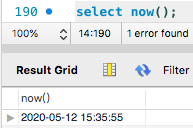
select s_name, s_birth, (year(now()) - year(s_birth)) as age from Student;
结果截图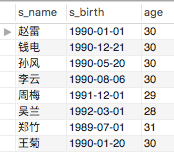
- 查询各学生的年龄,通过出⽣⽇期来计算,当前⽉⽇ < 出⽣年的⽉⽇,年龄减⼀
**
select s_name, s_birth, timestampdiff(year, s_birth, now()) as age from Student;
结果截图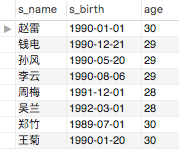
- 查询本周过生日的学生
**
select * from Studentwhere week(s_birth) = week(now());
结果截图(Empty Set)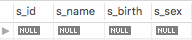
- 查询下周过生日的学⽣
**
select * from Studentwhere week(s_birth) = week(now()) + 1;
结果截图
- 查询本⽉过⽣⽇的学⽣
**
select * from Studentwhere month(s_birth) = month(now());
结果截图
- 按各科成绩进行排序,并显示排名,Score重复时保留名次空缺(难度等级:三颗星)
**
select a.s_id, a.c_id, a.s_score, count(b.s_score) + 1 as rankfrom Score a left join Score bon a.c_id = b.c_id and a.s_score < b.s_scoregroup by a.s_id, a.c_id, a.s_scoreorder by a.c_id, rank asc;
结果截图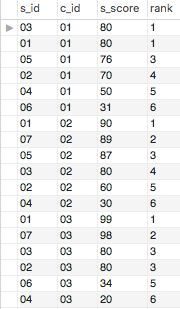
这里为我们显示排名信息提供了一种新的思路,之前我们都是通过定义变量的方式来显示
- 查询存在” 01 “课程但可能不存在” 02 “课程的情况(不存在时显示为null) (难度等级:三颗星)
**
select a.s_id, a.s_score as score1, b.s_score as score2 from(select s_id, s_score from Score where c_id = '01') as aleft join(select s_id, s_score from Score where c_id = '02') as bon a.s_id = b.s_id;
结果截图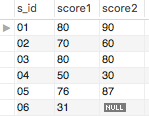
- 查询不存在” 01 “课程但存在” 02 “课程的情况
**
select * from Scorewhere s_id not in (select distinct s_id from Score a where c_id = '01')and c_id = '02';
结果截图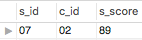
- 查询大于每门课课程平均分的学生名单(难度等级:三颗星)
**
方案一
select s.*, tmp.avg_score from Score sleft join(select c_id, avg(s_score) as avg_score from Score group by c_id) as tmpon s.c_id = tmp.c_idwhere s.s_score > tmp.avg_scoreorder by c_id, s_id;
结果截图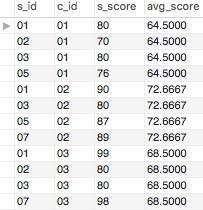
方案二
select a.s_id, a.c_id, a.s_score, avg(b.s_score) as avg_score from Score aleft join Score b on a.c_id = b.c_idgroup by a.s_id, a.c_id, a.s_scorehaving a.s_score > avg_scoreorder by c_id, s_id;
结果截图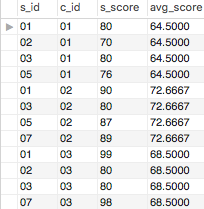
方案一相对来说逻辑上好理解一些,方案二如果理解了前面的第16题,这种写法也就好理解了;面试的时候曾被问到过这道题目,结果没答上来,见鬼;如果使用了group by操作,那having就扮演了where的角色
**
- 查询在同一个月份过生日的人数
**
select month(s_birth) as birthday, count(*) as num from Studentgroup by birthday;
结果截图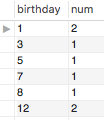

若有收获,就点个赞吧
0 人点赞


