title: 编写端平台插件
扩展一个编译平台,需要编写一个 Taro 插件,对编译时和运行时分别进行兼容。
端平台插件架构
插件目录组织
以 @tarojs/plugin-platform-weapp 为例:
├── src 源码目录| ├── index.ts 插件入口| ├── program.ts 编译时入口| ├── template.ts 模板处理逻辑| ├── runtime.ts 运行时入口| ├── runtime-utils.ts 运行时依赖工具| ├── apis.ts API 相关处理| ├── apis-list.ts API 列表| ├── components.ts 组件列表| └── components-react.ts 给 React 使用的组件类型├── types 类型├── index.js 编译时入口├── tsconfig.json├── rollup.config.json├── package.json└── README.md
架构图
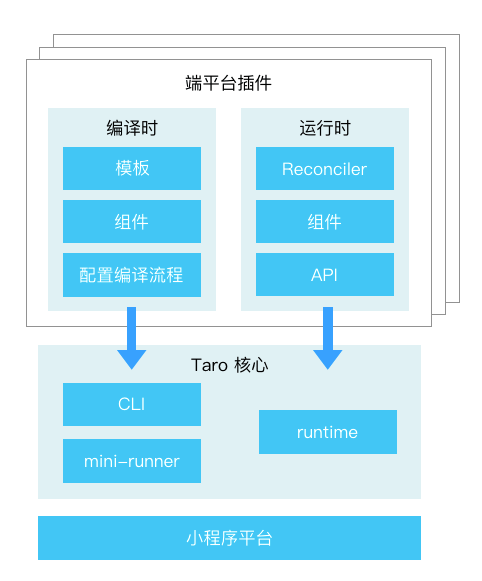
编译时
处理编译相关操作,如 Webpack 配置、模板生成规则等。
一、编写 Taro 插件
前置阅读:【如何编写一个 Taro 插件】。
首先我们需要编写一个 Taro 插件来注册我们的编译平台,如:
```js title=”index.ts” export default (ctx) => { ctx.registerPlatform({ name: ‘weapp’, useConfigName: ‘mini’, async fn (arg) { // … } }) }
#### ctx.registerPlatform(options: object)注册一个编译平台##### options.name`string`平台名称,用于 CLI 编译命令。如配置了 'xxx',则编译此平台时使用的 CLI 命令为:```shelltaro build --type xxxtaro build --type xxx --watch
options.useConfigName
string
把 Taro 编译配置中的指定字段纳入编译。
Taro 小程序相关配置默认放在 mini 字段下,因此一般情况配置 usingConfigName: mini 即可。
options.fn(arg)
function
端平台编译的入口函数,接受一个参数 arg,在此函数内我们可以开始编写端平台编译的逻辑。
arg
object
整合上述 options.useConfigName 指定字段后的 Taro 编译配置,编译配置各字段详情请看编译配置详情。
二、编写平台类
接下来给上一节中提到的插件入口函数添加内容。
我们把编译时常用的逻辑抽象出了一个基类 TaroPlatformBase,开发者可以继承于此基类,从而实现端平台的编译。
然后在插件入口函数中调用上述自定义平台类的编译接口:
```js title=”index.ts” import Weapp from ‘./program’
export default (ctx) => { ctx.registerPlatform({ name: ‘weapp’, useConfigName: ‘mini’, async fn (arg) { // 调用自定义平台类的 start 函数,开始端平台编译 const program = new Weapp(ctx, config) await program.start() } }) }
## 运行时处理运行时相关操作,如 API、组件、Taro runtime 逻辑等。### 一、处理运行时入口#### 1. 编写 runtime.ts`runtime.ts` 是我们运行时的入口文件,`Webpack` 编译时会把它注入到 `app.js` 中进行引用。例子:```js title="runtime.ts"import { mergeReconciler, mergeInternalComponents } from '@tarojs/shared'import { hostConfig, components } from './runtime-utils'mergeReconciler(hostConfig)mergeInternalComponents(components)
```js title=”runtime-utils.ts” export * from ‘./components’ export const hostConfig = {}
`runtime.ts` 主要负责:* 使用 `mergeReconciler` 函数把自定义的 `hostConfig` 合并到全局 [Reconciler](./platform-plugin-reconciler) 中。* 使用 `mergeInternalComponents` 函数把自定义组件信息 [components.ts]($versioned_docs-version-3.x-platform-plugin-base#31-编写-componentsts) 合并到全局 `internalComponents` 组件信息对象中。> 抽取 runtime-utils.ts 是为了方便其它插件引用#### 2. 连接插件入口为了让 `Webpack` 知道去哪里引用上述运行时入口文件,需要配置 `runtimePath`:```js title="program.ts"class Weapp extends TaroPlatformBase {runtimePath = '@tarojs/plugin-platform-weapp/dist/runtime'}
二、处理 API
在 Taro 中,用户需要从 @tarojs/taro 中引用 Taro 的内置 API 和 Promise 化 后的小程序 API。
import Taro from '@tarojs/taro'// 内置 APITaro.getCurrentInstance()// 小程序 APITaro.request()
1. 配置 initNativeApi
原始的 @tarojs/taro 包只提供了内置 API。我们需要通过配置 Reconciler 的 initNativeApi 选项,为全局 Taro 对象增加小程序的 API 和我们想要挂载在 Taro 对象上的 API。
``js title="apis-list.ts"
// 需要新增额外的原生 API 时,分拆一个单独的
apis-list.ts` 文件能有利于维护。
// 同步 API export const noPromiseApis = new Set([ ‘getAccountInfoSync’ ])
// 异步 API,这些 API 都可以设置 success、fail、complete 回调,需要对它们进行 Promise 化。
export const needPromiseApis = new Set([
‘addCard’
])
```js title="apis.ts"import { processApis } from '@tarojs/shared'import { noPromiseApis, needPromiseApis } from './apis-list'declare const wx: anyexport function initNativeApi (taro) {// 下文将详细介绍 processApis 函数processApis(taro, wx, {noPromiseApis,needPromiseApis})// 可以为 taro 挂载任意的 APItaro.cloud = wx.cloud}
```js title=”runtime-utils.ts” import { initNativeApi } from ‘./apis’ export const hostConfig = { initNativeApi }
#### 2. processApis(taro, global, options)##### 入参| 参数 | 类型 | 说明 || :--- | :--- | :--- || taro | object | Taro 对象 || global | object | 小程序全局对象,如微信的 wx || options | object | 配置项 |###### options| 属性 | 类型 | 说明 || :--- | :--- | :--- || noPromiseApis | Set`<string>` | 新增的同步 API || needPromiseApis | Set`<string>` | 新增的异步 API |上述 `processApis` 函数帮助我们做了三件事情:1. 挂载所有平台公共的小程序 API 到 Taro 对象上2. 挂载常用的小程序全局对象属性 到 Taro 对象上3. 挂载用户传入的小程序 API 到 Taro 对象上## 打包插件使用 `Rollup` 进行打包,需要打包出以下文件:| 入口文件 | 模式 | 必要 | 说明 || :--- | :--- | :--- | :--- || src/index.ts | cjs | 是 | 插件入口,供 Taro CLI 解析 || src/runtime.ts | es | 是 | 运行时入口 || src/runtime-utils.ts | es | 否 | 运行时工具集合,供继承的子类引用 || src/components-react.ts | es | 否 | 有新增组件时需要实现,供 React 引用 |注意,Taro 相关的包需要配置 `external`,以免重复打包:```js title="rollup.config.js"{external: ['@tarojs/shared', '@tarojs/service']}
类型
Taro 核心库维护的类型可能没有包括当前插件新增的组件和 API,这时我们需要对 @tarojs/taro 和 @tarojs/components 进行模块补充 (module augmentation)。
创建一个类型定义文件:
```ts title=”types/shims-iot.d.ts” // 为支付宝 IOT 小程序拓展新增的 API 和组件定义 import { ComponentType } from ‘react’ import Taro from ‘@tarojs/taro’
declare module ‘@tarojs/taro’ { interface Ix { onCashierEventReceive (cb: any): void } interface TaroStatic { ix: Ix } }
interface PosterProps { posid: string audible?: boolean onSuccess?: () => void onFail?: () => void onChange?: () => void }
declare module ‘@tarojs/components’ {
export const Poster: ComponentType
开发者在类型定义文件中引入此文件即可:```ts title="global.d.ts"/// <reference path="node_modules/@tarojs/plugin-platform-alipay-iot/types/shims-iot.d.ts" />

若有收获,就点个赞吧
0 人点赞


