一、马踏棋盘算法介绍和游戏演示
- 马踏棋盘算法也被称为骑士周游问题
- 将马随机放在国际象棋的 8×8 棋盘 Board0~7的某个方格中,马按走棋规则(马走日字)进行移动。要求 每个方格只进入一次,走遍棋盘上全部 64 个方格
- 游戏演示: http://www.4399.com/flash/146267_2.htm
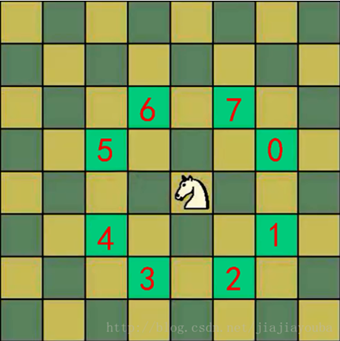
二、马踏棋盘游戏代码实现
- 马踏棋盘问题(骑士周游问题)实际上是图的深度优先搜索(DFS)的应用。
- 如果使用回溯(就是深度优先搜索)来解决,假如马儿踏了 53 个点,如图:走到了第 53 个,坐标(1,0),发 现已经走到尽头,没办法,那就只能回退了,查看其他的路径,就在棋盘上不停的回溯…… ,思路分析+代码 实现
- 思路图解
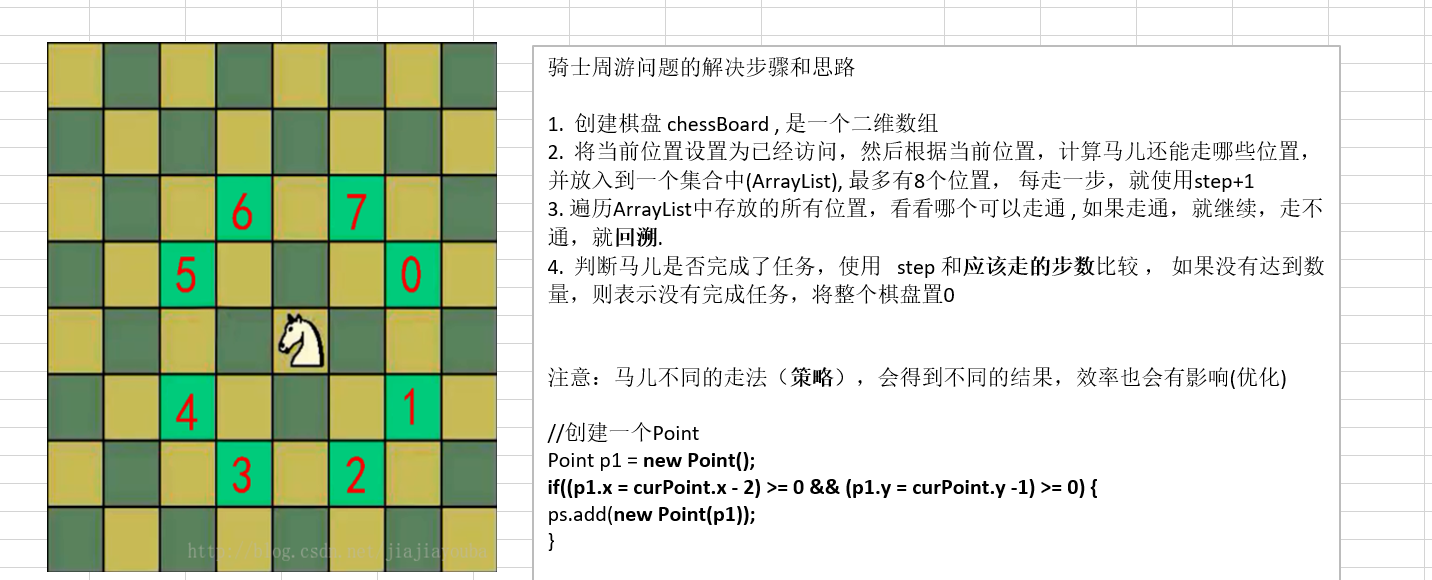
- 并使用贪心算法(greedyalgorithm)进行优化。解决马踏棋盘问题
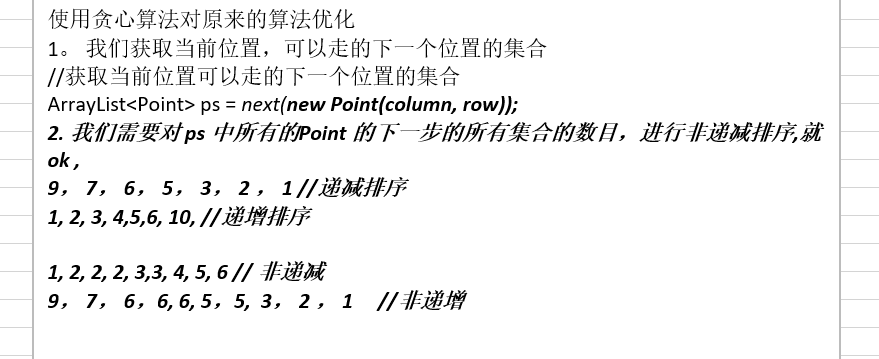
代码实现:
public class HorseChessboard {private static int X; // 棋盘的列数private static int Y; // 棋盘的行数//创建一个数组,标记棋盘的各个位置是否被访问过private static boolean visited[];//使用一个属性,标记是否棋盘的所有位置都被访问private static boolean finished; // 如果为 true,表示成功public static void main(String[] args) {System.out.println("骑士周游算法,开始运行~~");//测试骑士周游算法是否正确X = 8;Y = 8;int row = 1; //马儿初始位置的行,从 1 开始编号int column = 1; //马儿初始位置的列,从 1 开始编号//创建棋盘int[][] chessboard = new int[X][Y];visited = new boolean[X * Y];//初始值都是 false//测试一下耗时long start = System.currentTimeMillis();traversalChessboard(chessboard, row - 1, column - 1, 1);long end = System.currentTimeMillis();System.out.println("共耗时: " + (end - start) + " 毫秒");//输出棋盘的最后情况for(int[] rows : chessboard) {for(int step: rows) {System.out.print(step + "\t");}System.out.println();}}/*** 完成骑士周游问题的算法* @param chessboard 棋盘* @param row 马儿当前的位置的行 从 0 开始* @param column 马儿当前的位置的列 从 0 开始* @param step 是第几步 ,初始位置就是第 1 步*/public static void traversalChessboard(int[][] chessboard, int row, int column, int step) {chessboard[row][column] = step;//row = 4 X = 8 column = 4 = 4 * 8 + 4 = 36visited[row * X + column] = true; //标记该位置已经访问//获取当前位置可以走的下一个位置的集合ArrayList<Point> ps = next(new Point(column, row));//对 ps 进行排序,排序的规则就是对 ps 的所有的 Point 对象的下一步的位置的数目,进行非递减排序sort(ps);//遍历 pswhile(!ps.isEmpty()) {Point p = ps.remove(0);//取出下一个可以走的位置//判断该点是否已经访问过if(!visited[p.y * X + p.x]) {//说明还没有访问过traversalChessboard(chessboard, p.y, p.x, step + 1);}}//判断马儿是否完成了任务,使用 step 和应该走的步数比较 ,//如果没有达到数量,则表示没有完成任务,将整个棋盘置 0//说明: step < X * Y 成立的情况有两种//1. 棋盘到目前位置,仍然没有走完//2. 棋盘处于一个回溯过程if(step < X * Y && !finished ) {chessboard[row][column] = 0;visited[row * X + column] = false;} else {finished = true;}}/*** 功能: 根据当前位置(Point 对象),计算马儿还能走哪些位置(Point),并放入到一个集合中(ArrayList), 最多有 8 个位置* @param curPoint* @return*/public static ArrayList<Point> next(Point curPoint) {//创建一个 ArrayListArrayList<Point> ps = new ArrayList<Point>();//创建一个 PointPoint p1 = new Point();//表示马儿可以走 5 这个位置if((p1.x = curPoint.x - 2) >= 0 && (p1.y = curPoint.y -1) >= 0) {ps.add(new Point(p1));}//判断马儿可以走 6 这个位置if((p1.x = curPoint.x - 1) >=0 && (p1.y=curPoint.y-2)>=0) {ps.add(new Point(p1));}//判断马儿可以走 7 这个位置if ((p1.x = curPoint.x + 1) < X && (p1.y = curPoint.y - 2) >= 0) {ps.add(new Point(p1));}//判断马儿可以走 0 这个位置if ((p1.x = curPoint.x + 2) < X && (p1.y = curPoint.y - 1) >= 0) {ps.add(new Point(p1));}//判断马儿可以走 1 这个位置if ((p1.x = curPoint.x + 2) < X && (p1.y = curPoint.y + 1) < Y) {ps.add(new Point(p1));}//判断马儿可以走 2 这个位置if ((p1.x = curPoint.x + 1) < X && (p1.y = curPoint.y + 2) < Y) {ps.add(new Point(p1));}//判断马儿可以走 3 这个位置if ((p1.x = curPoint.x - 1) >= 0 && (p1.y = curPoint.y + 2) < Y) {ps.add(new Point(p1));}//判断马儿可以走 4 这个位置if ((p1.x = curPoint.x - 2) >= 0 && (p1.y = curPoint.y + 1) < Y) {ps.add(new Point(p1));}return ps;}//根据当前这个一步的所有的下一步的选择位置,进行非递减排序, 减少回溯的次数public static void sort(ArrayList<Point> ps) {ps.sort(new Comparator<Point>() {@Overridepublic int compare(Point o1, Point o2) {// TODO Auto-generated method stub//获取到 o1 的下一步的所有位置个数int count1 = next(o1).size();//获取到 o2 的下一步的所有位置个数int count2 = next(o2).size();if(count1 < count2) {return -1;} else if (count1 == count2) {return 0;} else {return 1;}}});}}

若有收获,就点个赞吧
0 人点赞


