介绍
什么是路由?
- 一个路由就是一个映射关系(key:value)
- key为路径, value可能是function或component
路由分类
后端路由:
- 理解: value是function, 用来处理客户端提交的请求。
- 注册路由: router.get(path, function(req, res))
- 工作过程:当node接收到一个请求时, 根据请求路径找到匹配的路由, 调用路由中的函数来处理请求, 返回响应数据
前端路由:
- 路由传递参数(对象写法)path是否可以结合params参数一起使用?
- 不可以程序会崩掉,必须使用name
- 如何指定params参数可传可不传?
- 在配置路由时加上?
path:"/search/:key?" - 如果指定name与params配置, 但params中数据是一个””, 无法跳转,路径会出问题
- 在配置路由时加上?
- params参数可以传递也可以不传递,但是如果传递是空串,如何解决?
- 传空也会有问题, 可以使用undefined解决
this.router.push({name:'xx', params:{key : '' || undefined}})
- 传空也会有问题, 可以使用undefined解决
路由组件能不能传递props数据?
安装vue-router,命令:
npm i vue-router@3- 应用插件:
Vue.use(VueRouter) - 编写router配置项:
router/index.js
//引入VueRouterimport VueRouter from 'vue-router'//引入Luyou 组件import About from '../components/About'import Home from '../components/Home'//创建router实例对象,去管理一组一组的路由规则const router = new VueRouter({routes:[{path:'/about',component:About},{path:'/home',component:Home}]})//暴露routerexport default router
main.js
//引入VueRouterimport VueRouter from 'vue-router'//引入路由器import router from './router'//注册路由Vue.use(VueRouter)//创建vmnew Vue({el:'#app',render: h => h(App),router:router})
使用路由
link 和 view 可以不用在同组件中<!-- Vue中借助router-link标签实现路由的切换 --><router-link to="/about">About</router-link><!-- 指定组件的呈现位置 --><router-view></router-view>
路由样式 -active-class
- active-class可配置高亮样式 (默认是
router-link-active) - linkActiveClass 修改active样式名
```javascript
About
//创建router实例对象时统一配置标签激活状态class const router = new VueRouter({ routes, //修改router-link标签激活状态class linkActiveClass: “dan-active” });
<a name="dgt2c"></a>
#### 按需加载
run build时会单独生成js和css文件,点击路由导航时才会在newwork加载
```javascript
//项目中这样写 ,记得一定要写()=>
const routes = [
 {
   path:'/singer',
   component:()=>import('../views/Singer'),
    }
]

//这种写法留着看大概原理
const Singer = (resolve)=>{
  import('../views/Singer').then((moduel)=>{
   resolve(moduel);
  })
}

const routes = [
 {
   path:'/singer',
   component:Singer,
    }
]
2.几个注意点
- 路由组件通常存放在
pages文件夹,一般组件通常存放在components文件夹。 - 通过切换,“隐藏”了的路由组件,默认是被销毁掉的,需要的时候再去挂载。
- 每个组件都有自己的
$route属性,里面存储着自己的路由信息。 - 整个应用只有一个router,可以通过组件的
$router属性获取到。
3.多级路由(路由嵌套)
- 配置路由规则,使用children配置项:
path:’news’, //此处一定不要写:/news
children:[ ] 是数组不是对象
routes:[
    {
        path:'/about',
        component:About,
    },
    {
        path:'/home',
        component:Home,
        children:[ //通过children配置子级路由
            {
                path:'news', //此处一定不要写:/news
                component:News
            },
            {
                path:'message',//此处一定不要写:/message
                component:Message
            }
        ]
    }
]
- 跳转(要写完整路径):
<router-link to="/home/news">News</router-link>
4.路由的query参数
- 传递参数
```vue跳转
<router-link :to=”{ path:’/home/message/detail’, query:{ id:666, title:’你好’ } }”
跳转 ```
- 接收参数:
```vue- 消息编号:{{$route.query.id}}
- 消息标题:{{$route.query.title}}
<a name="d12350da"></a>
### 5.命名路由

1.  作用:可以简化路由的跳转。
1.  如何使用
   1.  给路由命名:
```javascript
{
    path:'/demo',
    component:Demo,
    children:[
        {
            path:'test',
            component:Test,
            children:[
                {
          name:'hello' //给路由命名
                    path:'welcome',
                    component:Hello,
                }
            ]
        }
    ]
}
- 简化跳转:
```vue跳转
<router-link :to=”{ name:’hello’, query:{ id:666, title:’你好’ } }”
跳转 ```
6.路由的params参数
配置路由,声明接收params参数
{
path:'/home',
component:Home,
children:[
    {
        path:'news',
        component:News
    },
    {
        component:Message,
        children:[
            {
                name:'xiangqing',
                path:'detail/:id/:title', //使用占位符声明接收params参数
                component:Detail
            }
        ]
    }
]
}
传递参数
```vue跳转
<router-link :to=”{ name:’xiangqing’, params:{ id:666, title:’你好’ } }”
跳转 ``` 特别注意:路由携带params参数时,若使用to的对象写法,则不能使用path配置项,必须使用name配置!
- 接收参数:
$route.params.id
$route.params.title
7.路由的props配置
作用:让路由组件更方便的收到参数 (this.$route.name => name)
router/index.js
{
    name:'xiangqing',
    path:'detail/:id',
    component:Detail,

    //第一种写法:props值为对象,该对象中所有的key-value的组合最终都会通过props传给Detail组件
    // props:{a:900}

    //第二种写法:props值为布尔值,布尔值为true,则把路由收到的所有params参数通过props传给Detail组件
    // props:true

    //第三种写法:props值为函数,该函数返回的对象中每一组key-value都会通过props传给Detail组件
  //参数params query都可以
    props(route){
        return {
            id:route.query.id,
            title:route.query.title
        }
    }
}
//接收
props:['id','title']

//使用
<template>
    <ul>
        <li>消息编号:{{id}}</li>
        <li>消息标题:{{title}}</li>
    </ul>
</template>
8.<router-link>的replace属性
- 作用:控制路由跳转时操作浏览器历史记录的模式
- 浏览器的历史记录有两种写入方式:分别为
push和replace,push是追加历史记录,replace是替换当前记录。路由跳转时候默认为push - 如何开启
replace模式:<router-link replace .......>News</router-link>
9.编程式路由导航
- 作用:不借助
<router-link>实现路由跳转,让路由跳转更加灵活 - 具体编码: $router.push/replace()
```javascript
//$router的两个API
this.$router.push({
//path:’xxx’,//也可以是path
name:’xiangqing’,
})params:{ id:xxx, title:xxx }
this.$router.replace({ name:’xiangqing’, params:{ id:xxx, title:xxx } })
this.$router.forward() //前进 this.$router.back() //后退 this.$router.go() //可前进也可后退- 接收参数number表示前进或后退几次
<a name="aCkgK"></a>
#### 重写 push/replace (V4不会不用重写)

> router/index.js
```javascript
...
import VueRouter from 'vue-router'
...
//需要重写VueRouter.prototype原型对象身上的push|replace方法
//先把VueRouter.prototype身上的push|replace方法进行保存一份
let originPush = VueRouter.prototype.push;
let originReplace = VueRouter.prototype.replace;
//重写VueRouter.prototype身上的push方法了
VueRouter.prototype.push = function(location, resolve, reject) {
//第一个形参:路由跳转的配置对象(query|params)
//第二个参数:undefined|箭头函数(成功的回调)
//第三个参数:undefined|箭头函数(失败的回调)
if (resolve && reject) {
//push方法传递第二个参数|第三个参数(箭头函数)调用: this.push({},()=>{},()=>{})
//originPush:利用call修改上下文,变为(路由组件.$router)这个对象,第二参数:配置对象、第三、第四个参数:成功和失败回调函数
originPush.call(this, location, resolve, reject);
} else {
//push方法没有产地第二个参数|第三个参数
originPush.call(
this,
location,
() => {},
() => {}
);
}
};
//重写VueRouter.prototype身上的replace方法了
VueRouter.prototype.replace = function(location, resolve, reject) {
if (resolve && reject) {
originReplace.call(this, location, resolve, reject);
} else {
originReplace.call(
this,
location,
() => {},
() => {}
);
}
};
10. 缓存路由组件
- 作用:让不展示的路由组件保持挂载,不被销毁(不会重新执行生命周期函数)。
- 如果缓存的组件需要重新发送请求, vue提供了两个生命周期函数

- 场景:被切换的路由只要获取一次数据,不重复获取 或列表组件
- 具体编码:
```html <—! include=”组件名”—>
<—! 针对News组件—>
<—! 针对多个组件—>
<—! 针对非路由组件—>
<a name="DsgIb"></a>
#### 结合参数判断是否缓存
isAlive 为true时缓存组件
```javascript
// /route/index.js
const router =  new VueRouter({
    routes:[
        {
            name:'guanyu',
            path:'/about',
            component:About,
            meta:{isAlive:true}
        },
  ]
})
//About组件
<router-view v-if="!$route.meta.isAlive"></router-view>

<keep-alive>
    <router-view v-if="$route.meta.isAlive"></router-view>
</keep-alive>

<keep-alive :include="$route.meta ? $route.name : ''">
    <router-view v-if="$route.meta.isAlive"></router-view>
</keep-alive>
11.两个新的生命周期钩子
- 作用:路由组件所独有的两个钩子,用于捕获路由组件的激活状态。
- 具体名字:
activated路由组件被激活时触发。deactivated路由组件失活时触发。
- 写法与
created一样 - 解析:
●
● 如
12.路由守卫
- 作用:对路由进行权限控制
- 分类:全局守卫、独享守卫、组件内守卫
- 参数:to(跳转到的路由),from(从哪跳转的),next(放行)
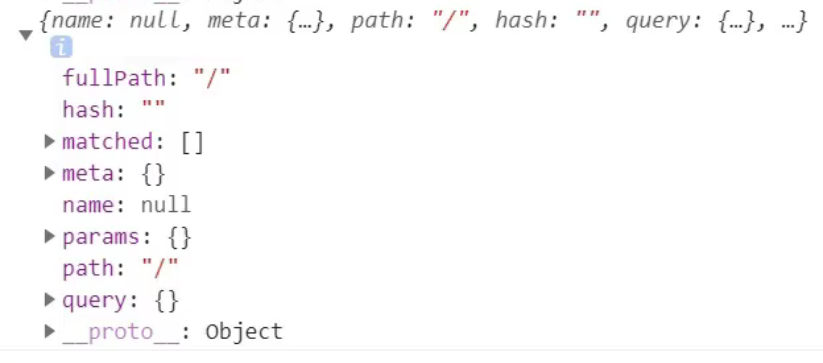
全局守卫:
// /route/index.js
const router =  new VueRouter({
    routes:[
        {
            name:'guanyu',
            path:'/about',
            component:About,
            meta:{isAuth:true,title:'新闻'}
        },
  ]
})

//全局前置守卫:初始化时执行、每次路由切换前执行
router.beforeEach((to,from,next)=>{
    console.log('beforeEach',to,from)
    if(to.meta.isAuth){ //判断当前路由是否需要进行权限控制
        if(localStorage.getItem('school') === 'atguigu'){ //权限控制的具体规则
            next() //放行
        }else{
            alert('暂无权限查看')
            // next({name:'guanyu'})
        }
    }else{
        next() //放行
    }
})

//全局后置守卫:初始化时执行、每次路由切换后执行
router.afterEach((to,from)=>{
    console.log('afterEach',to,from)
    if(to.meta.title){
        document.title = to.meta.title //修改网页的title
    }else{
        document.title = 'vue_test'
    }
})
独享守卫:
注意:
- 只有一个beforeEnter
写法“功能”与全局前置守卫一模一样
const router =  new VueRouter({
 routes:[
     {
         name:'guanyu',
         path:'/about',
         component:About,
         meta:{isAuth:true,title:'新闻'},
   //独享守卫
   beforeEnter(to,from,next){
     console.log('beforeEnter',to,from)
     if(to.meta.isAuth){ //判断当前路由是否需要进行权限控制
       if(localStorage.getItem('school') === 'atguigu'){
         next()
       }else{
         alert('暂无权限查看')
         // next({name:'guanyu'})
       }
     }else{
       next()
     }
   }
     },
]
})
组件内守卫:
 export default {
     name:'About',
     //通过路由规则,进入该组件时被调用
     beforeRouteEnter (to, from, next) {
         next()
     },

     //通过路由规则,离开该组件时被调用
     beforeRouteLeave (to, from, next) {
         next()
     }
 }
13.路由器的两种工作模式
- 对于一个url来说,什么是hash值?—— #及其后面的内容就是hash值。
- hash值不会包含在 HTTP 请求中,即:hash值不会带给服务器。
- hash模式:
- 地址中永远带着#号,不美观 。
- 若以后将地址通过第三方手机app分享,若app校验严格,则地址会被标记为不合法。
- 兼容性较好。
- history模式:
//配置路由规则时 { path: ‘/‘, redirect: ‘/one’ }
<a name="wVeSg"></a>
### 15.动态添加路由规则 - addRoutes & addRoute

<a name="INhdw"></a>
#### 左导航栏根据token动态添加路由规则 (在根路由使用一次即可)

<a name="W9Lkt"></a>
### 16.watch 监视路由更改- (路由组件守卫就能实现)
```javascript
let app = new Vue({
el: '#app',
watch: {
"$route.path": function(newValue, oldvalue) {
//newValue 跳转到的路由地址
//oldvalue 跳转前的路由地址
console.log(newValue, oldvalue)
}
},
//4.挂载路由
router: router,
components: {
"one": one,
"two": two,
}
});
17.路由滚动scroll
跳转路由界面后回到最上边
let router= new VueRouter({
  routes,
  //滚动行为
  scrollBehavior(to, from, savedPosition) {
    //返回的这个y=0,代表的滚动条在最上方
    //router4.x 以前写法
    return { y: 0 };
    //router4.x 写法
    return { top: 0 }
  },
})

export default router

若有收获,就点个赞吧
0 人点赞


