给定一个链表,返回链表开始入环的第一个节点。 如果链表无环,则返回 null。
为了表示给定链表中的环,我们使用整数 pos 来表示链表尾连接到链表中的位置(索引从 0 开始)。 如果 pos 是 -1,则在该链表中没有环。
说明:不允许修改给定的链表。
示例 1:
输入:head = [3,2,0,-4], pos = 1
输出:tail connects to node index 1
解释:链表中有一个环,其尾部连接到第二个节点。
示例 2:
输入:head = [1,2], pos = 0
输出:tail connects to node index 0
解释:链表中有一个环,其尾部连接到第一个节点。
示例 3:
输入:head = [1], pos = -1
输出:no cycle
解释:链表中没有环。
进阶:
你是否可以不用额外空间解决此题?
方法1:哈希表,第一个被重复访问的结点就是入环的第一个结点。
/*** Definition for singly-linked list.* struct ListNode {* int val;* ListNode *next;* ListNode(int x) : val(x), next(NULL) {}* };*/class Solution {public:bool hasCycle(ListNode * head){unordered_set<ListNode *> seen; // 记录某一个节点是否访问过while(head) // 到达尾节点{if (seen.count(head)) // 如果访问过head节点return true;seen.insert(head); // 插入head = head->next;}return false;}};
方法2:快慢指针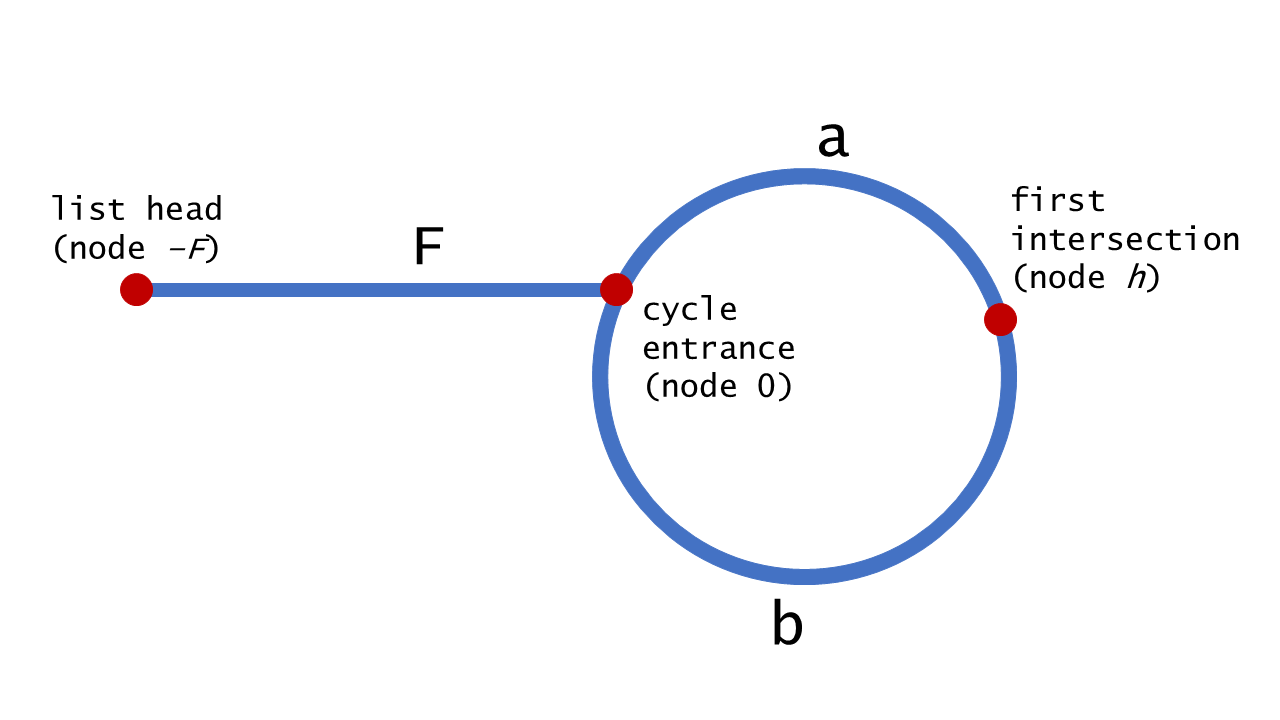
原理图(侵权请联系删除)
原理说明
2*distance(p_slow) == distance(p_fast) 2 * (F + a) == F + a + b + a F == b
step1: 如果存在环形,则找到汇合的点intersectNode
step2: 分别从head与intersectNode出发,一直到交点就是进入环形的起点。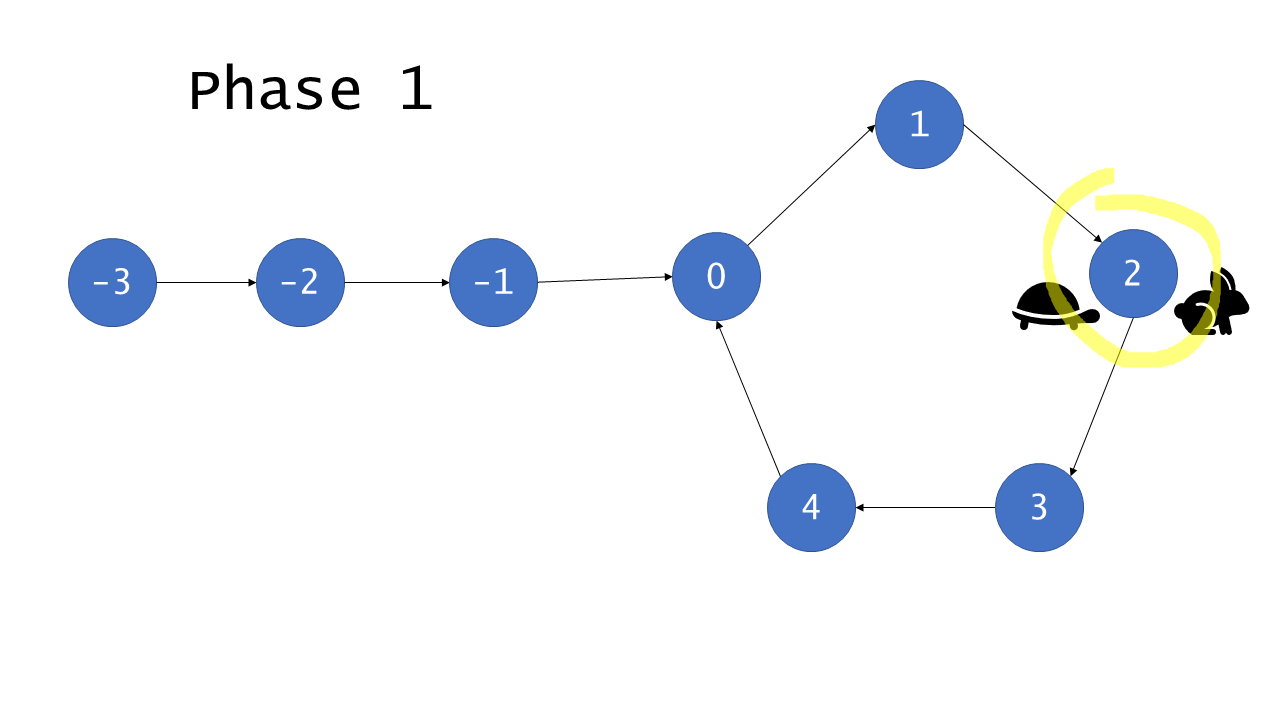
示意图(侵权联系删除)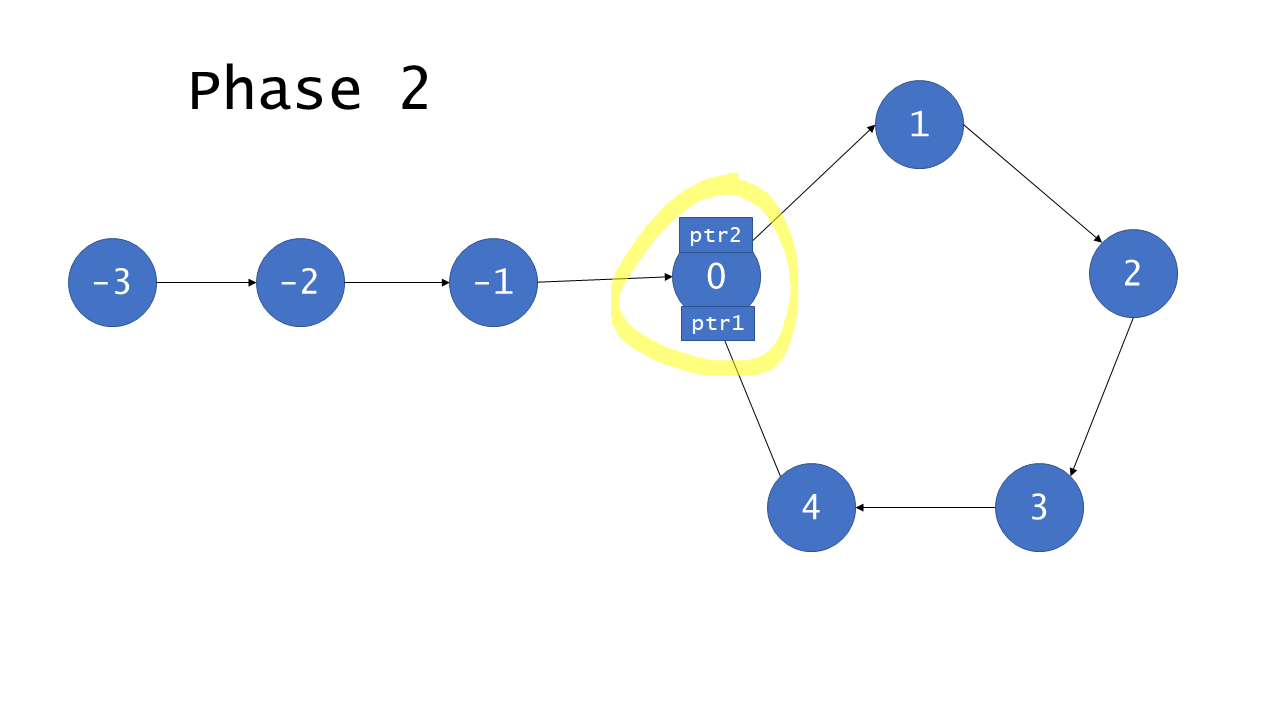
示意图(侵权联系删除)
/*** Definition for singly-linked list.* struct ListNode {* int val;* ListNode *next;* ListNode(int x) : val(x), next(NULL) {}* };*/class Solution {public:// 方法1: 哈希表ListNode *detectCycle(ListNode *head) {unordered_set<ListNode *> seen;ListNode * p_node = head;while(p_node){if (seen.count(p_node) != 0)return p_node;seen.insert(p_node);p_node = p_node->next;}return NULL;}}
class Solution {
public:
    // find intersect Node
    ListNode * getIntersectNode(ListNode * head)
    {
        ListNode * p_fast = head;
        ListNode * p_slow = head;
        while(p_fast != p_slow)
        {
            if (p_fast == nullptr || p_fast->next == nullptr)
                return NULL;
            p_fast = p_fast->next->next;
            p_slow = p_slow->next;
        }
        return p_fast;
    }

    // 方法2:快慢指针
    ListNode * detectCycle(ListNode * head)
    {
        if (head == nullptr || head->next == nullptr)
            return nullptr;
        ListNode * intersect = getIntersectNode(head);
        if (intersect == nullptr)
            return nullptr;
        ListNode * ptr1 = head;
        ListNode * ptr2 = intersect;
        while(ptr1 != ptr2)
        {
            ptr1 = ptr1->next;
            ptr2 = ptr2->next;
        }
        return ptr1;
    }
}
欢迎 交流,批评指正!

若有收获,就点个赞吧
0 人点赞


