题目
给定一个无重复元素的正整数数组 candidates 和一个正整数 target ,找出 candidates 中所有可以使数字和为目标数 target 的唯一组合。
candidates 中的数字可以无限制重复被选取。如果至少一个所选数字数量不同,则两种组合是唯一的。
对于给定的输入,保证和为 target 的唯一组合数少于 150 个。
示例 1:
输入: candidates = [2,3,6,7], target = 7输出: [[7],[2,2,3]]
示例 2:
输入: candidates = [2,3,5], target = 8输出: [[2,2,2,2],[2,3,3],[3,5]]
示例 3:
输入: candidates = [2], target = 1输出: []
示例 4:
输入: candidates = [1], target = 1输出: [[1]]
示例 5:
输入: candidates = [1], target = 2输出: [[1,1]]
提示:
- 1 <= candidates.length <= 30
- 1 <= candidates[i] <= 200
- candidate 中的每个元素都是独一无二的。
- 1 <= target <= 500
思路
题目中的无限制重复被选取,吓得我赶紧想想 出现0 可咋办,然后看到下面提示:1 <= candidates[i] <= 200,我就放心了。
本题和 77.组合、216.组合总和III 的区别是:本题没有数量要求,可以无限重复,但是有总和的限制,所以间接的也是有个数的限制。
本题搜索的过程抽象成树形结构如下: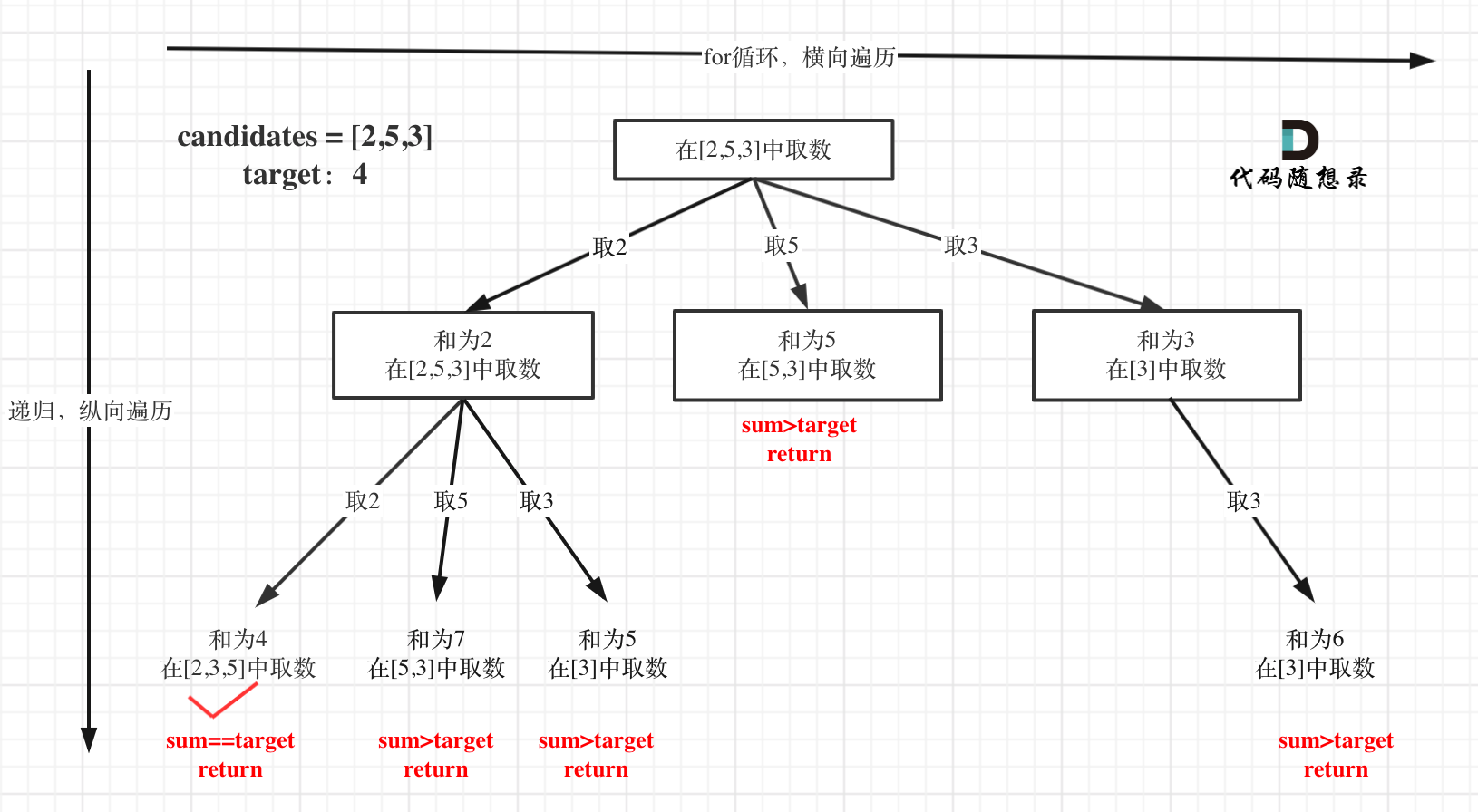
注意图中叶子节点的返回条件,因为本题没有组合数量要求,仅仅是总和的限制,所以递归没有层数的限制,只要选取的元素总和超过target,就返回。
而在 77.组合、216.组合总和III 中都可以知道要递归 K 层,因为要取 k 个元素的组合。
因为题目要求解集不能包含重复的组合,所以还需要 startIndex 来控制 for 循环的起始位置。
题目规定 candidates 中的数字可以无限制重复被选取,因此在递归调用 backtracking 时,i 就不用 +1 了,表示可以重复选择当前数字:
for (int i = startIndex; i < candidates.length; i++) {path.add(candidates[i]);sum += candidates[i];// 关键点:不用i+1了,表示可以重复读取当前的数backtracking(i);path.removeLast();sum -= candidates[i];}
那么,我们可以得出第一版的代码:
class Solution {int[] candidates = null;int target = 0;List<List<Integer>> result = new ArrayList<>();LinkedList<Integer> path = new LinkedList<>();// 定义 int 型的 sum 变量来统计单一结果 path 里元素的总和int sum = 0;public List<List<Integer>> combinationSum(int[] candidates, int target) {this.candidates = candidates;this.target = target;backtracking(0);return result;}void backtracking(int startIndex) {// 终止条件if (sum > target) {return;}// 符合题目要求,收集答案if (sum == target) {result.add(new ArrayList<>(path));return;}for (int i = startIndex; i < candidates.length; i++) {path.add(candidates[i]);sum += candidates[i];// 关键点:不用i+1了,表示可以重复读取当前的数backtracking(i);path.removeLast();sum -= candidates[i];}}}
剪枝
在这个树形结构中: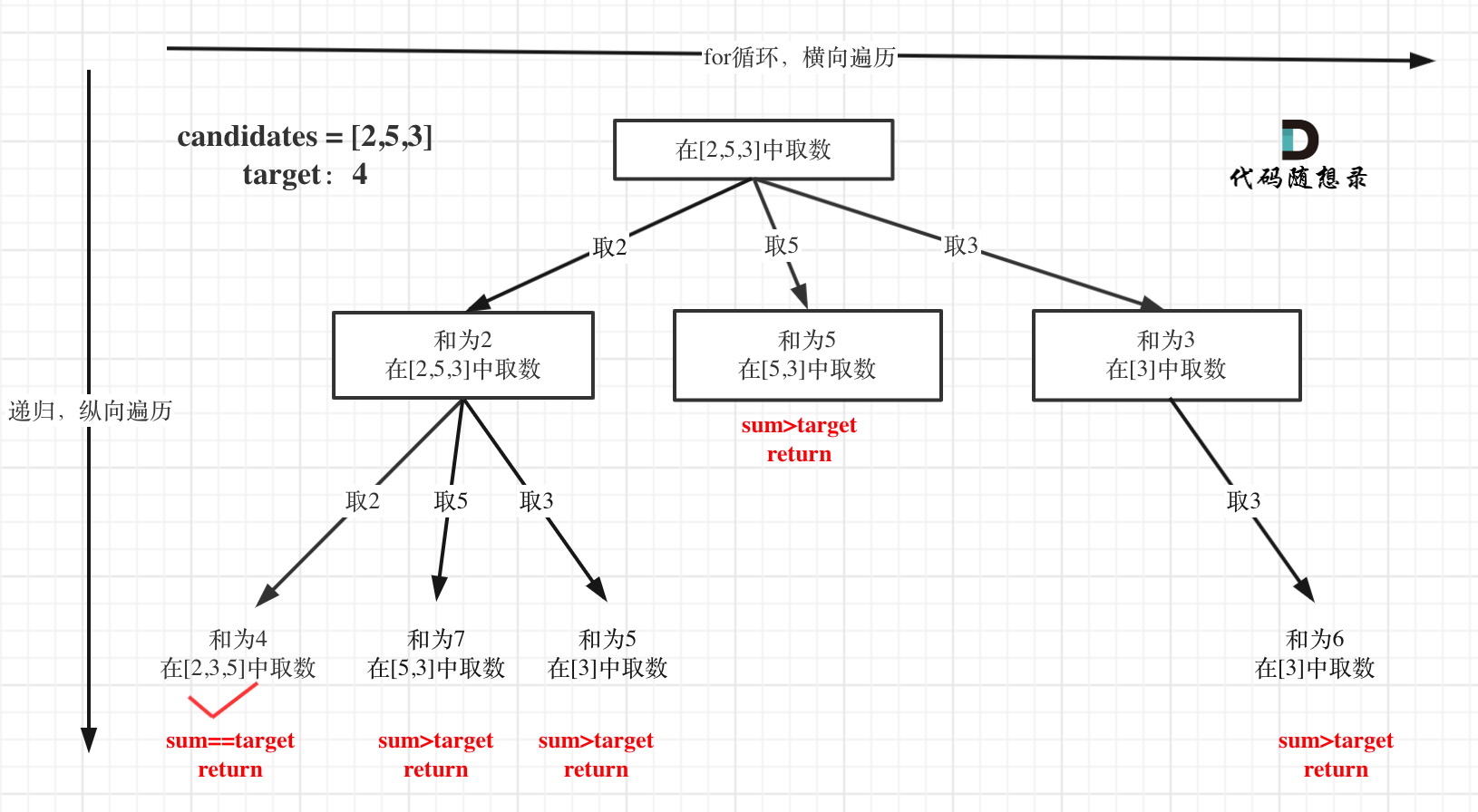
以及上面的版本一的代码大家可以看到,对于 sum 已经大于 target 的情况,其实是依然进入了下一层递归,只是下一层递归结束判断的时候,会判断 sum > target 的话就返回。
其实如果已经知道下一层的 sum 会大于 target ,就没有必要进入下一层递归了。
那么可以在 for 循环的搜索范围上做做文章了。
对总集合排序之后,如果下一层的 sum(就是本层的 sum + candidates[i] )已经大于 target ,就可以结束本轮 for 循环的遍历。
如图:
for 循环剪枝代码如下:
for (int i = startIndex; i < candidates.length && sum + candidates[i] <= target; i++) {
本题的剪枝优化,这个优化如果是初学者的话并不容易想到。在求和问题中,排序之后加剪枝是常见的套路。
答案
class Solution {
    int[] candidates = null;
    int target = 0;

    List<List<Integer>> result = new ArrayList<>();
    LinkedList<Integer> path = new LinkedList<>();

    // 定义 int 型的 sum 变量来统计单一结果 path 里元素的总和
    int sum = 0;

    public List<List<Integer>> combinationSum(int[] candidates, int target) {
        // 对集合做排序
        Arrays.sort(candidates);

        this.candidates = candidates;
        this.target = target;

        backtracking(0);
        return result;
    }

    void backtracking(int startIndex) {
        // 终止条件
        // 符合题目要求,收集答案
        if (sum == target) {
            result.add(new ArrayList<>(path));
            return;
        }

        // 如果 sum + candidates[i] > target 就提前终止遍历
        for (int i = startIndex; i < candidates.length && sum + candidates[i] <= target; i++) {
            path.add(candidates[i]);
            sum += candidates[i];

            // 关键点:不用i+1了,表示可以重复读取当前的数
            backtracking(i);

            path.removeLast();
            sum -= candidates[i];
        }
    }
}
REF
https://programmercarl.com/0039.组合总和.html
https://leetcode-cn.com/problems/combination-sum/

若有收获,就点个赞吧
0 人点赞


