46. 全排列
给定一个 没有重复数字的数组nums,返回其所有可能的全排列。
:::info
示例:
输入: [1,2,3]
输出:
[
[1,2,3],
[1,3,2],
[2,1,3],
[2,3,1],
[3,1,2],
[3,2,1]
]
:::
思路
方法一:分治
将排列的问题分治为小问题,由小问题递归推断出最后的解。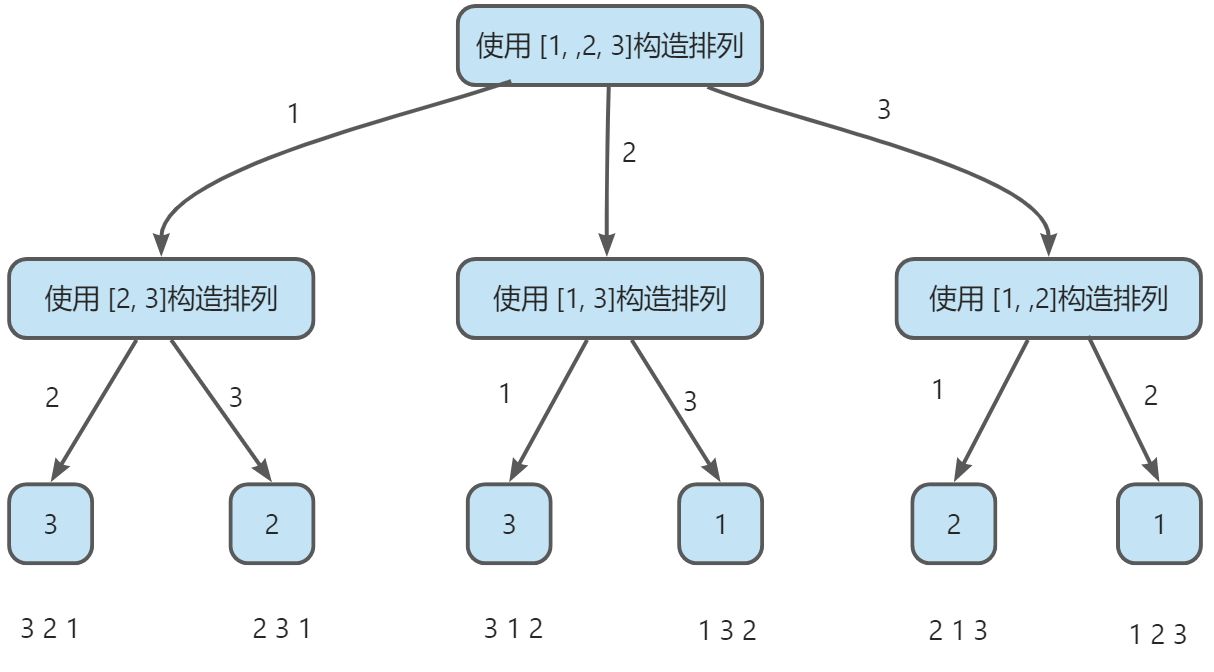
var permute = function(nums) {const len = nums.length;if (len === 1) return [nums];let res = [];for (let i = 0; i < len; i++) {// 取出nums[i]let num = nums[i];// 取出num[i]的数组let rest = nums.slice(0,i).concat(nums.slice(i+1, len));// 不断递归,直到数组长度为1let restPermuteArr = permute(rest);// 合并,加入结果数组for (let item of restPermuteArr) {res.push(item.concat(num));}}return res;};
方法二:回溯法
用一个数组used记录当前元素是否被使用过,同时利用一个路径栈path存储路径。
遍历目标数组,将当前元素i存入路径栈path中并标记该元素,即used[i] = true,然后开始递归。当路径栈长度等于目标数组长度时,即说明排列元素已满,加入到结果数组res中。
var permute = function(nums) {const len = nums.length;const res = [];// 定义回溯函数const backTracking = (used, path) => {if (path.length === len) res.push([...path]);for (let i = 0; i < len; i++) {// 如果当前元素被使用过,直接跳过本次循环,遍历下一个元素if (used[i]) continue;// 将当前元素加入路径栈path.push(nums[i])// 标记使用过的元素used[i] = true;backTracking(used, path);// 状态重置,撤销之前的操作path.pop();used[i] = false;}}backTracking([], []);return res;};
47. 全排列 II
给定一个可包含重复数字的序列,返回所有不重复的全排列。
:::info
输入: [1,1,2]
输出:
[
[1,1,2],
[1,2,1],
[2,1,1]
]
:::
本题跟 全排列 的思路一致,只不过需要在一开始排序,然后在回溯过程中增加判断去重:
var permuteUnique = function (nums) {const res = [];const len = nums.length;// 先排序,目的是为了把重复的数字放到一起形成连续,便于后面判断nums.sort((a, b) => a - b);var backtracking = function (used, path) {if (path.length === len) {res.push([...path]);}for (let i = 0; i < len; i++) {if (used[i]) continue;// 现在假如 第二个数字也是 1,和第一个 1 重复了:// 1.首先下标肯定要大于等于 0// 2.前后数字相等// 3.前面的数字必须标记为 使用过了if (i - 1 >= 0 && nums[i - 1] === nums[i] && !used[i - 1]) continue;path.push(nums[i]);used[i] = true;backtracking(used, path);path.pop();used[i] = false;}}backtracking([], []);return res;};

若有收获,就点个赞吧
0 人点赞


