
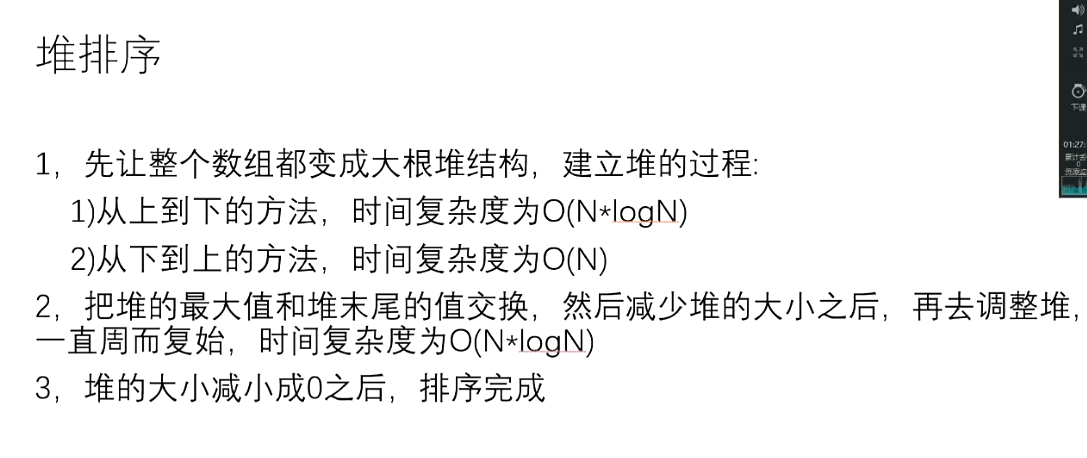
堆结构

前缀树

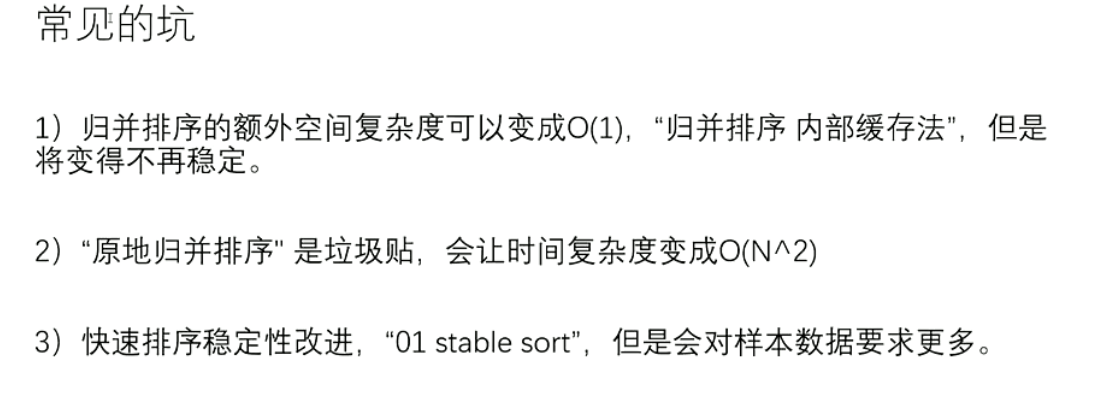
算法稳定性的坑
二叉树
public static class Node {public int value;public Node left;public Node right;public Node(int v) {value = v;}}
遍历
递归遍历
public static void f(Node head) {if (head == null) {return;}// 先序f(head.left);// 中序f(head.right);// 后序}
非递归遍历
思路:使用栈
先序遍历,顺序为:头左右,则先压入头,弹出头后,有右压右,有左压左
public static void pre(Node head) {System.out.print("pre-order: ");if (head != null) {Stack<Node> stack = new Stack<Node>();stack.add(head);while (!stack.isEmpty()) {head = stack.pop();System.out.print(head.value + " ");if (head.right != null) {stack.push(head.right);}if (head.left != null) {stack.push(head.left);}}}System.out.println();}
后序顺序为:左右头(逆序为头右左),则先压入头,弹出头后,有左压左,有右压右,此时顺序为 头右左 ,是后序遍历的逆序,再准备个栈即可
public static void pos1(Node head) {System.out.print("pos-order: ");if (head != null) {Stack<Node> s1 = new Stack<Node>();Stack<Node> s2 = new Stack<Node>();s1.push(head);while (!s1.isEmpty()) {head = s1.pop(); // 头 右 左s2.push(head);if (head.left != null) {s1.push(head.left);}if (head.right != null) {s1.push(head.right);}}// 左 右 头while (!s2.isEmpty()) {System.out.print(s2.pop().value + " ");}}System.out.println();}
中序遍历,顺序为:左右头
public static void in(Node cur) {System.out.print("in-order: ");if (cur != null) {Stack<Node> stack = new Stack<Node>();while (!stack.isEmpty() || cur != null) {if (cur != null) {stack.push(cur);cur = cur.left;} else {cur = stack.pop();System.out.print(cur.value + " ");cur = cur.right;}}}System.out.println();}
宽度优先遍历
使用map记录节点所在层
在弹出队列时才做操作
public static int maxWidthUseMap(Node head) {if (head == null) {return 0;}Queue<Node> queue = new LinkedList<>();queue.add(head);// key 在 哪一层,valueHashMap<Node, Integer> levelMap = new HashMap<>();levelMap.put(head, 1);int curLevel = 1; // 当前你正在统计哪一层的宽度int curLevelNodes = 0; // 当前层curLevel层,宽度目前是多少int max = 0;while (!queue.isEmpty()) {// 在弹出队列时才做操作Node cur = queue.poll();int curNodeLevel = levelMap.get(cur);if (cur.left != null) {levelMap.put(cur.left, curNodeLevel + 1);queue.add(cur.left);}if (cur.right != null) {levelMap.put(cur.right, curNodeLevel + 1);queue.add(cur.right);}if (curNodeLevel == curLevel) {curLevelNodes++;} else {max = Math.max(max, curLevelNodes);curLevel++;curLevelNodes = 1;}}max = Math.max(max, curLevelNodes);return max;}
记录当前层和下一层的最右节点,就可以知道一层是否已结束
在弹出队列时才做操作
public static int maxWidthNoMap(Node head) {if (head == null) {return 0;}Queue<Node> queue = new LinkedList<>();queue.add(head);Node curEnd = head; // 当前层,最右节点是谁Node nextEnd = null; // 下一层,最右节点是谁int max = 0;int curLevelNodes = 0; // 当前层的节点数while (!queue.isEmpty()) {// 在弹出队列时才做操作Node cur = queue.poll();if (cur.left != null) {queue.add(cur.left);nextEnd = cur.left;}if (cur.right != null) {queue.add(cur.right);nextEnd = cur.right;}curLevelNodes++;if (cur == curEnd) {max = Math.max(max, curLevelNodes);curLevelNodes = 0;curEnd = nextEnd;}}return max;}
二叉树序列化和反序列化
- 可以用先序、中序、后序序列化或按层遍历,来实现二叉树的变化
- 用什么方式序列化,就用什么方式反序列化
ps:空的节点也要序列化
递归序列化
// 序列化public static Queue<String> preSerial(Node head) {Queue<String> ans = new LinkedList<>();pres(head, ans);return ans;}public static void pres(Node head, Queue<String> ans) {if (head == null) {ans.add(null);} else {// 先序ans.add(String.valueOf(head.value));pres(head.left, ans);// 中序pres(head.right, ans);// 后序}}// 反序列化public static Node buildByPreQueue(Queue<String> prelist) {if (prelist == null || prelist.size() == 0) {return null;}return preb(prelist);}public static Node preb(Queue<String> prelist) {String value = prelist.poll();if (value == null) {return null;}// 先序Node head = new Node(Integer.valueOf(value));head.left = preb(prelist);// 中序head.right = preb(prelist);// 后序return head;}
按层序列化
public static Queue<String> levelSerial(Node head) {Queue<String> ans = new LinkedList<>();if (head == null) {ans.add(null);} else {ans.add(String.valueOf(head.value));Queue<Node> queue = new LinkedList<Node>();queue.add(head);while (!queue.isEmpty()) {head = queue.poll(); // head 父 子if (head.left != null) {ans.add(String.valueOf(head.left.value));queue.add(head.left);} else {ans.add(null);}if (head.right != null) {ans.add(String.valueOf(head.right.value));queue.add(head.right);} else {ans.add(null);}}}return ans;}public static Node buildByLevelQueue(Queue<String> levelList) {if (levelList == null || levelList.size() == 0) {return null;}Node head = generateNode(levelList.poll());Queue<Node> queue = new LinkedList<Node>();if (head != null) {queue.add(head);}Node node = null;while (!queue.isEmpty()) {node = queue.poll();node.left = generateNode(levelList.poll());node.right = generateNode(levelList.poll());if (node.left != null) {queue.add(node.left);}if (node.right != null) {queue.add(node.right);}}return head;}public static Node generateNode(String val) {if (val == null) {return null;}return new Node(Integer.valueOf(val));}

若有收获,就点个赞吧
0 人点赞


