概述
由前面【Dubbo】集群容错机制 文章可知,AbstractClusterInvoker#doSelect会调用LoadBalance#select方法选取一个Invoker并返回。
首先,先来看一下LoadBalance接口,LoadBalance默认使用的负载均衡实现是随机算法,而且过url的loadbalance参数进行自适应选择扩展。
@SPI(RandomLoadBalance.NAME)public interface LoadBalance {/*** @param invokers 供选择的invoker列表.* @param url refer url* @param invocation 消费者的调用会被封装成一个invocaion* @return 选择的invoker.*/@Adaptive("loadbalance")<T> Invoker<T> select(List<Invoker<T>> invokers, URL url, Invocation invocation) throws RpcException;}
接下来看一下LoadBalance接口的类图,如下所示:LoadBalance是顶层接口,AbstractLoadBalance封装了通用的实现逻辑。AbstractLoadBalance抽象类包含四个子类,分别对应随机、一致性哈希、轮询、最少活跃调用(慢的provider收到更少的请求)。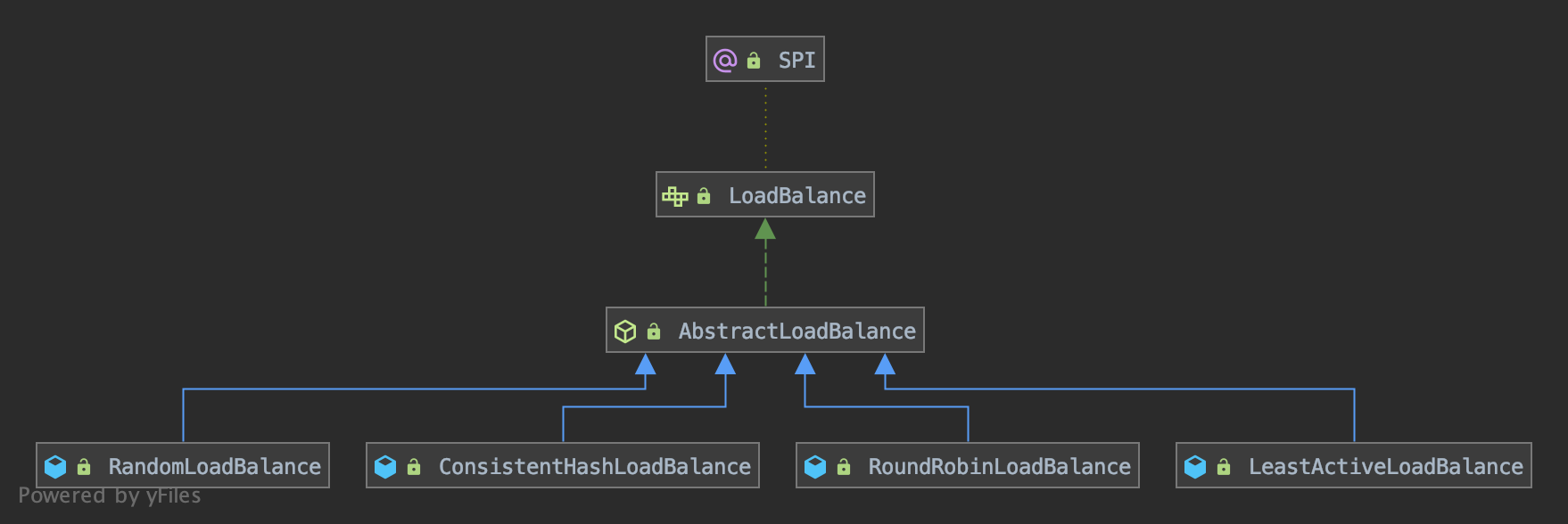
源码解析
AbstractLoadBalance
select方法
代码如下所示,逻辑比较简单,不多说。
public <T> Invoker<T> select(List<Invoker<T>> invokers, URL url, Invocation invocation) {//如果为空,返回空;如果只有一个,直接返回if (invokers == null || invokers.isEmpty())return null;if (invokers.size() == 1)return invokers.get(0);//调用子类实现的模板方法return doSelect(invokers, url, invocation);}protected abstract <T> Invoker<T> doSelect(List<Invoker<T>> invokers, URL url, Invocation invocation);
getWeight方法
该方法用来获取权重,主要逻辑就是计算服务的运行时间,当运行时间小于预热时间时,进行降权,防止服务一启动就进入高负载状态。代码如下所示。
protected int getWeight(Invoker<?> invoker, Invocation invocation) {//获取URl里weight参数,默认100int weight = invoker.getUrl().getMethodParameter(invocation.getMethodName(), Constants.WEIGHT_KEY, Constants.DEFAULT_WEIGHT);if (weight > 0) {//获取provider启动时间戳long timestamp = invoker.getUrl().getParameter(Constants.REMOTE_TIMESTAMP_KEY, 0L);if (timestamp > 0L) {//计算provider运行时间int uptime = (int) (System.currentTimeMillis() - timestamp);//获取服务预热时间,默认10分钟int warmup = invoker.getUrl().getParameter(Constants.WARMUP_KEY, Constants.DEFAULT_WARMUP);//如果运行时间小于预热时间,则重新计算权重if (uptime > 0 && uptime < warmup) {weight = calculateWarmupWeight(uptime, warmup, weight);}}}return weight;}static int calculateWarmupWeight(int uptime, int warmup, int weight) {//(uptime / warmup) * weight//(运行时间/预热时间)* 权重int ww = (int) ((float) uptime / ((float) warmup / (float) weight));return ww < 1 ? 1 : (ww > weight ? weight : ww);}
RandomLoadBalance
RandomLoadBalance是加权随机负载均衡算法的具体实现,其算法思想比较简单,下面举俩🌰说明一下。
🌰1:[10,10,10]三个Invoker的权重都一样,则直接取小于列表长度3的随机数(0,1,2),然后返回对应index的Invoker🌰2:[3,4,5]总权重=12,则会取小于12的随机数,假设随机数是6。index=0,6-3=3index=1,3-4=-1,-1小于0,所以index=1返回列表内index为1的Invoker
代码如下所示:
protected <T> Invoker<T> doSelect(List<Invoker<T>> invokers, URL url, Invocation invocation) {int length = invokers.size(); // Number of invokersint totalWeight = 0; // The sum of weightsboolean sameWeight = true; // Every invoker has the same weight?//计算总权重,并记录下是否有不一样的权重值。//如果权重值全都一样,则直接取小于列表大小的随机数,可看最后一步。for (int i = 0; i < length; i++) {int weight = getWeight(invokers.get(i), invocation);totalWeight += weight; // Sumif (sameWeight && i > 0&& weight != getWeight(invokers.get(i - 1), invocation)) {sameWeight = false;}}//权重值存在不一样的情况。//取一个小于总权重的随机数,然后从第一个开始遍历,一个个减掉Invoker对应的权重,当减到负数时,说明落在该Invoker对应的权重区间上。if (totalWeight > 0 && !sameWeight) {int offset = random.nextInt(totalWeight);for (int i = 0; i < length; i++) {offset -= getWeight(invokers.get(i), invocation);if (offset < 0) {return invokers.get(i);}}}return invokers.get(random.nextInt(length));}
RoundRobinLoadBalance
RoundRobinLoadBalance是平滑加权轮询负载均衡算法的具体实现,主要包含以下逻辑:
- 遍历
Invoker列表,如果Invoker对应的WeightedRoundRobin不存在,则新建一个并初始化权重 - 将当前
current = current + weight,找出当前current最大的,并更新lastUpdate - 删除长时间未更新
lastUpdate的WeightedRoundRobin current = current - 总权重,返回选中的Invoker
下面看个例子:
🌰:[1,2,3] 对应 A B C三个Invoker第一次:[0,0,0] -> [1,2,3] -> [1,2,-3] 选C第二次:[1,2,-3] -> [2,4,0] -> [2,-2,0] 选B第三次:[2,-2,0] -> [3,0,3] -> [3,0,-3] 选C第四次:[3,0,-3] -> [4,2,0] -> [-2,2,0] 选A第五次:[-2,2,0] -> [-1,4,3] -> [-1,-2,3] 选B第六次:[-1,-2,3] -> [0,0,6] -> [0,0,0] 选CA B C 分别对应 1 2 3次ps:中间一列,每个都加上自身权重。最后一列,会用最大的current建议一个totalWeight。所以总加的数量和总减的数量是一样的。自身权重越大的节点增长越快,那么比其他节点大的几率就越高,被选中的机会就越多。
代码如下所示:
protected <T> Invoker<T> doSelect(List<Invoker<T>> invokers, URL url, Invocation invocation) {//服务名+方法名String key = invokers.get(0).getUrl().getServiceKey() + "." + invocation.getMethodName();ConcurrentMap<String, WeightedRoundRobin> map = methodWeightMap.get(key);if (map == null) {methodWeightMap.putIfAbsent(key, new ConcurrentHashMap<String, WeightedRoundRobin>());map = methodWeightMap.get(key);}int totalWeight = 0;long maxCurrent = Long.MIN_VALUE;long now = System.currentTimeMillis();Invoker<T> selectedInvoker = null;WeightedRoundRobin selectedWRR = null;//遍历所有Invokerfor (Invoker<T> invoker : invokers) {String identifyString = invoker.getUrl().toIdentityString();WeightedRoundRobin weightedRoundRobin = map.get(identifyString);int weight = getWeight(invoker, invocation);if (weight < 0) {weight = 0;}//如果map中不存在对应的WeightedRoundRobin,则初始化一个put进去if (weightedRoundRobin == null) {weightedRoundRobin = new WeightedRoundRobin();weightedRoundRobin.setWeight(weight);map.putIfAbsent(identifyString, weightedRoundRobin);weightedRoundRobin = map.get(identifyString);}//如果权重与通过getWeight得到的不一样,则设置成getWeight得到的//这里不相等的原因可能是还在预热,因为在预热阶段,weight是会随着时间变大的。if (weight != weightedRoundRobin.getWeight()) {//weight changedweightedRoundRobin.setWeight(weight);}//increaseCurrent = current + weightlong cur = weightedRoundRobin.increaseCurrent();weightedRoundRobin.setLastUpdate(now);//这里是为了找出最大的那一个if (cur > maxCurrent) {maxCurrent = cur;selectedInvoker = invoker;selectedWRR = weightedRoundRobin;}//累加权重totalWeight += weight;}//上面那个for循环会更新lastUpdate,如果map里某个WeightedRoundRobin的lastupdate长时间未被更新,说明他可能挂了,所以把他移除掉。if (!updateLock.get() && invokers.size() != map.size()) {if (updateLock.compareAndSet(false, true)) {try {// copy -> modify -> update referenceConcurrentMap<String, WeightedRoundRobin> newMap = new ConcurrentHashMap<String, WeightedRoundRobin>();newMap.putAll(map);Iterator<Entry<String, WeightedRoundRobin>> it = newMap.entrySet().iterator();while (it.hasNext()) {Entry<String, WeightedRoundRobin> item = it.next();if (now - item.getValue().getLastUpdate() > RECYCLE_PERIOD) {it.remove();}}methodWeightMap.put(key, newMap);} finally {updateLock.set(false);}}}if (selectedInvoker != null) {//current = current-weightselectedWRR.sel(totalWeight);return selectedInvoker;}// should not happen herereturn invokers.get(0);}
LeastActiveLoadBalance
LeastActiveLoadBalance是最少活跃调用数负载均衡算法的集体实现,主要包含以下逻辑:
- 遍历
invoker列表,找到最小活跃数的invoker数组(可能存在多个活跃数=最小活跃数的情况) - 如果只有一个直接返回
- 如果存在多个,则根据权重是否相同来决定使用加权随机还是随机。
代码如下所示:
protected <T> Invoker<T> doSelect(List<Invoker<T>> invokers, URL url, Invocation invocation) {int length = invokers.size(); // Number of invokersint leastActive = -1; // The least active value of all invokersint leastCount = 0; // The number of invokers having the same least active value (leastActive)int[] leastIndexs = new int[length]; // The index of invokers having the same least active value (leastActive)int totalWeight = 0; // The sum of with warmup weightsint firstWeight = 0; // Initial value, used for comparisionboolean sameWeight = true; // Every invoker has the same weight value?//遍历invokers列表for (int i = 0; i < length; i++) {Invoker<T> invoker = invokers.get(i);//获取当前invoker的活跃适量int active = RpcStatus.getStatus(invoker.getUrl(), invocation.getMethodName()).getActive(); // Active number//权重int afterWarmup = getWeight(invoker, invocation); // Weight//如果活跃数量=-1 (说明是第一个遍历) 或者 当前活跃数量小于最小活跃数//将当前活跃数量设置到最小活跃数,并更新其他字段if (leastActive == -1 || active < leastActive) { // Restart, when find a invoker having smaller least active value.leastActive = active; // Record the current least active valueleastCount = 1; // Reset leastCount, count again based on current leastCountleastIndexs[0] = i; // ResettotalWeight = afterWarmup; // ResetfirstWeight = afterWarmup; // Record the weight the first invokersameWeight = true; // Reset, every invoker has the same weight value?}//如果当前活跃数量 = 最小活跃数,则加入到leastIndexs数组,并累加权重else if (active == leastActive) { // If current invoker's active value equals with leaseActive, then accumulating.leastIndexs[leastCount++] = i; // Record index number of this invokertotalWeight += afterWarmup; // Add this invoker's weight to totalWeight.// If every invoker has the same weight?//判断活跃数相等的,权重是否相等if (sameWeight && i > 0&& afterWarmup != firstWeight) {sameWeight = false;}}}// assert(leastCount > 0)//如果只有一个活跃数=最小活跃数,直接返回if (leastCount == 1) {// If we got exactly one invoker having the least active value, return this invoker directly.return invokers.get(leastIndexs[0]);}//存在多个活跃数=最小活跃数并且权重不相等的情况,进行加权随机if (!sameWeight && totalWeight > 0) {// If (not every invoker has the same weight & at least one invoker's weight>0), select randomly based on totalWeight.int offsetWeight = random.nextInt(totalWeight) + 1;// Return a invoker based on the random value.for (int i = 0; i < leastCount; i++) {int leastIndex = leastIndexs[i];offsetWeight -= getWeight(invokers.get(leastIndex), invocation);if (offsetWeight <= 0)return invokers.get(leastIndex);}}// If all invokers have the same weight value or totalWeight=0, return evenly.//存在多个活跃数=最小活跃数并且权重相等return invokers.get(leastIndexs[random.nextInt(leastCount)]);}
ConsistentHashLoadBalance
一致性hash算法的原理此处不做解释,直接看一下Dubbo一致性hash负载均衡的实现。
doSelect方法
首先,ConsistentHashLoadBalance内部维护了一个ConcurrentMap,缓存了方法以及对应的ConsistentHashSelector。doSelect方法主要做的事情,就是通过hashCode来检测Invoker列表是否发生了变化,如果发生了变化,则重新初始化ConsistentHashSelector,然后调用ConsistentHashSelector#select方法选择一个Invoker并返回。代码如下所示
private final ConcurrentMap<String, ConsistentHashSelector<?>> selectors = new ConcurrentHashMap<String, ConsistentHashSelector<?>>();@Overrideprotected <T> Invoker<T> doSelect(List<Invoker<T>> invokers, URL url, Invocation invocation) {String methodName = RpcUtils.getMethodName(invocation);String key = invokers.get(0).getUrl().getServiceKey() + "." + methodName;int identityHashCode = System.identityHashCode(invokers);ConsistentHashSelector<T> selector = (ConsistentHashSelector<T>) selectors.get(key);//如果没有初始化过或者invokers列表发生了变化,则需要重新初始化一次。if (selector == null || selector.identityHashCode != identityHashCode) {selectors.put(key, new ConsistentHashSelector<T>(invokers, methodName, identityHashCode));selector = (ConsistentHashSelector<T>) selectors.get(key);}//选择一个Invokerreturn selector.select(invocation);}
ConsistentHashSelector
接下来看一下ConsistentHashSelector的源码,注释很详细了,代码如下所示:
private static final class ConsistentHashSelector<T> {//虚拟节点,用TreeMap来实现,TreeMap的tailMap(K fromKey, boolean inclusive)方法可以获取比fromKey大的子mapprivate final TreeMap<Long, Invoker<T>> virtualInvokers;//虚拟节点数量,默认会取160private final int replicaNumber;//这个用来校验Invoker列表是不是发生了变化private final int identityHashCode;//在配置中可以用hash.arguments指定需要进行hash值计算的参数,比如0,1,2就是用第0,1,2这三个参数,默认取0private final int[] argumentIndex;//初始化一致性hash选择器ConsistentHashSelector(List<Invoker<T>> invokers, String methodName, int identityHashCode) {this.virtualInvokers = new TreeMap<Long, Invoker<T>>();this.identityHashCode = identityHashCode;URL url = invokers.get(0).getUrl();this.replicaNumber = url.getMethodParameter(methodName, "hash.nodes", 160);String[] index = Constants.COMMA_SPLIT_PATTERN.split(url.getMethodParameter(methodName, "hash.arguments", "0"));argumentIndex = new int[index.length];for (int i = 0; i < index.length; i++) {argumentIndex[i] = Integer.parseInt(index[i]);}//遍历invokers列表,for (Invoker<T> invoker : invokers) {String address = invoker.getUrl().getAddress();for (int i = 0; i < replicaNumber / 4; i++) {byte[] digest = md5(address + i);for (int h = 0; h < 4; h++) {long m = hash(digest, h);virtualInvokers.put(m, invoker);}}}}public Invoker<T> select(Invocation invocation) {//将参数转成key,根据argumentIndex拼接keyString key = toKey(invocation.getArguments());//md5算法,生成16个字节数组byte[] digest = md5(key);//计算hash值,使用selectForKey方法查询大于该hash值的第一个节点return selectForKey(hash(digest, 0));}//根据argumentIndex数据,拼接key,key是后面用来计算hash的//具体逻辑是,根据argumentIndex里的值取参数,比如0,2,就会取args里index=0,2的参数进行拼接private String toKey(Object[] args) {StringBuilder buf = new StringBuilder();for (int i : argumentIndex) {if (i >= 0 && i < args.length) {buf.append(args[i]);}}return buf.toString();}//使用TreeMap.tailMap方法获取大于hash的子mapprivate Invoker<T> selectForKey(long hash) {Map.Entry<Long, Invoker<T>> entry = virtualInvokers.tailMap(hash, true).firstEntry();if (entry == null) {entry = virtualInvokers.firstEntry();}return entry.getValue();}private long hash(byte[] digest, int number) {return (((long) (digest[3 + number * 4] & 0xFF) << 24)| ((long) (digest[2 + number * 4] & 0xFF) << 16)| ((long) (digest[1 + number * 4] & 0xFF) << 8)| (digest[number * 4] & 0xFF))& 0xFFFFFFFFL;}private byte[] md5(String value) {MessageDigest md5;try {md5 = MessageDigest.getInstance("MD5");} catch (NoSuchAlgorithmException e) {throw new IllegalStateException(e.getMessage(), e);}md5.reset();byte[] bytes;try {bytes = value.getBytes("UTF-8");} catch (UnsupportedEncodingException e) {throw new IllegalStateException(e.getMessage(), e);}md5.update(bytes);return md5.digest();}}
参考

若有收获,就点个赞吧
0 人点赞


