 Redis 缓存
ykkj-spring-boot-starter-redis技术组件,使用 Redis 实现缓存的功能,它有 2 种使用方式:
- 编程式缓存:基于 Spring Data Redis 框架的 RedisTemplate 操作模板
- 声明式缓存:基于 Spring Cache 框架的 @Cacheable 等等注解
1. 编程式缓存
```xmlorg.redisson redisson-spring-boot-starter
由于 Redisson 提供了分布式锁、队列、限流等特性,所以使用它作为 Spring Data Redis 的客户端。<a name="wI0Gb"></a>### 1.1 Spring Data Redis 配置① 在 application-local.yaml配置文件中,通过 spring.redis 配置项,设置 Redis 的配置。如下图所示:<br />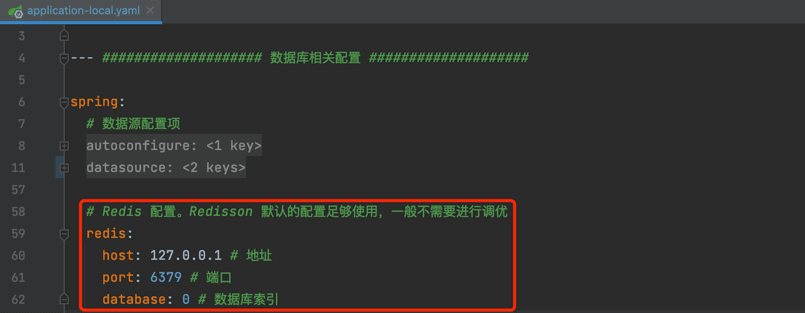<br />② 在 framework/redis/config/YkkjRedisAutoConfiguration.java配置类,设置使用 JSON 序列化 value 值。如下图所示:<br />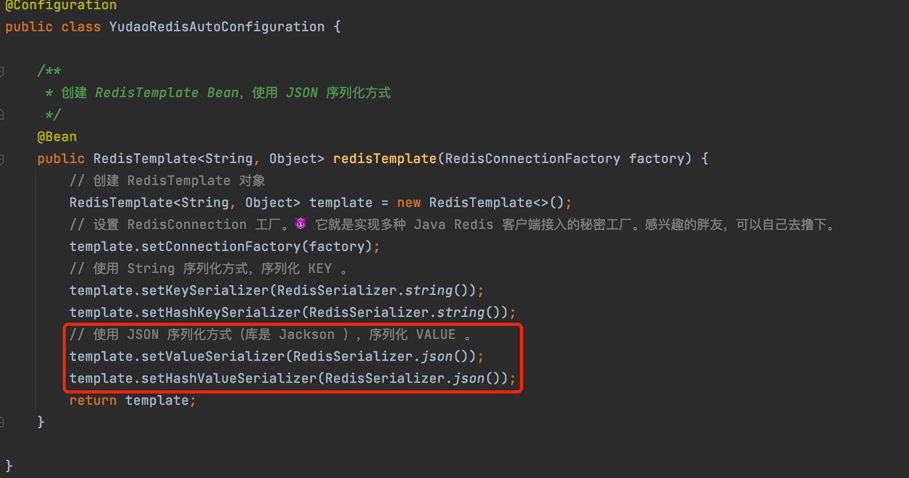<a name="b2CLT"></a>### 1.2 实战案例以登录用户的缓存来举例子,讲解项目中是如何使用 Spring Data Redis 框架的。<br /><a name="E3jOx"></a>#### 1.2.1 引入依赖在 ykkj-module-system-biz 模块中,引入 ykkj-spring-boot-starter-redis 技术组件。如下所示:```xml<dependency><groupId>cn.iocoder.boot</groupId><artifactId>yudao-spring-boot-starter-redis</artifactId></dependency>
1.2.2 LoginUser
新建 framework/security/core/LoginUser.java类,登录用户的缓存。代码如下:
友情提示:
一般情况下,每个缓存对应的类,创建在对应模块的 dal/dataobject 包下。
1.2.3 RedisKeyConstants
每个 ykkj-module-xxx 模块,都有一个 RedisKeyConstants 类,定义该模块的 Redis Key 的信息。目的是,避免 Redis Key 散落在 Service 业务代码中,像对待数据库的表一样,对待每个 Redis Key。通过这样的方式,如果我们想要了解一个模块的 Redis 的使用情况,只需要查看 RedisKeyConstants 类即可。
因此,在 ykkj-module-system 模块的 module/system/dal/redis/RedisKeyConstants.java类中,新建 LoginUser 对应的 Redis Key 定义 LOGIN_USER。如下图所示:
友情提示:
framework/redis/core/RedisKeyDefine.java是 Redis Key 定义类,填写 Key 模板、Value 在 Redis 中的类型、Value 在 Java 中的类型、过期时间等信息。
1.2.4 LoginUserRedisDAO
新建 system/dal/redis/auth/LoginUserRedisDAO.java类,是 LoginUser 的 RedisDAO 实现。代码如下:
1.2.5 UserSessionServiceImpl
在 /module/system/service/auth/UserSessionServiceImpl.java中,只要注入 LoginUserRedisDAO Bean,非常简洁干净的进行 LoginUser 的缓存操作,无需关心具体的实现。代码如下:
2. 声明式缓存
<dependency>
    <groupId>org.springframework.boot</groupId>
    <artifactId>spring-boot-starter-cache</artifactId>
</dependency>
相比来说 Spring Data Redis 编程式缓存,Spring Cache 声明式缓存的使用更加便利,一个 @Cacheable 注解即可实现缓存的功能。示例如下:
@Cacheable(value = "users", key = "#id")
UserDO getUserById(Integer id);
2.1 Spring Cache 配置
① 在 application.yaml配置文件中,通过 spring.redis 配置项,设置 Redis 的配置。如下图所示:
② 在 framework/redis/config/YudaoCacheAutoConfiguration.java配置类,设置使用 JSON 序列化 value 值。如下图所示:
2.2 常见注解
2.2.1 @Cacheable 注解
@Cacheable注解:添加在方法上,缓存方法的执行结果。执行过程如下:
- 1)首先,判断方法执行结果的缓存。如果有,则直接返回该缓存结果。
- 2)然后,执行方法,获得方法结果。
- 3)之后,根据是否满足缓存的条件。如果满足,则缓存方法结果到缓存。
-
2.2.2 @CachePut 注解
@CachePut注解,添加在方法上,缓存方法的执行结果。不同于 @Cacheable 注解,它的执行过程如下:
1)首先,执行方法,获得方法结果。也就是说,无论是否有缓存,都会执行方法。
- 2)然后,根据是否满足缓存的条件。如果满足,则缓存方法结果到缓存。
-
2.2.3 @CacheEvict 注解
2.3 实战案例
在 /module/infra/service/test/TestDemoServiceImpl.java中,项目提供了一个 Spring Cache 的示例,采用【被动读】的方案。原因是:

【被动读】相对能够保证 Redis 与 MySQL 的一致性
- 绝大数数据不需要放到 Redis 缓存中,采用【主动写】会将非必要的数据进行缓存
① 执行 #getTestDemo(…) 方法,从 MySQL 读取数据后,向 Redis 写入缓存。如下图所示:
② 执行 #updateTestDemo(…) 方法,在更新 MySQL 数据后,从 Redis 删除缓存。如下图所示:
3. Redis 监控
ykkj-module-infra 的 redis模块,提供了 Redis 监控的功能。
点击 [基础设施 -> Redis 监控] 菜单,可以查看到 Redis 的基础信息、命令统计、内存信息、Key 列表。如下图所示:

若有收获,就点个赞吧
0 人点赞


