中介者模式
1、智能家庭管理问题
智能家庭项目:
- 1)智能家庭包括各种设备,闹钟、咖啡机、电视机、窗帘等
- 2)主人要看电视时,各个设备可以协同工作,自动完成看电视的准备工作,比如流程为:
闹铃响起 => 咖啡机开始做咖啡 => 窗帘自动落下 => 电视机开始播放

传统方案解决智能家庭管理问题
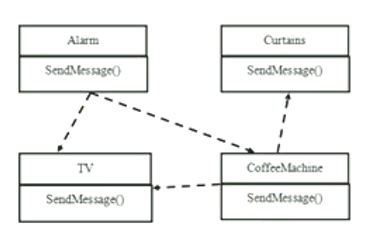
传统方式问题分析
- 1)当各电器对象有多种状态改变时,相互之间的调用关系会比较复杂
- 2)各个电器对象彼此联系,你中有我,我中有你,不利于松耦合
- 3)各个电器对象之间所传递的消息(参数),容易混乱
- 4)当系统增加一个新的电器对象时,或者执行流程改变时,代码的可维护性、扩展性都不理想→考虑中介者模式
2、中介者模式
- 1)中介者模式(
Mediator Pattern),用一个中介对象来封装一系列的对象交互。中介者使各个对象不需要显式地相互引用,从而使其耦合松散,而且可以独立地改变它们之间的交互 - 2)中介者模式属于行为型模式,使代码易于维护
- 3)比如 MVC 模式,C(
Controller控制器)是M(Model模型)和V(View视图)的中介者,在前后端交互时起到了中间人的作用
原理类图
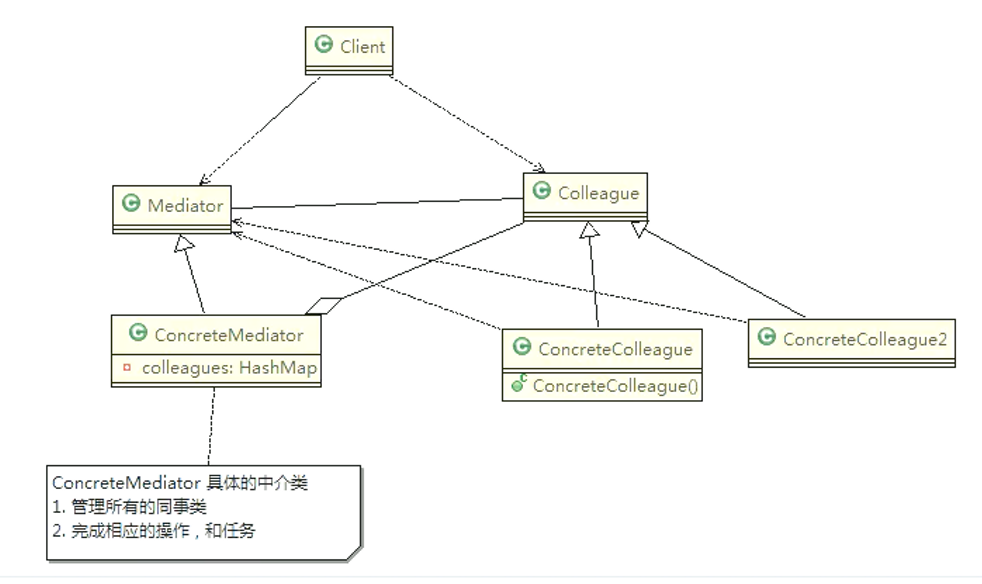
中介者模式角色及职责
Mediator【抽象中介者】:定义了同事对象到中介者对象的接口ConcreteMediator【具体的中介者对象】:实现抽象中介者方法,需要知道所有具体的同事类,即以一个集合来管理HashMap,并接受某个同事对象消息,完成相应的任务Colleague【抽象同事类】ConcreteColleague【具体的同事类】:会有很多,只知道自己的行为,而不了解其他同事类的行为(方法),但他们都依赖中介者对象
3、中介者模式解决智能家庭管理问题
UML 类图
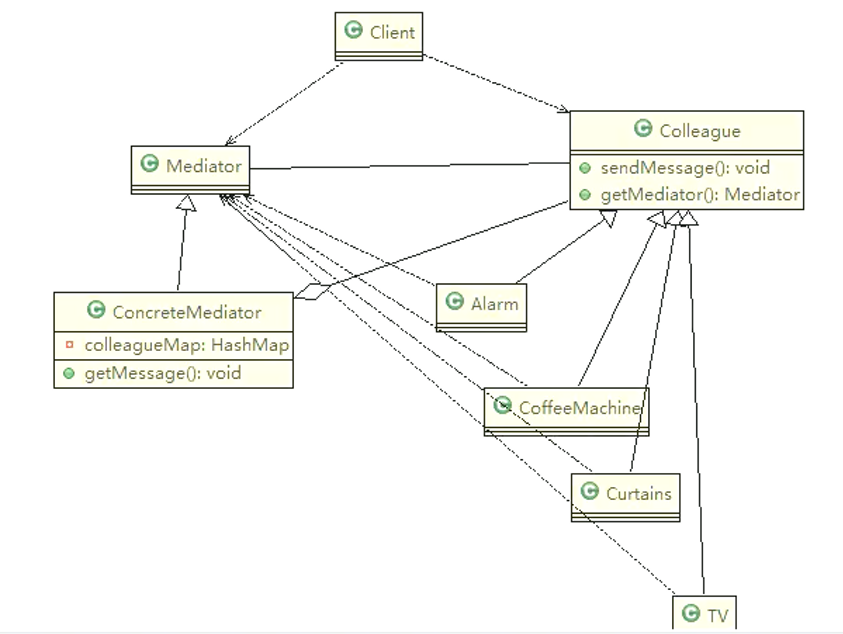
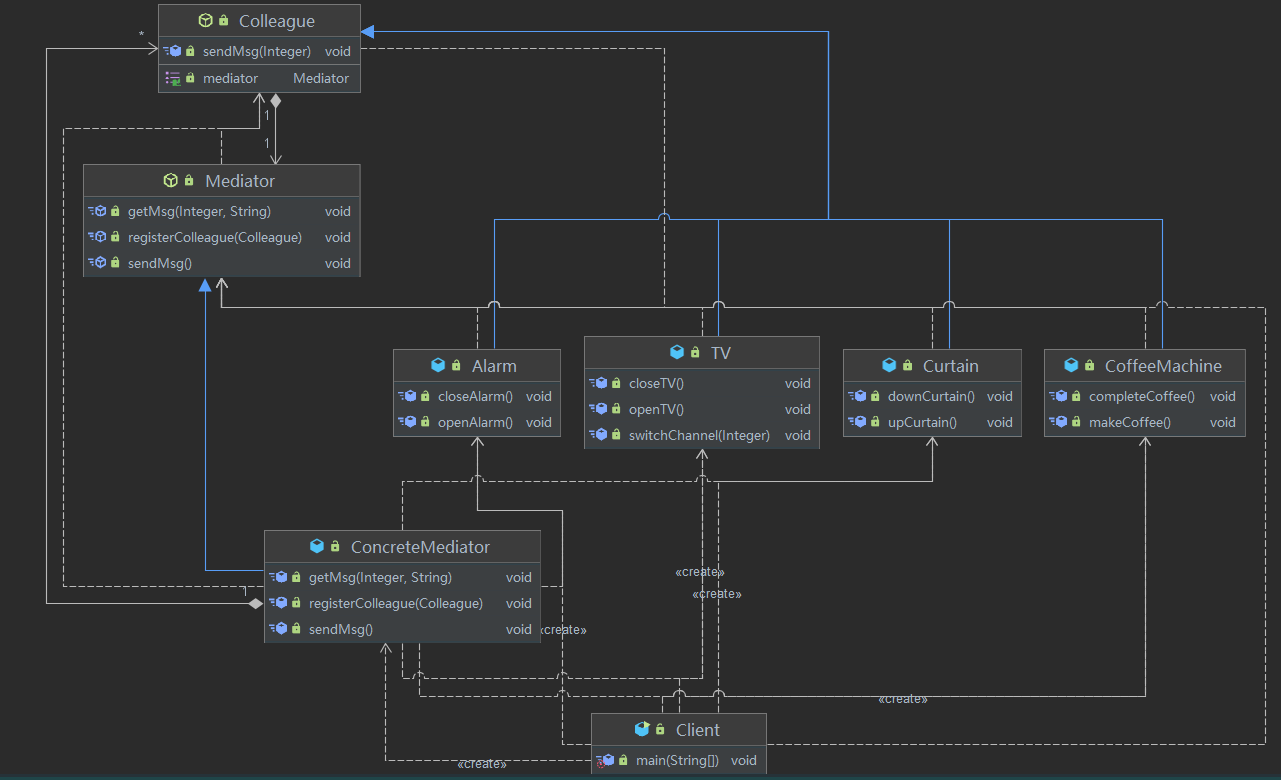
智能家庭管理操作流程
- 1)创建
ConcreMediator对象 - 2)创建各个同事类对象,比如:
Alarm、CoffeeMachine、TV… - 3)在创建同事类对象时,直接通过构造器加入到
colleagueMap - 4)同事类对象可以调用
sendMessage,最终会去调用ConcreteMediator的getMessage方法 - 5)
getMessage会根据接收到的同事对象发出的消息,来协调调用其它的同事对象,完成任务 - 6)可以看到
getMessage是核心方法,完成相应任务
核心代码
抽象中介者
public abstract class Mediator {public abstract void registerColleague(Colleague colleague);public abstract void getMsg(Integer state, String name);public abstract void sendMsg();}
抽象同事类
public abstract class Colleague {private Mediator mediator;public Colleague(Mediator mediator) {this.mediator = mediator;}public Mediator getMediator() {return this.mediator;}public void sendMsg(Integer state) {this.getMediator().getMsg(state, this.getClass().getSimpleName());}}
具体同事类
/*** 闹钟*/public class Alarm extends Colleague {public Alarm(Mediator mediator) {super(mediator);this.getMediator().registerColleague(this);}/*** 闹铃响起*/public void openAlarm() {System.out.println(">>>闹铃响起");try {//模拟闹铃耗时Thread.sleep(3000);} catch (InterruptedException e) {e.printStackTrace();}sendMsg(1);}/*** 闹铃关闭*/public void closeAlarm() {System.out.println(">>>闹铃关闭");sendMsg(0);}}/*** 咖啡机*/public class CoffeeMachine extends Colleague {public CoffeeMachine(Mediator mediator) {super(mediator);this.getMediator().registerColleague(this);}/*** 煮咖啡*/public void makeCoffee() {System.out.println(">>>煮咖啡中...");sendMsg(0);try {//模拟煮咖啡耗时Thread.sleep(3000);} catch (InterruptedException e) {e.printStackTrace();}}/*** 煮咖啡完毕*/public void completeCoffee() {System.out.println(">>>咖啡已煮好");sendMsg(1);}}/*** 窗帘*/public class Curtain extends Colleague {public Curtain(Mediator mediator) {super(mediator);this.getMediator().registerColleague(this);}/*** 拉起窗帘*/public void upCurtain() {System.out.println(">>>拉起窗帘...");sendMsg(1);try {//模拟拉起窗帘耗时Thread.sleep(3000);} catch (InterruptedException e) {e.printStackTrace();}}/*** 拉下窗帘*/public void downCurtain() {System.out.println(">>>拉下窗帘...");sendMsg(0);try {//模拟拉下窗帘耗时Thread.sleep(3000);} catch (InterruptedException e) {e.printStackTrace();}}}/*** 电视机*/public class TV extends Colleague {public TV(Mediator mediator) {super(mediator);this.getMediator().registerColleague(this);}/*** 打开电视*/public void openTV() {System.out.println(">>>打开电视...");sendMsg(1);}/*** 关闭电视*/public void closeTV() {System.out.println(">>>关闭电视...");sendMsg(0);}/*** 切换频道*/public void switchChannel(Integer state) {System.out.println(">>>切换频道:" + state);sendMsg(state);try {//模拟看电视耗时Thread.sleep(3000);} catch (InterruptedException e) {e.printStackTrace();}}}
具体中介者
public class ConcreteMediator extends Mediator {private Map<String, Colleague> colleagueMap;public ConcreteMediator() {this.colleagueMap = new HashMap<>();}@Overridepublic void registerColleague(Colleague colleague) {colleagueMap.put(colleague.getClass().getSimpleName(), colleague);}@Overridepublic void getMsg(Integer state, String name) {Colleague colleague = colleagueMap.get(name);if (colleague instanceof Alarm) {dealAlarm(state);} else if (colleague instanceof CoffeeMachine) {dealCoffeeMachine(state);} else if (colleague instanceof Curtain) {dealCurtain(state);} else if (colleague instanceof TV) {dealTV(state);}}/*** 闹铃响起后操作** @param state*/private void dealAlarm(Integer state) {if (Integer.valueOf(1).equals(state)) {((Alarm) colleagueMap.get(Alarm.class.getSimpleName())).closeAlarm();((CoffeeMachine) colleagueMap.get(CoffeeMachine.class.getSimpleName())).makeCoffee();}}/*** 咖啡机煮咖啡完毕后操作** @param state*/private void dealCoffeeMachine(Integer state) {if (Integer.valueOf(1).equals(state)) {((Curtain) colleagueMap.get(Curtain.class.getSimpleName())).downCurtain();}}/*** 窗帘落下后操作** @param state*/private void dealCurtain(Integer state) {if (Integer.valueOf(0).equals(state)) {TV tv = (TV) colleagueMap.get(TV.class.getSimpleName());tv.openTV();tv.switchChannel(101);}}/*** 电视关闭后操作** @param state*/private void dealTV(Integer state) {if (Integer.valueOf(0).equals(state)) {((Curtain) colleagueMap.get(Curtain.class.getSimpleName())).upCurtain();}}@Overridepublic void sendMsg() {// Do Nothing...}}
测试代码
//创建中介者Mediator mediator = new ConcreteMediator();//创建各个同事类,并加入Mediator中介者的Map对象中Alarm alarm = new Alarm(mediator);CoffeeMachine coffeeMachine = new CoffeeMachine(mediator);Curtain curtain = new Curtain(mediator);TV tv = new TV(mediator);//闹钟响起alarm.openAlarm();coffeeMachine.completeCoffee();tv.closeTV();//>>>闹铃响起//>>>闹铃关闭//>>>煮咖啡中...//>>>咖啡已煮好//>>>拉下窗帘...//>>>打开电视...//>>>切换频道:101//>>>关闭电视...//>>>拉起窗帘...
4、中介者模式的注意事项和细节
优点
- 1)多个类相互耦合,会形成网状结构,使用中介者模式将网状结构分离为星型结构,进行解耦
- 2)减少类间依赖,降低了耦合,符合迪米特原则
缺点
- 3)中介者承担了较多的责任,一旦中介者出现了问题,整个系统就会受到影响
- 4)如果设计不当,中介者对象本身变得过于复杂,这点在实际使用时,要特别注意

若有收获,就点个赞吧
0 人点赞


