226. 翻转二叉树
101. 对称二叉树
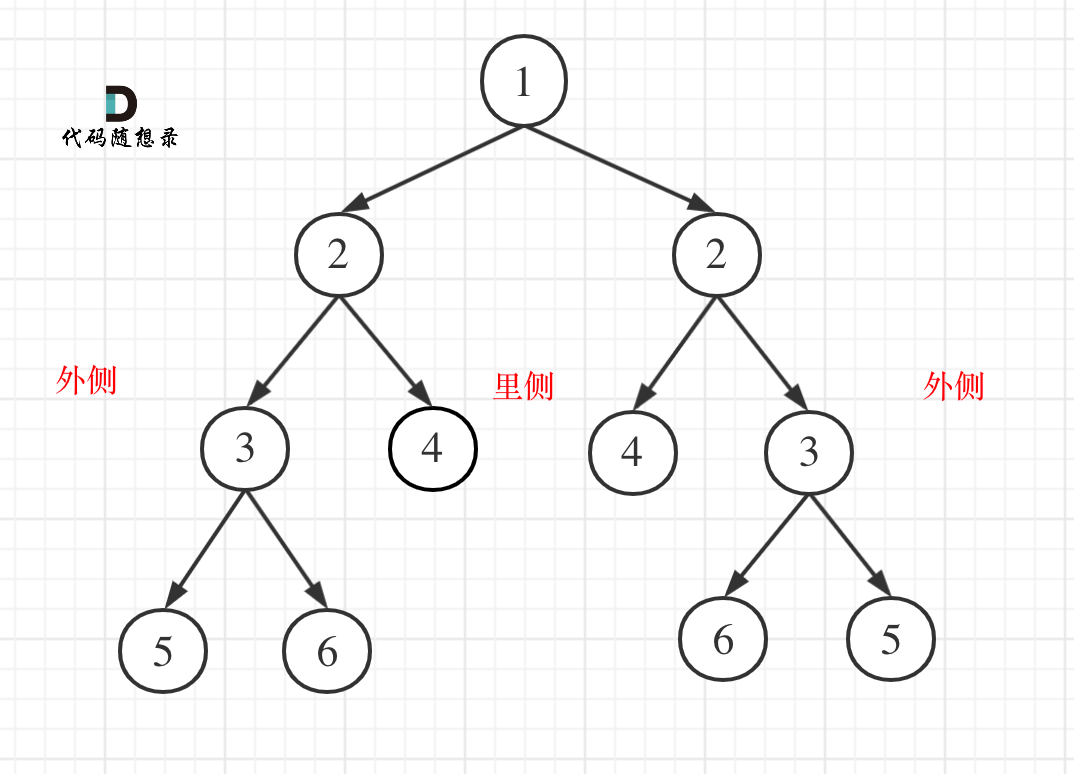
递归法
两颗树的遍历顺序分别是左右中和右左中,因此本质上是一个后序遍历
public boolean compare(TreeNode left, TreeNode right){if (left == null && right == null) return true;else if (left == null && right != null) return false;else if (left != null && right == null) return false;else if (left.val != right.val) return false;//比较外侧boolean outside = compare(left.left, right.right);//比较内侧boolean inside = compare(left.right, right.left);return outside && inside;}
迭代法
使用双端队列或者普通队列皆可
public boolean isSymmetric(TreeNode root) {Deque<TreeNode> deque = new LinkedList<>();deque.addFirst(root.left);deque.addLast(root.right);while (!deque.isEmpty()){TreeNode left = deque.pollFirst();TreeNode right = deque.pollLast();if (left == null && right == null) continue;if (left == null && right != null) return false;if (left != null && right == null) return false;if (left.val != right.val) return false;//此时left.val == right.valdeque.offerFirst(left.left);deque.offerFirst(left.right);deque.offerLast(right.right);deque.offerLast(right.left);}return true;}
104. 二叉树的最大深度
递归法
最大深度为根节点到最远叶子节点的最长路径上的节点数
迭代法用层序遍历,递归法用后序遍历,主要学习递归法,分别求取左右子树的最大深度,再加一即可
    public int maxdepth(treenode root) {
        if (root == null) {
            return 0;
        }
        int leftdepth = maxdepth(root.left);
        int rightdepth = maxdepth(root.right);
        return math.max(leftdepth, rightdepth) + 1;
    }
迭代法
    public int maxDepth(TreeNode root) {
        if (root == null){
            return 0;
        }
        Queue<TreeNode> queue = new LinkedList<>();
        queue.offer(root);
        int depth = 0;
        while (!queue.isEmpty()){
            int len = queue.size();
            depth++;
            while(len-- > 0){
                TreeNode node = queue.poll();
                if (node.left != null){
                    queue.offer(node.left);
                }
                if (node.right != null){
                    queue.offer(node.right);
                }
            }
        }
        return depth;
    }
111. 二叉树的最小深度
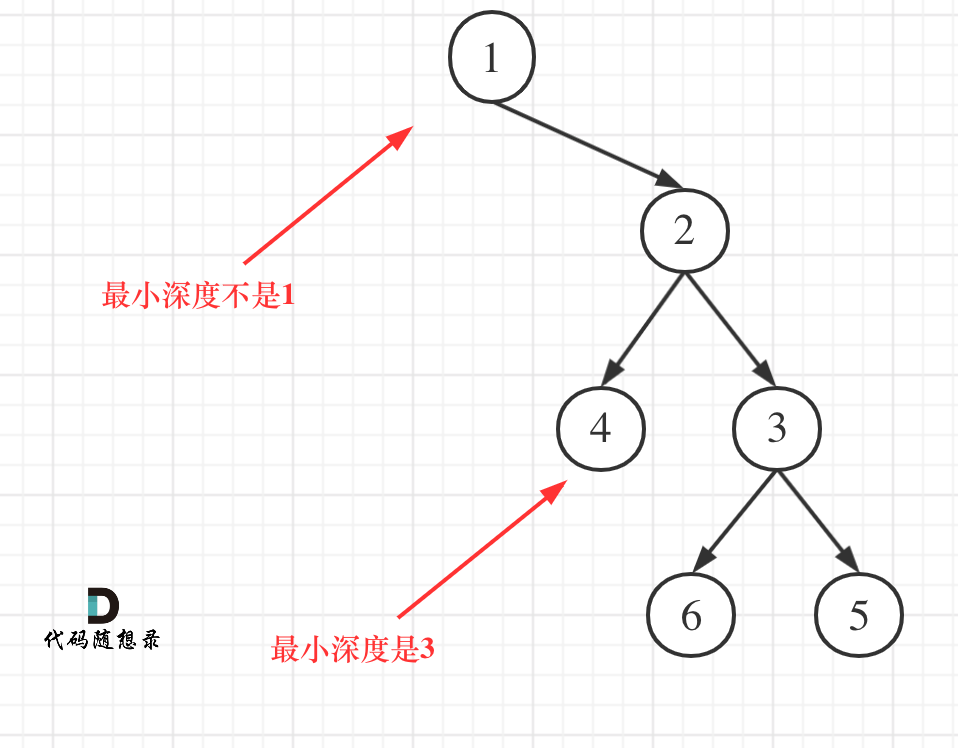
最小深度是从根节点到最近叶子节点的最短路径上的节点数量
- 个人思路:使用层序遍历,如果当层结点小于当层应该有的结点即2的n次方,那么该层即为最小深度。但是这样不符合最小深度的定义
- 关键在于叶子结点,得左右孩子都为空的结点才算到头
递归法
如果不加中间的判断,没有左孩子的分支会算为最短深度。
所以,如果左子树为空,右子树不为空,说明最小深度是 1 + 右子树的深度。
反之,如果右子树为空,左子树不为空,最小深度是 1 + 左子树的深度。
最后,如果左右子树都不为空,返回左右子树深度最小值 + 1 。
    public int minDepth(TreeNode root){
        if (root == null){
            return 0;
        }
        int leftDepth = minDepth(root.left);
        int rightDepth = minDepth(root.right);

        if (root.left == null) return rightDepth + 1;
        if (root.right == null) return leftDepth + 1;

        return Math.min(leftDepth, rightDepth) + 1;
    }
迭代法
    public int minDepth1(TreeNode root) {
        if (root == null){
            return 0;
        }
        Queue<TreeNode> queue = new LinkedList<>();
        queue.offer(root);
        int depth = 0;
        while (!queue.isEmpty()){
            depth ++;
            int len = queue.size();
            while(len-- > 0){
                TreeNode node = queue.poll();
                if (node.left != null){
                    queue.offer(node.left);
                }
                if (node.right != null){
                    queue.offer(node.right);
                }
                if (node.left == null && node.right == null){
                    return depth;
                }
            }
        }
        return depth;
    }
222. 完全二叉树的节点个数
递归法:左子树结点个数+右子树结点个数+当前结点(即 + 1)
    public int countNodes(TreeNode root) {
        if (root == null){
            return 0;
        }
        int leftNodes = countNodes(root.left) ;
        int rightNodes = countNodes(root.right);
        return leftNodes+rightNodes + 1;
    }
110. 平衡二叉树
首先明确深度和高度的定义,详见二叉树基础
❌自顶向下的递归
类似前序遍历,即对于当前遍历到的节点,首先计算左右子树的高度,如果左右子树的高度差是否不超过 1,再分别递归地遍历左右子节点,并判断左子树和右子树是否平衡。这是一个自顶向下的递归的过程。也是我的思路,但是这种方法,在同一个节点处,height方法会被重复调用,递归套递归
class Solution {
    public boolean isBalanced(TreeNode root) {
        if (root == null){
            return true;
        }
        int leftDepth = getHeight(root.left);
        int rightDepth = getHeight(root.right);
        if (Math.abs(leftDepth - rightDepth) > 1){
            return false;
        }
        return isBalanced(root.left) && isBalanced(root.right);
    }

    public int getHeight(TreeNode root) {
        if (root == null) {
            return 0;
        }
        return Math.max(getHeight(root.left), getHeight(root.right)) + 1;
    }
}
🌟自底向上的递归
类似后序遍历,对于当前遍历到的节点,先递归地判断其左右子树是否平衡,再判断以当前节点为根的子树是否平衡。如果一棵子树是平衡的,则返回其高度(高度一定是非负整数),否则返回 -1−1。如果存在一棵子树不平衡,则整个二叉树一定不平衡。
class Solution {
    public boolean isBalanced(TreeNode root) {
        return getHeight(root) > 0;
    }

    public int getHeight(TreeNode root) {
        if (root == null) {
            return 0;
        }
        int leftHeight = getHeight(node.left);
        if(leftHeight == -1)
            return -1;
        int rightHeight = getHeight(node.right);
        if(rightHeight == -1)
           return -1;

        int result;
        if(Math.abs(leftHeight - rightHeight) > 1){
            result = -1;
        }else {
               result = Math.max(leftHeight, rightHeight) + 1;
        }
        return result;
    }
}
257. 二叉树的所有路径
从根节点到子结点—>前序遍历,所有路径—>回溯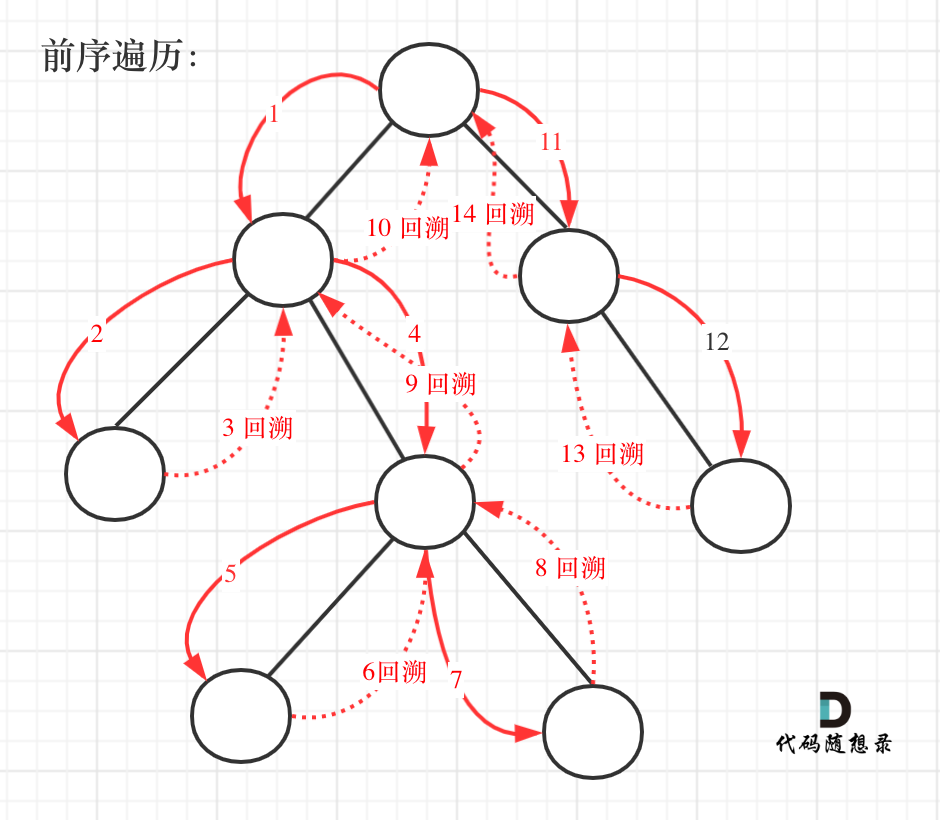
递归法
class Solution {
    public List<String> binaryTreePaths(TreeNode root) {
        List<String> res = new ArrayList<>();
        List<Integer> paths = new ArrayList<>();
        if (root == null){
            return res;
        }
        traversal(root, res, paths);
        return res;
    }

    public void traversal(TreeNode root, List<String> res, List<Integer> paths){
        paths.add(root.val);
        if (root.left == null && root.right == null){
            //到达叶子节点,一条路到底了,递归终止条件
            //开始输出这条路径
            StringBuilder sb = new StringBuilder();
            for (int i = 0; i < paths.size() - 1; ++i){
                sb.append(paths.get(i)).append("->");
            }
            sb.append(paths.get(paths.size() - 1)); //多加一个->再delete是不行的,因为只会删一个字符
            res.add(sb.toString());
            return ;
        }
        if (root.left != null){
            traversal(root.left, res, paths); //做出选择
            paths.remove(paths.size() - 1); //撤销选择
        }
        if (root.right != null){
            traversal(root.right, res, paths);
            paths.remove(paths.size() - 1);
        }
    }
}
迭代法
class Solution {
    /**
     * 迭代法
     */
    public List<String> binaryTreePaths(TreeNode root) {
        List<String> result = new ArrayList<>();
        if (root == null)
            return result;
        Stack<Object> stack = new Stack<>();
        // 节点和路径同时入栈
        stack.push(root);
        stack.push(root.val + "");
        while (!stack.isEmpty()) {
            // 节点和路径同时出栈
            String path = (String) stack.pop();
            TreeNode node = (TreeNode) stack.pop();
            // 若找到叶子节点
            if (node.left == null && node.right == null) {
                result.add(path);
            }
            //右子节点不为空
            if (node.right != null) {
                stack.push(node.right);
                stack.push(path + "->" + node.right.val);
            }
            //左子节点不为空
            if (node.left != null) {
                stack.push(node.left);
                stack.push(path + "->" + node.left.val);
            }
        }
        return result;
    }
}
404. 左叶子之和
「如果左节点不为空,且左节点没有左右孩子,那么这个节点的左节点就是左叶子」
递归法
    public int sumOfLeftLeaves(TreeNode root) {
        if(root == null){
            return 0;
        }
        int left = sumOfLeftLeaves(root.left);
        int right = sumOfLeftLeaves(root.right);

        int mid = 0;
        if(root.left != null && root.left.left == null && root.left.right == null){
            mid = root.left.val;
        }
        return left + right + mid;
    }
迭代法
    public int sumOfLeftLeaves(TreeNode root) {
        if (root == null) return 0;
        Stack<TreeNode> stack = new Stack<> ();
        stack.add(root);
        int result = 0;
        while (!stack.isEmpty()) {
            TreeNode node = stack.pop();
            if (node.left != null && node.left.left == null && node.left.right == null) {
                result += node.left.val;
            }
            if (node.right != null) stack.add(node.right);
            if (node.left != null) stack.add(node.left);
        }
        return result;
    }
513. 找树左下角的值
递归法
    int maxDepth = -1;
    int maxDepthLeft = 0;
    public int findBottomLeftValue(TreeNode root){
        traversal(root, 0);
        return maxDepthLeft;
    }

    public void traversal(TreeNode root, int leftDepth){
        if (root.left == null && root.right == null) {
            if (leftDepth > maxDepth) {
                maxDepth = leftDepth;
                maxDepthLeft = root.val;
            }
            return ;
        }
        if (root.left != null) {
            leftDepth++;
            traversal(root.left, leftDepth);
            leftDepth--;
        }
        if (root.right != null) {
            traversal(root.right, leftDepth + 1);//隐藏着回溯
        }
    }
迭代法
    public int findBottomLeftValue(TreeNode root) {
        int res = 0;
        ArrayDeque<TreeNode> dq = new ArrayDeque<>();
        dq.addLast(root);
        while(!dq.isEmpty()){
            int len = dq.size();
            res = dq.peekFirst().val;
            while(len-- > 0){
                TreeNode node = dq.pollFirst();
                if(node.left != null){
                    dq.addLast(node.left);
                }
                if(node.right != null){
                    dq.addLast(node.right);
                }
            }
        }
        return res;
    }
112. 路径总和
递归法
- 使用count表示还需要的目标值
递归的返回值是boolean
class Solution {
  public boolean hasPathSum(TreeNode root, int targetSum) {
      if (root == null) {
          return false;
      }
      return traversal(root, targetSum - root.val);
  }

  public boolean traversal(TreeNode root, int count) {
      if (root.left == null && root.right == null) {
          return count == 0;
      }
      if (root.left != null) {
          if (traversal(root.left, count - root.left.val)) {
              return true;
          }
      }
      if (root.right != null) {
          if (traversal(root.right, count - root.right.val)){
              return true;
          }
      }
      return false;
  }
}
迭代法
  public boolean hasPathSum(TreeNode root, int targetSum) {
      if (root == null) {
          return false;
      }
      ArrayDeque<TreeNode> stack1 = new ArrayDeque<>();
      ArrayDeque<Integer> stack2 = new ArrayDeque<>();
      stack1.addLast(root);
      stack2.addLast(root.val);
      while (!stack1.isEmpty()) {
          int size = stack1.size();
          while (size-- > 0) {
              TreeNode node = stack1.pollLast();
              int sum = stack2.pollLast();
              if (node.left == null && node.right == null && sum == targetSum) {
                  return true;
              }
              if (node.right != null) {
                  stack1.addLast(node.right);
                  stack2.addLast(sum + node.right.val);
              }
              if (node.left != null) {
                  stack1.addLast(node.left);
                  stack2.addLast(sum + node.left.val);
              }
          }
      }
      return false;
  }
113. 路径总和 II
递归法
class Solution {
  List<List<Integer>> res = new ArrayList<>();
  Deque<Integer> path = new LinkedList<>();
  public List<List<Integer>> pathSum(TreeNode root, int targetSum) {
      if (root == null) {
          return res;
      }
      path.add(root.val);
      traversal(root, targetSum - root.val);
      return res;
  }

  public void traversal(TreeNode root, int count) {
      if (root.left == null && root.right == null) {
          if (count == 0) {
              res.add(new ArrayList<>(path));
          }
          return ;
      }
      if (root.left != null) {
          path.add(root.left.val);
          count -= root.left.val;
          traversal(root.left, count);
          count += root.left.val;
          path.removeLast();
      }
      if (root.right != null) {
          path.add(root.right.val);
          count -= root.right.val;
          traversal(root.right, count);
          count += root.right.val;
          path.removeLast();
      }
  }
}

若有收获,就点个赞吧
0 人点赞


