环境和版本
- Mac M1
- IDEA 2021
-
简介
与HashMap相比,TreeMap是一个可以比较元素大小的Map集合。会对传入的Key进行排序。
- 不同于HashMap的哈希映射,TreeMap底层实现了树结构,其就是红黑树。也即是说,整个TreeMap就是一颗红黑树
我们在讲解HashMap之前,先学习的手写红黑树,哪个红黑树实现没有删除方法,但是TreeMap就是一个完整的红黑树操作了
前置知识
红黑树的5个性质
性质1:每个节点要么是红色,要么是黑色。
- 性质2:根节点是黑色
- 性质3:每个叶子节点是黑色
- 性质4:每个红色节点的子节点一定是黑色
- 性质5:任意一个节点到每个子节点的路径都包含数量相同的黑节点,俗称黑高
从性质5可以推出:如果一个节点存在黑子节点,那么该节点肯定有两个子节点
红黑树的左旋和右旋
-
属性
```java // 比较器 private final Comparator<? super K> comparator;
// 根节点
private transient Entry
// 元素大小 private transient int size = 0;
// 修改次数 private transient int modCount = 0;
<a name="J9QsG"></a># 构造函数```javapublic TreeMap() {comparator = null;}public TreeMap(Comparator<? super K> comparator) {this.comparator = comparator;}public TreeMap(Map<? extends K, ? extends V> m) {comparator = null;putAll(m);}public TreeMap(SortedMap<K, ? extends V> m) {comparator = m.comparator();try {buildFromSorted(m.size(), m.entrySet().iterator(), null, null);} catch (java.io.IOException cannotHappen) {} catch (ClassNotFoundException cannotHappen) {}}
buildFromSorted
private void buildFromSorted(int size, Iterator<?> it,java.io.ObjectInputStream str,V defaultVal)throws java.io.IOException, ClassNotFoundException {// 设置key-value键值对的数量this.size = size;// computeRedLevel 计算树的高度// 构建红黑树,返回根节点root = buildFromSorted(0, 0, size-1, computeRedLevel(size),it, str, defaultVal);}// 计算高度private static int computeRedLevel(int sz) {int level = 0;for (int m = sz - 1; m >= 0; m = m / 2 - 1)level++;return level;}// buildFromSorted//private final Entry<K,V> buildFromSorted(int level, int lo, int hi,int redLevel,Iterator<?> it,java.io.ObjectInputStream str,V defaultVal)throws java.io.IOException, ClassNotFoundException {// 递归结束if (hi < lo) return null;// 计算中间值int mid = (lo + hi) >>> 1;// 创建左子树Entry<K,V> left = null;if (lo < mid)// 递归左子树left = buildFromSorted(level+1, lo, mid - 1, redLevel,it, str, defaultVal);// extract key and/or value from iterator or stream// 获得key-value键值对K key;V value;// 使用it迭代器,获取下一个值if (it != null) {if (defaultVal==null) {// 下一个 entry 节点Map.Entry<?,?> entry = (Map.Entry<?,?>)it.next();key = (K)entry.getKey();value = (V)entry.getValue();} else {key = (K)it.next();value = defaultVal;}} else { // use stream// 处理Stream 流的情况key = (K) str.readObject();value = (defaultVal != null ? defaultVal : (V) str.readObject());}// 创建中间节点Entry<K,V> middle = new Entry<>(key, value, null);// color nodes in non-full bottommost level red// 如果到树的最大高度,则设置为红节点if (level == redLevel)middle.color = RED;// 如果左子树非空,则进行设置if (left != null) {// 当前节点,设置左子树middle.left = left;// 左子树设置父亲节点left.parent = middle;}// 创建右节点if (mid < hi) {// 递归右子树Entry<K,V> right = buildFromSorted(level+1, mid+1, hi, redLevel,it, str, defaultVal);// 当前节点设置右子树middle.right = right;// 设置右子树的父亲节点right.parent = middle;}return middle;}
putAll方法
public void putAll(Map<? extends K, ? extends V> map) {int mapSize = map.size();// 满足如下条件 调用 buildFromSorted 处理// TreeMap 大小为0// mapSize 非0// 是 SortedMapif (size==0 && mapSize!=0 && map instanceof SortedMap) {Comparator<?> c = ((SortedMap<?,?>)map).comparator();if (c == comparator || (c != null && c.equals(comparator))) {++modCount;try {// 顺序插入即可buildFromSorted(mapSize, map.entrySet().iterator(),null, null);} catch (java.io.IOException cannotHappen) {} catch (ClassNotFoundException cannotHappen) {}return;}}// 直接遍历添加super.putAll(map);}
Entry节点
private static final boolean RED = false;private static final boolean BLACK = true;static final class Entry<K,V> implements Map.Entry<K,V> {// 节点 kK key;// 节点 vV value;// 左孩子节点Entry<K,V> left;// 右孩子节点Entry<K,V> right;// 父节点Entry<K,V> parent;// 颜色boolean color = BLACK;/*** Make a new cell with given key, value, and parent, and with* {@code null} child links, and BLACK color.*/Entry(K key, V value, Entry<K,V> parent) {this.key = key;this.value = value;this.parent = parent;}/*** Returns the key.** @return the key*/public K getKey() {return key;}/*** Returns the value associated with the key.** @return the value associated with the key*/public V getValue() {return value;}/*** Replaces the value currently associated with the key with the given* value.** @return the value associated with the key before this method was* called*/public V setValue(V value) {V oldValue = this.value;this.value = value;return oldValue;}public boolean equals(Object o) {if (!(o instanceof Map.Entry))return false;Map.Entry<?,?> e = (Map.Entry<?,?>)o;return valEquals(key,e.getKey()) && valEquals(value,e.getValue());}public int hashCode() {int keyHash = (key==null ? 0 : key.hashCode());int valueHash = (value==null ? 0 : value.hashCode());return keyHash ^ valueHash;}public String toString() {return key + "=" + value;}}
put方法
public V put(K key, V value) {// 根节点 赋给tEntry<K,V> t = root;// 如果没有根节点// 使用key-value创建根节点if (t == null) {// 比较compare(key, key); // type (and possibly null) check// 使用key-value创建根节点root = new Entry<>(key, value, null);size = 1;modCount++;return null;}// 遍历红黑树// key 比父节点小还是大int cmp;// 父节点Entry<K,V> parent;// split comparator and comparable paths// 比较器Comparator<? super K> cpr = comparator;if (cpr != null) {do {// 记录父节点parent = t;// 比较cmp = cpr.compare(key, t.key);// 比父节点小if (cmp < 0)// 遍历左子树t = t.left;else if (cmp > 0)// 比父节点大// 遍历右子树t = t.right;else// 等于父节点return t.setValue(value);} while (t != null);}else {// key 不能为空 因为要用到比较器if (key == null)throw new NullPointerException();@SuppressWarnings("unchecked")Comparable<? super K> k = (Comparable<? super K>) key;do {// 记录父节点parent = t;// 比较大小cmp = k.compareTo(t.key);// 遍历左子树if (cmp < 0)t = t.left;else if (cmp > 0)// 遍历右子树t = t.right;elsereturn t.setValue(value);} while (t != null);}// 设置新的 EntryEntry<K,V> e = new Entry<>(key, value, parent);// 如果 cmp 小于0// 设置到父节点的左孩子if (cmp < 0)parent.left = e;else// 设置到父节点的右节点parent.right = e;// 插入后进行自平衡fixAfterInsertion(e);size++;modCount++;return null;}
fixAfterInsertion自平衡 TODO
- 有点懵逼,等我手写红黑树之后再来啃
或者参见底部参考文章 ```java private void fixAfterInsertion(Entry
while (x != null && x != root && x.parent.color == RED) {
  if (parentOf(x) == leftOf(parentOf(parentOf(x)))) {
      Entry<K,V> y = rightOf(parentOf(parentOf(x)));
      if (colorOf(y) == RED) {
          setColor(parentOf(x), BLACK);
          setColor(y, BLACK);
          setColor(parentOf(parentOf(x)), RED);
          x = parentOf(parentOf(x));
      } else {
          if (x == rightOf(parentOf(x))) {
              x = parentOf(x);
              rotateLeft(x);
          }
          setColor(parentOf(x), BLACK);
          setColor(parentOf(parentOf(x)), RED);
          rotateRight(parentOf(parentOf(x)));
      }
  } else {
      Entry<K,V> y = leftOf(parentOf(parentOf(x)));
      if (colorOf(y) == RED) {
          setColor(parentOf(x), BLACK);
          setColor(y, BLACK);
          setColor(parentOf(parentOf(x)), RED);
          x = parentOf(parentOf(x));
      } else {
          if (x == leftOf(parentOf(x))) {
              x = parentOf(x);
              rotateRight(x);
          }
          setColor(parentOf(x), BLACK);
          setColor(parentOf(parentOf(x)), RED);
          rotateLeft(parentOf(parentOf(x)));
      }
  }
} root.color = BLACK; }
<a name="jwGrd"></a>
# get方法
```java
public V get(Object key) {
    // 获取 entry
    Entry<K,V> p = getEntry(key);
    return (p==null ? null : p.value);
}

final Entry<K,V> getEntry(Object key) {
    // Offload comparator-based version for sake of performance
    // 如果比较器不为空
    if (comparator != null)
        // 使用自定义的比较器
        return getEntryUsingComparator(key);
    if (key == null)
        throw new NullPointerException();
    @SuppressWarnings("unchecked")
    Comparable<? super K> k = (Comparable<? super K>) key;
    Entry<K,V> p = root;
    // 迭代
    while (p != null) {
        int cmp = k.compareTo(p.key);
        if (cmp < 0)
            p = p.left;
        else if (cmp > 0)
            p = p.right;
        else
            return p;
    }
    return null;
}
final Entry<K,V> getEntryUsingComparator(Object key) {
    @SuppressWarnings("unchecked")
    K k = (K) key;
    Comparator<? super K> cpr = comparator;
    // 迭代,二叉树插座
    if (cpr != null) {
        Entry<K,V> p = root;
        while (p != null) {
            int cmp = cpr.compare(k, p.key);
            if (cmp < 0)
                p = p.left;
            else if (cmp > 0)
                p = p.right;
            else
                return p;
        }
    }
    return null;
}
remove方法
- 删除方法比较复杂,这里会使用一棵树来进行测试
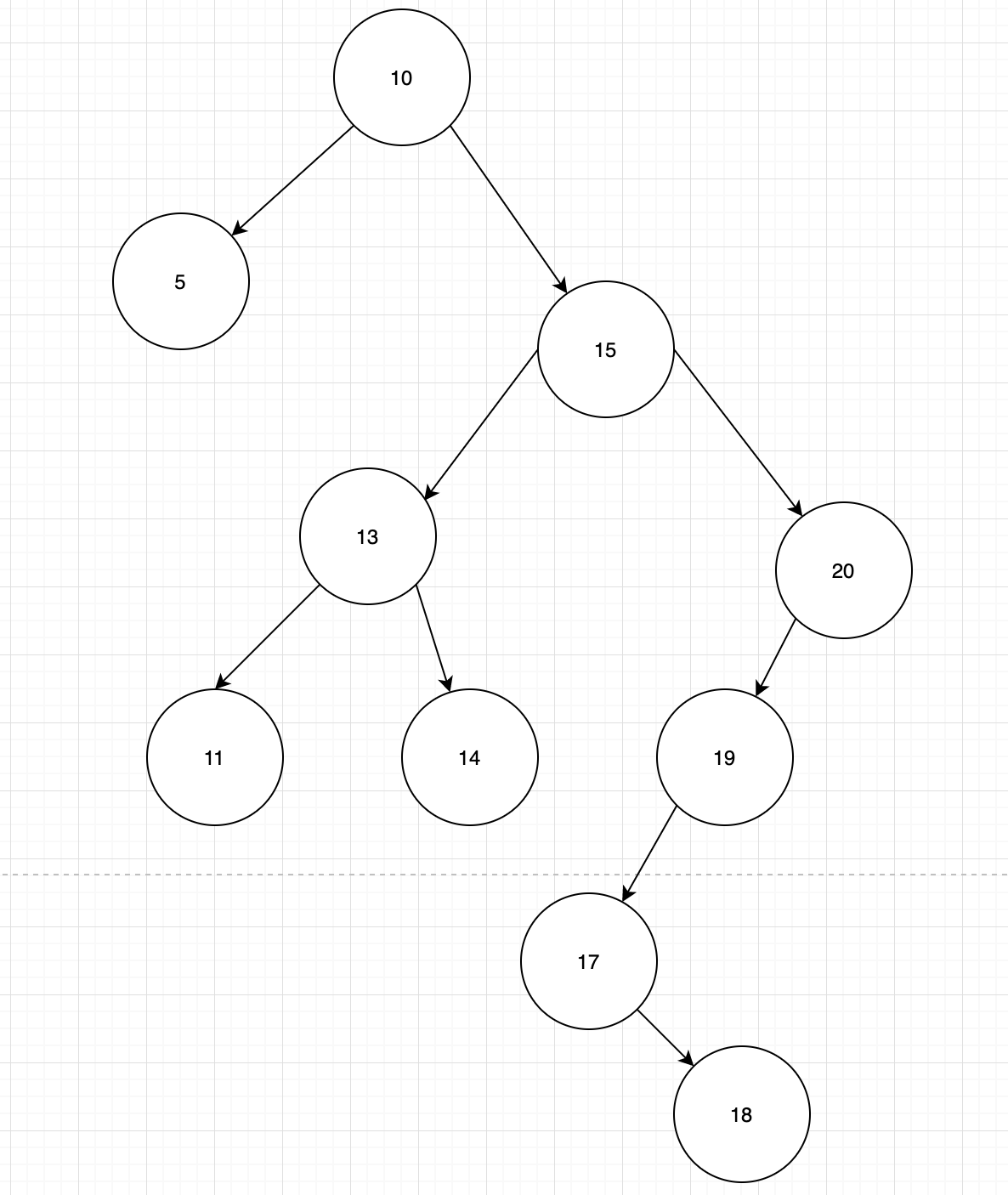
- 情况1:无子节点。直接删除父节点对其的指向即可。例如叶子节点5、11、14、18
- 情况2:只有左子节点。将删除节点的父节点,指向删除节点的左子节点。 例如说,节点 20 。可以通过将节点 15 的右子节点指向节点 19
- 情况3:只有右子节点。和情况二的处理方式一致。将删除节点的父节点,指向删除节点的右子节点
情况4:有左子节点+右子节点。这种比较复杂,因为无法使用子节点替换删除的节点。删除15为例
- 先查找15的右子树的最小值,找到节点是17
- 将将17设置到15上。因为节点17是右子树的最小值,能够满足比节点15的左子树都大,比右子树都小,这样问题就变成删除节点17
删除节点17的过程,满足情况3。将节点19的左子节点指向节点18即可。 ```java public V remove(Object key) { // 获取 entry Entry
V oldValue = p.value; deleteEntry(p); return oldValue; }
private void deleteEntry(Entry
// If strictly internal, copy successor's element to p and then make p
// point to successor.
// 要删除的节点既有左子节点也有右子节点
if (p.left != null && p.right != null) {
    // 获得右子树的最小值
    Entry<K,V> s = successor(p);
    // 修改 p 的 key-value 为 s 的 key-value 键值对
    p.key = s.key;
    p.value = s.value;
    // 设置 p 指向 s 此时,就变成删除 s 节点了。
    p = s;
} // p has 2 children

// Start fixup at replacement node, if it exists.
// 获得替换节点
Entry<K,V> replacement = (p.left != null ? p.left : p.right);

// 有子节点的情况
if (replacement != null) {
    // Link replacement to parent
    // 替换节点的父节点,指向 p 的父节点
    replacement.parent = p.parent;
    if (p.parent == null)
        // 如果 p 的父节点为空,则说明 p 是根节点,直接 root 设置为替换节点
        root = replacement;
    else if (p == p.parent.left)
        // 如果 p 是父节点的左子节点,则 p 的父子节的左子节指向替换节点
        p.parent.left  = replacement;
    else
        // 如果 p 是父节点的右子节点,则 p 的父子节的右子节指向替换节点
        p.parent.right = replacement;

    // Null out links so they are OK to use by fixAfterDeletion.
    // 置空 p 的所有指向
    p.left = p.right = p.parent = null;

    // Fix replacement
    // 如果 p 的颜色是黑色,则执行自平衡
    if (p.color == BLACK)
        fixAfterDeletion(replacement);
    //如果 p 没有父节点,说明删除的是根节点,直接置空 root 即可
} else if (p.parent == null) { // return if we are the only node.
    root = null;
    // 如果删除的没有左子树,又没有右子树
} else { //  No children. Use self as phantom replacement and unlink.
    // 如果 p 的颜色是黑色,则执行自平衡
    if (p.color == BLACK)
        fixAfterDeletion(p);
    // 删除 p 和其父节点的相互指向
    if (p.parent != null) {
        // 如果 p 是父节点的左子节点,则置空父节点的左子节点
        if (p == p.parent.left)
            p.parent.left = null;
        // 如果 p 是父节点的右子节点,则置空父节点的右子节点
        else if (p == p.parent.right)
            p.parent.right = null;
        // 置空 p 对父节点的指向
        p.parent = null;
    }
}
}
static
    // 先获得 t 的父节点
    Entry<K,V> p = t.parent;
    // 不断向上遍历父节点,直到子节点 ch 不是父节点 p 的右子节点
    Entry<K,V> ch = t;
    // 继续遍历的条件,必须是子节点 ch 是父节点 p 的右子节点
    while (p != null && ch == p.right) {
        ch = p;
        p = p.parent;
    }
    return p;
}
}
<a name="KG6vT"></a>
# 查找接近的元素

- 在 NavigableMap 中,定义了四个查找接近的元素
- lowerEntry(K key) 方法,小于 key 的节点
- floorEntry(K key) 方法,小于等于 key 的节点
- higherEntry(K key) 方法,大于 key 的节点
- ceilingEntry(K key) 方法,大于等于 key 的节点
```java
// 是加强版的二叉树查找,在找不到 key 的情况下,找到比 key 大且最接近的节点
public Map.Entry<K,V> ceilingEntry(K key) {
    return exportEntry(getCeilingEntry(key));
}

static <K,V> Map.Entry<K,V> exportEntry(TreeMap.Entry<K,V> e) {
    return (e == null) ? null :
    new AbstractMap.SimpleImmutableEntry<>(e);
}

final Entry<K,V> getCeilingEntry(K key) {
    Entry<K,V> p = root;
    // 循环二叉查找遍历红黑树
    while (p != null) {
        int cmp = compare(key, p.key);
        // 当前节点比 key 大,则遍历左子树,这样缩小节点的值
        if (cmp < 0) {
            // 如果有左子树,则遍历左子树
            if (p.left != null)
                p = p.left;
            else
                // 直接返回该节点
                return p;
        } else if (cmp > 0) {
            // 当前节点比 key 小,则遍历右子树,这样放大节点的值
            if (p.right != null) {
                // 如果有右子树,则遍历右子树
                p = p.right;
            } else {
                Entry<K,V> parent = p.parent;
                Entry<K,V> ch = p;
                // 找到当前的后继节点
                while (parent != null && ch == parent.right) {
                    ch = parent;
                    parent = parent.parent;
                }
                return parent;
            }
        } else
            // 相等,直接返回 p
            return p;
    }
    return null;
}


public Map.Entry<K,V> higherEntry(K key) {
    return exportEntry(getHigherEntry(key));
}
final Entry<K,V> getHigherEntry(K key) {
    Entry<K,V> p = root;
    // 一样是循环,和上面的类似
    while (p != null) {
        int cmp = compare(key, p.key);
        if (cmp < 0) {
            if (p.left != null)
                p = p.left;
            else
                return p;
        } else {
            if (p.right != null) {
                p = p.right;
            } else {
                Entry<K,V> parent = p.parent;
                Entry<K,V> ch = p;
                while (parent != null && ch == parent.right) {
                    ch = parent;
                    parent = parent.parent;
                }
                return parent;
            }
        }
        // 此处,相等的情况下,不返回
    }
    return null;
}

public Map.Entry<K,V> ceilingEntry(K key) {
    return exportEntry(getCeilingEntry(key));
}

final Entry<K,V> getCeilingEntry(K key) {
    Entry<K,V> p = root;
    while (p != null) {
        int cmp = compare(key, p.key);
        if (cmp < 0) {
            if (p.left != null)
                p = p.left;
            else
                return p;
        } else if (cmp > 0) {
            if (p.right != null) {
                p = p.right;
            } else {
                Entry<K,V> parent = p.parent;
                Entry<K,V> ch = p;
                while (parent != null && ch == parent.right) {
                    ch = parent;
                    parent = parent.parent;
                }
                return parent;
            }
        } else
            return p;
    }
    return null;
}

final Entry<K,V> getLowerEntry(K key) {
    Entry<K,V> p = root;
    while (p != null) {
        int cmp = compare(key, p.key);
        if (cmp > 0) {
            if (p.right != null)
                p = p.right;
            else
                return p;
        } else {
            if (p.left != null) {
                p = p.left;
            } else {
                Entry<K,V> parent = p.parent;
                Entry<K,V> ch = p;
                while (parent != null && ch == parent.left) {
                    ch = parent;
                    parent = parent.parent;
                }
                return parent;
            }
        }
    }
    return null;
}
// 所有查找的思路一致,就不写注释了


// 在一些场景下,我们并不需要返回 Entry 节点,只需要返回符合条件的 key 即可。所以有了对应的如下四个方法
public K lowerKey(K key) {
    return keyOrNull(getLowerEntry(key));
}

public K floorKey(K key) {
    return keyOrNull(getFloorEntry(key));
}

public K ceilingKey(K key) {
    return keyOrNull(getCeilingEntry(key));
}

public K higherKey(K key) {
    return keyOrNull(getHigherEntry(key));
}

static <K,V> K keyOrNull(TreeMap.Entry<K,V> e) {
    return (e == null) ? null : e.key;
}
获得首尾的元素
// firstEntry
public Map.Entry<K,V> firstEntry() {
    return exportEntry(getFirstEntry());
}

final Entry<K,V> getFirstEntry() {
    Entry<K,V> p = root;
    // 循环,不断遍历到左子节点,直到没有左子节点
    if (p != null)
        while (p.left != null)
            p = p.left;
    return p;
}

public Map.Entry<K,V> pollFirstEntry() {
    //  获得首个 Entry 节点
    Entry<K,V> p = getFirstEntry();
    Map.Entry<K,V> result = exportEntry(p);
    if (p != null)
        // 如果存在,则进行删除。
        deleteEntry(p);
    return result;
}

public K firstKey() {
    return key(getFirstEntry());
}

static <K> K key(Entry<K,?> e) {
    if (e==null)
        throw new NoSuchElementException();
    return e.key;
}
public Map.Entry<K,V> lastEntry() {
    return exportEntry(getLastEntry());
}

// 一直遍历右子树
final Entry<K,V> getLastEntry() {
    Entry<K,V> p = root;
    if (p != null)
        while (p.right != null)
            p = p.right;
    return p;
}

// 移除最后的元素
public Map.Entry<K,V> pollLastEntry() {
    Entry<K,V> p = getLastEntry();
    Map.Entry<K,V> result = exportEntry(p);
    if (p != null)
        deleteEntry(p);
    return result;
}
containsValue方法
public boolean containsValue(Object value) {
    // // 获得首个 Entry 节点
    for (Entry<K,V> e = getFirstEntry();
         // 遍历到没有下一个节点
         e != null;
         // 通过中序遍历,获得下一个节点
         e = successor(e))
        // 判断值是否相等
        if (valEquals(value, e.value))
            return true;
    return false;
}
clear方法
public void clear() {
    modCount++;
    size = 0;
    root = null;
}
获取迭代器
- 好多好多迭代器
```java
Iterator
keyIterator() { return new KeyIterator(getFirstEntry()); // 获得的是首个元素 }
Iterator
abstract class PrivateEntryIterator
/**
 * 下一个节点
 */
Entry<K,V> next;
/**
 * 最后返回的节点
 */
Entry<K,V> lastReturned;
/**
 * 当前的修改次数
 */
int expectedModCount;

PrivateEntryIterator(Entry<K,V> first) {
    expectedModCount = modCount;
    lastReturned = null;
    next = first;
}

public final boolean hasNext() {
    return next != null;
}

final Entry<K,V> nextEntry() { // 获得下一个 Entry 节点
    // 记录当前节点
    Entry<K,V> e = next;
    // 如果没有下一个,抛出 NoSuchElementException 异常
    if (e == null)
        throw new NoSuchElementException();
    // 如果发生了修改,抛出 ConcurrentModificationException 异常
    if (modCount != expectedModCount)
        throw new ConcurrentModificationException();
    // 获得 e 的后继节点,赋值给 next
    next = successor(e);
    // 记录最后返回的节点
    lastReturned = e;
    // 返回当前节点
    return e;
}

final Entry<K,V> prevEntry() { // 获得前一个 Entry 节点
    // 记录当前节点
    Entry<K,V> e = next;
    // 如果没有下一个,抛出 NoSuchElementException 异常
    if (e == null)
        throw new NoSuchElementException();
    // 如果发生了修改,抛出 ConcurrentModificationException 异常
    if (modCount != expectedModCount)
        throw new ConcurrentModificationException();
    // 获得 e 的前继节点,赋值给 next
    next = predecessor(e);
    // 记录最后返回的节点
    lastReturned = e;
    // 返回当前节点
    return e;
}

public void remove() { // 删除节点
    // 如果当前返回的节点不存在,则抛出 IllegalStateException 异常
    if (lastReturned == null)
        throw new IllegalStateException();
    // 如果发生了修改,抛出 ConcurrentModificationException 异常
    if (modCount != expectedModCount)
        throw new ConcurrentModificationException();
    // deleted entries are replaced by their successors
    // 在 lastReturned 左右节点都存在的时候,实际在 deleteEntry 方法中,是将后继节点替换到 lastReturned 中
    // 因此,next 需要指向 lastReturned
    if (lastReturned.left != null && lastReturned.right != null)
        next = lastReturned;
    // 删除节点
    deleteEntry(lastReturned);
    // 记录新的修改次数
    expectedModCount = modCount;
    // 置空 lastReturned
    lastReturned = null;
}
}
// 和 successor(Entry t) 方法,是一样的思路
static
// Key 正序
final class KeyIterator extends PrivateEntryIterator
KeyIterator(Entry<K,V> first) {
    super(first);
}

// 实现 next 方法,实现正序
public K next() {
    return nextEntry().key;
}
}
// Key 倒序迭代器
final class DescendingKeyIterator extends PrivateEntryIterator
DescendingKeyIterator(Entry<K,V> first) {
    super(first);
}

// 实现 next 方法,实现倒序
public K next() {
    return prevEntry().key;
}

// 重写 remove 方法,因为在 deleteEntry 方法中,在 lastReturned 左右节点都存在的时候,是将后继节点替换到 lastReturned 中。
// 而这个逻辑,对于倒序遍历,没有影响。
public void remove() {
    // 如果当前返回的节点不存在,则抛出 IllegalStateException 异常
    if (lastReturned == null)
        throw new IllegalStateException();
    // 如果发生了修改,抛出 ConcurrentModificationException 异常
    if (modCount != expectedModCount)
        throw new ConcurrentModificationException();
    // 删除节点
    deleteEntry(lastReturned);
    // 置空 lastReturned
    lastReturned = null;
    // 记录新的修改次数
    expectedModCount = modCount;
}
}
// Entry 的正序迭代器。
final class EntryIterator extends PrivateEntryIterator
EntryIterator(Entry<K,V> first) {
    super(first);
}

// 实现 next 方法,实现正序
public Map.Entry<K,V> next() {
    return nextEntry();
}
}
// value 的正序迭代器 // TreeMap.java
final class ValueIterator extends PrivateEntryIterator
ValueIterator(Entry<K,V> first) {
    super(first);
}

// 实现 next 方法,实现正序
public V next() {
    return nextEntry().value;
}
}
<a name="UOI6y"></a>
# 转换成集合
```java
// keySet

/**
 * 正序的 KeySet 缓存对象
 */
private transient KeySet<K> navigableKeySet;

public Set<K> keySet() {
    return navigableKeySet();
}

public NavigableSet<K> navigableKeySet() {
    KeySet<K> nks = navigableKeySet;
    return (nks != null) ? nks : (navigableKeySet = new KeySet<>(this));
}

/**
 * 倒序的 NavigableMap 缓存对象
 */
private transient NavigableMap<K,V> descendingMap;

public NavigableSet<K> descendingKeySet() {
    return descendingMap().navigableKeySet();
}

public NavigableMap<K, V> descendingMap() {
    NavigableMap<K, V> km = descendingMap;
    return (km != null) ? km :
    (descendingMap = new DescendingSubMap<>(this,
                                            true, null, true,
                                            true, null, true));
}

// values 方法
public Collection<V> values() {
    Collection<V> vs = values;
    if (vs == null) {
        vs = new Values();
        values = vs; // values 缓存,来自 AbstractMap 的属性
    }
    return vs;
}

// entrySet
/**
 * Entry 缓存集合
 */
private transient EntrySet entrySet;

public Set<Map.Entry<K,V>> entrySet() {
    EntrySet es = entrySet;
    return (es != null) ? es : (entrySet = new EntrySet());
}
查找范围的元素 TODO
- 自行查看源码,或者参见Java-Review中的讲解
- 平时用的很少
参考和推荐文章

若有收获,就点个赞吧
0 人点赞


