环境和版本
- Mac M1
- IDEA 2021
-
简介
众所周知,HashMap提供的访问是无序的。而在一些业务场景下,希望提供有序访问的HashMap,那么此时就有2种选择
- TreeMap:安装Key的顺序
- LinkedHashMap:按照Key的插入和访问顺序
- LinkedHashMap,在HashMap的基础上,提供了顺序访问的特性,这里的顺序包括2种
- 按照 key-value 的插入顺序进行访问。关于这一点,相信大多数人都知道
- 按照 key-value 的访问顺序进行访问。通过这个特性,我们实现基于 LRU 算法的缓存。

- LinkedHashMap实现了Map接口,即允许放入key为null的元素,也允许插入value为null的元素。从名字上可以看出该容器是linked list和HashMap的混合体,也就是说它同时满足HashMap和linked list的某些特性。可将LinkedHashMap看作采用linked list增强的HashMap。
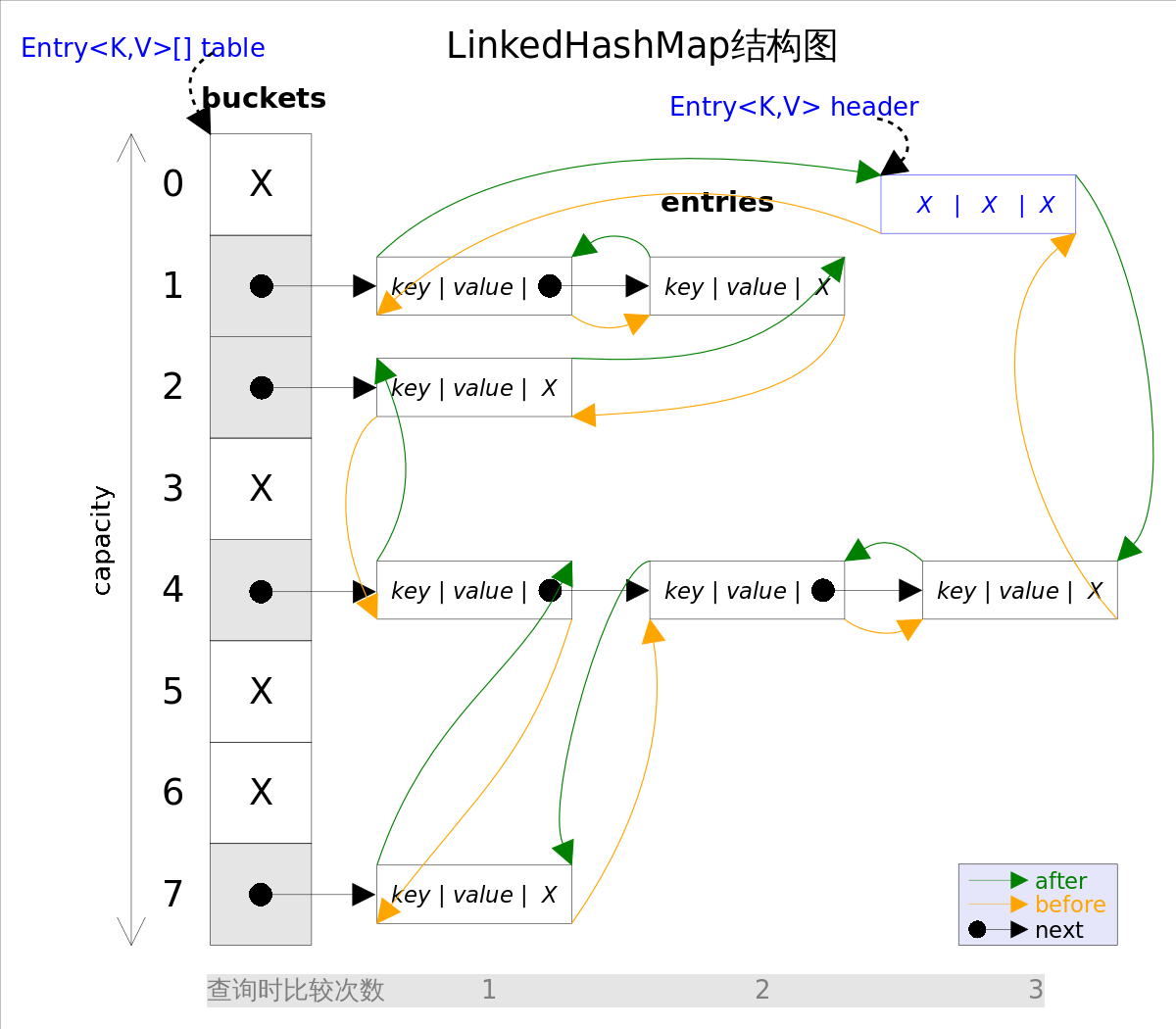
- 事实上LinkedHashMap是HashMap的直接子类,二者唯一的区别是LinkedHashMap在HashMap的基础上,采用双向链表(doubly-linked list)的形式将所有entry连接起来,这样是为保证元素的迭代顺序跟插入顺序相同。上图给出了LinkedHashMap的结构图,主体部分跟HashMap完全一样,多了header指向双向链表的头部(是一个哑元),该双向链表的迭代顺序就是entry的插入顺序
- 除了可以保迭代历顺序,这种结构还有一个好处 : 迭代LinkedHashMap时不需要像HashMap那样遍历整个table,而只需要直接遍历header指向的双向链表即可,也就是说LinkedHashMap的迭代时间就只跟entry的个数相关,而跟table的大小无关
- 有两个参数可以影响LinkedHashMap的性能: 初始容量(inital capacity)和负载系数(load factor)。初始容量指定了初始table的大小,负载系数用来指定自动扩容的临界值。当entry的数量超过capacity*load_factor时,容器将自动扩容并重新哈希。对于插入元素较多的场景,将初始容量设大可以减少重新哈希的次数
- 将对象放入到LinkedHashMap或LinkedHashSet中时,有两个方法需要特别关心: hashCode()和equals()。hashCode()方法决定了对象会被放到哪个bucket里,当多个对象的哈希值冲突时,equals()方法决定了这些对象是否是“同一个对象”。所以,如果要将自定义的对象放入到LinkedHashMap或LinkedHashSet中,需要@Override hashCode()和equals()方法
属性
```java static class Entry
} }super(hash, key, value, next);
// 头节点
transient LinkedHashMap.Entry
// 尾节点
transient LinkedHashMap.Entry
// 是否按照访问的顺序。 // true :按照 key-value 的访问顺序进行访问。 // false :按照 key-value 的插入顺序进行访问。 final boolean accessOrder;
// HashMap的Node节点
transient Node
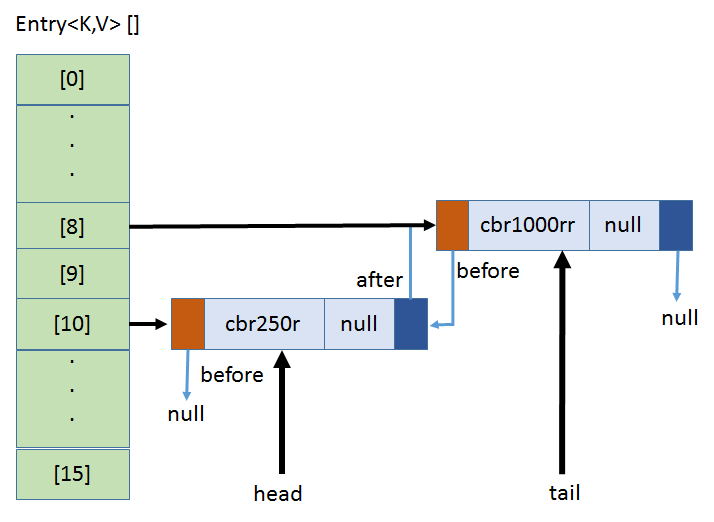
- head + tail 属性,形成LinkedHashMap的双向链表,而访问的顺序,就是 head => tail
- accessOrder属性,决定了LinkedHashMap的顺序
- true:当Entry节点被访问的时候,放置到链表的尾部,被tail指向
- false:当Entry被添加的的时候,放置到链表的尾部,被tail指向。如果插入的Key对应的Entry已经存在,也会被放到结尾
<a name="X4CvP"></a>
# 构造方法
```java
public LinkedHashMap(int initialCapacity, float loadFactor) {
super(initialCapacity, loadFactor);
accessOrder = false;
}
public LinkedHashMap(int initialCapacity) {
super(initialCapacity);
accessOrder = false;
}
public LinkedHashMap() {
super();
accessOrder = false;
}
public LinkedHashMap(Map<? extends K, ? extends V> m) {
super();
accessOrder = false;
putMapEntries(m, false);
}
public LinkedHashMap(int initialCapacity,
float loadFactor,
boolean accessOrder) {
super(initialCapacity, loadFactor);
this.accessOrder = accessOrder;
}
put方法
// put 方法调用父类 HashMap的put方法。然后在本类重写了 newNode 方法
public V put(K key, V value) {
    return putVal(hash(key), key, value, false, true);
}
final V putVal(int hash, K key, V value, boolean onlyIfAbsent,
               boolean evict) {
    Node<K,V>[] tab; Node<K,V> p; int n, i;
    if ((tab = table) == null || (n = tab.length) == 0)
        n = (tab = resize()).length;
    if ((p = tab[i = (n - 1) & hash]) == null)
        tab[i] = newNode(hash, key, value, null);
    else {
        Node<K,V> e; K k;
        if (p.hash == hash &&
            ((k = p.key) == key || (key != null && key.equals(k))))
            e = p;
        else if (p instanceof TreeNode)
            e = ((TreeNode<K,V>)p).putTreeVal(this, tab, hash, key, value);
        else {
            for (int binCount = 0; ; ++binCount) {
                if ((e = p.next) == null) {
                    p.next = newNode(hash, key, value, null);
                    if (binCount >= TREEIFY_THRESHOLD - 1) // -1 for 1st
                        treeifyBin(tab, hash);
                    break;
                }
                if (e.hash == hash &&
                    ((k = e.key) == key || (key != null && key.equals(k))))
                    break;
                p = e;
            }
        }
        if (e != null) { // existing mapping for key
            V oldValue = e.value;
            if (!onlyIfAbsent || oldValue == null)
                e.value = value;
            afterNodeAccess(e);
            return oldValue;
        }
    }
    ++modCount;
    if (++size > threshold)
        resize();
    afterNodeInsertion(evict);
    return null;
}
newNode方法
// 子类的node节点
// hash: hash
// key: key
// value: value
// e: 当前node节点
Node<K,V> newNode(int hash, K key, V value, Node<K,V> e) {
    // 创建Entry
    LinkedHashMap.Entry<K,V> p =
        new LinkedHashMap.Entry<K,V>(hash, key, value, e);

    // 将P元素添加到末尾
    linkNodeLast(p);
    return p;
}

// 将P元素添加到末尾
// 这样,越是最新的元素,则放在末尾
private void linkNodeLast(LinkedHashMap.Entry<K,V> p) {
    // last = tail
    LinkedHashMap.Entry<K,V> last = tail;
    tail = p;
    // 如果last == null
    // 说明没有元素 设置为头节点
    if (last == null)
        head = p;
    else {
        // 否则 p的前一个节点是last
        // last的后一个节点是p
        // 此时将链表连接起来
        p.before = last;
        last.after = p;
    }
}
get方法
public V get(Object key) {
    Node<K,V> e;
    if ((e = getNode(hash(key), key)) == null)
        return null;
    if (accessOrder)
        afterNodeAccess(e);
    return e.value;
}

public V getOrDefault(Object key, V defaultValue) {
    Node<K,V> e;
    if ((e = getNode(hash(key), key)) == null)
        return defaultValue;
    if (accessOrder)
        afterNodeAccess(e);
    return e.value;
}
节点操作回调-afterNodeAccess
// 节点读取回调

void afterNodeAccess(Node<K,V> e) { // move node to last
    LinkedHashMap.Entry<K,V> last;
    // accessOrder 判断必须是满足按访问顺序
    // 判断 e 是否是队尾,如果是,则无需在访问了
    // 这里是为了更新,相当于是个LRU算法
    if (accessOrder && (last = tail) != e) {
        // 将 e 赋值给 p
        // b a 分别是e的前驱节点、后置节点
        LinkedHashMap.Entry<K,V> p =
            (LinkedHashMap.Entry<K,V>)e, b = p.before, a = p.after;
        // 将p从链表中移除
        p.after = null;
        // 处理b的下一个子节点指向a
        // 如果e的前一个节点b == null,说明e是第一个节点
        // 此时,将头节点设置为e的后一个节点
        if (b == null)
            head = a;
        else
            // 否则,b的后一个节点设置为a
            b.after = a;
        // 如果e的后置节点a不为null,
        // 将a的前一个节点指向b
        // 这样,a、b就连接起来了,e已经剔除出去了
        if (a != null)
            a.before = b;
        else
            // 否则 b就是最后一个节点
            last = b;
        // 如果 last 还是为null - 此时说明当前是第一次添加节点
        if (last == null)
            // 将 p 设置给head
            head = p;
        else {
            // 否则连接p的前一个为last节点
            // last的后一个节点为p
            // 将p加入到最后一个节点
            p.before = last;
            last.after = p;
        }
        // p执行最后一个节点
        // 为尾节点
        tail = p;
        ++modCount;
    }
}
基于LinkedHashMap实现的LUR缓存
public class LRUCache<K, V> extends LinkedHashMap<K, V> {
    private final int CACHE_SIZE;

    /**
     * 传递进来最多能缓存多少数据
     *
     * @param cacheSize 缓存大小
     */
    public LRUCache(int cacheSize) {
        // true 表示让 LinkedHashMap 按照访问顺序来进行排序,最近访问的放在头部,最老访问的放在尾部。
        super((int) Math.ceil(cacheSize / 0.75) + 1, 0.75f, true);
        CACHE_SIZE = cacheSize;
    }

    @Override
    protected boolean removeEldestEntry(Map.Entry<K, V> eldest) {
        // 当 map 中的数据量大于指定的缓存个数的时候,就自动删除最老的数据。
        return size() > CACHE_SIZE;
    }
}
节点操作回调-afterNodeInsertion
// 插入后回调 - 在 putVal
// evict 翻译为驱逐,表示是否允许移除元素
void afterNodeInsertion(boolean evict) { // possibly remove eldest
    // 头节点
    LinkedHashMap.Entry<K,V> first;
    // head 为头节点
    // emoveEldestEntry(first) 判断是否满足移除最老节点
    if (evict && (first = head) != null && removeEldestEntry(first)) {
        K key = first.key;
        // 移除节点 - 调用父类移除节点
        removeNode(hash(key), key, null, false, true);
    }
}

protected boolean removeEldestEntry(Map.Entry<K,V> eldest) {
    return false;
}
节点操作回调-afterNodeRemoval
// 在移除节点的时候,还要维护 双向链表
// 解除去掉的节点的数据
void afterNodeRemoval(Node<K,V> e) { // unlink
    LinkedHashMap.Entry<K,V> p =
        (LinkedHashMap.Entry<K,V>)e, b = p.before, a = p.after;
    p.before = p.after = null;
    if (b == null)
        head = a;
    else
        b.after = a;
    if (a == null)
        tail = b;
    else
        a.before = b;
}
转换为集合
public Set<K> keySet() {
    // 获得 keySet 缓存
    Set<K> ks = keySet;
    if (ks == null) {
        // LinkedKeySet 是 LinkedHashMap 自定义的
        ks = new LinkedKeySet();
        keySet = ks;
    }
    return ks;
}
final class LinkedKeySet extends AbstractSet<K> {
    public final int size()                 { return size; }
    public final void clear()               { LinkedHashMap.this.clear(); }
    public final Iterator<K> iterator() {
        return new LinkedKeyIterator();
    }
    public final boolean contains(Object o) { return containsKey(o); }
    public final boolean remove(Object key) {
        return removeNode(hash(key), key, null, false, true) != null;
    }
    public final Spliterator<K> spliterator()  {
        return Spliterators.spliterator(this, Spliterator.SIZED |
                                        Spliterator.ORDERED |
                                        Spliterator.DISTINCT);
    }
    public final void forEach(Consumer<? super K> action) {
        if (action == null)
            throw new NullPointerException();
        int mc = modCount;
        for (LinkedHashMap.Entry<K,V> e = head; e != null; e = e.after)
            action.accept(e.key);
        if (modCount != mc)
            throw new ConcurrentModificationException();
    }
}

// 获取值
public Collection<V> values() {
    // 获得 values 缓存
    Collection<V> vs = values;
    // 不存则就那些创建
    if (vs == null) {
        // LinkedValues 是 LinkedHashMap 自定义的
        vs = new LinkedValues();
        values = vs;
    }
    return vs;
}

final class LinkedValues extends AbstractCollection<V> {
    public final int size()                 { return size; }
    public final void clear()               { LinkedHashMap.this.clear(); }
    public final Iterator<V> iterator() {
        return new LinkedValueIterator();
    }
    public final boolean contains(Object o) { return containsValue(o); }
    public final Spliterator<V> spliterator() {
        return Spliterators.spliterator(this, Spliterator.SIZED |
                                        Spliterator.ORDERED);
    }
    public final void forEach(Consumer<? super V> action) {
        if (action == null)
            throw new NullPointerException();
        int mc = modCount;
        for (LinkedHashMap.Entry<K,V> e = head; e != null; e = e.after)
            action.accept(e.value);
        if (modCount != mc)
            throw new ConcurrentModificationException();
    }
}

public Set<Map.Entry<K,V>> entrySet() {
    Set<Map.Entry<K,V>> es;
    return (es = entrySet) == null ? (entrySet = new LinkedEntrySet()) : es;
}

final class LinkedEntrySet extends AbstractSet<Map.Entry<K,V>> {
    public final int size()                 { return size; }
    public final void clear()               { LinkedHashMap.this.clear(); }
    public final Iterator<Map.Entry<K,V>> iterator() {
        return new LinkedEntryIterator();
    }
    public final boolean contains(Object o) {
        if (!(o instanceof Map.Entry))
            return false;
        Map.Entry<?,?> e = (Map.Entry<?,?>) o;
        Object key = e.getKey();
        Node<K,V> candidate = getNode(hash(key), key);
        return candidate != null && candidate.equals(e);
    }
    public final boolean remove(Object o) {
        if (o instanceof Map.Entry) {
            Map.Entry<?,?> e = (Map.Entry<?,?>) o;
            Object key = e.getKey();
            Object value = e.getValue();
            return removeNode(hash(key), key, value, true, true) != null;
        }
        return false;
    }
    public final Spliterator<Map.Entry<K,V>> spliterator() {
        return Spliterators.spliterator(this, Spliterator.SIZED |
                                        Spliterator.ORDERED |
                                        Spliterator.DISTINCT);
    }
    public final void forEach(Consumer<? super Map.Entry<K,V>> action) {
        if (action == null)
            throw new NullPointerException();
        int mc = modCount;
        for (LinkedHashMap.Entry<K,V> e = head; e != null; e = e.after)
            action.accept(e);
        if (modCount != mc)
            throw new ConcurrentModificationException();
    }
}


// 上述的  LinkedKeyIterator、LinkedValueIterator、LinkedEntryIterator 都继承了
// LinkedHashIterator 分别用于迭代 Key、Value、Entry
abstract class LinkedHashIterator {
    // 下一个节点
    LinkedHashMap.Entry<K,V> next;
    // 当前节点
    LinkedHashMap.Entry<K,V> current;
    // 修改次数
    int expectedModCount;

    LinkedHashIterator() {
        next = head;
        expectedModCount = modCount;
        current = null;
    }

    public final boolean hasNext() {
        return next != null;
    }

    final LinkedHashMap.Entry<K,V> nextNode() {
        LinkedHashMap.Entry<K,V> e = next;
        // 如果发生了修改,则抛出并发修改异常
        if (modCount != expectedModCount)
            throw new ConcurrentModificationException();
        if (e == null)
            throw new NoSuchElementException();
        current = e;
        next = e.after;
        return e;
    }

    public final void remove() {
        // 移除当前节点
        Node<K,V> p = current;
        if (p == null)
            throw new IllegalStateException();
        if (modCount != expectedModCount)
            throw new ConcurrentModificationException();
        current = null;
        K key = p.key;
        removeNode(hash(key), key, null, false, false);
        expectedModCount = modCount;
    }
}
clear方法
public void clear() {
    // 清空
    super.clear();
    // 标记 head 和 tail 为 null
    head = tail = null;
}
序列化和反序列化
void internalWriteEntries(java.io.ObjectOutputStream s) throws IOException {
    for (LinkedHashMap.Entry<K,V> e = head; e != null; e = e.after) {
        s.writeObject(e.key);
        s.writeObject(e.value);
    }
}

void reinitialize() {
    super.reinitialize();
    head = tail = null;
}
containsValue查找值
public boolean containsValue(Object value) {
    for (LinkedHashMap.Entry<K,V> e = head; e != null; e = e.after) {
        V v = e.value;
        if (v == value || (value != null && value.equals(v)))
            return true;
    }
    return false;
}
总结
- LinkedHashMap 是 HashMap 的子类,增加了顺序访问的特性
- [默认] 当 accessOrder = false 时,按照 key-value 的插入顺序进行访问
- 当 accessOrder = true 时,按照 key-value 的读取顺序[谁读了,谁就更新到tail]进行访问
- LinkedHashMap 的顺序特性,通过内部的双向链表实现,所以我们把它看成是 LinkedList + LinkedHashMap 的组合
- LinkedHashMap 通过重写 HashMap 提供的回调方法,从而实现其对顺序的特性的处理。同时,因为 LinkedHashMap 的顺序特性,需要重写 #keysToArray(T[] a) 等遍历相关的方法
- LinkedHashMap 可以方便实现 LRU 算法的缓存
LinkedHashMap 的本质就是套娃,其在HashMap上包了一层 Entry,然后然后形成双向链表
参考文章
LinkedHashMap:https://www.pdai.tech/md/java/collection/java-map-LinkedHashMap&LinkedHashSet.html
- Java-Review:https://gitee.com/icanci/Java-Review

若有收获,就点个赞吧
0 人点赞


