二叉树的序列化
题目描述
「二叉树的序列化和反序列化」就是给你输入一棵二叉树的根节点 root,要求你实现如下一个类:
class Codec {// 把一棵二叉树序列化成字符串string serialize(TreeNode* root) {}// 把字符串反序列化成二叉树TreeNode* deserialize(string data) {}};
可以用 serialize 方法将二叉树序列化成字符串,用 deserialize 方法将序列化的字符串反序列化成二叉树。
比如,输入如下这样一棵二叉树:
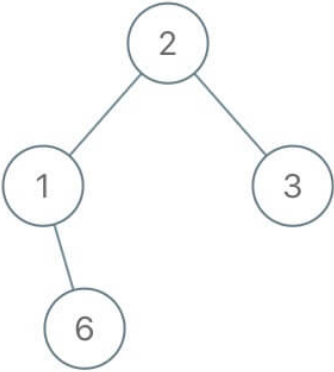
serialize 方法也许会将它序列化为 2, 1, #, 6, 3, #, #,其中 # 表示 nullptr 指针,将这个字符串再输入 deserialize 方法,依然可以还原出这颗二叉树。
前序遍历解法
前序遍历框架如下:
void traverse(TreeNode* root) {
    if (root == nullptr)
        return;
    // 前序遍历代码
    traverse(root->left);
    traverse(root->right);
}
伪代码如下:
vector<int> res;
void traverse(TreeNode* root) {
    if (root == nullptr) {
        res.push_back(-1);
        return;
    }

    // 前序遍历位置
    res.push_back(root->val);

    traverse(root->left);
    traverse(root->right);
}
调用 traverse 函数之后,如下图,可以直观看出前序遍历做的事:
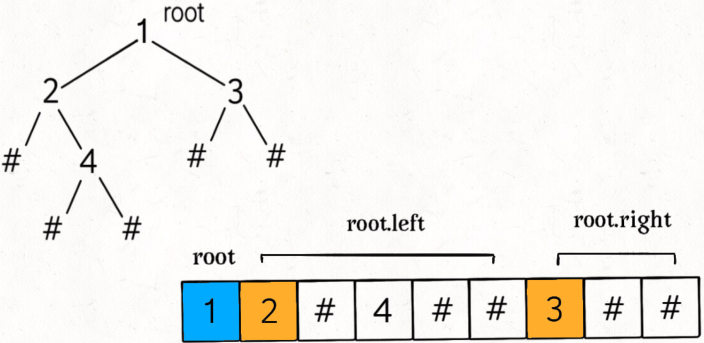
res = [1, 2, -1, 4, -1, -1, 3, -1, -1],这就是将二叉树「打平」到了一个列表中,其中 -1 表示 nullptr。
那么将二叉树打平到一个字符串中也是一样的:
// 代表分割符的字串
string sep = ",";
// 代表 nullptr 空指针的字符
string null_ = "#";
string str = "";

// 将二叉树打平为字符串
void traverse(TreeNode* root, string& str) {
    if (root == nullptr) {
        str += null_;
        str += sep;
        return;
    }

    // 前序遍历的位置
    str += root->val;
    str += sep;

    traverse(root->left, str);
    traverse(root->right, str);
}
至此,序列化函数 serialize 代码如下:
string sep = ",";
string null_ = "#";
// 辅助函数
void serialize(TreeNode* root, string& str) {
    if (root == nullptr) {
        str += null_;
        str += sep;
        return;
    }

    str += to_string(root->val);
    str += sep;

    serialize(root->left, str);
    serialize(root->right, str);
}

// 主函数
string serialize(TreeNode* root) {
    string str = "";
    serialize(root, str);
    return str;
}
现在,思考如何写 deserialize 函数,将字符串反过来构造二叉树。
首先可以把字符串转换为列表:
string data = "1, 2, #, 4, #, #, 3, #, #,";
list<string> split(const string& str, const string& ch) {
    regex re(ch);
    sregex_token_iterator first {str.begin(), str.end(), re, -1}, last;
    return {first, last};
}
list<string> nodes = split(data, ",");
这样,nodes 列表就是二叉树的前序遍历结果,问题转换为:如何通过二叉树的前序遍历结果还原一棵二叉树?
PS:一般情况下,单单前序遍历结果是不能还原二叉树结构的,因为缺少空指针信息。
根据刚才分析,nodes 列表就是一棵打平的二叉树:
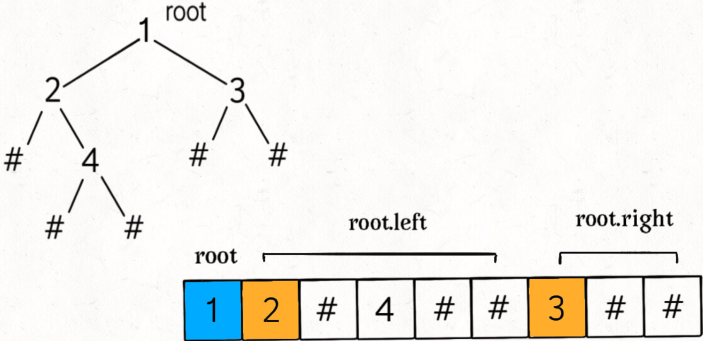
那么,反序列化过程也是一样的,先确定根节点 root,然后遵循前序遍历的规则,递归生成左右子树即可。
// 字符切割函数
list<string> split(const string& str, const string& ch) {
    regex re(ch);
    sregex_token_iterator first {str.begin(), str.end(), re, -1}, last;
    return {first, last};
}
// 辅助函数
TreeNode* deserialize(list<string>& nodes) {
    if (nodes.empty()) {
        return nullptr;
    }

    // 前序遍历位置
    // 列表最左侧是根节点
    string first = nodes.front();
    nodes.pop_front();
    if (null == first) {
        return nullptr;
    }

    TreeNode* root = new TreeNode(stoi(first));

    root->left = deserialize(nodes);
    root->right = deserialize(nodes);
    return root;
}

// 主函数
TreeNode* deserialize(string data) {
    // 将字符串转化为链表
    list<string> nodes = split(data, sep);
    return deserialize(nodes);
}
所以整体代码如下:
class Codec {
private:
    string sep = ",";
    string null = "#";
public:
    /*序列化*/
    // 辅助函数
    void serialize(TreeNode* root, string& str) {
        if (root == nullptr) {
            str.append(null).append(sep);
            return;
        }

        str.append(to_string(root->val)).append(sep);

        serialize(root->left, str);
        serialize(root->right, str);
    }
    // 主函数
    string serialize(TreeNode* root) {
        string str = "";
        serialize(root, str);
        return str;
    }

    /*反序列化*/
    // 字符切割函数
    list<string> split(const string& str, const string& ch) {
        regex re(ch);
        sregex_token_iterator first {str.begin(), str.end(), re, -1}, last;
        return {first, last};
    }
    // 辅助函数
    TreeNode* deserialize(list<string>& nodes) {
        if (nodes.empty()) {
            return nullptr;
        }

        // 前序遍历位置
        // 列表最左侧是根节点
        string first = nodes.front();
        nodes.pop_front();
        if (null == first) {
            return nullptr;
        }

        TreeNode* root = new TreeNode(stoi(first));

        root->left = deserialize(nodes);
        root->right = deserialize(nodes);
        return root;
    }

    // 主函数
    TreeNode* deserialize(string data) {
        // 将字符串转化为链表
        list<string> nodes = split(data, sep);
        return deserialize(nodes);
    }
};
后续遍历解法
二叉树的后续遍历框架
void traverse(TreeNode* root) {
    if (root == nullptr)
        return;
    traverse(root->left);
    traverse(root->right);

    // 后续遍历的代码
    // todo
}
先实现序列化 serialize 函数
// 辅助函数
void serialize(TreeNode* root, string& str) {
    if (root == nullptr) {
        str.append(null).append(sep);
        return;
    }

    str.append(to_string(root->val)).append(sep);

    serialize(root->left, str);
    serialize(root->right, str);
}
// 主函数
string serialize(TreeNode* root) {
    string str = "";
    serialize(root, str);
    return str;
}
关键难点在于,如何实现后续遍历的 deserialize 函数。以下代码是错误的:
TreeNode* deserialize(list<string>& nodes) {
    if (nodes.empty())
        return nullptr;
    root->left = deserialize(nodes);
    root->right = deserialize(nodes);

    // 后续遍历位置
    string first = nodes.front();
    nodes.pop_front();
    if (null == first) {
        return nullptr;
    }
    TreeNode* root = new TreeNode(stoi(first));

    return root;
}
变量没有声明,不能提前使用。deserialize 函数,第一件事就是要寻找 root 节点的值,然后递归构造左右节点。在后续遍历中,root 的值是列表的最后一个元素。我们应该从后向前取出列表元素,先用最后一个元素构造 root,然后递归调用生成左右子树。
注意:从后往前在 nodes 列表中取元素,一定要先构造 root->right 子树,后构造 root->left 子树。
整体代码如下:
class Codec_ {
private:
    string sep = ",";
    string null = "#";
public:
    /*序列化*/
    // 辅助函数
    void serialize(TreeNode* root, string& str) {
        if (root == nullptr) {
            str.append(null).append(sep);
            return;
        }

        serialize(root->left, str);
        serialize(root->right, str);

        // 后序遍历位置
        str.append(to_string(root->val)).append(sep);
    }
    // 主函数
    string serialize(TreeNode* root) {
        string str = "";
        serialize(root, str);
        return str;
    }

    /*反序列化*/
    // 字符串切割函数
    list<string> split(const string& str, const string& ch) {
        regex re(ch);
        sregex_token_iterator first {str.begin(), str.end(), re, -1}, last;
        return {first, last};
    }
    // 辅助函数
    TreeNode* deserialize(list<string>& nodes) {
        if (nodes.empty()) {
            return nullptr;
        }
        // 从后往前取出元素
        string last = nodes.back();
        nodes.pop_back();
        if (null == last) {
            return nullptr;
        }
        TreeNode* root = new TreeNode(stoi(last));
        // 先构造右子树,再构造左子树
        root->right = deserialize(nodes);
        root->left = deserialize(nodes);

        return root;
    }
    // 主函数
    TreeNode* deserialize(string data) {
        if (data.empty()) {
            return nullptr;
        }
        list<string> nodes = split(data, sep);
        return deserialize(nodes);
    }
};
中序遍历解法
中序遍历无法实现反序列化函数 deserialize,因为无法找到 root 节点的值。
层序遍历解法
层序遍历二叉树的框架:
void traverse(TreeNode* root) {
    if (root == nullptr)
        return;
    queue<TreeNode*> que;
    vector<vector<int>> res;
    que.push(root);
    while (!que.empty()) {
        vector<int> vec;
        int len = que.size();
        for (int i = 0; i < len; ++i) {
            TreeNode* node = que.front();
            que.pop();
            vec.push_back(node->val);
            if (node->left)
                que.push(node->left);
            if (node->right)
                que.push(node->right);
        }
        res.push_back(vec);
    }
}
上述代码是标准的二叉树层次遍历框架,队列中不会存在 nullptr 指针。但是在反序列的过程中是需要记录空指针的,所以需要略作修改:
void traverse(TreeNode* root) {
    if (root == nullptr)
        return;
    queue<TreeNode*> que;
    que.push(root);
    while (!que.empty()) {
        TreeNode* node = que.front();
        que.pop();

        if (node == nullptr)
            continue;
        cout << root->val << endl;
        que.push(que->left);
        que.push(que->right);
    }
}
对空指针的检验从「将元素加入队列」的时候改为「从队列中取出元素」的时候。
string sep = ",";
string null = "#";

string serialize(TreeNode* root) {
    if (root == nullptr) {
        return "";
    }
    string str = "";
    queue<TreeNode*> que;
    que.push(root);
    while (!que.empty()) {
        TreeNode* node = que.front();
        que.pop();

        if (node == nullptr) {
            str.append(null).append(sep);
            continue;
        }
        str.append(node->val).append(sep);

        que.push(root->left);
        que.push(root->right);
    }
    return str;
}
层次遍历序列化得出的结果如下图:
可以看到,每个非空节点都会对应两个子节点,那么反序列化的思路也是用队列进行层次遍历,同时使用索引 i 记录对应子节点的位置。
代码如下:
class _Codec {
private:
    string sep = ",";
    string null = "#";
public:
    string serialize(TreeNode* root) {
        if (root == nullptr) {
            return "";
        }
        string str = "";
        queue<TreeNode*> que;
        que.push(root);
        while (!que.empty()) {
            TreeNode* node = que.front();
            que.pop();
            if (node == nullptr) {
                str.append(null).append(sep);
                continue;
            }
            str.append(to_string(node->val)).append(sep);
            que.push(node->left);
            que.push(node->right);
        }
        return str;
    }

    vector<string> split(const string& str, const string& ch) {
        regex re(ch);
        sregex_token_iterator first {str.begin(), str.end(), re, -1}, last;
        return {first, last};
    }

    TreeNode* deserialize(string data) {
        if (data.empty()) {
            return nullptr;
        }
        vector<string> nodes = split(data, sep);

        // 第一个就是 root 的值
        TreeNode* root = new TreeNode(stoi(nodes[0]));


        // 队列记录父节点,将 root 加入队列
        queue<TreeNode*> que;
        que.push(root);
        for (int i = 1; i < nodes.size(); ) {
            // 队列中存的都是父节点
            TreeNode* parent = que.front();
            que.pop();
            // 父节点对应的左侧子节点的值
            string left = nodes[i++];
            if (left != null) {
                parent->left = new TreeNode(stoi(left));
                que.push(parent->left);
            } else {
                parent->left = nullptr;
            }
            // 父节点对应的右侧子节点的值
            string right = nodes[i++];
            if (right != null) {
                parent->right = new TreeNode(stoi(right));
                que.push(parent->right);
            } else {
                parent->right = nullptr;
            }
        }
        return root;
    }
};
总结
三种解法总结如下:
/*使用前序遍历来实现*/
class Codec {
private:
    string sep = ",";
    string null = "#";
public:
    /***
     * @description: 辅助函数,序列化
     * @param {TreeNode*} root
     * @param {string&} str
     * @return {*}
     */
    void serialize(TreeNode* root, string& str) {
        if (root == nullptr) {
            str.append(null).append(sep);
            return;
        }
        str.append(to_string(root->val)).append(sep);

        serialize(root->left, str);
        serialize(root->right, str);
    }
    /***
     * @description: 主函数,序列化
     * @param {TreeNode*} root
     * @return {*}
     */
    string serialize(TreeNode* root) {
        string str = "";
        serialize(root, str);
        return str;
    }
    /***
     * @description: 根据 ch 分割字符串 str
     * @param {string&} str
     * @param {string&} ch
     * @return {*}
     */
    list<string> split(const string& str, const string& ch) {
        regex re(ch);
        sregex_token_iterator first {str.begin(), str.end(), re, -1}, last;
        return {first, last};
    }
    /***
     * @description: 辅助函数,反序列化
     * @param {*}
     * @return {*}
     */
    TreeNode* deserialize(list<string>& nodes) {
        if (nodes.empty()) {
            return nullptr;
        }
        // 前序遍历的第一个值为 root 节点的值
        string first = nodes.front();
        nodes.pop_front();
        if (null == first) {
            return nullptr;
        }
        TreeNode* root = new TreeNode(stoi(first));
        root->left = deserialize(nodes);
        root->right = deserialize(nodes);

        return root;
    }
    /***
     * @description: 主函数,反序列化
     * @param {string} data
     * @return {*}
     */
    TreeNode* deserialize(string data) {
        if (data.empty()) {
            return nullptr;
        }
        list<string> nodes = split(data, sep);
        return deserialize(nodes);
    }
};

/*使用后序遍历来实现*/
class Codec_ {
private:
    string sep = ",";
    string null = "#";
public:
    /***
     * @description: 辅助函数,序列化
     * @param {TreeNode*} root
     * @param {string&} str
     * @return {*}
     */
    void serialize(TreeNode* root, string& str) {
        if (root == nullptr) {
            str.append(null).append(sep);
            return;
        }
        serialize(root->left, str);
        serialize(root->right, str);

        str.append(to_string(root->val)).append(sep);
    }
    /***
     * @description: 主函数,序列化
     * @param {TreeNode*} root
     * @return {*}
     */
    string serialize(TreeNode* root) {
        string str = "";
        serialize(root, str);
        return str;
    }
    /***
     * @description: 字符串切割函数
     * @param {string&} str
     * @param {string&} ch
     * @return {*}
     */
    list<string> split(const string& str, const string& ch) {
        regex re(ch);
        sregex_token_iterator first {str.begin(), str.end(), re, -1}, last;
        return {first, last};
    }
    /***
     * @description: 辅助函数,反序列化
     * @param {*}
     * @return {*}
     */
    TreeNode* deserialize(list<string>& nodes) {
        if (nodes.empty()) {
            return nullptr;
        }

        // 后序遍历最后一个元素的值是 root 节点的值
        string last = nodes.back();
        nodes.pop_back();
        if (null == last) {
            return nullptr;
        }
        TreeNode* root = new TreeNode(stoi(last));
        root->right = deserialize(nodes);
        root->left = deserialize(nodes);

        return root;
    }
    /***
     * @description: 主函数,反序列化
     * @param {string} data
     * @return {*}
     */
    TreeNode* deserialize(string data) {
        if (data.empty()) {
            return nullptr;
        }
        list<string> nodes = split(data, sep);
        return deserialize(nodes);
    }
};

/*使用层次遍历来实现*/
class _Codec_ {
private:
    string sep = ",";
    string null = "#";
public:
    /***
     * @description: 序列化
     * @param {TreeNode*} root
     * @return {*}
     */
    string serialize(TreeNode* root) {
        if (root == nullptr) {
            return "";
        }
        string str = "";
        queue<TreeNode*> que;
        que.push(root);
        while (!que.empty()) {
            TreeNode* node = que.front();
            que.pop();
            if (node == nullptr) {
                str.append(null).append(sep);
                continue;
            }
            str.append(to_string(root->val)).append(sep);
            que.push(node->left);
            que.push(node->right);
        }
        return str;
    }
    /***
     * @description: 字符串切割函数
     * @param {string&} str
     * @param {string&} ch
     * @return {*}
     */
    vector<string> split(const string& str, const string& ch) {
        regex re(ch);
        sregex_token_iterator first {str.begin(), str.end(), re, -1}, last;
        return {first, last};
    }
    /***
     * @description: 反序列化
     * @param {string} data
     * @return {*}
     */
    TreeNode* deserialize(string data) {
        if (data.empty()) {
            return nullptr;
        }
        vector<string> nodes = split(data, sep);
        // 第一个元素就是 root 的值
        string first = nodes[0];
        if (null == first) {
            return nullptr;
        }
        TreeNode* root = new TreeNode(stoi(first));
        // 队列记录父节点
        queue<TreeNode*> que;
        que.push(root);
        for (int i = 1; i < nodes.size();) {
            // 从队列中取出一个父节点
            TreeNode* parent = que.front();
            que.pop();
            // 父节点对应的左侧子节点的值
            string left = nodes[i++];
            if (null != left) {
                parent->left = new TreeNode(stoi(left));
                que.push(parent->left);
            } else {
                parent->left = nullptr;
            }
            // 父节点对应的右侧节点的值
            string right = nodes[i++];
            if (null != right) {
                parent->right = new TreeNode(stoi(right));
                que.push(parent->right);
            } else {
                parent->right = nullptr;
            }
        }
        return root;
    }
};

若有收获,就点个赞吧
0 人点赞


