示例
平时我们在使用spring时,会使用autowired注入需要的对象实例,例如下面代码:在F类中注入I类的实例对象
@Componentpublic class F {@Autowiredprivate I a;}
public interface I {}
@Component("a")public class IA implements I{}
注入原理分析
在使用Autowired属性注入时,其逻辑的主要是由AutowiredAnnotationBeanPostProcessor.AutowiredFieldElement的resolveFieldValue进行实现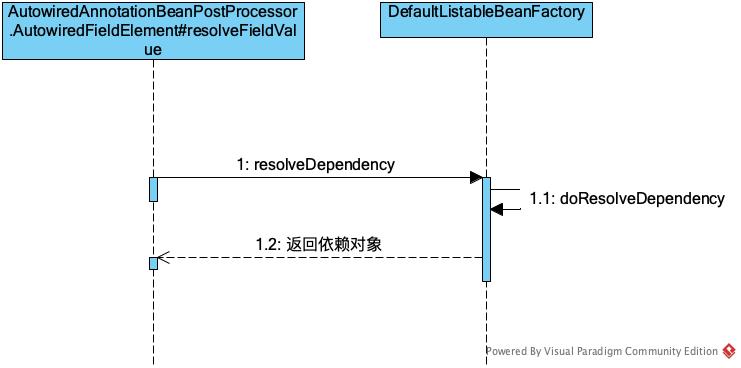
核心代码
public Object doResolveDependency(DependencyDescriptor descriptor, @Nullable String beanName,@Nullable Set<String> autowiredBeanNames, @Nullable TypeConverter typeConverter) throws BeansException {InjectionPoint previousInjectionPoint = ConstructorResolver.setCurrentInjectionPoint(descriptor);try {Object shortcut = descriptor.resolveShortcut(this);if (shortcut != null) {return shortcut;}Class<?> type = descriptor.getDependencyType();Object value = getAutowireCandidateResolver().getSuggestedValue(descriptor);if (value != null) {if (value instanceof String) {String strVal = resolveEmbeddedValue((String) value);BeanDefinition bd = (beanName != null && containsBean(beanName) ?getMergedBeanDefinition(beanName) : null);value = evaluateBeanDefinitionString(strVal, bd);}TypeConverter converter = (typeConverter != null ? typeConverter : getTypeConverter());try {return converter.convertIfNecessary(value, type, descriptor.getTypeDescriptor());}catch (UnsupportedOperationException ex) {// A custom TypeConverter which does not support TypeDescriptor resolution...return (descriptor.getField() != null ?converter.convertIfNecessary(value, type, descriptor.getField()) :converter.convertIfNecessary(value, type, descriptor.getMethodParameter()));}}// 是否支持多个注入,则在该方法内部完成bean的查找,例如:listObject multipleBeans = resolveMultipleBeans(descriptor, beanName, autowiredBeanNames, typeConverter);if (multipleBeans != null) {return multipleBeans;}// 完成查找,可能查找出多个结果Map<String, Object> matchingBeans = findAutowireCandidates(beanName, type, descriptor);if (matchingBeans.isEmpty()) {if (isRequired(descriptor)) {raiseNoMatchingBeanFound(type, descriptor.getResolvableType(), descriptor);}return null;}String autowiredBeanName;Object instanceCandidate;if (matchingBeans.size() > 1) {// 决定使用哪个bean的name,后续实例化的时候需要使用到这个beanNameautowiredBeanName = determineAutowireCandidate(matchingBeans, descriptor);if (autowiredBeanName == null) {if (isRequired(descriptor) || !indicatesMultipleBeans(type)) {return descriptor.resolveNotUnique(descriptor.getResolvableType(), matchingBeans);}else {// In case of an optional Collection/Map, silently ignore a non-unique case:// possibly it was meant to be an empty collection of multiple regular beans// (before 4.3 in particular when we didn't even look for collection beans).return null;}}instanceCandidate = matchingBeans.get(autowiredBeanName);}else {// We have exactly one match.Map.Entry<String, Object> entry = matchingBeans.entrySet().iterator().next();autowiredBeanName = entry.getKey();instanceCandidate = entry.getValue();}if (autowiredBeanNames != null) {autowiredBeanNames.add(autowiredBeanName);}if (instanceCandidate instanceof Class) {instanceCandidate = descriptor.resolveCandidate(autowiredBeanName, type, this);}Object result = instanceCandidate;if (result instanceof NullBean) {if (isRequired(descriptor)) {raiseNoMatchingBeanFound(type, descriptor.getResolvableType(), descriptor);}result = null;}if (!ClassUtils.isAssignableValue(type, result)) {throw new BeanNotOfRequiredTypeException(autowiredBeanName, type, instanceCandidate.getClass());}return result;}finally {ConstructorResolver.setCurrentInjectionPoint(previousInjectionPoint);}}
注入原理


若有收获,就点个赞吧
0 人点赞


