用一个简单的场景来举例,咱们看一看A星寻路算法的工作过程。
迷宫游戏的场景通常都是由小方格组成的。假设我们有一个7×5大小的迷宫,上图中绿色的格子是起点,红色的格子是终点,中间的3个蓝色格子是一堵墙。
AI角色从起点开始,每一步只能向上下/左右移动1格,且不能穿越墙壁。那么如何让AI角色用最少的步数到达终点呢?
在解决这个问题之前,我们先引入2个集合和1个公式。
两个集合如下。
- OpenList:可到达的格子
- CloseList:已到达的格子
一个公式如下。

每一个格子都具有F、G、H这3个属性,就像下图这样。
G:从起点走到当前格子的成本,也就是已经花费了多少步。
H:在不考虑障碍的情况下,从当前格子走到目标格子的距离,也就是离目标还有多远。
F:G和H的综合评估,也就是从起点到达当前格子,再从当前格子到达目标格子的总步数。
我们通过实际场景来分析一下,你就明白了。
第1步,把起点放入OpenList,也就是刚才所说的可到达格子的集合。
第2步,找出OpenList中F值最小的方格作为当前方格。虽然我们没有直接计算起点方格的F值,但此时OpenList中只有唯一的方格Grid(1,2),把当前格子移出OpenList,放入CloseList。代表这个格子已到达并检查过了。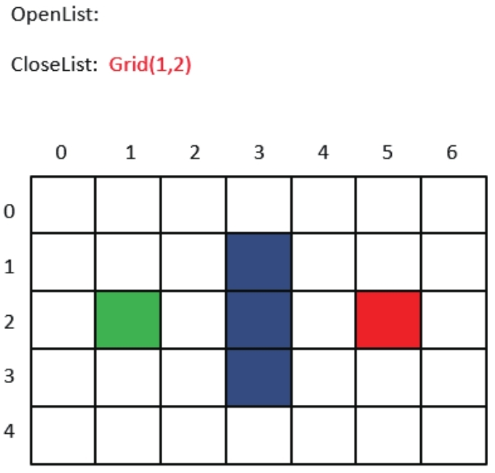
第3步,找出当前方格(刚刚检查过的格子)上、下、左、右所有可到达的格子,看它们是否在OpenList或CloseList当中。如果不在,则将它们加入OpenList,计算出相应的G、H、F值,并把当前格子作为它们的“父节点”。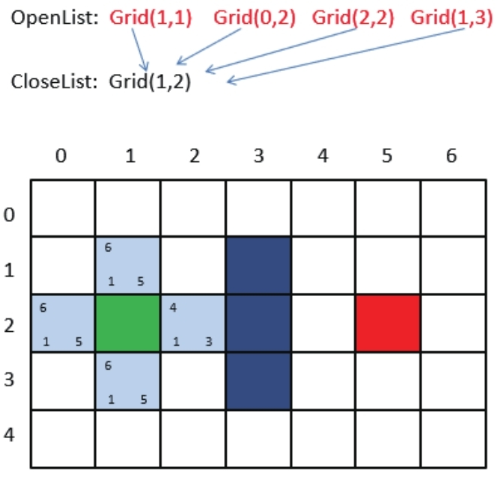
在上图中,每个格子的左下方数字是G,右下方是H,左上方是F。
一个格子的“父节点”代表它的来路,在输出最终路线时会用到。
刚才经历的几个步骤是一次局部寻路的步骤。我们需要一次又一次重复刚才的第2步和第3步,直到找到终点为止。
下面进入A星寻路的第2轮操作。
第1步,找出OpenList中F值最小的方格,即方格Grid(2,2),将它作为当前方格,并把当前方格移出OpenList,放入CloseList。代表这个格子已到达并检查过了。
第2步,找出当前方格上、下、左、右所有可到达的格子,看它们是否在OpenList或CloseList当中。如果不在,则将它们加入OpenList,计算出相应的G、H、F值,并把当前格子作为它们的“父节点”。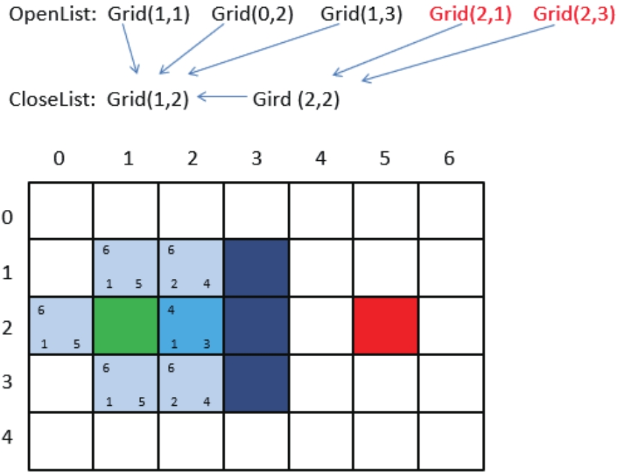
为什么这一次OpenList只增加了2个新格子呢?因为Grid(3,2)是墙壁,自然不用考虑,而Grid(1,2)在CloseList中,说明已经检查过了,也不用考虑。
下面我们进入第3轮寻路历程。
第1步,找出OpenList中F值最小的方格。由于此时有多个方格的F值相等,任意选择一个即可,如将Grid(2,3)作为当前方格,并把当前方格移出OpenList,放入CloseList。代表这个格子已到达并检查过了。
第2步,找出当前方格上、下、左、右所有可到达的格子,看它们是否在OpenList当中。如果不在,则将它们加入OpenList,计算出相应的G、H、F值,并把当前格子作为它们的“父节点”。
剩下的就是以前面的方式继续迭代,直到OpenList中出现终点方格为止。这里我们仅仅使用图片简单描述一下,方格中的数字表示F值。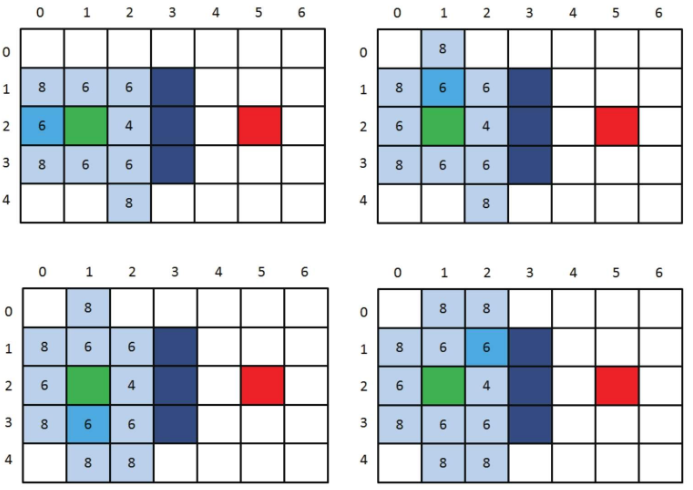


像这样一步一步来,当终点出现在OpenList中时,我们的寻路之旅就结束了。
还记得刚才方格之间的父子关系吗?我们只要顺着终点方格找到它的父亲,再找到父亲的父亲……如此依次回溯,就能找到一条最佳路径了。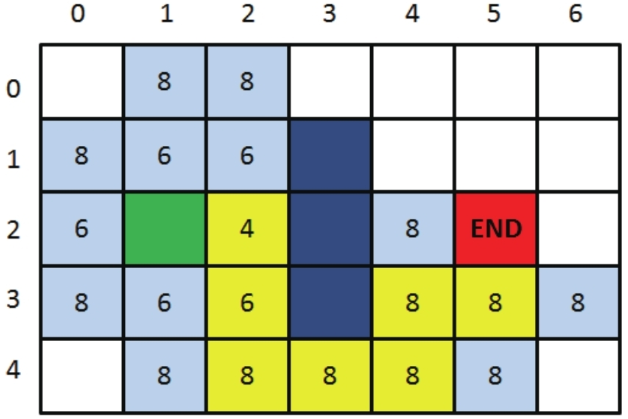
这就是A星寻路算法的基本思想。像这样以估值高低来决定搜索优先次序的方法,被称为启发式搜索 。
class Grid {public int x;public int y;public int f;public int g;public int h;public Grid parent;public Grid(int x, int y) {this.x = x;this.y = y;}public void initGrid(Grid parent, Grid end) {this.parent = parent;if (parent != null) {this.g = parent.g + 1;} else {this.g = 1;}this.h = Math.abs(this.x - end.x) + Math.abs(this.y - end.y);this.f = this.g + this.h;}}public class AStarSearch {// 迷宫地图public static final int[][] MAZE = {{0, 0, 0, 0, 0, 0, 0},{0, 0, 0, 1, 0, 0, 0},{0, 0, 0, 1, 0, 0, 0},{0, 0, 0, 1, 0, 0, 0},{0, 0, 0, 0, 0, 0, 0}};private static boolean containGrid(List<Grid> grids, int x, int y) {for (Grid n : grids) {if ((n.x == x) && (n.y == y)) {return true;}}return false;}private static boolean isValidGrid(int x, int y, List<Grid> openList, List<Grid> closeList) {// 是否超过边界if (x < 0 || x >= MAZE.length || y < 0 || y >= MAZE[0].length) return false;// 是否有障碍物if (MAZE[x][y] == 1) return false;// 是否已经在 openList 中if (containGrid(openList, x, y)) return false;// 是否已经在 closeList 中if (containGrid(closeList, x, y)) return false;return true;}private static ArrayList<Grid> findNeighbors(Grid grid, List<Grid> openList, List<Grid> closeList) {ArrayList<Grid> gridList = new ArrayList<>();if (isValidGrid(grid.x, grid.y - 1, openList, closeList)) {gridList.add(new Grid(grid.x, grid.y - 1));}if (isValidGrid(grid.x, grid.y + 1, openList, closeList)) {gridList.add(new Grid(grid.x, grid.y + 1));}if (isValidGrid(grid.x - 1, grid.y, openList, closeList)) {gridList.add(new Grid(grid.x - 1, grid.y));}if (isValidGrid(grid.x + 1, grid.y, openList, closeList)) {gridList.add(new Grid(grid.x + 1, grid.y));}return gridList;}private static Grid findMinGird(ArrayList<Grid> openList) {Grid tempGrid = openList.get(0);for (Grid grid : openList) {if (grid.f < tempGrid.f) {tempGrid = grid;}}return tempGrid;}// 主逻辑public static Grid aStartSearch(Grid start, Grid end) {ArrayList<Grid> openList = new ArrayList<>();ArrayList<Grid> closeList = new ArrayList<>();// 把起点加入 openListopenList.add(start);// 主循环,每一轮检测一个当前方格节点while (openList.size() > 0) {// 在 openList 中查找 F 值最小的节点,将其作为当前方格节点Grid currentGrid = findMinGird(openList);// 将当前节点从 openList 中删除openList.remove(currentGrid);// 当前方格节点进入 closeListcloseList.add(currentGrid);// 找到所有邻近节点ArrayList<Grid> neighbors = findNeighbors(currentGrid, openList, closeList);for (Grid grid : neighbors) {if (!openList.contains(grid)) {// 邻近节点不在 openList 中,标记“父节点”、G、H、F,并放入 openListgrid.initGrid(currentGrid, end);openList.add(grid);}}// 如果终点在 openList 中,直接返回终点格子for (Grid grid : openList) {if ((grid.x == end.x) && (grid.y == end.y)) {return grid;}}}// openList 用尽,仍然找不到终点,说明终点不可到达,返回空return null;}public static void main(String[] args) {// 设置起点和终点Grid start = new Grid(2, 1);Grid end = new Grid(2, 5);// 搜索迷宫终点Grid resultGrid = aStartSearch(start, end);// 回溯迷宫路径ArrayList<Grid> path = new ArrayList<>();while (resultGrid != null) {path.add(new Grid(resultGrid.x, resultGrid.y));resultGrid = resultGrid.parent;}// 输出迷宫和路径,路径用 * 表示for (int i = 0; i < MAZE.length; i++) {for (int j = 0; j < MAZE[0].length; j++) {if (containGrid(path, i, j)) {System.out.print("*, ");} else {System.out.print(MAZE[i][j] + ", ");}}System.out.println();}}}

若有收获,就点个赞吧
0 人点赞


