应用场景
我们在使用一些开源调度系统(比如:elastic-job等)的时候,对于任务的执行时间通常都是有规律性的,可能是每隔半小时执行一次,或者每天凌晨一点执行一次。然而实际业务中还存在另外一种定时任务,它可能需要一些触发条件才开始定时,比如:编写博文时候,设置2小时之后发送。对于这些开始时间不确定的定时任务,我们也可以通过Spring Cloud Stream来很好的处理。
为了实现开始时间不确定的定时任务触发,我们将引入延迟消息的使用。RabbitMQ中提供了关于延迟消息的插件,所以本文就来具体介绍以下如何利用Spring Cloud Stream以及RabbitMQ轻松的处理上述问题。
动手试试
插件安装
关于RabbitMQ延迟消息的插件介绍可以查看官方网站:https://www.rabbitmq.com/blog/2015/04/16/scheduling-messages-with-rabbitmq/
安装方式很简单,只需要在这个页面:http://www.rabbitmq.com/community-plugins.html 中找到rabbitmq_delayed_message_exchange插件,根据您使用的RabbitMQ版本选择对应的插件版本下载即可。
注意:只有RabbitMQ 3.6.x以上才支持
在下载好之后,解压得到.ez结尾的插件包,将其复制到RabbitMQ安装目录下的plugins文件夹。
然后通过命令行启用该插件(或在sbin目录进入命令行):
rabbitmq-plugins enable rabbitmq_delayed_message_exchange
该插件在通过上述命令启用后就可以直接使用,不需要重启。
另外,如果您没有启用该插件,您可能为遇到类似这样的错误:
ERROR 156 --- [ 127.0.0.1:5672] o.s.a.r.c.CachingConnectionFactory : Channel shutdown: connection error; protocol method: #method(reply-code=503, reply-text=COMMAND_INVALID - unknown exchange type 'x-delayed-message', class-id=40, method-id=10)
应用编码
下面通过编写一个简单的例子来具体体会一下这个属性的用法:
@EnableBinding(TestApplication.TestTopic.class)@SpringBootApplicationpublic class TestApplication {public static void main(String[] args) {SpringApplication.run(TestApplication.class, args);}@Slf4j@RestControllerstatic class TestController {@Autowiredprivate TestTopic testTopic;/*** 消息生产接口** @param message* @return*/@GetMapping("/sendMessage")public String messageWithMQ(@RequestParam String message) {log.info("Send: " + message);testTopic.output().send(MessageBuilder.withPayload(message).setHeader("x-delay", 5000).build());return "ok";}}/*** 消息消费逻辑*/@Slf4j@Componentstatic class TestListener {@StreamListener(TestTopic.INPUT)public void receive(String payload) {log.info("Received: " + payload);}}interface TestTopic {String OUTPUT = "example-topic-output";String INPUT = "example-topic-input";@Output(OUTPUT)MessageChannel output();@Input(INPUT)SubscribableChannel input();}}
内容很简单,既包含了消息的生产,也包含了消息消费。在/sendMessage接口的定义中,发送了一条消息,一条消息的头信息中包含了x-delay字段,该字段用来指定消息延迟的时间,单位为毫秒。所以上述代码发送的消息会在5秒之后被消费。在消息监听类TestListener中,对TestTopic.INPUT通道定义了@StreamListener,这里会对延迟消息做具体的逻辑。由于消息的消费是延迟的,从而变相实现了从消息发送那一刻起开始的定时任务。
在启动应用之前,还要需要做一些必要的配置,下面分消息生产端和消费端做说明:
消息生产端
spring.cloud.stream.bindings.example-topic-output.destination=delay-topicspring.cloud.stream.rabbit.bindings.example-topic-output.producer.delayed-exchange=true
消息消费端
# 若destination主题已经存在,需要从新命名一个延时队列的主题spring.cloud.stream.bindings.example-topic-input.destination=delay-topicspring.cloud.stream.bindings.example-topic-input.group=test# 注意这里的包名变化spring.cloud.stream.rabbit.bindings.example-topic-input.consumer.delayed-exchange=true
在消费端也一样,需要设置spring.cloud.stream.rabbit.bindings.example-topic-output.producer.delayed-exchange=true。如果该参数不设置,将会出现类似下面的错误:
ERROR 9340 --- [ 127.0.0.1:5672] o.s.a.r.c.CachingConnectionFactory : Channel shutdown: channel error; protocol method: #method<channel.close>(reply-code=406, reply-text=PRECONDITION_FAILED - inequivalent arg 'type' for exchange 'delay-topic' in vhost '/': received 'topic' but current is ''x-delayed-message'', class-id=40, method-id=10)
完成了上面配置之后,就可以启动应用,并尝试访问localhost:8080/sendMessage?message=hello接口来发送一个消息到MQ中了。此时可以看到类似下面的日志:
2021-07-08 11:13:00.949 INFO 37400 --- [ctor-http-nio-2] c.s.RouterMqApplication$TestController : Send: hello2021-07-08 11:13:00.964 INFO 37400 --- [ctor-http-nio-2] o.s.a.r.c.CachingConnectionFactory : Attempting to connect to: [localhost:5672]2021-07-08 11:13:00.974 INFO 37400 --- [ctor-http-nio-2] o.s.a.r.c.CachingConnectionFactory : Created new connection: rabbitConnectionFactory.publisher#c28b827:0/SimpleConnection@4efc930f [delegate=amqp://guest@127.0.0.1:5672/, localPort= 49677]2021-07-08 11:13:06.037 INFO 37400 --- [ontent-router-1] c.snow.RouterMqApplication$TestListener : Received v1 : hello, 1.0
从日志中可以看到,Send: hello和Received: hello两条输出之间间隔了5秒,符合我们上面编码设置的延迟时间。
深入思考
在代码层面已经完成了定时任务,那么我们如何查看延迟的消息数等信息呢?
此时,我们可以打开RabbitMQ的Web控制台,首先可以进入Exchanges页面,看看这个特殊exchange,具体如下: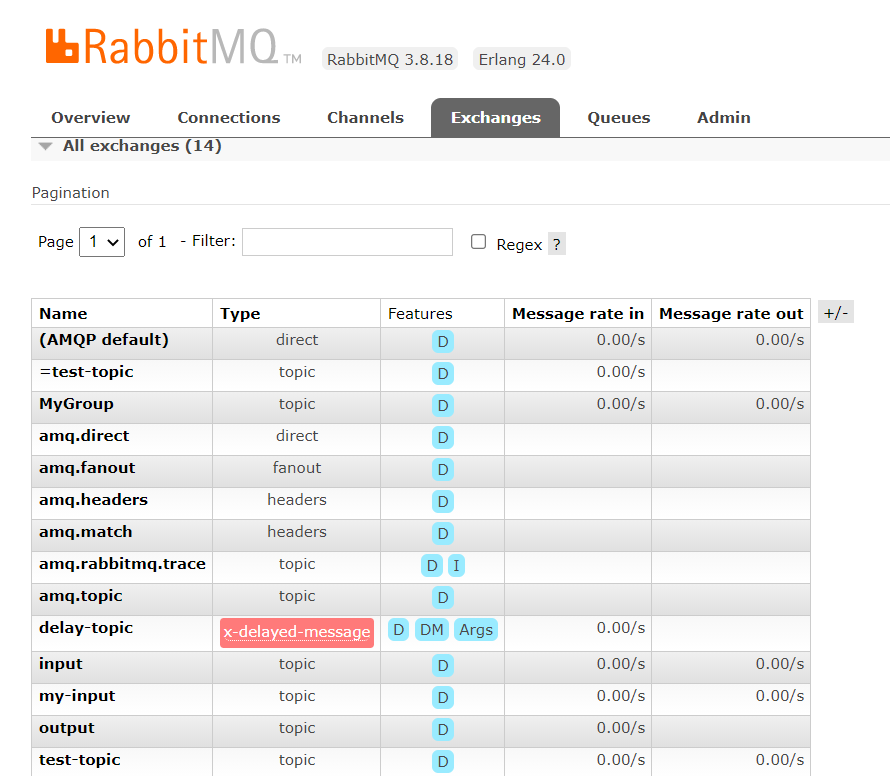
可以看到,这个exchange的Type类型是x-delayed-message。点击该exchange的名称,进入详细页面,就可以看到更多具体信息和延时消息数了:

若有收获,就点个赞吧
0 人点赞


