二叉树深度优先遍历
先序遍历
// 树节点public static class Node {private Node left;private Node right;private int value;public Node(int value) {this.value = value;}}
先序遍历的递归实现
public static void pre(Node head) {if (head == null) return;System.out.print(head.value + "\t");pre(head.left);pre(head.right);}
先序遍历的非递归实现
非递归代码实现如下:
public static void preUnRec(Node head) {
    if (head != null) {
        Stack<Node> stack = new Stack<>();
        stack.push(head);  // 头节点先入栈
        while (!stack.empty()) {
            Node node = stack.pop(); // 栈顶元素出栈,孩子节点入栈,如果有右孩子右侧孩子先入栈。
            System.out.print(node.value + "\t");
            if (node.right != null) { // 右孩子先入栈
                stack.push(node.right);
            }
            if (node.left != null) {
                stack.push(node.left);
            }
        }
    }
}
中序遍历
中序遍历的递归实现
public static void in(Node head) {
    if (head == null) return;
    in(head.left);
    System.out.print(head.value + "\t");
    in(head.right);
}
中序遍历的非递归实现
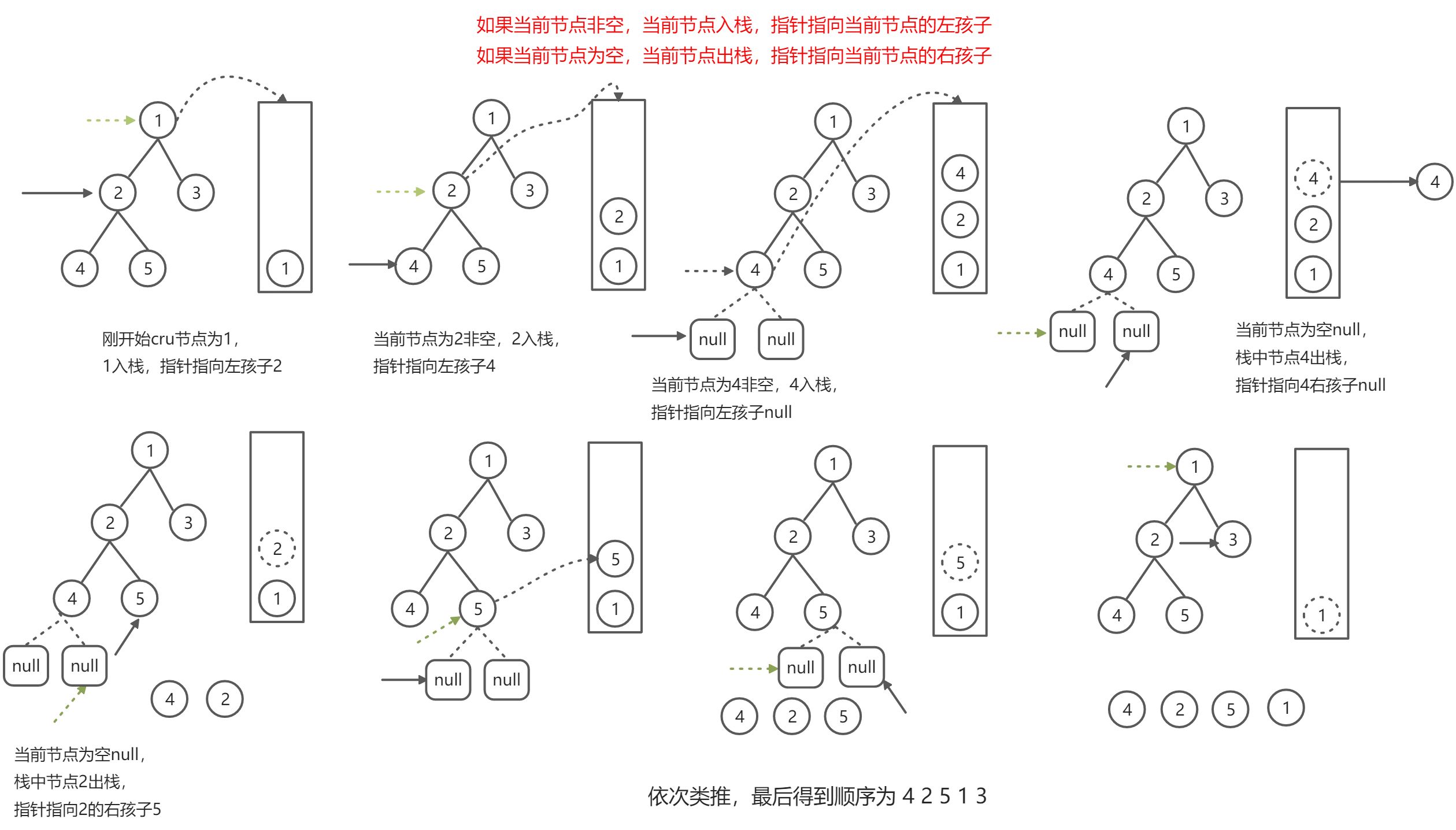
/**
 * 中序遍历 - 非递归
 * @param cur 二叉树的当前节点
 * 当前节点有左孩子,左孩子先入栈,左孩子优先
 * 当前节点没有左孩子,当前节点出栈,打印节点信息,
 * 当前节点指向其右孩子。
 */
public static void inUnRec(Node cur){
    if (cur != null) {
        Stack<Node> stack = new Stack<Node>();
        while (!stack.isEmpty() || cur != null) {
            if (cur != null) {
                stack.push(cur);
                cur = cur.left;
            } else {
                Node node = stack.pop();
                System.out.print(node.value + "\t");
                cur = node.right;
            }
        }
    }
}
后序遍历
后序遍历的递归实现
public static void pos(Node head) {
    if (head == null) return;
    pos(head.left);
    pos(head.right);
    System.out.print(head.value + "\t");
}
后序遍历的非递归实现
后序遍历的非递归实现,是在先序遍历的非递归实现的基础上进行改造的,先序遍历依次将根节点存入栈中,每次节点出栈后,依次将节点的右孩子先入栈,然后左孩子再入栈,最后得到一个根左右的一个顺序。
如果在先序遍历中,将孩子的入栈顺序进行调整,左孩子先入栈,右孩子后入栈,我们将得到一个“根右左”的出栈顺序,如果我们将节点按照这个顺序存入到一个新栈中,最后再对这个新栈进行出栈操作,我们将得到一个“根左右”的顺序,也就是二叉树后续遍历的顺序。
/**
 * 后续遍历 - 非递归  通过先序序列非递归方法进行改造  根 左 右 -》 根 右 左 -》 反转成  左 右 根
 * @param head
 */
public static void postUnRec(Node head){
    if (head != null) {
        Stack<Node> stack = new Stack<>();
        Stack<Node> stack2 = new Stack<>();
        stack.push(head);
        while (!stack.isEmpty()) {
            Node node = stack.pop();
            System.out.print(node.value + "\t");
            stack2.push(node);
            if (node.left != null) {   // 左孩子先入栈,出栈时左孩子优先级次之
                stack.push(node.left);
            }
            if (node.right != null) {
                stack.push(node.right);
            }
        }
        System.out.println("------中间序列-----");
        while (!stack2.empty()) {
            System.out.print(stack2.pop().value + "\t");
        }
    }
}
二叉树宽度优先遍历—按层遍历
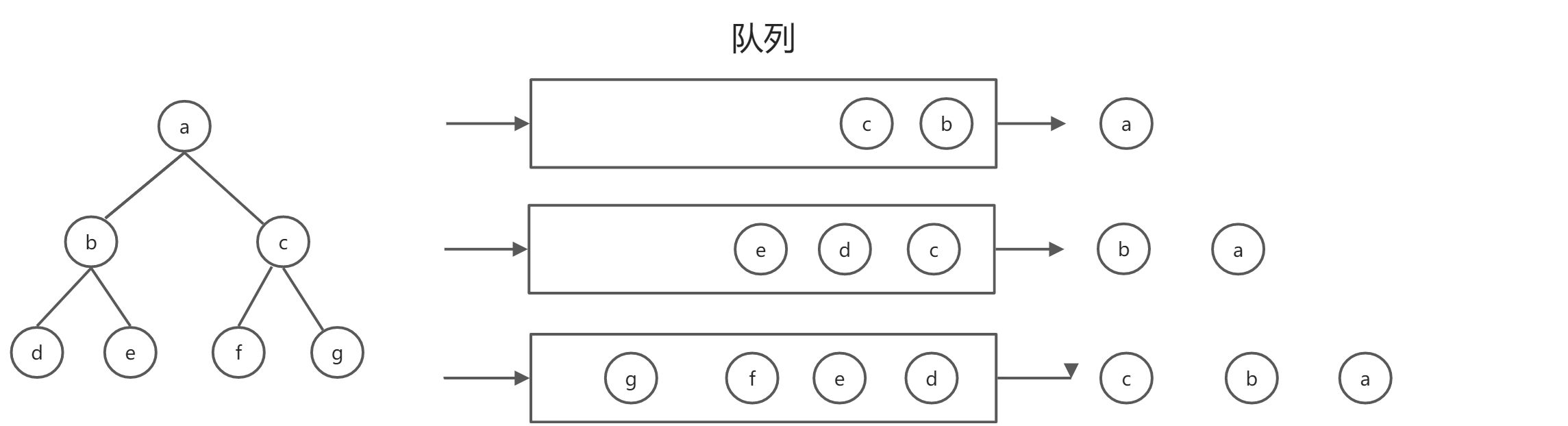
按层遍历实现思路:
(1)二叉树头节点入队,队列对头元素cur出队,打印
(2)出队元素cur有左孩子,左孩子入队,有右孩子,右孩子入队。顺序是先左后右
可以通过设置flag的方式来判断二叉树按层遍历某一层是否结束。
// 二叉树按层遍历代码实现
public class LevelTraversalBT {
    public static class Node {
            public int value;
            public Node left;
            public Node right;
            public Node(int v) {
                value = v;
            }
        }
        // 二叉树的按层遍历
        public static void level(Node head) {
            if (head == null) {
                return;
            }
            // LinkedList 底层是双端节点
            Queue<Node> queue = new LinkedList<>();// 队列来保存出栈的顺序
            queue.add(head);
            while (!queue.isEmpty()) {
                Node cur = queue.poll();  // 队头元素出队
                System.out.println(cur.value);
                if (cur.left != null) {  // 有左孩子,左孩子入队
                    queue.add(cur.left);
                }
                if (cur.right != null) {  // 有右孩子,右孩子入队
                    queue.add(cur.right);
                }
            }
    }
    public static void main(String[] args) {
        Node head = new Node(1);
        head.left = new Node(2);
        head.right = new Node(3);
        head.left.left = new Node(4);
        head.left.right = new Node(5);
        head.right.left = new Node(6);
        head.right.right = new Node(7);

        level(head);
        System.out.println("========");
    }

}
二叉树的序列化和反序列化

二叉树 -> 字符串 ->二叉树 二叉树和字符串是一一对应的
二叉树可以通过先序、后序或者按层遍历的方式序列化和反序列化,但是不能通过中序遍历方式来进行。
eg:
   * 二叉树可以通过先序、后序或者按层遍历的方式序列化和反序列化,
     * 以下代码全部实现了。
     * 但是,二叉树无法通过中序遍历的方式实现序列化和反序列化
     * 因为不同的两棵树,可能得到同样的中序序列,即便补了空位置也可能一样。
     * 比如如下两棵树
     *         __2
     *        /
     *       1
     *       和
     *       1__
     *          \
     *           2
     * 补足空位置的中序遍历结果都是{ null, 1, null, 2, null}
在二叉树的序列化和反序列化中,二叉树中的Null节点是不可忽略的,使用特殊来标识NULL。
先序方式序列化
在二叉树先序遍历递归代码实现的基础上进行改造,只不过对于每个树节点的空值也要进行存储,下面对二叉树先序遍历来进行一步步的改造得到,先序序列化的代码实现。
二叉树先序遍历递归代码实现如下:
public static void pre(Node head){
 if(head == null) return null;
 System.out.print(head.vlaue + "\t")
 pre(head.left);
 pre(head.right);
}
改造1-先序遍历打印节点时,把还孩子节点为空的值也打印出来,用 # 来表示空节点
public static void pre-1(Node head){
 if(head == null){
     System.out.print("#\t")
 } else{
     System.out.print(head.vlaue + "\t")
     pre(head.left);
     pre(head.right);
 }
}
对上图中二叉树进行先序遍历运行结果为: a b # c # # #
改造2-上面得到的输出序列就是二叉树先序方式序列化的结果,那么我们就考虑下一步,如何将这些结果保存起来,我们想到的是把这些节点按照先序遍历的顺序存储在一个队列中,如果遇到空的则保存为 #,得到队列后对队列进行出队操作,就可以得到序列化之后的结果。代码如下:
public static void pre-2(Node head, Queue<String> queue){
 if(head == null){
     queue.add("#");
 } else {
     queue.add(String.valueOf(head.value));
     pre(head.left,queue);
     pre(head.right,queue);
 }
}
得到二叉树按照先序序列化的代码实现
# 按照先序方式序列化二叉树
public Queue<String> static preSerial(Node head){
 Queue<String> queue = new LinkedList<>();
 pre-2(head,queue);
 return queue;
}
先序方式反序列化
通过序列化结果的值来将其进行反序列化,还原成二叉树的一个过程。如果采用的是先序方式序列化,则反序列化的时候也要采用先序的方式进行反序列化。
根据序列化得到的队列,依次出队,按照先序遍历的方式来构建二叉树,// 给定一个队列,建立一棵树,返回树的头节点 public static Node buildByPreQueue(Queue<String> prelist) { if (prelist == null || prelist.size() == 0) { return null; } return preb(prelist); } // 反序列化的过程 public static Node preb(Queue<String> prelist) { String value = prelist.poll(); if (value == "#") { // # 代表的是null,当取出的节点为#时,不建树,直接结束返回空 return null; } // 如果队列中出来的元素非空,则将该值作为节点值来建节点,作为当前的头节点 Node head = new Node(Integer.valueOf(value)); head.left = preb(prelist); // 先让左树消费这个队列 head.right = preb(prelist); // 再让右树消费这个队列 return head; }按层遍历方式序列化
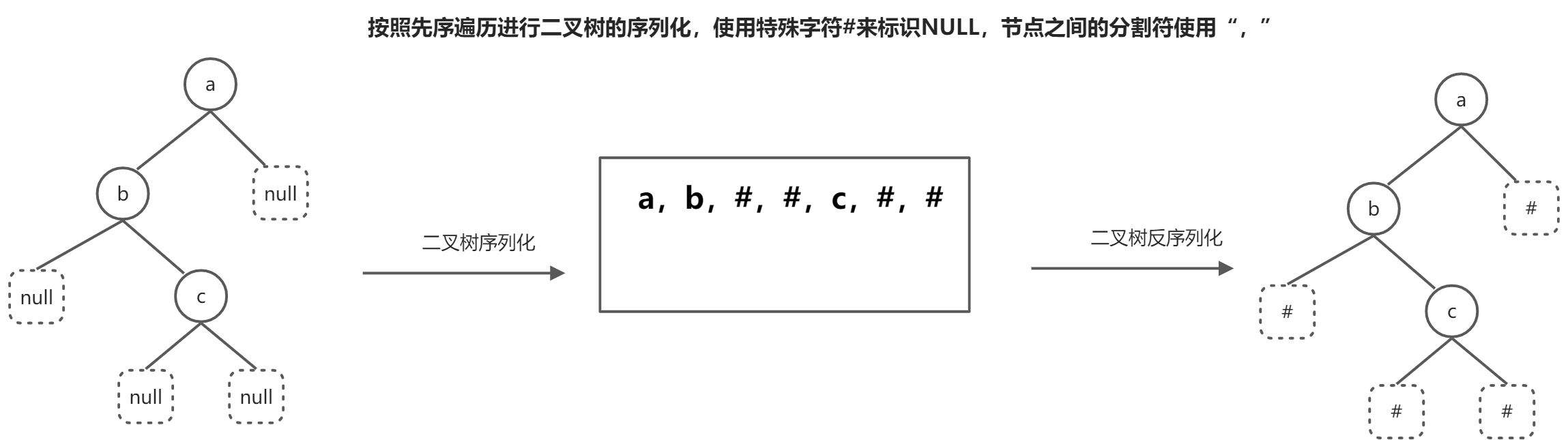
如图,对于同一棵二叉树,按照按层遍历的方式进行序列化的结果为a,b,#,#,c,#,#
同先序遍历方式序列化的方式一样,该代码的实现仍然是基于按层遍历来改造的
二叉树按层方式序列化代码实现如下:
public static Queue<String> levelSerial(Node head) {
    Queue<String> ans = new LinkedList<>(); // 用来保存序列化之后的结果
    if (head == null) {
        ans.add(null);
    } else {
        // 将头节点进行序列化,放入结果结合中
        ans.add(String.valueOf(head.value));
        // 队列用来存储序列化之后的节点,该队列中出队的元素来序列化其孩子节点;就是来帮助我们进行按层遍历的
        Queue<Node> queue = new LinkedList<Node>(); // 进队列时进行序列化,出队列对其孩子进行序列化
        queue.add(head);  // 将序列化之后的节点加入到队列中
        while (!queue.isEmpty()) {
            head = queue.poll(); // 弹出一个节点,依次序列化该节点的左右孩子
            if (head.left != null) {
                // 左孩子非空,进行序列化,并且入队
                ans.add(String.valueOf(head.left.value));
                queue.add(head.left);
            } else {
                // 左孩子为空,只进行序列化,不将空放入序列化队列中
                ans.add(null);
            }
            if (head.right != null) {
                // 右孩子非空,进行序列化,并且入队
                ans.add(String.valueOf(head.right.value));
                queue.add(head.right);
            } else {
                // 右孩子为空,只进行序列化,不将空放入序列化队列中
                ans.add(null);
            }
        }
    }
    return ans;
}
按层遍历方式反序列化
按照按层方式进行序列化之后的序列来进行对其反序列化操作。
按层进行反序列化代码实现如下:
public static Node buildByLevelQueue(Queue<String> levelList) {
    if (levelList == null || levelList.size() == 0) {
        return null;
    }
    // 先对头节点进行反序列化  -- 和序列化步骤一一对应
    Node head = generateNode(levelList.poll());
    Queue<Node> queue = new LinkedList<Node>();
    if (head != null) {
        queue.add(head);
    }
    Node node = null;
    while (!queue.isEmpty()) {
        node = queue.poll();
        node.left = generateNode(levelList.poll());  // 先将左孩子进行反序列化
        node.right = generateNode(levelList.poll()); // 再将有孩子进行反序列化
        if (node.left != null) {
            queue.add(node.left);   // 如果左孩子非空加入到队列中,
        }
        if (node.right != null) {
            queue.add(node.right);   // 如果有孩子非空加入到队列中
        }
    }
    return head;
}

// 根据给定的值来建立树的节点
public static Node generateNode(String val) {
    if (val == null) {
        return null;
    }
    return new Node(Integer.valueOf(val));
}

若有收获,就点个赞吧
0 人点赞


