1. 入门介绍
Spring Cloud Ribbon是基于Netflix Ribbon实现的一套客户端负载均衡的工具。
简单的说,Ribbon是Netflix发布的开源项目,主要功能是提供客户端的软件负载均衡算法和服务调用。Ribbon客户端组件提供一系列完善的配置项如连接超时,重试等。
简单的说,就是在配置文件中列出Load Balancer(简称LB)后面所有的机器,Ribbon会自动的帮助你基于某种规则(如简单轮询,随机连接等)去连接这些机器。我们很容易使用Ribbon实现自定义的负载均衡算法。
1.1 官网资料
https://github.com/Netflix/ribbon/wiki/Getting-Started
Ribbon目前也进入维护模式。
Ribbon未来可能被Spring Cloud LoadBalacer替代。
1.2 LB负载均衡(Load Balance)
简单的说就是将用户的请求平摊的分配到多个服务上,从而达到系统的HA (高可用)。
常见的负载均衡有软件Nginx,LVS,硬件F5等。
(1)Ribbon本地负载均衡客户端VS Nginx服务端负载均衡区别
Nginx是服务器负载均衡,客户端所有请求都会交给nginx,然后由nginx实现转发请求。即负载均衡是由服务端实现的。
Ribbon本地负载均衡,在调用微服务接口时候,会在注册中心上获取注册信息服务列表之后缓存到JVM本地,从而在本地实现RPC远程服务调用技术。
集中式LB
即在服务的消费方和提供方之间使用独立的LB设施(可以是硬件,如F5, 也可以是软件,如nginx),由该设施负责把访问请求通过某种策略转发至服务的提供方;
进程内LB
将LB逻辑集成到消费方,消费方从服务注册中心获知有哪些地址可用,然后自己再从这些地址中选择出一个合适的服务器。
Ribbon就属于进程内LB,它只是一个类库,集成于消费方进程,消费方通过它来获取到服务提供方的地址。
一句话
2. Ribbon负载均衡
2.1 架构说明
Ribbon其实就是一个软负载均衡的客户端组件,它可以和其他所需请求的客户端结合使用,和Eureka结合只是其中的一个实例。

Ribbon在工作时分成两步:
- 第一步先选择EurekaServer ,它优先选择在同一个区域内负载较少的server。
- 第二步再根据用户指定的策略,在从server取到的服务注册列表中选择一个地址。
其中Ribbon提供了多种策略:比如轮询、随机和根据响应时间加权。
2.2 POM
先前工程项目没有引入spring-cloud-starter-ribbon也可以使用ribbon。
<dependency><groupld>org.springframework.cloud</groupld><artifactld>spring-cloud-starter-netflix-ribbon</artifactid></dependency>
这是因为spring-cloud-starter-netflix-eureka-client自带了spring-cloud-starter-ribbon引用。
2.3 RestTemplate的使用
(1) getForObject() / getForEntity() - GET请求方法
getForObject():返回对象为响应体中数据转化成的对象,基本上可以理解为Json。
getForEntity():返回对象为ResponseEntity对象,包含了响应中的一些重要信息,比如响应头、响应状态码、响应体等
@GetMapping(value = "/consumer/payment/getEntity/{id}")public CommonResult<Payment> getEntity(@PathVariable("id") Long id){ResponseEntity<CommonResult> entity = restTemplate.getForEntity(PAYMENT_URL + "/payment/get/" + id, CommonResult.class);if(entity.getStatusCode().is2xxSuccessful()){return entity.getBody();}else{return new CommonResult<>(444,"操作失败");}}
(2) postForObject() / postForEntity() - POST请求方法
@PostMapping(value = "/consumer/payment/createEntity")public CommonResult<Payment> createEntity(Payment payment){ResponseEntity<CommonResult> entity = restTemplate.postForEntity(PAYMENT_URL + "/payment/create", payment, CommonResult.class);if(entity.getStatusCode().is2xxSuccessful()){return entity.getBody();}else{return new CommonResult<>(444,"操作失败");}}
3. Ribbon核心组件IRule
3.1 IRule:根据特定算法从服务列表中选取一个要访问的服务
| RoundRobinRule | 轮询 |
|---|---|
| RandomRule | 随机 |
| RetryRule | 先按照RoundRobinRule的策略获取服务,如果获取服务失败则在指定时间内会进行重试 |
| WeightedResponseTimeRule | 对RoundRobinRule的扩展,响应速度越快的实例选择权重越大,越容易被选择 |
| BestAvailableRule | 会先过滤掉由于多次访问故障而处于断路器跳闸状态的服务,然后选择一个并发量最小的服务 |
| AvailabilityFilteringRule | 先过滤掉故障实例,再选择并发较小的实例 |
| ZoneAvoidanceRule | 默认规则,复合判断server所在区域的性能和server的可用性选择服务器 |

3.2 Ribbon负载规则替换
(1)修改order80项目
(2)注意配置细节
官方文档明确给出了警告:
这个自定义配置类不能放在@ComponentScan所扫描的当前包下以及子包下,
否则我们自定义的这个配置类就会被所有的Ribbon客户端所共享,达不到特殊化定制的目的了。
(也就是说不要将Ribbon配置类与主启动类同包)
(3)新建package - com.atguigu.myrule
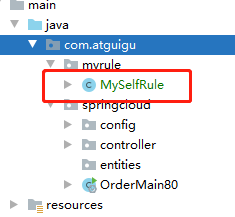
(4)在com.lun.myrule下新建MySelfRule规则类
package com.atguigu.myrule;import com.netflix.loadbalancer.IRule;import com.netflix.loadbalancer.RandomRule;import org.springframework.context.annotation.Bean;import org.springframework.context.annotation.Configuration;@Configurationpublic class MySelfRule {@Beanpublic IRule myRule(){return new RandomRule();}}
(5)主启动类
@RibbonClient(name = “CLOUD-PAYMENT-SERVICE”, configuration = MySelfRule.class)
import com.lun.myrule.MySelfRule;import org.springframework.boot.SpringApplication;import org.springframework.boot.autoconfigure.SpringBootApplication;import org.springframework.cloud.netflix.eureka.EnableEurekaClient;import org.springframework.cloud.netflix.ribbon.RibbonClient;@SpringBootApplication@EnableEurekaClient//添加到此处@RibbonClient(name = "CLOUD-PAYMENT-SERVICE", configuration = MySelfRule.class)public class OrderMain80{public static void main( String[] args ){SpringApplication.run(OrderMain80.class, args);}}
(6)测试
开启cloud-eureka-server7001,cloud-consumer-order80,cloud-provider-payment8001,cloud-provider-payment8002
浏览器-输入http://localhost/consumer/payment/get/1
返回结果中的serverPort在8001与8002两种间反复横跳。
4. Ribbon负载均衡算法
4.1 原理
默认负载轮训算法: rest接口第几次请求数 % 服务器集群总数量 = 实际调用服务器位置下标,每次服务重启动后rest接口计数从1开始。
List
如:
List [0] instances = 127.0.0.1:8002
List [1] instances = 127.0.0.1:8001
8001+ 8002组合成为集群,它们共计2台机器,集群总数为2,按照轮询算法原理:
当总请求数为1时:1%2=1对应下标位置为1,则获得服务地址为127.0.0.1:8001
当总请求数位2时:2%2=О对应下标位置为0,则获得服务地址为127.0.0.1:8002
当总请求数位3时:3%2=1对应下标位置为1,则获得服务地址为127.0.0.1:8001
当总请求数位4时:4%2=О对应下标位置为0,则获得服务地址为127.0.0.1:8002
如此类推…
4.2 RoundRobinRule源码分析
public interface IRule{/** choose one alive server from lb.allServers or* lb.upServers according to key** @return choosen Server object. NULL is returned if none* server is available*///重点关注这方法public Server choose(Object key);public void setLoadBalancer(ILoadBalancer lb);public ILoadBalancer getLoadBalancer();}
package com.netflix.loadbalancer;import com.netflix.client.config.IClientConfig;import org.slf4j.Logger;import org.slf4j.LoggerFactory;import java.util.List;import java.util.concurrent.atomic.AtomicInteger;/*** The most well known and basic load balancing strategy, i.e. Round Robin Rule.** @author stonse* @author Nikos Michalakis <nikos@netflix.com>**/public class RoundRobinRule extends AbstractLoadBalancerRule {private AtomicInteger nextServerCyclicCounter;private static final boolean AVAILABLE_ONLY_SERVERS = true;private static final boolean ALL_SERVERS = false;private static Logger log = LoggerFactory.getLogger(RoundRobinRule.class);public RoundRobinRule() {nextServerCyclicCounter = new AtomicInteger(0);}public RoundRobinRule(ILoadBalancer lb) {this();setLoadBalancer(lb);}//重点关注这方法。public Server choose(ILoadBalancer lb, Object key) {if (lb == null) {log.warn("no load balancer");return null;}Server server = null;int count = 0;while (server == null && count++ < 10) {List<Server> reachableServers = lb.getReachableServers();List<Server> allServers = lb.getAllServers();int upCount = reachableServers.size();int serverCount = allServers.size();if ((upCount == 0) || (serverCount == 0)) {log.warn("No up servers available from load balancer: " + lb);return null;}int nextServerIndex = incrementAndGetModulo(serverCount);server = allServers.get(nextServerIndex);if (server == null) {/* Transient. */Thread.yield();continue;}if (server.isAlive() && (server.isReadyToServe())) {return (server);}// Next.server = null;}if (count >= 10) {log.warn("No available alive servers after 10 tries from load balancer: "+ lb);}return server;}/*** Inspired by the implementation of {@link AtomicInteger#incrementAndGet()}.** @param modulo The modulo to bound the value of the counter.* @return The next value.*/private int incrementAndGetModulo(int modulo) {for (;;) {int current = nextServerCyclicCounter.get();int next = (current + 1) % modulo;//求余法if (nextServerCyclicCounter.compareAndSet(current, next))return next;}}@Overridepublic Server choose(Object key) {return choose(getLoadBalancer(), key);}@Overridepublic void initWithNiwsConfig(IClientConfig clientConfig) {}}
4.3 Ribbon之手写轮询算法
自己试着写一个类似RoundRobinRule的本地负载均衡器。
- 7001/7002集群启动
8001/8002微服务改造- controller ```java @RestController @Slf4j public class PaymentController{
…
@GetMapping(value = “/payment/lb”) public String getPaymentLB() { return serverPort;//返回服务接口 }
… }
80订单微服务改造<br />1.ApplicationContextConfig去掉注解@LoadBalanced,OrderMain80去掉注解@RibbonClient```javaimport org.springframework.cloud.client.loadbalancer.LoadBalanced;import org.springframework.context.annotation.Bean;import org.springframework.context.annotation.Configuration;import org.springframework.web.client.RestTemplate;@Configurationpublic class ApplicationContextConfig {@Bean//@LoadBalancedpublic RestTemplate getRestTemplate(){return new RestTemplate();}}
2.创建LoadBalancer接口
import org.springframework.cloud.client.ServiceInstance;

import java.util.List;

/**
 */
public interface LoadBalancer
{
    ServiceInstance instances(List<ServiceInstance> serviceInstances);
}
3.MyLB
实现LoadBalancer接口
import org.springframework.cloud.client.ServiceInstance;
import org.springframework.stereotype.Component;

import java.util.List;
import java.util.concurrent.atomic.AtomicInteger;

/**
 */
@Component//需要跟主启动类同包,或者在其子孙包下。
public class MyLB implements LoadBalancer
{

    private AtomicInteger atomicInteger = new AtomicInteger(0);

    public final int getAndIncrement()
    {
        int current;
        int next;

        do {
            current = this.atomicInteger.get();
            next = current >= 2147483647 ? 0 : current + 1;
        }while(!this.atomicInteger.compareAndSet(current,next));
        System.out.println("*****第几次访问,次数next: "+next);
        return next;
    }

    //负载均衡算法:rest接口第几次请求数 % 服务器集群总数量 = 实际调用服务器位置下标  ,每次服务重启动后rest接口计数从1开始。
    @Override
    public ServiceInstance instances(List<ServiceInstance> serviceInstances)
    {
        int index = getAndIncrement() % serviceInstances.size();

        return serviceInstances.get(index);
    }
}
4.OrderController
import org.springframework.cloud.client.ServiceInstance;
import org.springframework.cloud.client.discovery.DiscoveryClient;
import com.lun.springcloud.lb.LoadBalancer;

@Slf4j
@RestController
public class OrderController {

    //public static final String PAYMENT_URL = "http://localhost:8001";
    public static final String PAYMENT_URL = "http://CLOUD-PAYMENT-SERVICE";

    ...

    @Resource
    private LoadBalancer loadBalancer;

    @Resource
    private DiscoveryClient discoveryClient;

    ...

    @GetMapping(value = "/consumer/payment/lb")
    public String getPaymentLB()
    {
        List<ServiceInstance> instances = discoveryClient.getInstances("CLOUD-PAYMENT-SERVICE");

        if(instances == null || instances.size() <= 0){
            return null;
        }

        ServiceInstance serviceInstance = loadBalancer.instances(instances);
        URI uri = serviceInstance.getUri();

        return restTemplate.getForObject(uri+"/payment/lb",String.class);

    }
}
5.测试 不停地刷新http://localhost/consumer/payment/lb,可以看到8001/8002交替出现。

若有收获,就点个赞吧
0 人点赞


