 The internet has changed our lives in many ways, from the way we consume news to how we communicate with friends and family. From Facebook to blogging, the internet has opened up new channels of communication. Using a device you can carry around with you, you can now share text, images, and videos. Being able to gain the benefits the internet can offer is part of being an effective digital citizen. Before you consider these opportunities, think about the scale and reach of the internet.
互联网有多大?How big is the internet?
Before you click on the link in the section below, I want you to make some predictions:
- In your country, what percentage of the population are internet users?
- Which countries have the fastest rate of growth for internet usage?
- How many blog posts are written worldwide every day?
To test your predictions, have a look at Internet Live Stats. It gives a mind-blowing live view of the internet in the form of usage statistics; it would be pointless quoting any statistics, though, as by the time you read this they will be hopelessly out of date!
If these statistics seem too big to comprehend, it’s probably because they are. They illustrate that the internet is massive, and still growing. They also highlight why, as an educator, you need to play a key role in teaching children how and why they can use computers and the internet to their advantage.
小中见大 Start small, think big
As the internet is so big now, it can be difficult for your learners to grasp that it came from small beginnings. In 1995 there were only 16 million (0.4% of the population) users of the internet worldwide; by 2020 that figure had increased to over 4.8 billion (62%). Source: Internet World Stats.
All the websites and devices referred to on the Internet Live Stats website started with an idea. For example, YouTube was first created when three friends — Chad Hurley, Steve Chen, and Jawed Karim — realised that they found it difficult to share or view videos online. While they may have had big ambitions for their video-sharing platform, they could not have predicted how large it would eventually become.
At a more relatable level, there is EduBlocks. This was created by Joshua Lowe, who at the time was only 12 years old. He spotted that the transition from a block-based coding language, such as Scratch, to a text-based language, such as Python, was difficult for some. This inspired him to create EduBlocks, a drag-and-drop interface for Python which introduced the language and the syntax, but minimised errors by reducing the possibility of typing errors. This solution is now being used in schools in over 120 countries. This resulted in Joshua becoming a BT Young Pioneer finalist in 2019.
Somewhere, someone has an idea that will evolve into a widely used device or service. It could even be a child in your class or school. What can you, as an educator, do to make this more likely?
全球用户 A global audience
The very nature of the internet offers children and young people opportunities that would not have been possible without a global communications network. From their own school or home, children can create and make, and then share their projects worldwide.
There are some fantastic initiatives that encourage children to be creative with technology, such as Coolest Projects, which runs annually in the UK, USA, and internationally. Coolest Projects provides children with a platform to share their technology projects with a wider audience and become part of a larger community of makers.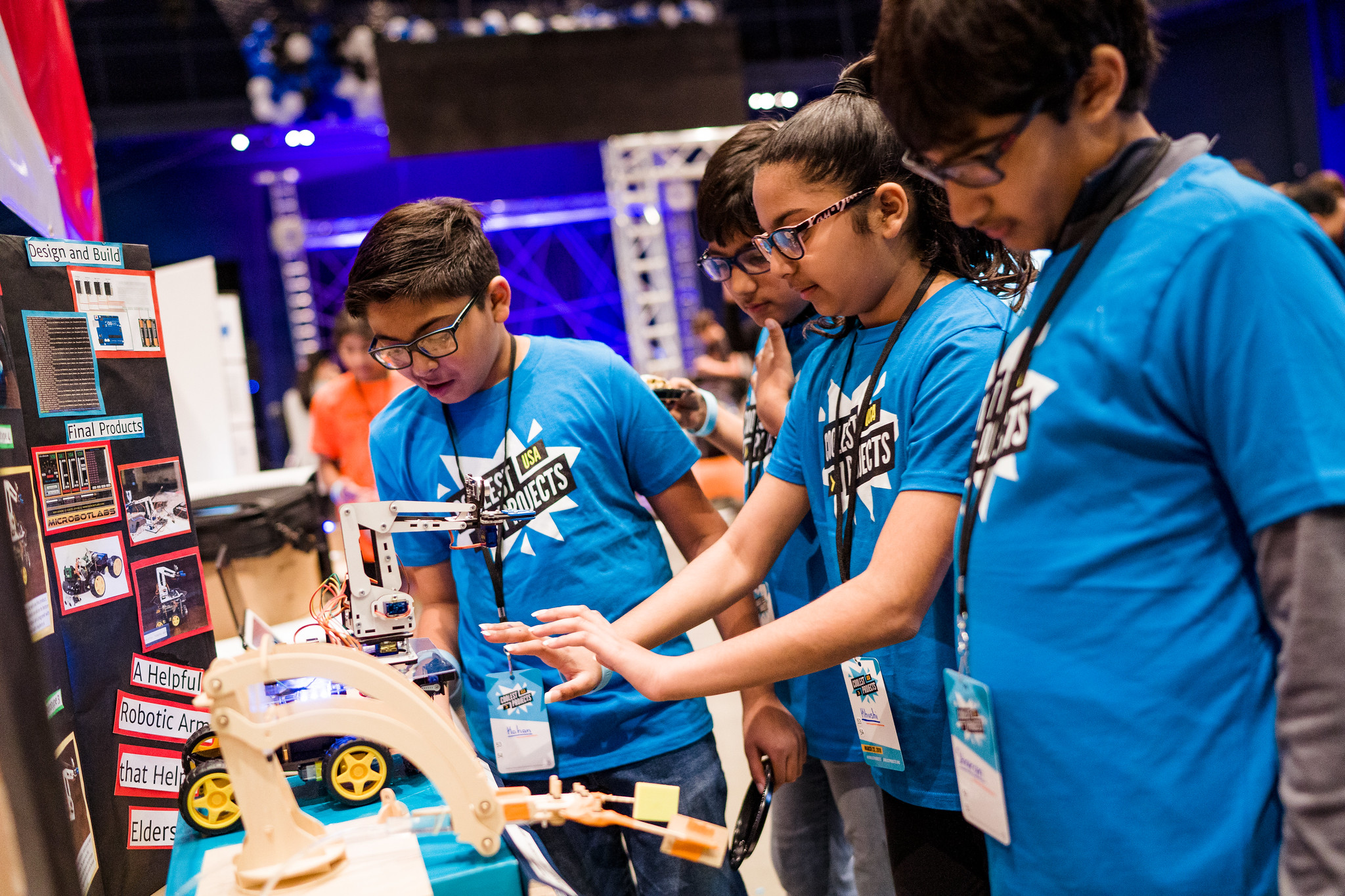
As Coolest Projects has very few constraints, children are able to work on projects that are meaningful to them. Even if their projects are niche, the global audience of Coolest Projects means that they can share their projects with those who have a similar perspective or interest, as well as sharing their unique perspective with the wider world.
For the 2020 event (held online) Oisín and Naoise, two brothers from Ireland, created Autistically Awesome, a five-minute animation in Scratch which they describe as “a powerfully emotive conversation between myself and my younger brother examining how autism affects our lives”. This project provides a first-hand description of autism, a perspective which is rarely heard. It was chosen as a favourite by Mitchel Resnick, one of the creators of Scratch and a Coolest Projects judge. By featuring in the Coolest Projects showcase and through Mitchel Resnick’s endorsement, this project and its message have reached and informed a new, wider audience.
Have a look at the showcase and the judges’ favourites from this year’s event. In the comments section below, link to any projects you particularly enjoyed and explain how you think they could inspire your learners to become more creative with technology.
字幕: 0:03Skip to 0 minutes and 3 secondsThe internet has changed our lives, from consuming news and talking with your family on social media, to sending a picture from your phone to friends on the other side of the world. If you visit Internetlivestats.com, you can get a mindblowing view of the scale of the internet that can be quite hard to comprehend. At the time of recording, in December of 2020, we can see that there are over 4.75 billion internet users in the world and over 1.82 billion total number of websites. It’s incredible to see the phenomenal rate of emails being sent or videos viewed on YouTube. By the time you’re watching this video, these statistics will be completely out of date. 0:45Skip to 0 minutes and 45 secondsVisit Internetlivestats.com for yourself right now and compare these figures and how they have changed in the time since recording. The internet offers children and young people opportunities that would not have been possible without a global communications network. For example, Coolest Projects is a fantastic initiative that encourages children to be creative with technology and share their projects worldwide. Follow the links in the article below to browse the showcase and judges’ favourites from this year’s Coolest Projects event. Which project stood out to you? Share your favourites in the comments section, and discuss how it might inspire your learners to be more creative with technology.

若有收获,就点个赞吧
0 人点赞


