The head of inclusion and computational design at WordPress parent company Automattic thinks that designers should be more like supporting actors to the leading characters at tech companies–the developers and product managers.
WordPress母公司Automattic inclusion and computational 设计部门的领导前田约翰认为,在科技公司,设计师更应该像一个配角,而主角是开发者和产品经理。
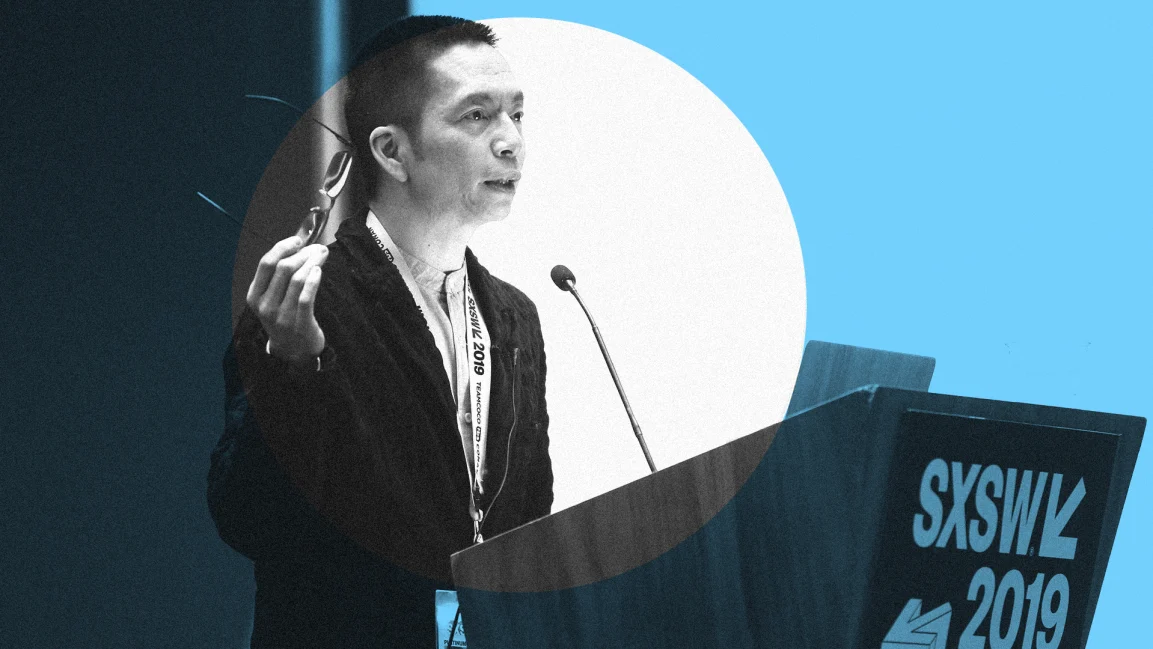
前田约翰 在 2019年DesignInTech上的演讲. [Photo: Hutton Supancic/Getty Images/SXSW]
What is design’s role in business? For years, designers have advocated for more decision-making power at companies, with the goal of building humanistic products that serve users instead of corporate interests or technological advancement alone. Recent studies have shown that design does have a substantial impact on a business’ bottom line, inspiring countless companies to reposition themselves as “design-led.” Consider how many large corporations have acquired independent design firms in the past few years alone.
设计在业务中扮演了一个什么样的角色?多年以来,人们一直提倡设计师在公司内应该拥有更多的决策权,目的是构建人性化的产品来服务用户,而不单单是为了企业利益或者技术进步。最新研究表明,设计确实对产品的下限产生了重大影响,也促使许多公司用“设计主导”来重新定位自己。想想过去几年中,有多少大公司收购了独立的设计公司,我们就能看出这样的趋势。
But design luminary John Maeda proposes that the idea–one he has previously advocated for–is flawed. “I have friends at all the companies and I kept hearing about ‘design-led’ and all that and it got me excited. I was pushing for it,” he says. “Years later now, I’m in a phase where I realize that [advocacy] was really important, but in reality, design is not that important.”
但是设计大师前田约翰发觉他之前宣传的“设计主导”理念是有缺陷的。“我之前非常高兴“设计主导”这个理念在许多公司中口口相传,而这正是我当时想要努力推动的。但是多年后的今天,我意识到对于一个理念来说,‘宣传’这个行为很重要,然而就这个理念本身来说,设计其实对于业务并没有那么重要。”
Hold on. What?
等一下,怎么回事?
Maeda, who is the head of inclusion and computational design at WordPress parent company Automattic, thinks that design should play a secondary role in tech companies rather than a leadership role. In Maeda’s annual Design in Tech report, he says the design should be like a supporting actor or actress to the leading characters in a tech company–developers and product managers. When companies become design-led, he believes, designers are saying “get out of the way, I’m the boss.” The forceful “I’m the boss” mentality combines with design’s tendency to become what he calls a “microworld of aesthetic highfives”: in which designers have an invisible language about what good design looks like based on a history and experience that they tend to privilege, and this understanding that designers together at the exclusion of others. Maeda thinks these two elements end up alienating other disciplines when everyone should be working together.
前田,WordPress母公司Automattic inclusion and computational 设计部门的领导,但他认为在科技公司,设计应该扮演辅助角色,而不是领导角色。他的年度科技设计报告中指出,设计在科技公司中应该更像一个配角,而主角是开发者和产品经理。当公司变成由设计主导,设计师们就会说,“去去去,这儿我说了算。”这种强有力的“我说了算”的心态和设计趋势相结合,就会变成他所谓的“为细枝末节的美而击掌”:关于优秀的设计应该是什么样子的,设计师们有一种天然的默契,这种默契是基于设计演变和工作经验的积累得来的,同时也让他们形成了独有的圈子。前田认为,当大家一起工作时,这两个因素会让设计师们疏远本应协同工作的其他人员。
“Over half the designers still want to make things beautiful and can’t help it. That’s a built-in competency,” Maeda says. “To a business person that seems irrelevant. To the developer, it’s like, ‘I have to build that.’”
“超过半数的设计师仍然无法自拔地想让产品变得更美,这是一种条件反射般的能力,”前田说,“对于一个商人来说,产品的美无关紧要,而对于开发者来说,花时间在产品的外观上更像是不得已而为之。”
Instead, Maeda thinks that designers should focus on being good teammates rather than leaders. Worrying too much about whether design has enough influence over a product or a company distracts from the real vision: making great products that solve people’s problems.
与成为领导者相反,前田认为设计师应该致力于成为好搭档。过于担心设计是否对产品或公司有足够的影响力,会干扰公司实现真正的愿景:做帮助人们解决问题的好产品。
 [Photo: Alvaro Reyes/Unsplash]
It’s a controversial stance, given how much Maeda and other design industry leaders have argued for design becoming a more powerful discipline within organizations. “Designers are used to being the benchwarmer and called into spray smell on something, and they’ve been so hurt, they’re tired of it, they want to fight back and organize,” he says. “I think in the past … I was advocating for design in general, I had to be a symbolic leader of that. I felt responsible to do that.”
这是一个具有争议的观点,尤其是前田和设计行业的其他领袖已经为设计在组织中能变得更有影响力而争论已久。“长期以来,设计师一直在充当替补队员的角色,按照别人的要求去工作。他们感到不舒服,他们厌倦这种感觉,他们想要组织和反击。”前田说,“过去,我总是全方位地提倡设计,我不得不变成这个理念的精神领袖,因为我总感觉这是我的职责。”
But Maeda says the last three years at Automattic have changed his perspective. “I kept meeting so many people who were telling me I’m wrong: designers in tech companies saying, ‘You don’t know what you’re talking about.’” These detractors pushed back on Maeda’s initial desire for design leadership at all costs, and encouraged him to think about how such an approach doesn’t always mesh with the day-to-day realities of in business.
但是前田说,在Automattic的最后三年中他改变了观点。“不断有人对我说你错了。科技公司的设计师对我说,‘你根本不知所云’”。这些批评者反驳了前田最初不惜一切代价追求设计主导的想法,并促使他开始思考这种想法与真实生活中的业务多么不吻合。
Of course, the problem isn’t limited to designers or design. Many disciplines suffer from “the microworld of high-fives”–including engineers and product managers. Maeda believes it’s detrimental to a business on a whole because it comes at the cost of teamwork. But for designers, it is especially critical to work with developers. “We know that tech people are in charge of the world: They can approve pull requests and they push the code out and right or wrong happens,” he says. “But if you can’t work with developers, you’re not going to make a dent in the universe.” In other words, the only way to change the system is to work within it.
当然了,这种情况并不局限于设计师或设计行业,许多岗位都受到了“为细枝末节的美而击掌”这种情况的影响,包括工程师和产品经理。前田认为这对企业整体是有害的,因为它是以牺牲团队合作为代价的。而对于设计师来说,和开发者的合作其实非常重要。“我们知道技术人员掌控着世界。他们可以批准需求,提交代码,然后才有接下来的一切。”他说,“但如果你不能和开发合作,你就是在做无米之炊。”换句话说,先有系统,然后你才能在里面进行修改。
Ultimately, Maeda believes that when designers do get more power than their developer counterparts, they build weaker products. “I find that any company that wishes to be design-led is going to index high on experience quality. If [the company’s] audience is designers, and people with high standards of quality, then fantastic. But if they do that, maybe they won’t worry about the tech stack, that actually it’s a brittle tech stack and maybe it works 99 times out of 100,” he says. “If they’re so focused on experience, maybe they’re not going to be asking product questions about is this going to help us break even.” Take, for instance, Jawbone, which once had a $1.5 billion valuation. But its product Up, a wearable fitness tracker that was supposed to be the hottest gadget of 2011, was a flop. At the time, Cliff Kuang wrote about how Up had impeccable design (by well-known Silicon Valley designer Yves Behar)–but couldn’t recommend the product because the software was so buggy, it was virtually useless. Ultimately, the product (and the company) failed. The lesson? Beautiful industrial design means nothing when paired with poor engineering.
最终,前田认为,当设计师获得了比他们的开发同行更多的话语权时,他们构建的产品却变差了。“我发现所有以设计主导的公司都想在用户体验方面得高分。如果该公司的受众是设计师和高审美水平的人,那大家一拍即合。但要是真的有那么高的质量,也许他们就不必担心技术上会有堆栈问题了。事实上,他们的技术堆栈还是异常脆弱,运行100次可能只有99次成功。”他说,“如果他们过于专注于用户体验,也许就不会关心产品本身的问题,比如它能否帮我们实现收支平衡。”举例来说,Jawbone是一家估值1.5亿的公司,他们的产品Jawbone Up健身手环本应是2011年最热门的产品,但最终却销量惨淡。当时Cliff Kuang写了一篇文章,讲述了Jawbone Up的设计如何完美,但却不推荐它,因为其软件的漏洞太多,几乎毫无用处。最终,产品失败,公司也倒闭了。从这个例子我们得知,在拙劣的工程设计面前,再漂亮的工业设计都毫无意义。
Maeda isn’t the only design thinker to take issue with the concept of “design-led” companies. Airbnb’s head of design, Alex Schleifer, believes that design-led cultures tend to devalue other people’s opinions and insights. He has built his design organization so that designers aren’t given special treatment; instead, product managers are tasked entirely with representing the perspective of the user, rather than their group with the organization.
前田并不是唯一一个对“设计主导”这一公司理念提出异议的设计思想家。Airbnb的设计主管Alex Schleifer认为,以设计为主导的文化往往会贬低其他人的意见和想法。因此他创立了自己的设计机构,这样设计师就不会被特别对待。同样的,产品经理的任务是完全代入用户的视角,而非公司和团队。
For Maeda, design taking a supporting role is not a negative thing for designers. Instead, it just gives them a chance to work with their colleagues as a team–which, he insists, will ultimately lead to better design. “Some people’s reaction has been, what a terrible thing. It’s about ‘design-led, design-driven, design insert-your-word,’” he says. “I say, [what about] those movies where best supporting actor or actress steals the show?”
对于前田来说,设计在项目中扮演辅助的角色对于设计师并不是一件坏事。相反,他认为这会让他们有机会参与团队合作,而这最终会带来更好的设计。“有些人的反应一直是,这太可怕了,应该是‘设计主导,设计驱动,设计贯穿始终。’”他说,“我就告诉他们,那些最佳配角抢了主角风头的电影你觉得怎么样?”
译者后记:别被开头标题骗了,其实这篇看似有争议的文章所指出的是传统设计师角色的局限性 —— 只关注设计本身。这篇文章近日在设计圈里一石激起千层浪,正如文中说的,前田在过去的几年里一直推崇“设计主导”,但其突然的转变让很多“设计主导”的忠实信徒感到无所适从,有人尴尬有人迷茫,也有人试图用其余公司和产品举例来证明“设计主导”其实是非常成功的。后来前田在他的个人博客中发文澄清,他想表达的其实是将公司和产品的重点放在客户的需求上,而作为一个团队不同岗位分工合作是达到这一目的的最好方式。
关于文中提到的“为细枝末节的美而击掌”,译者认为前田描述的是一种钻牛角尖的情况,即作为一个设计师,为了作品里局部细节的美而沾沾自喜,却忽略了设计到底能对产品带来怎样的帮助。不得不说,这种情况在真实的设计工作中的确时有发生。
关于设计主导这个概念,不同的公司有不同的解读,但很多优秀的公司都不约而同都地强调了设计师视角的提升:从界面到流程,再到业务和商业模式。我认为前田的反对更像是对“设计主导”这个概念的一次重新解读,即“单一的设计视角无法更好地帮助公司和产品取得成功”。抛开技术的部分不谈,如何发掘客户的需求,如何发现关键问题,如何理解和优化业务模型等,这些都是狭义的“设计”之外却又与设计一脉相承的话题。也许当设计师的眼光从界面中移开,转而去探寻和思考更多方法和真相的时候,“设计主导”就能给企业和产品带来更多的价值。

若有收获,就点个赞吧
0 人点赞


