概念
拓扑排序,就是将图中的所有节点展开成一维序列,对于序列中任意的节点  ,如果在序列中
  在
在  的前面,则说明在图中存在从
  出发到达
出发到达  的通路,即
的通路,即  排在
排在  的前面,反之亦然。
入度
出度
由该节点指向其出边的条数。
对于有向图的拓扑排序,我们可以使用 **BFS** 的方式输出拓扑排序:
- 起始阶段:将所有入度为
0的节点入队。 - 从队列中进行节点出队操作,出队序列就是我们输出的拓扑排序。对于弹出的节点
 ,遍历
,遍历  的所有出度,统称
  ,对
,对  的做入度减 1 操作,含义是因为
  从队列中弹出,被添加到拓扑序中,等价于
  从图中被移除。
- 判断
 的入度是否为
 0,如果是则 入队,加入拓扑排序。
以上操作能完成的前提是:必然能够找到至少一个入度为 0 的起点。
问题转化
题目
- 构建邻接矩阵/邻接表。
- 计算入度数组。
- 将入度为 0 的节点放入队列
queue。 while(!queue.isEmpty())。- 弹出节点 i,遍历 i 所有指向的其它节点,使其入度数减 1,如果入度数 = 0,则添加进队列中。
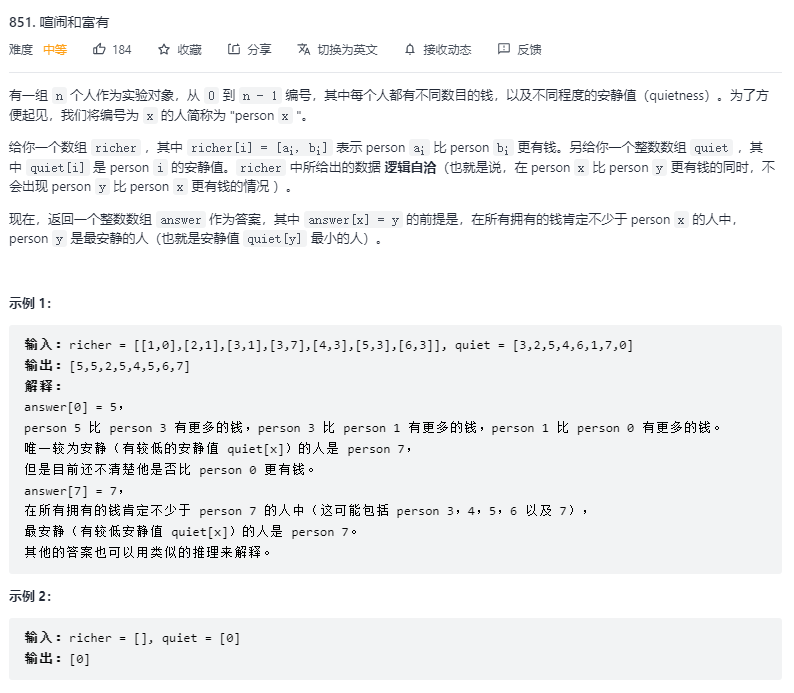
本题有点绕,求一个 ans[x] = y 数组,含义为比 x 钱多的所有人中,quiet 最小的为 y 。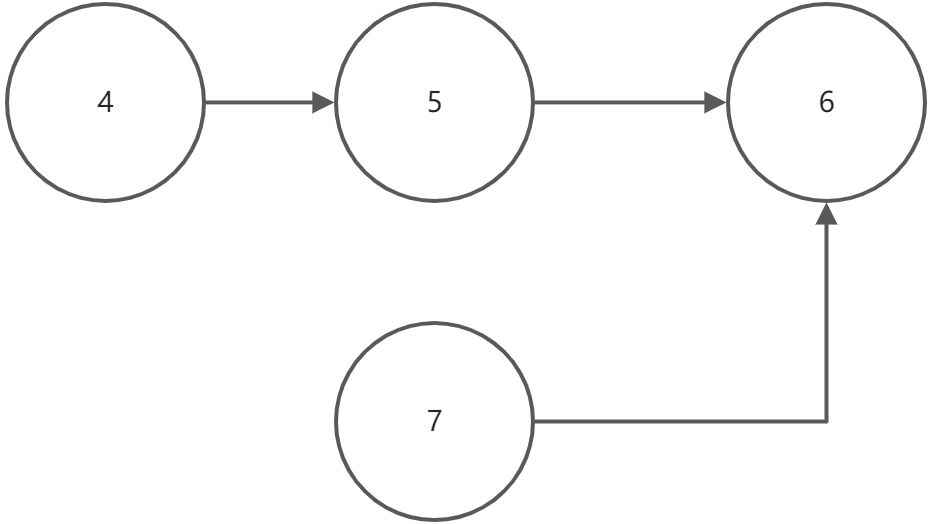
- 每个节点的默认安静值是自己。
数组
ans保存每个节点对应的最小安静值所对应的节点 ID,所以在#1比较的时候,也是使用ans[pool]来操作。class Solution {public int[] loudAndRich(int[][] richers, int[] quiet) {int len = quiet.length;// 在所有拥有钱肯定不少于person[x]的人中,person[y]是最安静的int[] ans = new int[len];// 入度数组int[] in = new int[len];// ① 建图(邻接表、邻接矩阵),并统计入度数// (a, b) a比b有钱,构建一个有向图,a->bList<Integer>[] table = buildGraph(richers, in, len);int k = 0;// 将入度 0 放入队列中Deque<Integer> queue = new ArrayDeque<>();for (int i = 0; i < len; i++) {ans[i] = i;}for (int i = 0; i < len; i++) {// 初始化 ans 数组// ans[i] = quiet[i];if (in[i] == 0) {queue.addLast(i);}}// 拓扑排序while (!queue.isEmpty()) {int richer = queue.pollLast();// 获取 removeIndex 指向的所有节点List<Integer> targetList = table[richer];for (int poor : targetList) { // i 表示所指向的节点in[poor]--; // 入度数减 1// #1if (quiet[ans[poor]] > quiet[ans[richer]]) {ans[poor] = ans[richer];}if (in[poor] == 0) {queue.addLast(poor);}}}return ans;}// 构建邻接矩阵图List<Integer>[] buildGraph(int[][] richers, int [] in, int len) {List<Integer>[] graph = new LinkedList[len];for (int i = 0; i < len; i++) {graph[i] = new LinkedList<>();}for (int[] richer : richers) {int from = richer[0];int to = richer[1];in[to]++;graph[from].add(to);}return graph;}}

若有收获,就点个赞吧
0 人点赞


