1、剑指 Offer 34.二叉树中和为某一值
1.1 题目
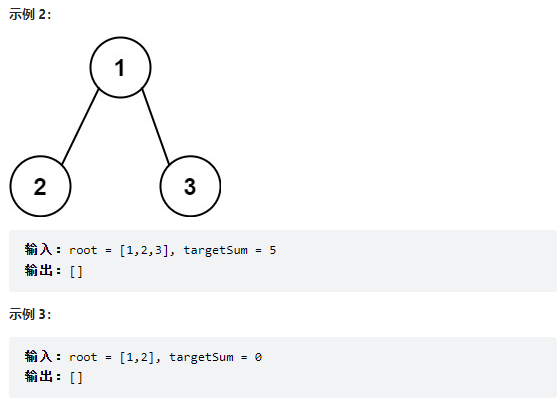
给你二叉树的根节点 root 和一个整数目标和 targetSum ,找出所有 从根节点到叶子节点 路径总和等于给定目标和的路径。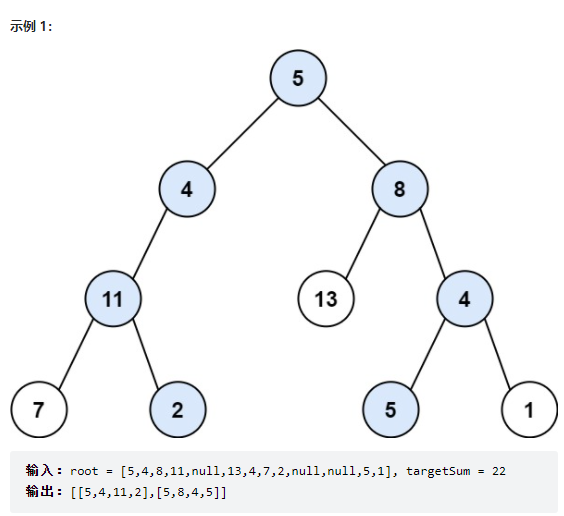
1.2 思路
整体还是一个二叉树的先序遍历,需要注意以下两点:
- 判断trace是否添加到res的条件,不需要到root==null,只要root的左右子树都为null,且target已经减到零时就可以将trace添加到res了;
- 一定要注意:由于trace是一个引用,指向堆中唯一一块内存,递归中trace指向的也是同一个对象,因此当前节点add到trace,并递归了节点的左右子树之后,需要把节点从trace里remove掉,否则递归向上走到11时时,trace里还有之前的7。
1.3 代码
class Solution {private List<List<Integer>> res = new ArrayList<>();private LinkedList<Integer> trace = new LinkedList<>();public List<List<Integer>> pathSum(TreeNode root, int target) {if (root == null) {return res;}dfs(root, target);return res;}private void dfs(TreeNode root, int target) {if (root == null) {return;}trace.addLast(root.val);target -= root.val;if (root.left == null && root.right == null && target == 0) {res.add(new ArrayList<>(trace));}dfs(root.left, target);dfs(root.right, target);trace.removeLast();}}
2、剑指 Offer 38. 字符串的排列
2.1 题目
输入一个字符串,打印出该字符串中字符的所有排列。你可以以任意顺序返回这个字符串数组,但里面不能有重复元素。
示例:
输入:s = “abc” 输出:[“abc”,”acb”,”bac”,”bca”,”cab”,”cba”]
2.2 思路
这道题是回溯算法的经典题目。但需要注意以下几点:
- 字符串s里可能出现重复字母,比如aab,此时如果对结果不去重,会出现两个aab和两个baa,因为两个a是下标区分的,因此结果可以用set去重;
由于字符串每个下标上的字母只能使用一次,因此需要维护一个visited数组,当下标对应的字母add进sb时,则visited数组对应下标记为1,代表当前字符串对应下标的字母已经被使用了,在回退时也要将visited数组对应下标的值恢复为0。
2.3 代码
class Solution {public String[] permutation(String s) {Set<String> set = new HashSet<>();StringBuilder sb = new StringBuilder();int[] visited = new int[s.length()];trace(s, set, sb, visited);return set.toArray(new String[0]);}private void trace(String s, Set<String> set, StringBuilder sb, int[] visited) {if (sb.toString().length() == s.length()) {set.add(sb.toString());return;}for (int i = 0; i < s.length(); ++i) {if (visited[i] == 1) {continue;}sb.append(s.charAt(i));visited[i] = 1;trace(s, set, sb, visited);// 回退sb.deleteCharAt(sb.toString().length() - 1);visited[i] = 0;}}}
3、剑指 Offer 12.矩阵中的路径
3.1 题目
给定一个 m x n 二维字符网格 board 和一个字符串单词 word 。如果 word 存在于网格中,返回 true ;否则,返回 false 。单词必须按照字母顺序,通过相邻的单元格内的字母构成,其中“相邻”单元格是那些水平相邻或垂直相邻的单元格。同一个单元格内的字母不允许被重复使用。
例如,在下面的 3×4 的矩阵中包含单词 “ABCCED”(单词中的字母已标出):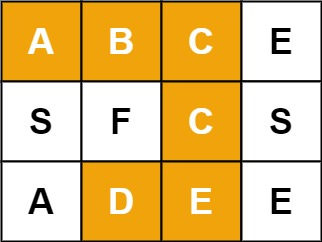
示例 1:输入:board = [[“A”,”B”,”C”,”E”],[“S”,”F”,”C”,”S”],[“A”,”D”,”E”,”E”]], word = “ABCCED” 输出:true
示例 2:
输入:board = [[“a”,”b”],[“c”,”d”]], word = “abcd” 输出:false
3.2 思路
这道题是深度优先搜索和回溯思想的结合。
- 由于不能走已经走过的格子,因此需要维护一个二维数组visited,来记录哪些坐标已经走过了,dfs到上下左右的坐标时,需要判断当前的坐标是否已经走过,走过就不能再走了直接return;
- 注意dfs的起点,题中意思是路径的起始点可以是矩阵中的任意点,因此需要遍历这个二维数组,以数组中的任意一个点作为路径的起始点去dfs;
在dfs里需要注意回溯思想中的“添加”和“回退”。进入dfs后,开始下一轮dfs前,如果当前坐标对应的值可以添加到路径,则需要将当前坐标对应的visited二维数组中的点置为true,当前点的dfs退出前,需要将当前坐标对应的visited二维数组中的点置为false;
3.3 代码
class Solution {private boolean[][] visited;public boolean exist(char[][] board, String word) {int h = board.length;int w = board[0].length;visited = new boolean[h][w];for (int i = 0; i < h; ++i) {for (int j = 0; j < w; ++j) {if (dfs(i, j, 0, board, word)) {return true;}}}return false;}private boolean dfs(int i, int j, int index, char[][] board, String word) {if (board[i][j] != word.charAt(index)) {return false;}if (index == word.length() - 1) {return true;}visited[i][j] = true;int[][] directions = new int[][]{{-1, 0}, {1, 0}, {0, -1}, {0, 1}};for (int[] direction: directions) {int ii = i + direction[0];int jj = j + direction[1];if (isValid(ii, jj, board) && !visited[ii][jj]) {if (dfs(ii, jj, index + 1, board, word)) {return true;}}}visited[i][j] = false;return false;}private boolean isValid(int i, int j, char[][] board) {int h = board.length;int w = board[0].length;return i >= 0 && i < h && j >= 0 && j < w;}}
4、46. 全排列
4.1 题目描述
给定一个不含重复数字的数组 nums ,返回其 所有可能的全排列 。你可以 按任意顺序 返回答案。
示例 1:
输入:nums = [1,2,3] 输出:[[1,2,3],[1,3,2],[2,1,3],[2,3,1],[3,1,2],[3,2,1]]
示例 2:
输入:nums = [0,1] 输出:[[0,1],[1,0]]
示例 3:
输入:nums = [1] 输出:[[1]]
4.2 思路
这道题是回溯算法经典的题目,由于非常典型可以说是回溯算法入门的第一道题目。
4.3 代码
class Solution {private List<List<Integer>> res = new LinkedList<List<Integer>>();public List<List<Integer>> permute(int[] nums) {LinkedList<Integer> trace = new LinkedList<Integer>();traceBack(trace, nums);return res;}void traceBack(LinkedList<Integer> trace, int[] nums) {if (trace.size() == nums.length){res.add(new LinkedList(trace));return;}for (int num : nums){if (trace.contains(num)) {continue;}trace.add(num);traceBack(trace, nums);trace.removeLast();}}}
5、78. 子集
5.1 题目描述
给你一个整数数组 nums ,数组中的元素 互不相同 。返回该数组所有可能的子集(幂集)。解集不能包含重复的子集。你可以按任意顺序返回解集。
示例 1:
输入:nums = [1,2,3] 输出:[[],[1],[2],[1,2],[3],[1,3],[2,3],[1,2,3]]
示例 2:
输入:nums = [0] 输出:[[],[0]]
5.2 思路
插入元素顺序:
- 回溯算法顺序:[], [1], [1,2], [1,2,3], [1,3], [2], [2,3], [3], []
非回溯算法顺序:[], [1], [2], [1,2], [3], [1,3], [2,3], [1,2,3]
5.3 代码
回溯解法:
class Solution {private List<List<Integer>> res = new LinkedList<List<Integer>>();public List<List<Integer>> subsets(int[] nums) {LinkedList<Integer> trace = new LinkedList<Integer>();int index = 0;traceBack(trace, nums, index);res.add(new LinkedList());return res;}private void traceBack(LinkedList<Integer> trace, int[] nums, int index) {if (trace.size() == nums.length || index == nums.length) {return;}for (int i = index ; i < nums.length; ++i) {trace.add(nums[i]);res.add(new LinkedList(trace));index = i + 1;traceBack(trace, nums, index);trace.removeLast();}}}
思路清奇的非回溯解法:
class Solution {public List<List<Integer>> subsets(int[] nums) {List<List<Integer>> res = new ArrayList<>();res.add(new ArrayList<>());for (int i = 0 ; i < nums.length; ++i) {int size = res.size();for (int j = 0 ; j < size; ++j) {List<Integer> tmp = new ArrayList<>(res.get(j));tmp.add(nums[i]);res.add(tmp);}}return res;}}
6、39. 组合总和
6.1 题目描述
给定一个无重复元素的数组 candidates 和一个目标数 target ,找出 candidates 中所有可以使数字和为 target 的组合。candidates 中的数字可以无限制重复被选取。
说明:所有数字(包括 target)都是正整数;
- 解集不能包含重复的组合。
示例 1:
输入:candidates = [2,3,6,7], target = 7, 所求解集为: [ [7], [2,2,3] ]
示例 2:
输入:candidates = [2,3,5], target = 8, 所求解集为: [ [2,2,2,2], [2,3,3], [3,5] ]
6.2 思路
还是一个经典的回溯题。需要注意的是:[2 ,2 ,3]和[2, 3, 2]只能出现[2, 2, 3],因此回溯的函数里需要多一个for循环的起始index,将每次trace方法中的当前i的值指定给index,比如上面的例子,[2, 3]中一旦出现了3,就只能新增3之后的数字(包括当前的3),不能再添加前面的2了。
6.3 代码
class Solution {private List<List<Integer>> res = new LinkedList<>();private int target;public List<List<Integer>> combinationSum(int[] candidates, int target) {if (candidates == null || candidates.length == 0) {return res;}LinkedList<Integer> route = new LinkedList<>();this.target = target;trace(candidates, route, 0, 0);return res;}private void trace(int[] candidates, LinkedList<Integer> route, int sum, int start) {if (sum > target) {return;}if (sum == target) {res.add(new LinkedList<>(route));return;}for (int i = start; i < candidates.length; ++i) {route.addLast(candidates[i]);sum += candidates[i];trace(candidates, route, sum, i);route.removeLast();sum -= candidates[i];}}}
7、17. 电话号码的字母组合
7.1 题目
7.2 思路
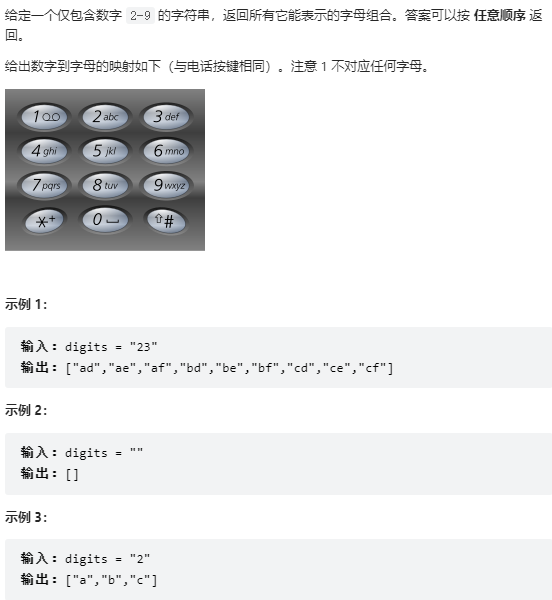
回溯问题中加了点映射关系,整体思路还是回溯,需要注意:
- 相比传统的回溯,由于一个数字可以对应多个字符,因此回溯函数里需要双重循环;
- 由于数字2选取之后,只能从2之后的数字(不包含2)开始选取,因此需要维护一个index,每次新的trace方法遍历digists数组时,需要从这个index开始遍历;
注意这个index的维护,是i + 1, 而不是index + 1。
7.3 代码
class Solution {private static Map<Character, List<Character>> map = new HashMap<>();static {map.put('2', Arrays.asList('a', 'b', 'c'));map.put('3', Arrays.asList('d', 'e', 'f'));map.put('4', Arrays.asList('g', 'h', 'i'));map.put('5', Arrays.asList('j', 'k', 'l'));map.put('6', Arrays.asList('m', 'n', 'o'));map.put('7', Arrays.asList('p', 'q', 'r', 's'));map.put('8', Arrays.asList('t', 'u', 'v'));map.put('9', Arrays.asList('w', 'x', 'y', 'z'));}private List<String> res = new ArrayList<>();public List<String> letterCombinations(String digits) {if (digits == null || digits.length() == 0) {return res;}dfs(digits, new StringBuilder(), 0);return res;}private void dfs(String digits, StringBuilder trace, int index) {if (trace.length() == digits.length()) {res.add(trace.toString());return;}for (int i = index; i < digits.length(); ++i) {List<Character> values = map.get(digits.charAt(i));for (int j = 0; j < values.size(); ++j) {trace.append(values.get(j));dfs(digits, trace, i + 1);trace.deleteCharAt(trace.length() - 1);}}}}
8、494. 目标和
8.1 题目
给你一个整数数组 nums 和一个整数 target 。向数组中的每个整数前添加 ‘+’ 或 ‘-‘ ,然后串联起所有整数,可以构造一个 表达式 :例如,nums = [2, 1] ,可以在 2 之前添加 ‘+’ ,在 1 之前添加 ‘-‘ ,然后串联起来得到表达式 “+2-1” 。返回可以通过上述方法构造的、运算结果等于 target 的不同 表达式 的数目。
示例 1:输入:nums = [1,1,1,1,1], target = 3 输出:5 解释:一共有 5 种方法让最终目标和为 3 。 -1 + 1 + 1 + 1 + 1 = 3 +1 - 1 + 1 + 1 + 1 = 3 +1 + 1 - 1 + 1 + 1 = 3 +1 + 1 + 1 - 1 + 1 = 3 +1 + 1 + 1 + 1 - 1 = 3
示例 2:
输入:nums = [1], target = 1 输出:1
8.2 思路
本题是一道回溯的题目。但是写法与传统的回溯有略微不一样,代码中不用回退(因为多加了一个sum变量的原因)。
8.3 代码
class Solution {private int cnt;public int findTargetSumWays(int[] nums, int target) {trace(nums, target, 0, 0);return cnt;}private void trace(int[] nums, int target, int index, int sum) {if (index == nums.length) {if (sum == target) {++cnt;}} else {trace(nums, target, index + 1, sum + nums[index]);trace(nums, target, index + 1, sum - nums[index]);}}}
参考

若有收获,就点个赞吧
0 人点赞


