概念
首先,数据结构中的堆和堆内存完全不是一个东西。
参考知乎回答:https://www.zhihu.com/question/276016774/answer/385381844
这里,我们讨论数据结构:堆,英文叫,Heap。
堆是一种完全二叉树,它的特点是任何一个节点的子节点一定比其父节点大(或者小),如果整棵树都是比父节点大,它是一个最小堆,反之,则是最大堆。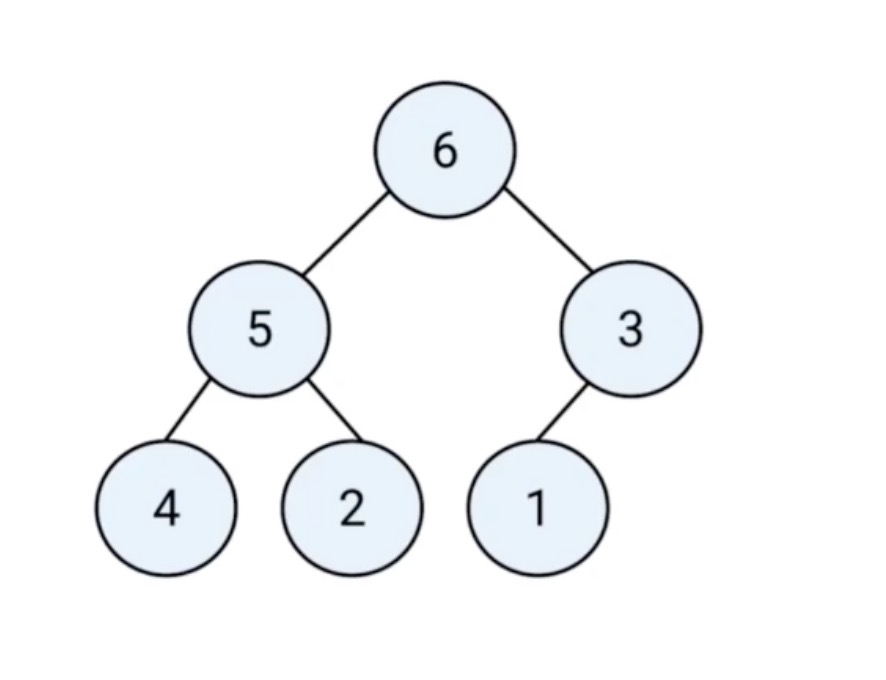
这里需要理解的是,
- 逻辑上,堆是一棵树,完全二叉树(就是除了最后一层节点外,上面的层次是一棵满二叉树)。
- 另外,堆的每一对父子节点顺序是有要求的,要么都是大于关系,要么都是小于关系。
堆的实现
数据结构
从逻辑上来讲,堆是一棵树。但是完全二叉树可以用数组来表示。
比如上面图中所表示的堆,用数组表示就是:
数组:[ 6, 5, 3, 4, 2, 1 ]
下标: 0 1 2 3 4 5
现在要说的是,关于数组表示完全二叉树,有两个重要公式:
任意节点下标index而言, 它的父节点下标是:取整(index - 1 / 2);它的左边子节点是:index 2 + 1;它的右边子节点是:index 2 + 2;
就上面那幅图而言,我们用值是‘5’的节点举例子:
它的下标是1,那么父节点下标 (1 - 0) / 2, 取整为0,没问题,
左边子节点: 2 1 + 1 = 3,没问题,右边 2 1 + 2 = 4 ,也ok。
插入元素算法
堆的数据结构有个特点,就是我们在做任何增加删除操作的时候,都要维持堆的结构,就是保持父子节点的大小关系。
堆插入的算法思想是这样:
先向数组尾部追加一个元素。
找到这个元素的父元素,比较这个元素和父元素的大小关系是否正确,如果正确,那ok,按兵不动。如果不正确,那就要交换父元素和该元素,然后再比较新的父元素,这个过程可能持续到直到一直换到堆顶。
也就是说,最慢情况是,有多少层换了多少次。
n个节点的堆有log(n)层,所以时间复杂度,O(log(n))
删除堆顶算法
删除堆顶的操作,我们的思想是:
先把堆中最后一个元素的弹出,把它的值设置为堆顶。
这时候,堆的稳定性破坏了,但是除了堆顶,其他的节点都ok。
所以,堆顶和它的子节点比较,如果不符合大小关系就换一下,换了以后和新的子节点再比较,不行再换….最终我们就得到删除堆顶以后的一个新的堆。
时间复杂度,依旧,O(log(n))
实现,用TS以及可以做的更多
用TS实现了一个最小堆,不过既然用TS了,那就可以做很多事情了:
/*** 简单实现最小堆类*/class MinHeap {private heap: Array<number>;constructor() {this.heap = [];}// 交换两个元素private swap(aIndex: number, bIndex: number) {const tmp = this.heap[aIndex];this.heap[aIndex] = this.heap[bIndex];this.heap[bIndex] = tmp;}// 得到父节点公式是:子节点下标 - 1 / 2,取整private getParentIndex(index: number) {return Math.floor((index - 1) / 2);}// 得到左右子节点公式// 左子 = index * 2 + 1// 右子 = index * 2 + 2private getLeftChildIndex(index: number) {return index * 2 + 1;}private getRightChildIndex(index: number) {return index * 2 + 2;}// 上移到合适的位置的方法// 和父节点交换private shiftUp(index: number) {if (index === 0) return;const parentIndex = this.getParentIndex(index);if (this.heap[index] < this.heap[parentIndex]) {this.swap(index, parentIndex);this.shiftUp(parentIndex);}}// 下沉到正确的位置// 和子节点交换private shiftDown(index: number) {const leftChildIndex = this.getLeftChildIndex(index);const rightChildIndex = this.getRightChildIndex(index);if(this.heap[index] > this.heap[leftChildIndex]) {this.swap(index, leftChildIndex);this.shiftDown(leftChildIndex);}if(this.heap[index] > this.heap[rightChildIndex]){this.swap(index, rightChildIndex);this.shiftDown(rightChildIndex);}}/*** 插入的方法* 先插入,后上移动到合适的位置*/public insert(value: number) {// 先插入this.heap.push(value);// 上移this.shiftUp(this.heap.length - 1);}/*** 删除堆顶的方法* 先把最后一个元素放在堆顶* 然后让堆顶元素下沉到合适位置*/public pop() {if (this.heap.length === 1) {this.heap.pop();return;}const last = this.heap.pop();if (last) {this.heap[0] = last;this.shiftDown(0);}}/*** 得到对顶元素的值*/public peak() {return this.heap[0];}/*** 得到堆的大小*/public size() {return this.heap.length;}}//////////// testconst h = new MinHeap();h.insert(3);h.insert(2);h.insert(1);h.insert(10);h.pop()
这里有一个番外篇:实战:TS面向对象实现堆数据结构(Heap) (写于等飞机时)
面试题
待补充

若有收获,就点个赞吧
0 人点赞


