class Point {public:Point() {}Point(int x,int y) : x(x),y(y) {}void setX(int x) { this->x = x; }void setY(int y) { this->y = y; }int getX() const { return x; }int getY() const { return y; }private:int x;int y;};struct RectData {Point m_leftup;Point m_rightdown;RectData(Point a,Point b) {m_leftup = a;m_rightdown = b;}};
使用struct,为了使Rectangle对象尽可能小,结构体里函数是不占空间的
避免返回引用指向对象内部成分
//给客户提供的正方形类class Rectangle {public:Rectangle(Point a,Point b) : prd(make_shared<RectData>(RectData(a,b))) {}Point& leftUp() const {return prd->m_leftup;}Point& rightDown() const {return prd->m_rightdown;}private:shared_ptr<RectData> prd;};
int main() {Point cord1(0,0);Point cord2(100,100);const Rectangle rc(cord1,cord2);rc.rightDown().setX(15);cout << rc.rightDown().getX() << endl;return 0;}
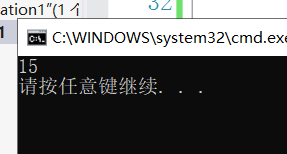
矛盾在于:
1、将leftUp和rightDown声明为const函数,目的不是让调用者修改内部数据;但是函数内部返回引用,调用者可以通过引用修改数据
2、rec不可变,但是也确实修改了数据
结论:
1、当成员函数返回一个引用指向对象内部成分时,该成分访问权限从private升至public
2、logical constness:常成员函数返回一个引用指向对象内部成分,且该成分储存于对象之外(可以理解为引用指向了对象之外),调用者可以修改这个数据。比如operator[]
指针、迭代器同理
解决办法
在返回值处加入const

若有收获,就点个赞吧
0 人点赞


