自我赋值
class Widget {……};Widget w;w = w;//有可能发生的自我赋值a[i] = a[j]; //i = j的话*p = *q; //q和q指向同一块内存class Base {……};class Derived : public Base {};void doSomething(const Base& b,Derived& d); //b和d如果两个对象,来自于同一个继承体系,也有可能指向同一块内存空间
版本一:自我赋值安全
#include<iostream>using namespace std;class Bitmap {};class Widget {public:Widget& operator=(const Widget& rhs) {delete bitmap;bitmap = new Bitmap(*rhs.bitmap); //调用拷贝构造,rhs.bitmap的副本//而不是bitmap = rhs.bitmap,这是一个浅拷贝return *this;}private:Bitmap *bitmap;};int main() {Widget w;w = w;return 0;}
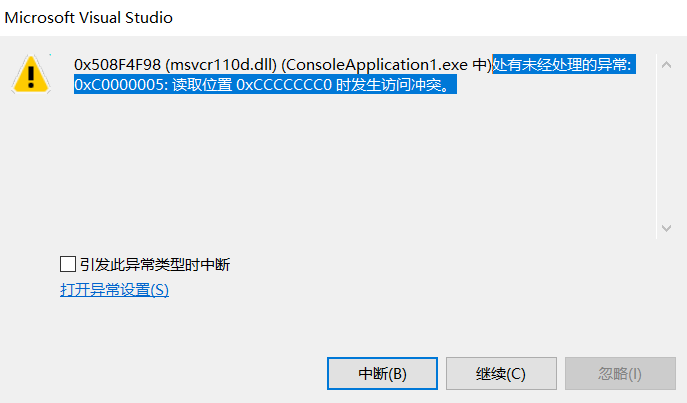
1、bitmap = new Bitmap( rhs.bitmap ); this->bitmap所指向的空间和rhs->bitmap一样,当自我赋值时,this->bitmap所指向的空间已经被删除,所以rhs->bitmap指向的是一个已经被删除的空间
2、空指针(与本例关系不大)
1)异常的解释,本例中是因为给空指针赋值了
2)为什么不能给空指针赋值
因为NULL本质就是0,则,一个指针变量的值为0,意味着它指向整个内存的最开始字节处,而这个地方是用户程序(APP)的禁区,不能访问,如果强行访问,则,将被OS禁止并中断这个进程执行(程序被中断)。
上述说法,不能说指针的值不能为NULL,只是说,不能对0编号开始的空间进行“访问”。即,可以令指针指向0编号区域,只要不访问就没有问题。
3)如果在delete bitmap之后,bitmap = NULL,此时bitmap才是空指针,光delete bitmap还不是空指针,只是删除了bitmap所指的地址空间,还可以给bitmap指针赋值
3、 + 指针,才可以直接得到指针所指变量的内容,比如:
int a = 10;int p = &a;
cout << p << endl;
版本二:异常安全
Widget& operator=(const Widget& rhs) {if(this == &rhs) return *this;delete bitmap;bitmap = new Bitmap(*rhs.bitmap);return *this;}
bitmap = new Bitmap( *rhs.bitmap ); 虽然规避了自我赋值导致的异常,但是拷贝构造抛出异常 或者 内存不够了,bitmap指向了被删除的空间
这种指针如果不使用倒是可以正常运行,一旦使用就会带来麻烦
版本三:if的成本
Widget& operator=(const Widget& rhs) {Bitmap *oldMap = bitmap;delete oldMap;bitmap = new Bitmap(*rhs.bitmap);return *this;}
效率没有带 if 的高,但是if也是有成本的,要判断发生自我赋值的频率
版本四:copy on write
class Widget {public:……//交换*this和rhsvoid swap(Widget& rhs) {……}Widget& operator=(const Widget& rhs) {Widget temp(rhs);//必须将非const的Widget对象传入swap函数swap(temp);return *this;}//或者Widget& operator=(Widget rhs) {swap(rhs);return *this;}};
a = b,交换a( *this )和b( rhs )地址空间的内容
总结
设计operator=时,要考虑自我赋值(保证这种情况是合法的)、语句顺序和copy and swap

若有收获,就点个赞吧
0 人点赞


