版本一 返回建立在栈上的对象
#include<iostream>using namespace std;class Rational {public:Rational(int m,int n) : m(m),n(n) {}int getM() { return m; }int getN() { return n; }private:int m;int n;friend const Rational& operator*(const Rational& lhs,const Rational& rhs);};const Rational& operator*(const Rational& lhs,const Rational& rhs) {Rational r(lhs.m * rhs.m,lhs.n * rhs.n);return r;}int main() {Rational r1(1,4);Rational r2(3,5);Rational r3 = r1 * r2;return 0;}

问题在于:返回了一个reference指向了local对象,local对象在函数结束时会被销毁,reference指向的是一个被销毁的对象,会造成无定义行为,如果返回了一个指针也是一样的道理
C++未定义行为
C++未定义行为
版本二 返回建立在堆上的对象
const Rational& operator*(const Rational& lhs,const Rational& rhs) {Rational *r = new Rational(lhs.m * rhs.m,lhs.n * rhs.n);return *r;}int main() {Rational r1(1,4);Rational r2(3,5);Rational r3(1,2) ;Rational r4 = r1 * r2 * r3;return 0;}
问题:导致了内存泄漏,operator=返回的指针无法delete
最初尝试函数返回一个引用,目的是 提高效率,减少调用构造函数的次数,有没有方法可以不去调用构造函数呢?
版本三 返回static对象
const Rational& operator*(const Rational& lhs,const Rational& rhs) {static Rational r;r = Rational(lhs.m * rhs.m,lhs.n * rhs.n);return r;}bool operator==(const Rational& lhs,const Rational& rhs) {if(lhs.m == rhs.m && lhs.n == rhs.n) {return true;}return false;}int main() {Rational r1(1,4);Rational r2(3,5);Rational r3(1,2);Rational r4(3,7);if((r1 * r2) == (r3 * r4)) {cout << "ture" << endl;}else {cout << "false" << endl;}return 0;}
输出true
如果把operator*的返回值不设为引用类型,就输出false
operator==(operator*(r1,r2),operator*(r3,r4))
问题:
1、两个operaotr都返回一个static的引用,而且返回的还是引用类型,即都是一个引用指向static r这个空间,r1 r2和r3 * r4其实是一块空间;如果返回的不是引用类型,那么调用者得到的是返回值的副本,并不是一块空间
2、static还会造成线程安全问题
版本四 正确的写法
inline const Rational operator*(const Rational& lhs,const Rational& rhs) {return Rational(lhs.m * rhs.m,lhs.n * rhs.n);}
首先返回一个栈上的对象,没有内存泄漏问题,其次调用者获得的是该对象的副本,保证结果正确,缺陷就是避免不了返回值的构造和析构。
选择一个正确的写法,虽然产生了效率问题,但是编译器会为我们优化(某些情况下,返回值的构造函数和析构函数也许会被安全的消除),在保证效率的前提下是保证结果正确。
拷贝赋值操作
为什么类的拷贝构造参数加引用、重载赋值函数的返回值和参数加引用
#include<iostream>#include<string>using namespace std;class StringClass {public:StringClass(const char* str = "") {m_str = new char[strlen(str) + 1];strcpy(m_str,str);cout << "构造函数" << endl;}StringClass(const StringClass& str) {m_str = new char[strlen(str.m_str) + 1];strcpy(m_str,str.m_str);cout << "拷贝构造" << endl;}StringClass& operator=(const StringClass& str) {delete []m_str;m_str = new char[strlen(str.m_str) + 1];strcpy(m_str,str.m_str);cout << "拷贝赋值操作符" << endl;return *this;}~StringClass() {delete []m_str;m_str = nullptr;}private:char *m_str;};int main() {StringClass str1("a");StringClass str4("");str4 = str1;return 0;}
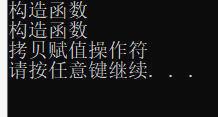
1、如果拷贝赋值操作返回值不是引用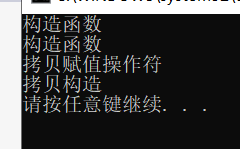
2、如果不自定义拷贝构造,且拷贝赋值操作符返回值不是引用: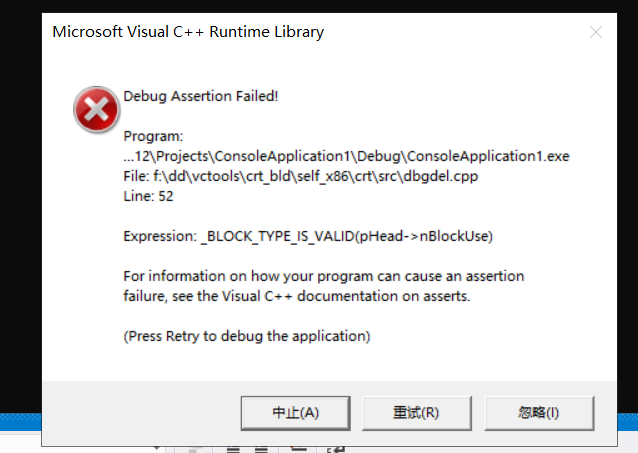
如果拷贝赋值操作返回值不是引用的话,执行到return语句,会调用拷贝构造生成一个临时对象返回给调用端,然后临时对象被销毁。如果类内成员变量有指针的话,那么这个拷贝构造一定是自定义的,因为默认拷贝构造是浅拷贝,会造成内存泄漏。
3、其他
为什么delete指针之后要赋值为空?
C++中,能不能delete空指针
空指针

若有收获,就点个赞吧
0 人点赞


