您可以将几个参数传递给路径操作装饰器以对其进行配置。
:::tips
警告
请注意,这些参数直接传递给路径操作装饰器,而不是传递给路径操作函数。
:::
响应状态码
您可以定义要在路径操作的响应中使用的(HTTP)status_code。
您可以直接传递int代码,例如404。
但是,如果您不记得每个数字代码的用途,则可以在status中使用快捷方式常量:
from typing import Setfrom fastapi import FastAPI, statusfrom pydantic import BaseModelapp = FastAPI()class Item(BaseModel):name: strdescription: str = Noneprice: floattax: float = Nonetags: Set[str] = []@app.post("/items/", response_model=Item, status_code=status.HTTP_201_CREATED)async def create_item(*, item: Item):return item
该状态代码将在响应中使用,并将添加到OpenAPI架构中。
:::info
你也可以使用from starlette import status
FastAPI提供与starlette.status相同的fastapi.status,以方便开发人员。但它直接来自Starlette。
:::
标签
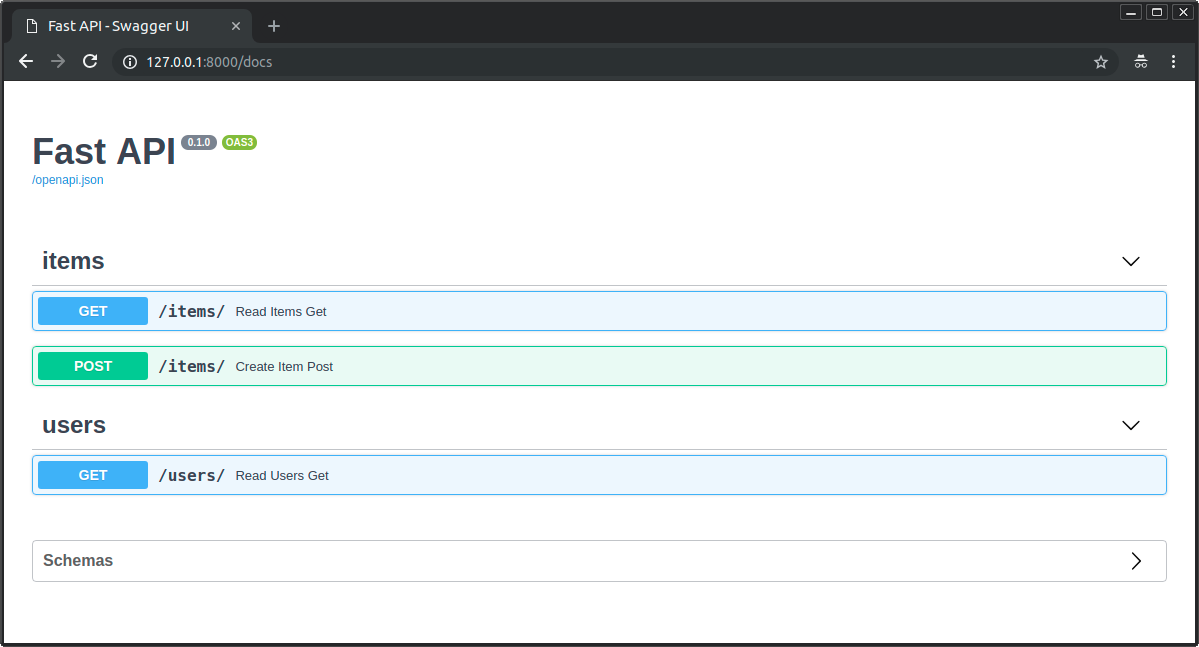
您可以在路径操作中添加标签,并通过带有str列表的参数标签(通常只有一个str)传递:
from typing import Setfrom fastapi import FastAPIfrom pydantic import BaseModelapp = FastAPI()class Item(BaseModel):name: strdescription: str = Noneprice: floattax: float = Nonetags: Set[str] = []@app.post("/items/", response_model=Item, tags=["items"])async def create_item(*, item: Item):return item@app.get("/items/", tags=["items"])async def read_items():return [{"name": "Foo", "price": 42}]@app.get("/users/", tags=["users"])async def read_users():return [{"username": "johndoe"}]
它们将被添加到OpenAPI架构中,并由自动文档界面使用:
总结和说明
你可以添加一个summary和description:
from typing import Setfrom fastapi import FastAPIfrom pydantic import BaseModelapp = FastAPI()class Item(BaseModel):name: strdescription: str = Noneprice: floattax: float = Nonetags: Set[str] = []@app.post("/items/",response_model=Item,summary="Create an item",description="Create an item with all the information, name, description, price, tax and a set of unique tags",)async def create_item(*, item: Item):return item
来自文档字符串的描述
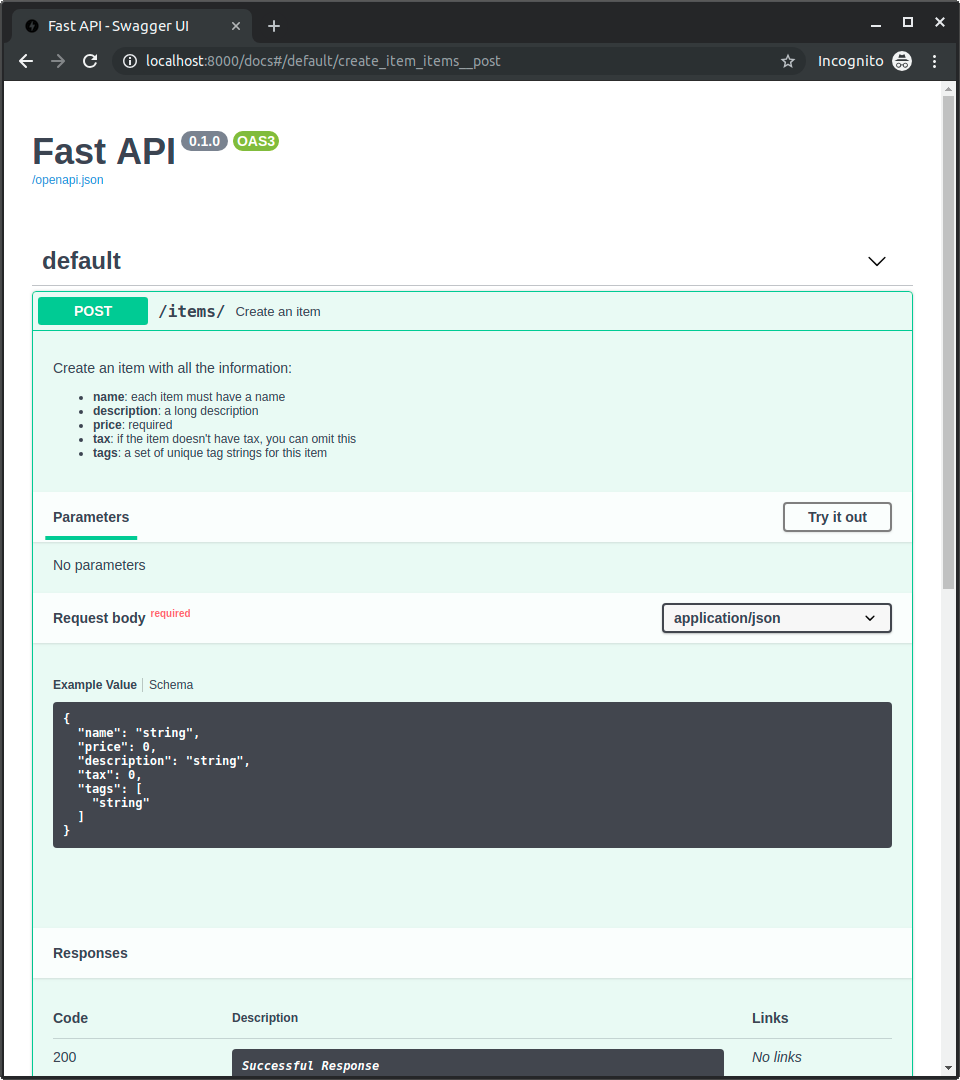
由于描述可能会很长并且涵盖多行,因此您可以在函数docstring中声明路径操作描述,FastAPI将从那里读取它。
您可以在文档字符串中编写Markdown,它将被正确解释和显示(考虑到文档字符串缩进)。
from typing import Setfrom fastapi import FastAPIfrom pydantic import BaseModelapp = FastAPI()class Item(BaseModel):name: strdescription: str = Noneprice: floattax: float = Nonetags: Set[str] = []@app.post("/items/", response_model=Item, summary="Create an item")async def create_item(*, item: Item):"""Create an item with all the information:- **name**: each item must have a name- **description**: a long description- **price**: required- **tax**: if the item doesn't have tax, you can omit this- **tags**: a set of unique tag strings for this item"""return item
响应说明
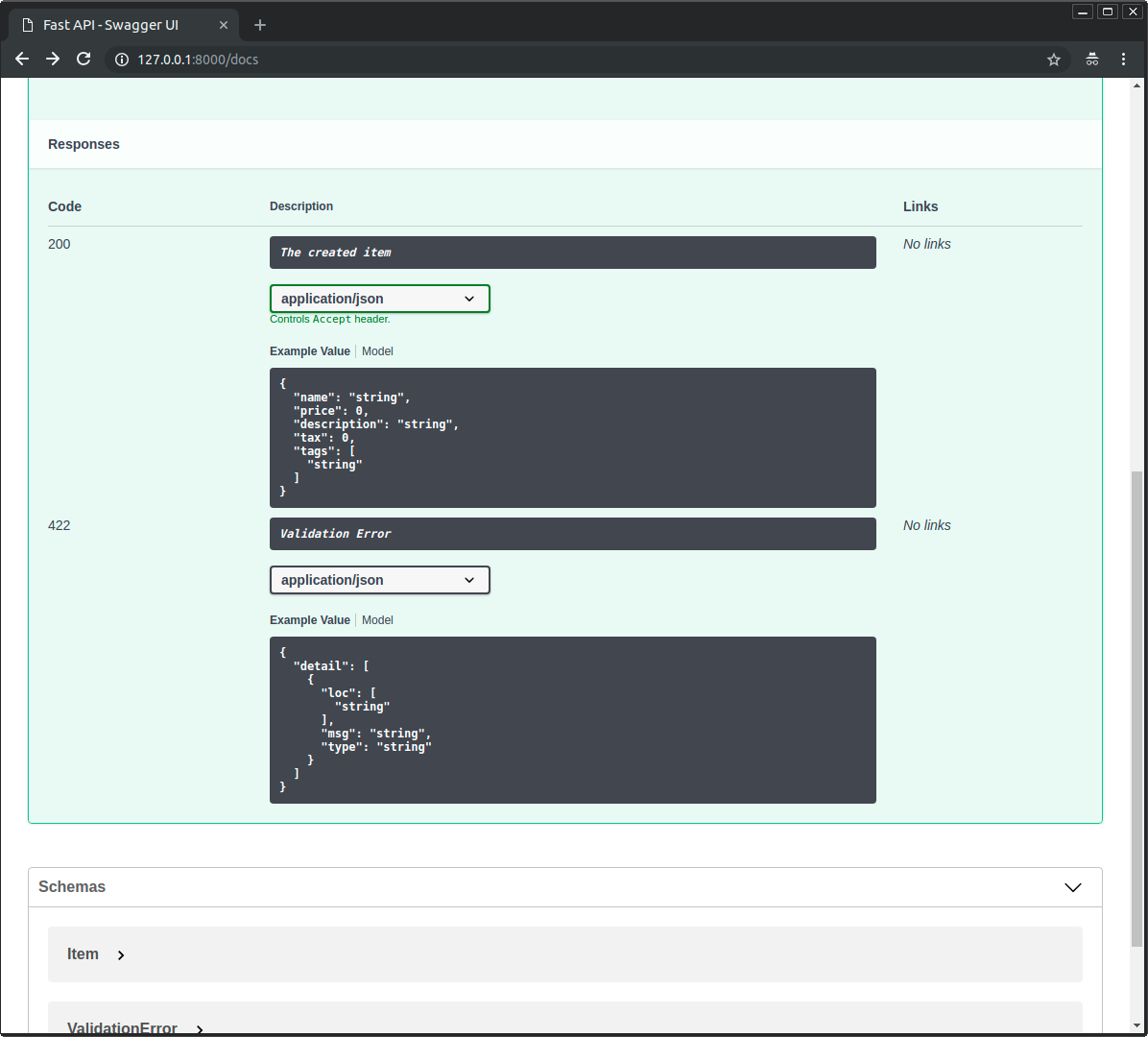
您可以使用参数response_description指定响应描述:
from typing import Setfrom fastapi import FastAPIfrom pydantic import BaseModelapp = FastAPI()class Item(BaseModel):name: strdescription: str = Noneprice: floattax: float = Nonetags: Set[str] = []@app.post("/items/",response_model=Item,summary="Create an item",response_description="The created item",)async def create_item(*, item: Item):"""Create an item with all the information:- **name**: each item must have a name- **description**: a long description- **price**: required- **tax**: if the item doesn't have tax, you can omit this- **tags**: a set of unique tag strings for this item"""return item
:::tips
请注意,response_description特别是指响应,description通常是指路径操作。
:::
:::info
OpenAPI指定每个路径操作都需要响应描述。
因此,如果您不提供任何一种,FastAPI将自动生成“成功响应”之一。
:::
弃用路径操作
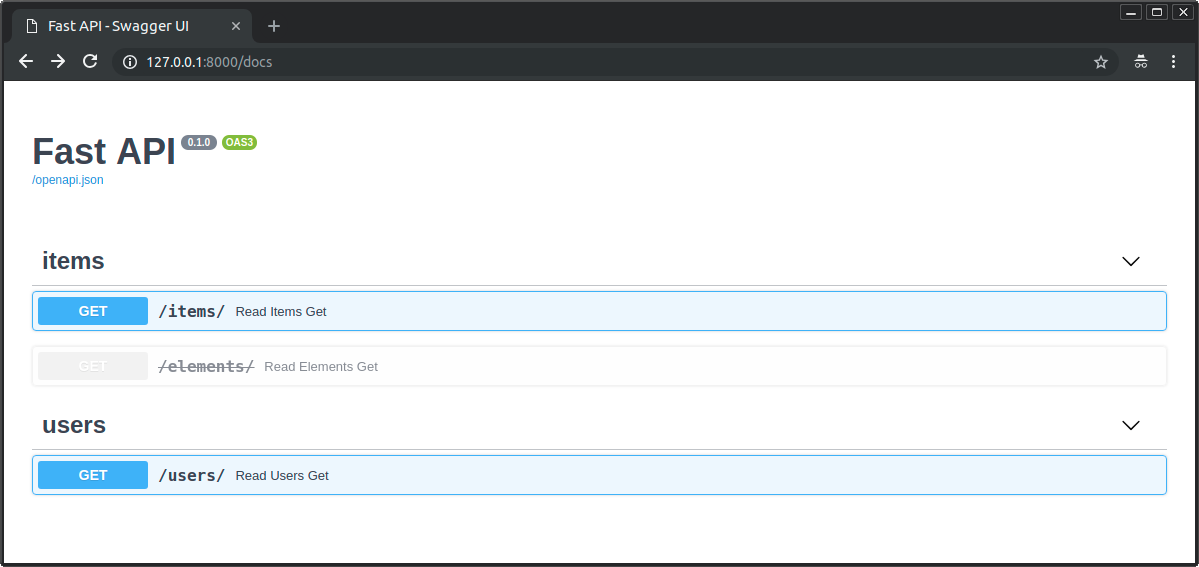
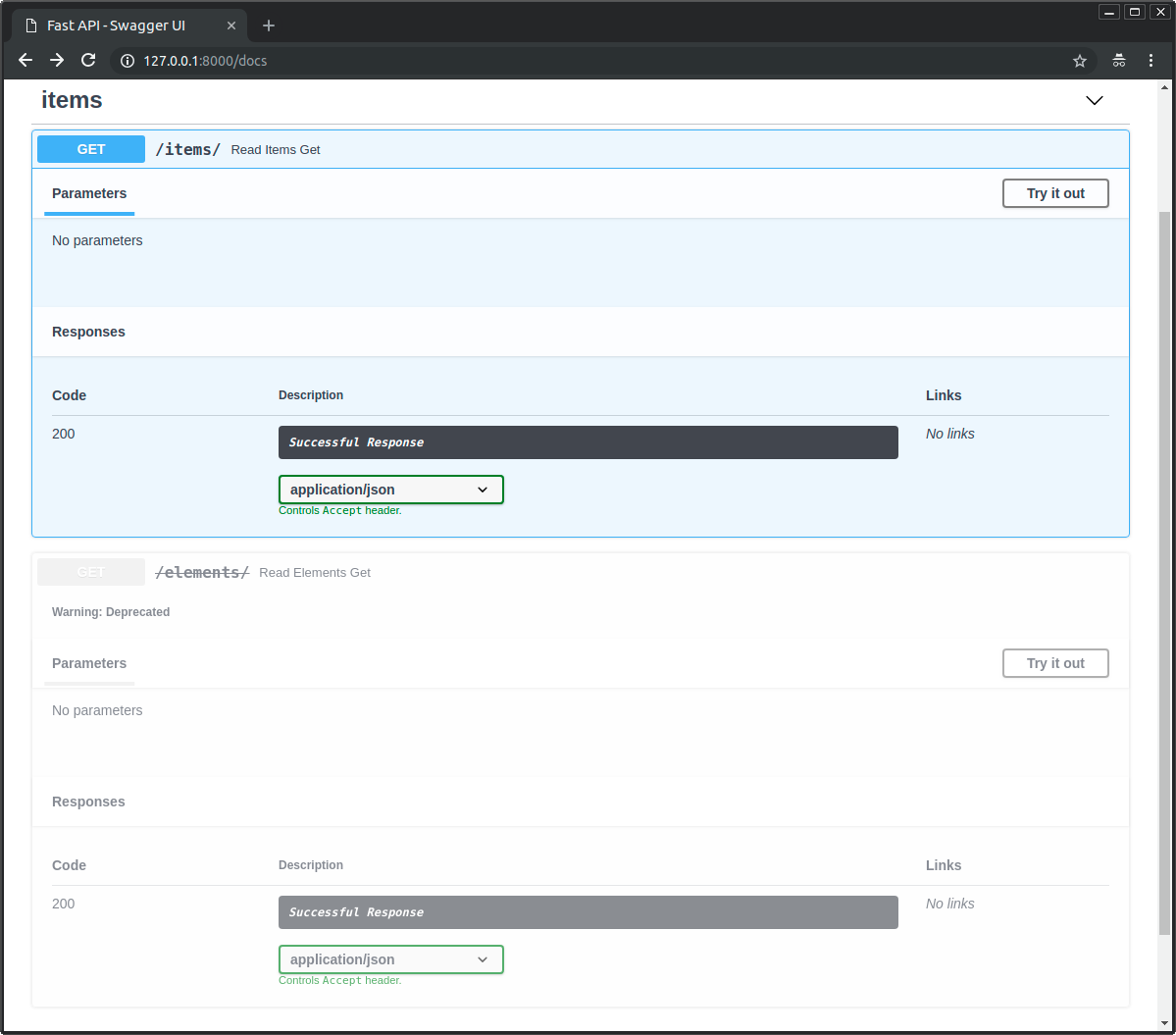
如果需要将路径操作标记为已弃用,但不删除它,则传递不建议使用的参数:
from fastapi import FastAPI

app = FastAPI()


@app.get("/items/", tags=["items"])
async def read_items():
    return [{"name": "Foo", "price": 42}]


@app.get("/users/", tags=["users"])
async def read_users():
    return [{"username": "johndoe"}]


@app.get("/elements/", tags=["items"], deprecated=True)
async def read_elements():
    return [{"item_id": "Foo"}]
在交互式文档中,它将明确标记为不推荐使用:
检查不赞成和不赞成使用的路径操作的样子:
概括
通过将参数传递给路径操作修饰符,可以轻松地为路径操作配置和添加元数据。

若有收获,就点个赞吧
0 人点赞


