1. 意图(Intent)
在创建一个对象时不向客户暴露内部细节,并提供一个创建对象的通用接口。
2. 类图(Class Diagram)
简单工厂把实例化的操作单独放到一个类中,这个类就成为简单工厂类,让简单工厂类来决定应该用哪个具体子类来实例化。
这样做能把客户类和具体子类的实现解耦,客户类不再需要知道有哪些子类以及应当实例化哪个子类。客户类往往有多个,如果不使用简单工厂,那么所有的客户类都要知道所有子类的细节。而且一旦子类发生改变,例如增加子类,那么所有的客户类都要进行修改。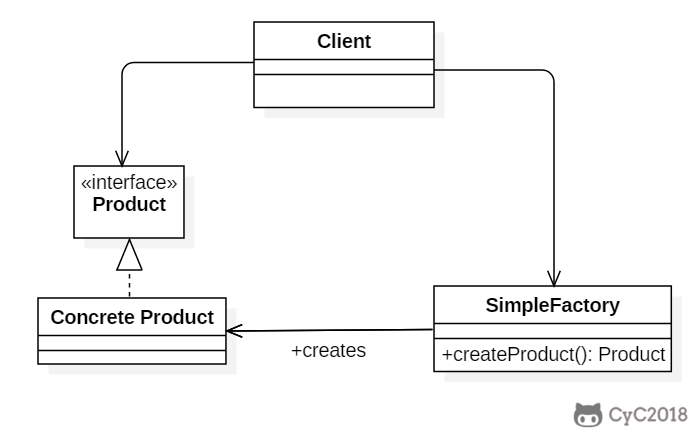
3. 实现(Implementation)
public interface Product {//...接口}
public class ConcreteProductA implements Product {//...接口实现 A 产品}
public class ConcreteProductB implements Product {//...接口实现 B 产品}
public class ConcreteProductC implements Product {//...接口实现 C 产品}
以下的 Client 类包含了实例化的代码,这是一种错误的实现。如果在客户类中存在这种实例化代码,就需要考虑将代码放到简单工厂中。
public class Client {public static void main(String[] args) {int type = 1;Product product;if (type == 1) {product = new ConcreteProductA();} else if (type == 2) {product = new ConcreteProductB();} else {product = new ConcreteProductC();}// do something with the product}}
以下的 SimpleFactory 是简单工厂实现,它被所有需要进行实例化的客户类调用。
public class SimpleFactory {public Product createProduct(int type) {if (type == 1) {return new ConcreteProductA();} else if (type == 2) {return new ConcreteProductB();}return new ConcreteProductC();}}
public class Client {public static void main(String[] args) {SimpleFactory simpleFactory = new SimpleFactory();Product product = simpleFactory.createProduct(1); //根据传进去的参数来实例化类// do something with the product}}
我们强调职责单一原则,一个类只提供一种功能,SimpleFactory 的功能就是只要负责生产各种 Product。

若有收获,就点个赞吧
0 人点赞


