题目链接:https://leetcode-cn.com/problems/most-beautiful-item-for-each-query/
针对题目给定的 items = {{price_i, beauty_i}},我们可以先对价格进行排序,使其按照价格从小到大的顺序排列。
在这里,最朴素的做法是,根据每次查询的价格,即 queries[i],然后遍历 items 中所有价格小于等于 queries[i] 的元素,找最大值,这一过程的时间复杂度为O(n),加上所有的查询,总的时间复杂度为 O(nq),这样会导致超时。
我们考虑一种优化方案,首先我们还是对价格从小达到排序,并且我们利用一次遍历,从 items[0][1] 开始,找最大值,并依次传递给后面的元素,
即更新公式:items[i][1] = max(items[i][1], items[i-1][1]),这样保证了当价格小于等于items[i][0]时,有最大的美丽值,即items[i][1]。
在这里,有一种很天真的想法,一直环绕在脑中,既然我们知道了 items[i][0] 对应的 items[i][1] 就是我们要找的答案,那不是可以通过 queries[i] 直接获取吗?
很遗憾的是,虽然 items 是按价格从小到大排序的,但是我们并不清楚具体的某个价格所在的下标,那么我们就无法以O(1) 的代价访问它,如果用遍历 items 的方式去获取,那么时间复杂度还是 O(nq)。上面我们更新了 items[i][1],在这里,就是构造数组单调性的过程,自然想到了用二分法。并且要找 target的右边界。
如果 items = {{3, 2}, {3, 5}} 这样的情况,必须要搜索右边界才能得到正确的答案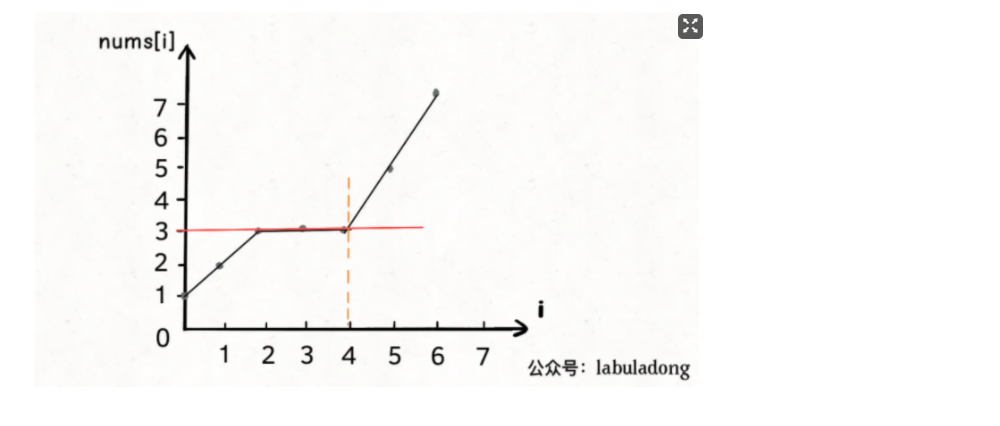
class Solution {private int query(int[][] items, int l, int r, int target) {while(l < r) {int mid = (l + r) / 2;if(items[mid][0] == target) {l = mid + 1;}else if(items[mid][0] < target){l = mid + 1;}else{r = mid;}}if(l == 0) {return 0;}else{return items[l-1][1];}}public int[] maximumBeauty(int[][] items, int[] queries) {// 按价格从小到大进行排序Arrays.sort(items, new Comparator<int[]>(){@Overridepublic int compare(int[] o1, int[] o2) {return o1[0] - o2[0];}});// 为使用二分搜索,构造单调性// 因为现在已经对价格排好序,我们通过一次遍历,记录小于或等于当前价格对应的最大美丽值int maxBeauty = items[0][1];for(int i = 0; i < items.length; i++) {items[i][1] = Math.max(maxBeauty, items[i][1]);maxBeauty = items[i][1];}// 进行查询// 在这里讲一下为什么要用二分搜索// 上面我们对价格进行了排序,如果给定一个queries[i],搜索价格小于等于它的最大美丽值所需时间复杂度为O(n)// 而用二分搜索法,则为O(logn)// 整体的时间复杂度从O(n*n) 变为 O(nlogn)int[] ans = new int[queries.length];for(int i = 0; i < queries.length; i++) {ans[i] = query(items, 0, items.length, queries[i]);}return ans;}}

若有收获,就点个赞吧
0 人点赞


