什么是AQS
AQS是AbstractQueuedSynchronizer的简称,即抽象队列同步器,从字面意思上理解:
- 抽象:抽象类,只实现一些主要逻辑,有些方法由子类实现;
- 队列:使用先进先出(FIFO)队列存储数据;
- 同步:实现了同步的功能。
用于自定义锁和同步,JUC包下的工具大多基于AQS设计
AQS的数据结构

类结构如下
public abstract class AbstractQueuedSynchronizer{int stat;head Node;tail Node;Node class{Thread = thread}}
AQS解析
AQS的设计是基于模板方法模式
而资源有两种共享模式,或者说两种同步方式:
- 独占模式(Exclusive):资源是独占的,一次只能一个线程获取。如ReentrantLock。
- 共享模式(Share):同时可以被多个线程获取,具体的资源个数可以通过参数指定。如Semaphore/CountDownLatch。
AQS常用方法
- isHeldExclusively():判断该线程是否正则独占资源;
- tryAcquire():独占方式尝试获取资源;
- tryRelease():独占方式尝试释放资源;
- tryAcquireShared():共享方式尝试获取资源;
- tryReleaseShared():共享方式尝试释放资源;
获取资源
public final void acquire(int arg) {
    if (!tryAcquire(arg) &&
        acquireQueued(addWaiter(Node.EXCLUSIVE), arg))
        selfInterrupt();
}
tryAcquire方法由子类实现,尝试失败后调用addWaiter方法
CLH队列通过CAS添加当前的Node线程,这是因为AQS本身会存在多个线程争夺资源,避免同时插入节点的问题
private Node addWaiter(Node mode) {
    // 生成该线程对应的Node节点
    Node node = new Node(Thread.currentThread(), mode);
    // 将Node插入队列中
    Node pred = tail;
    if (pred != null) {
        node.prev = pred;
        // 使用CAS尝试,如果成功就返回
        if (compareAndSetTail(pred, node)) {
            pred.next = node;
            return node;
        }
    }
    // 如果等待队列为空或者上述CAS失败,再自旋CAS插入
    enq(node);
    return node;
}
// 自旋CAS插入等待队列
private Node enq(final Node node) {
    for (;;) {
        Node t = tail;
        if (t == null) { // Must initialize
            if (compareAndSetHead(new Node()))
                tail = head;
        } else {
            node.prev = t;
            if (compareAndSetTail(t, node)) {
                t.next = node;
                return t;
            }
        }
    }
}
CLH队列的每个结点会执行acquireQueued方法,判断自己是否为head的第二个节点,否则调用park()是使自己阻塞,直到被unpark()
final boolean acquireQueued(final Node node, int arg) {
    boolean failed = true;
    try {
        boolean interrupted = false;
        // 自旋
        for (;;) {
            final Node p = node.predecessor();
            // 如果node的前驱结点p是head,表示node是第二个结点,就可以尝试去获取资源了
            if (p == head && tryAcquire(arg)) {
                // 拿到资源后,将head指向该结点。
                // 所以head所指的结点,就是当前获取到资源的那个结点或null。
                setHead(node);
                p.next = null; // help GC
                failed = false;
                return interrupted;
            }
            // 如果自己可以休息了,就进入waiting状态,直到被unpark()
            if (shouldParkAfterFailedAcquire(p, node) &&
                parkAndCheckInterrupt())
                interrupted = true;
        }
    } finally {
        if (failed)
            cancelAcquire(node);
    }
}
获取资源流程图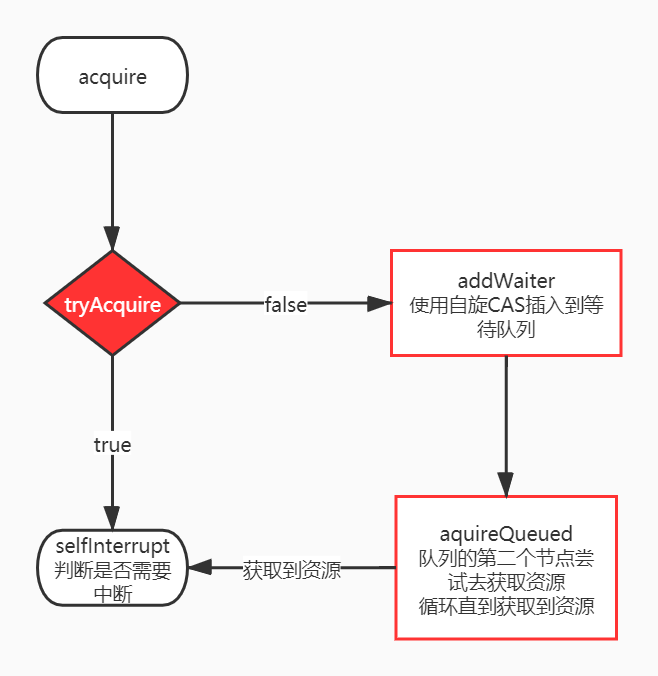
释放资源
public final boolean release(int arg) {
    if (tryRelease(arg)) {
        Node h = head;
        if (h != null && h.waitStatus != 0)
            unparkSuccessor(h);
        return true;
    }
    return false;
}
private void unparkSuccessor(Node node) {
    // 如果状态是负数,尝试把它设置为0
    int ws = node.waitStatus;
    if (ws < 0)
        compareAndSetWaitStatus(node, ws, 0);
    // 得到头结点的后继结点head.next
    Node s = node.next;
    // 如果这个后继结点为空或者状态大于0
    // 通过前面的定义我们知道,大于0只有一种可能,就是这个结点已被取消
    if (s == null || s.waitStatus > 0) {
        s = null;
        // 等待队列中所有还有用的结点,都向前移动
        for (Node t = tail; t != null && t != node; t = t.prev)
            if (t.waitStatus <= 0)
                s = t;
    }
    // 如果后继结点不为空,
    if (s != null)
        LockSupport.unpark(s.thread);
}

若有收获,就点个赞吧
0 人点赞


