什么是队列
-
与栈的区别
栈只支持两个基本操作:入栈 push()和出栈 pop()
队列最基本的操作也是两个:入队 enqueue(),放一个数据到队列尾部;出队 dequeue(),从队列头部取一个元素
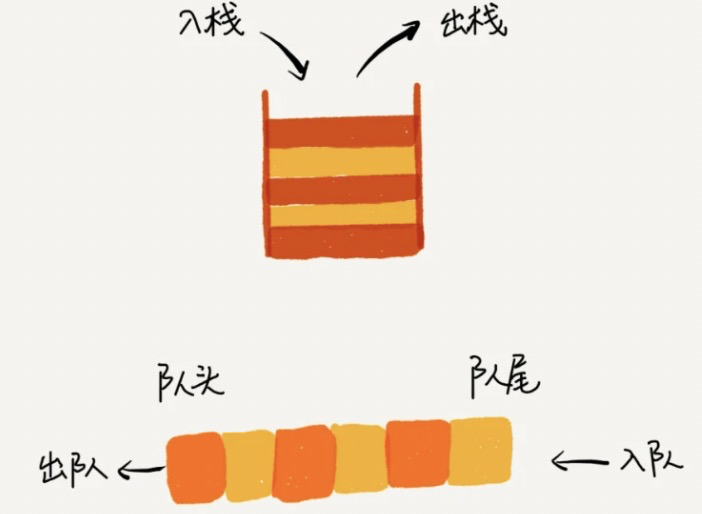
-
顺序队列和链式队列
用数组实现的队列叫作顺序队列,
-
顺序队列
入队出队时间复杂度为O(1)
不足:队列满的时候要数据搬移,时间复杂度就会从原来的 O(1) 变为 O(n) ```typescript // 数组实现顺序队列 class ArrayQueue { constructor(initLen) { this.head = 0 this.tail = 0 this.items = [] this.items.length = initLen }
// 入队(队尾添加元素) enqueue(item) { /**考虑的事情
- 1.队头 队尾 的位置,可以画图,节省脑容量
- 2.队列满了如何处理 — 数据搬移
/
if (this.tail === this.items.length) { // 表示元素已经加到队尾位置
// 考虑是否搬移数据
if (this.head === 0) { // 表示队满了 无法入队
return false
}
// 搬移数据 整体向前搬 到 对头位置 0
for (let i = this.head; i < this.tail; i++) {
this.items[i - this.head] = this.items[i]
}
/*
- 更新队头 队尾 指针
- 先更新 队尾, 再更新 队头 */ this.tail = this.tail - this.head this.head = 0 } // 正常添加元素 this.items[this.tail] = item this.tail++ return true }
/**
- 出队(从对头取出元素)
- 1.永远从队头 head 取元素
- 1.考虑队空清空 */ dequeue() { if (this.tail === 0) { //表示队空 return null } const res = this.items[this.head] this.head++ return res } } const arrqueue = new ArrayQueue(10)
arrqueue.enqueue(‘1’) arrqueue.enqueue(‘2’) arrqueue.enqueue(‘3’) console.log(arrqueue.dequeue()); console.log(arrqueue.dequeue()); console.log(arrqueue.dequeue());
<a name="PwMuc"></a>#### 循环队列- 避免数据搬移- **入队出队时间复杂度为O(1)**- **队满条件 (tail+1)%n=head**- **队空条件 tail=tail**- 当队列满时,tail 指向的位置实际上是没有存储数据的。所以,**循环队列会浪费一个数组的存储空间**- 如果不浪费一个数组空间,可能需要引入其他变量,去记录队列的实际容量,也是需要额外的内存空间```javascriptclass CircularQueue {constructor(initLen) {this.head = 0this.tail = 0this.items = []this.items.length = initLen}/*** 入队* 考虑 队满条件* 1.tail与head的关系 (tail + 1) % length === this.head*/enqueue(item) {if ((this.tail + 1) % this.items.length === this.head) {return false}this.items[this.tail] = itemthis.tail = (this.tail + 1) % this.items.lengthreturn true}/*** 出队* 考虑 队空条件* 1.tail与head的关系: tail===head*/dequeue() {if (this.tail === this.head) {return null}const res = this.items[this.head]this.head = (this.head + 1) % this.items.lengthreturn res}}const circularQueue = new CircularQueue(10)circularQueue.enqueue('1')circularQueue.enqueue('2')circularQueue.enqueue('3')console.log(circularQueue.dequeue());console.log(circularQueue.dequeue());console.log(circularQueue.dequeue());
阻塞队列
就是在队列为空的时候,从队头取数据会被阻塞。因为此时还没有数据可取,直到队列中有了数据才能返回;如果队列已经满了,那么插入数据的操作就会被阻塞,直到队列中有空闲位置后再插入数据,然后再返回
并发队列
-
思考
线程池没有空闲线程时,新的任务请求线程资源时,线程池该如何处理?各种处理策略又是如何实现的呢?
- 我们希望公平地处理每个排队的请求,先进者先服务,所以队列这种数据结构很适合来存储排队请求
- 队列有基于链表和基于数组这两种实现方式
- 基于链表的实现方式,可以实现一个支持无限排队的无界队列(unbounded queue),但是可能会导致过多的请求排队等待,请求处理的响应时间过长。所以,针对响应时间比较敏感的系统,基于链表实现的无限排队的线程池是不合适的
- 基于数组实现的有界队列(bounded queue),队列的大小有限,所以线程池中排队的请求超过队列大小时,接下来的请求就会被拒绝,这种方式对响应时间敏感的系统来说,就相对更加合理。不过,设置一个合理的队列大小,也是非常有讲究的。队列太大导致等待的请求太多,队列太小会导致无法充分利用系统资源、发挥最大性能

若有收获,就点个赞吧
0 人点赞


