一:排序不等式
这个题需要注意数据的范围,粗略的计算数据范围是50亿,int的数据范围是20亿,所以结果需要使用long long 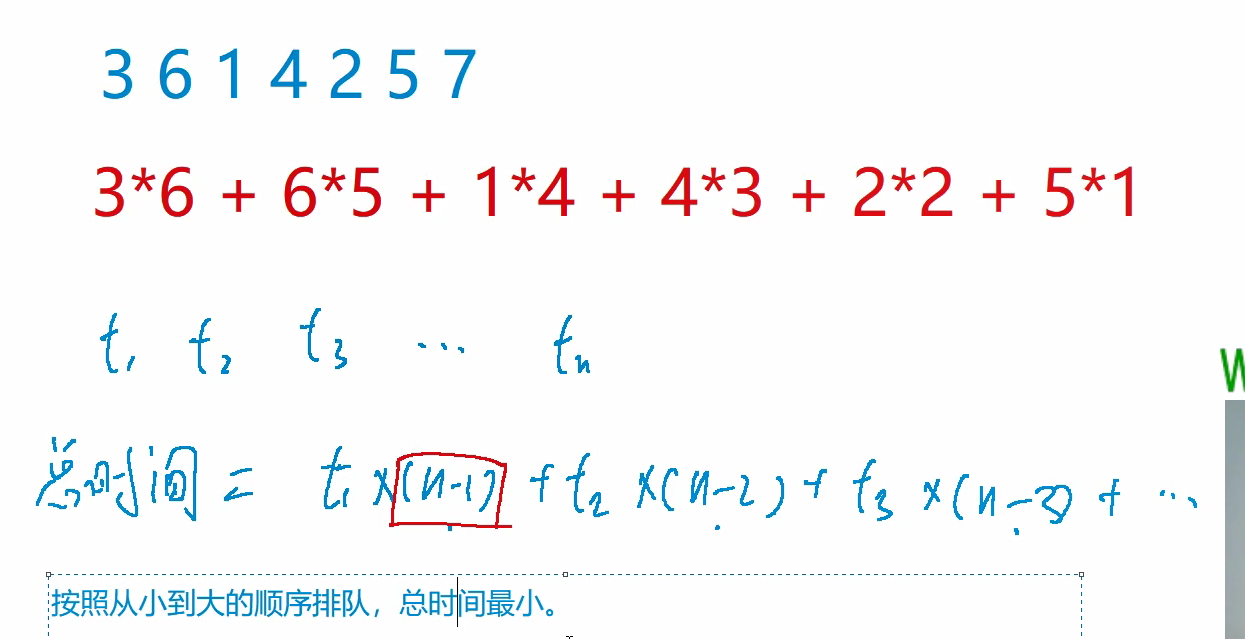
#include <iostream>#include <algorithm>using namespace std;const int N = 1e5 + 10;typedef long long LL;int n, a[N];int main(){ios::sync_with_stdio(false);cin >> n;for (int i = 1; i <= n; i++)cin >> a[i];sort(a + 1 , a + n + 1); // 使用注意,默认从小到大排序LL res = 0;for (int i = 1; i <= n; i++)res += a[i] * (n - i);cout << res << endl;return 0;}
二:绝对值不等式
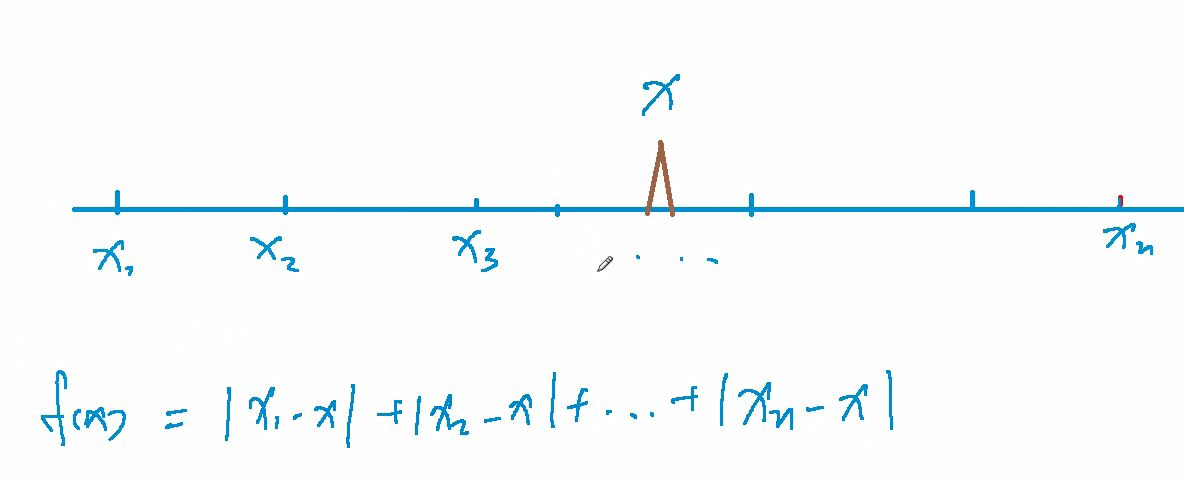
下面分析a-x和b-x的绝对值的时候,发现当x在a和b的中间的时候,距离就是b-a,无论在a,b区间的左边还是右边,这个值都会多出两倍的距离来,下图的y总两两组合就是应用的a-x和b-x的原理,所以我们推测我们要选择的就是中间位置的点,注意这个题选择的时候数轴上已经存在的点,偶数个点随便选择中间两个点某个点就可以,如果是奇数个点的时候,直接选择即可。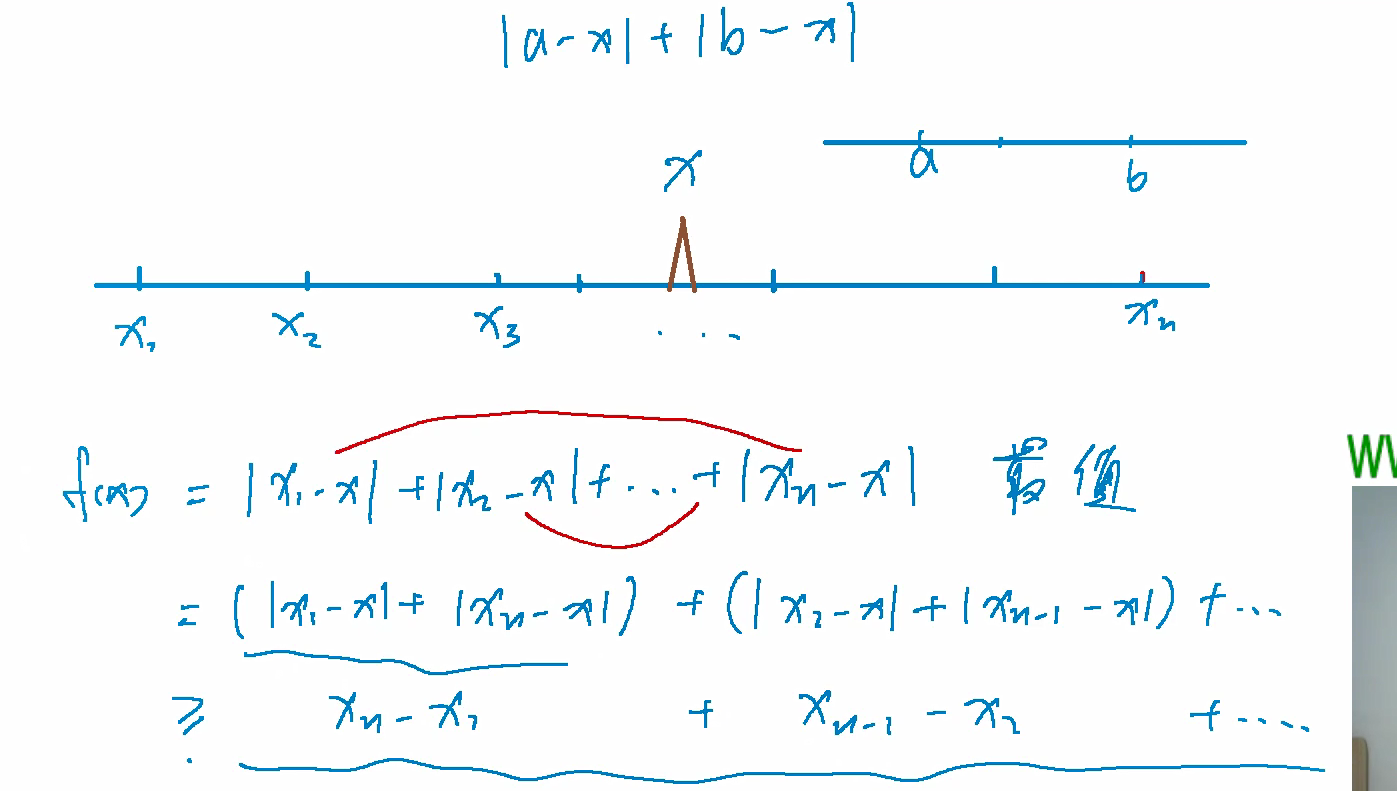
#include <iostream>#include <algorithm>using namespace std;const int N = 1e5 +10;int a[N];int n;int main(){ios::sync_with_stdio(false);cin >> n;for (int i = 0; i < n; i++)cin >> a[i];sort(a, a + n);int res = 0;for (int i = 0; i < n; i++){res += abs(a[i] - a[n / 2]);}cout << res << endl;return 0;}
三:不等式

若有收获,就点个赞吧
0 人点赞


