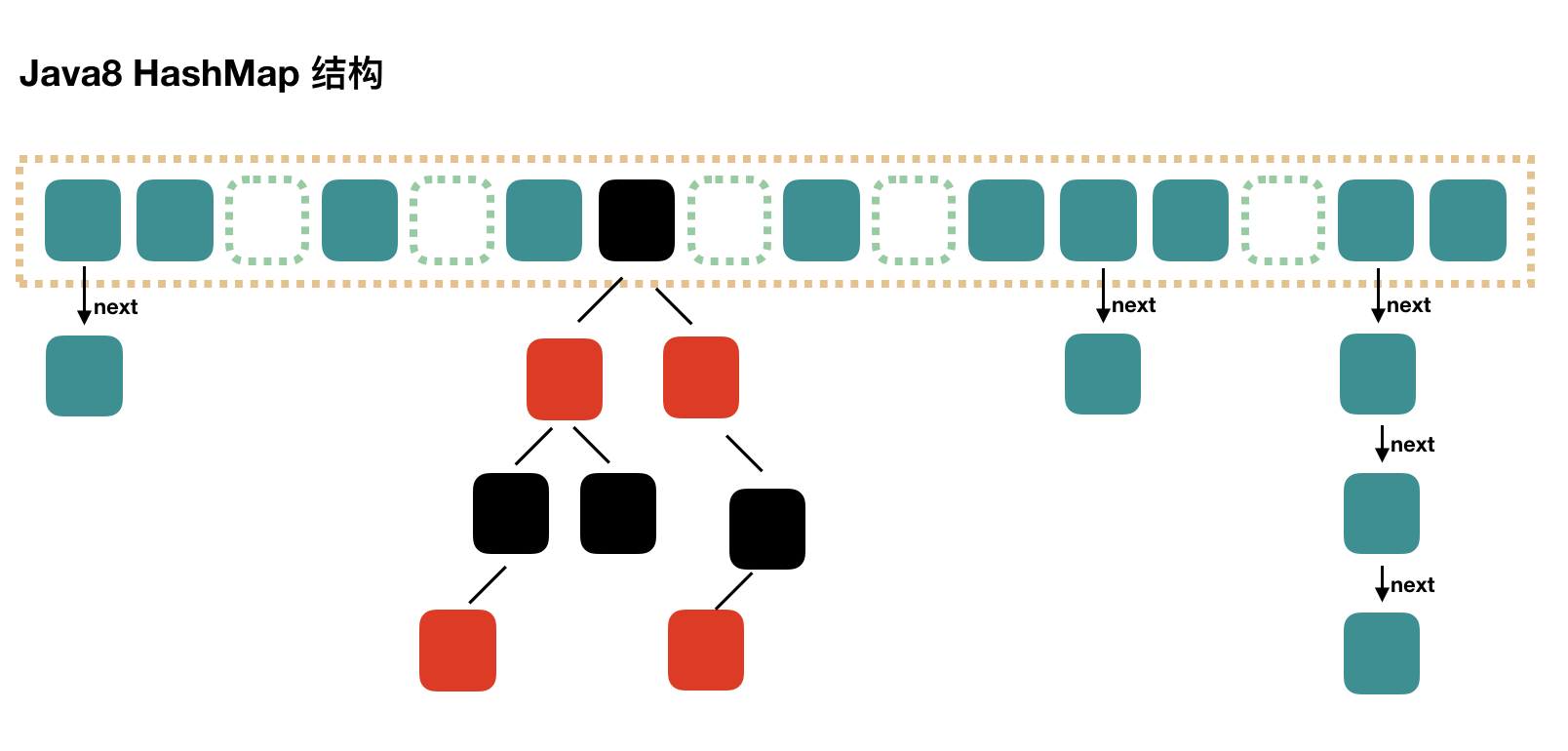
put 方法

步骤
- 对key的hashCode做hash操作,然后再计算在桶中的index(1.5 HashMap的哈希函数);
- 如果没碰撞直接放到桶里;
- 如果碰撞了,以链表的形式存在桶后;
- 如果节点已经存在,就替换old value(保证key的唯一性)
如果桶满了(超过阈值,阈值=loadfactor*current capacity,load factor默认0.75),就要resize。
源码
public V put(K key, V value) {return putVal(hash(key), key, value, false, true);}final V putVal(int hash, K key, V value, boolean onlyIfAbsent, boolean evict) {Node<K,V>[] tab; Node<K,V> p; int n, i;// 如果hashmap为空,调用resize方法,对hashmap进行扩容if ((tab = table) == null || (n = tab.length) == 0)n = (tab = resize()).length;// 根据index找到目标桶后,若当前桶上没有结点,那么直接新增一个结点,赋值给该bucketif ((p = tab[i = (n - 1) & hash]) == null)tab[i] = newNode(hash, key, value, null);else {Node<K,V> e; K k;// 若当前桶上有链表,且头结点就匹配,那么直接做替换即可;// key的hash值一样,key一样,key不为nullif (p.hash == hash &&((k = p.key) == key || (key != null && key.equals(k))))e = p;// 若当前桶上的是树结构,则转为红黑树的插入操作else if (p instanceof TreeNode)e = ((TreeNode<K,V>)p).putTreeVal(this, tab, hash, key, value);else {// 若上面的判断都不成立,则对链表做遍历操作for (int binCount = 0; ; ++binCount) {// 尾插法,jdk 1.7 是头插法// 若没有结点匹配,则在链表末尾追加if ((e = p.next) == null) {p.next = newNode(hash, key, value, null);// 当链表的长度大于8 时,会将链表转化树if (binCount >= TREEIFY_THRESHOLD - 1) // -1 for 1st// 转红黑树treeifyBin(tab, hash);break;}if (e.hash == hash &&((k = e.key) == key || (key != null && key.equals(k))))break;p = e;}}// 若链表中有结点匹配,则做value替换if (e != null) { // existing mapping for keyV oldValue = e.value;if (!onlyIfAbsent || oldValue == null)e.value = value;afterNodeAccess(e);return oldValue;}}++modCount;// 判断是否需要扩容if (++size > threshold)resize();afterNodeInsertion(evict);return null;}
红黑树转换
final void treeifyBin(Node<K,V>[] tab, int hash) {int n, index; Node<K,V> e;// 若表为空,或表长度小于MIN_TREEIFY_CAPACITY,也不做转换,直接做扩容处理。// MIN_TREEIFY_CAPACITY这个其实是转化成红黑树的另外一个条件,就是数组长度要大于64// 如果小于64 就可以通过扩容的方法,来减小冲突,没有必要转换成红黑树,因为红黑树的转换也是需要很大是 时间和空间的代价if (tab == null || (n = tab.length) < MIN_TREEIFY_CAPACITY)resize();// 获得需要树形化的 链表的第一个节点 也就是数组对应的数组节点table[i]else if ((e = tab[index = (n - 1) & hash]) != null) {TreeNode<K,V> hd = null, tl = null;do {//将普通的node节点 构造成TreeNodeTreeNode<K,V> p = replacementTreeNode(e, null);if (tl == null)hd = p;else {p.prev = tl;tl.next = p;}tl = p;} while ((e = e.next) != null);// 替换成 构造成双链表的节点if ((tab[index] = hd) != null)// 进行红黑树转换hd.treeify(tab);}}
final void treeify(Node<K,V>[] tab) {TreeNode<K,V> root = null;// 循环遍历链表for (TreeNode<K,V> x = this, next; x != null; x = next) {next = (TreeNode<K,V>)x.next;x.left = x.right = null;// 第一次循环// 将x 赋值给root节点 初始化root节点的颜色 黑色(红黑树的根节点 一定是黑色)if (root == null) {x.parent = null;x.red = false;root = x;}// 此处开始构造红黑树else {//获得当前节点的 key 和 hashK k = x.key;int h = x.hash;Class<?> kc = null;// 从根节点开始每次遍历 寻找插入的位置for (TreeNode<K,V> p = root;;) {int dir, ph;K pk = p.key;// 获得根节点的 key// 判断key 与root的key的大小 确定dir的值,也就确定了插入的方向 ,是root节点的左边还是右边if ((ph = p.hash) > h)dir = -1;else if (ph < h)dir = 1;// 如果key的hash相等 或者实现comparable接口 又或者是实现了该接口 但是两个比较结果也相同// 所以为了打破这种平衡必须再次调用tieBreakOrder方法 比较一次 返回值 只有-1 或1else if ((kc == null &&(kc = comparableClassFor(k)) == null) ||(dir = compareComparables(kc, k, pk)) == 0)dir = tieBreakOrder(k, pk);TreeNode<K,V> xp = p;if ((p = (dir <= 0) ? p.left : p.right) == null) {// 当前链表节点 作为 当前树节点的父节点x.parent = xp;if (dir <= 0)xp.left = x;elsexp.right = x;// 每次插入完一个节点之后,就要进行红黑树的调整root = balanceInsertion(root, x);break;}}}}// 根节点目前到底是链表的哪一个节点是不确定的// 要将红黑树的根节点 移动至链表节点的第一个位置 也就是 table[i]的位置。moveRootToFront(tab, root);}
static <K,V> void moveRootToFront(Node<K,V>[] tab, TreeNode<K,V> root) {int n;if (root != null && tab != null && (n = tab.length) > 0) {// 获得当红黑树所处在 table数组的哪一个位置 (n - 1) & root.hash效果与取模相同int index = (n - 1) & root.hash;// 获得改位置的节点对象 也就是链表的第一个节点TreeNode<K,V> first = (TreeNode<K,V>)tab[index];// 如果这个位置不是 root节点 那么就要进行调整了if (root != first) {// 定义一个临时Node 变量Node<K,V> rn;// 直接将链表的第一个位置 指向了root节点tab[index] = root;// 将前驱和后继相连接 root节点从原链表中脱离出来了TreeNode<K,V> rp = root.prev;if ((rn = root.next) != null)((TreeNode<K,V>)rn).prev = rp;if (rp != null)rp.next = rn;// 将root与原来双链表的第一个节点相连// 这样root又回到双链表当中 并且在双链表的第一个位置上if (first != null)first.prev = root;root.next = first;// root节点的前驱节点设置为null 因为他双链表的第一个节点 没有前驱root.prev = null;}assert checkInvariants(root);}}
扩容
在扩充HashMap的时候,不需要重新计算hash,只需要看看原来的hash值新增的那个bit是1还是0就好了,是0的话索引没变,是1的话索引变成“原索引+oldCap”。可以看看下图为16扩充为32的resize示意图: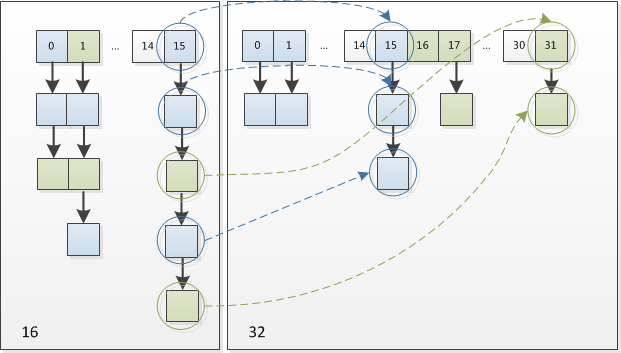
这个设计确实非常的巧妙,既省去了重新计算hash值的时间,而且同时,由于新增的1bit是0还是1可以认为是随机的,因此resize的过程,均匀的把之前的冲突的节点分散到新的bucket了。
触发扩容的场景
- 哈希table为null或长度为0;
- Map中存储的k-v对数量超过了阈值threshold;
- 链表中的长度超过了TREEIFY_THRESHOLD,但表长度却小于MIN_TREEIFY_CAPACITY。
扩容步骤
- 扩容:哈希表长度*2
- 移动:对每个节点重新计算哈希值,重新计算每个元素在数组中的位置,将原来的元素移动到新的哈希表中。
源码
// 初始化或加倍表大小。如果为 null,则根据字段阈值中保留的初始容量目标进行分配。否则,由于我们使用的是两个扩展的电源,因此每个 bin 中的元素必须保持在同一索引中,或者以新表中两个偏移的功率移动。final Node<K,V>[] resize() {Node<K,V>[] oldTab = table;int oldCap = (oldTab == null) ? 0 : oldTab.length;int oldThr = threshold;int newCap, newThr = 0;if (oldCap > 0) {if (oldCap >= MAXIMUM_CAPACITY) {threshold = Integer.MAX_VALUE;return oldTab;}else if ((newCap = oldCap << 1) < MAXIMUM_CAPACITY &&oldCap >= DEFAULT_INITIAL_CAPACITY)// oldThr*2newThr = oldThr << 1;}else if (oldThr > 0) // initial capacity was placed in thresholdnewCap = oldThr;else { // zero initial threshold signifies using defaultsnewCap = DEFAULT_INITIAL_CAPACITY;newThr = (int)(DEFAULT_LOAD_FACTOR * DEFAULT_INITIAL_CAPACITY);}if (newThr == 0) {float ft = (float)newCap * loadFactor;newThr = (newCap < MAXIMUM_CAPACITY && ft < (float)MAXIMUM_CAPACITY ?(int)ft : Integer.MAX_VALUE);}threshold = newThr;@SuppressWarnings({"rawtypes","unchecked"})Node<K,V>[] newTab = (Node<K,V>[])new Node[newCap];table = newTab;//上面是做hash表的长度拓展//下面是如何迁移数据if (oldTab != null) {// 循环遍历哈希表的每个不为null的桶// 注意,这里是"++j",略过了oldTab[0]的处理for (int j = 0; j < oldCap; ++j) {Node<K,V> e;if ((e = oldTab[j]) != null) {oldTab[j] = null;// 若只有一个结点,则原地存储if (e.next == null)newTab[e.hash & (newCap - 1)] = e;else if (e instanceof TreeNode)// 如果是红黑树,则执行split拆分// 拆分过程中,如果新的红黑树长度小于等于 6 , 则红黑树就会退化成链表((TreeNode<K,V>)e).split(this, newTab, j, oldCap);else { // preserve order// "lo"前缀的代表要在原桶上存储,"hi"前缀的代表要在新桶上存储// loHead代表是链表的头结点,loTail代表链表的尾结点Node<K,V> loHead = null, loTail = null;Node<K,V> hiHead = null, hiTail = null;Node<K,V> next;do {next = e.next;if ((e.hash & oldCap) == 0) {// 有序插入,即依次将原链表的结点追加到当前链表的末尾if (loTail == null)loHead = e;elseloTail.next = e;loTail = e;}else {if (hiTail == null)hiHead = e;elsehiTail.next = e;hiTail = e;}} while ((e = next) != null);if (loTail != null) {loTail.next = null;newTab[j] = loHead;}if (hiTail != null) {hiTail.next = null;// 需要搬迁的结点,新下标为从当前下标往前挪oldCap个距离。newTab[j + oldCap] = hiHead;}}}}}return newTab;}
remove方法
源码
/*** 从HashMap中删除掉指定key对应的键值对,并返回被删除的键值对的值* 如果返回空,说明key可能不存在,也可能key对应的值就是null* 如果想确定到底key是否存在可以使用containsKey方法*/public V remove(Object key) {Node<K,V> e;return (e = removeNode(hash(key), key, null, false, true)) == null ?null : e.value;}/*** 方法为final,不可被覆写,子类可以通过实现afterNodeRemoval方法来增加自己的处理逻辑(解析中有描述)** @param hash key的hash值,该值是通过hash(key)获取到的* @param key 要删除的键值对的key* @param value 要删除的键值对的value,该值是否作为删除的条件取决于matchValue是否为true* @param matchValue 如果为true,则当key对应的键值对的值equals(value)为true时才删除;否则不关心value的值* @param movable 删除后是否移动节点,如果为false,则不移动* @return 返回被删除的节点对象,如果没有删除任何节点则返回nul*/final Node<K,V> removeNode(int hash, Object key, Object value,boolean matchValue, boolean movable) {Node<K,V>[] tab; Node<K,V> p; int n, index;/** 如果 节点数组tab不为空、数组长度n大于0、根据hash定位到的节点对象p(该节点为 树的根节点 或 链表的首节点)不为空* 需要从该节点p向下遍历,找到那个和key匹配的节点对象*/if ((tab = table) != null && (n = tab.length) > 0 &&(p = tab[index = (n - 1) & hash]) != null) {Node<K,V> node = null, e; K k; V v;// 如果当前节点的键和key相等,那么当前节点就是要删除的节点,赋值给nodeif (p.hash == hash &&((k = p.key) == key || (key != null && key.equals(k))))node = p;/** 到这一步说明首节点没有匹配上,那么检查下是否有next节点* 如果没有next节点,就说明该节点所在位置上没有发生hash碰撞, 就一个节点并且还没匹配上,也就没得删了,最终也就返回null了* 如果存在next节点,就说明该数组位置上发生了hash碰撞,此时可能存在一个链表,也可能是一颗红黑树*/else if ((e = p.next) != null) {// 如果是红黑树if (p instanceof TreeNode)node = ((TreeNode<K,V>)p).getTreeNode(hash, key);// 如果是链表,循环遍历查找else {do {if (e.hash == hash &&((k = e.key) == key ||(key != null && key.equals(k)))) {node = e;break;}p = e;} while ((e = e.next) != null);}}/** 如果node不为空,说明根据key匹配到了要删除的节点* 如果不需要对比value值 或者 需要对比value值但是value值也相等* 那么就可以删除该node节点了*/if (node != null && (!matchValue || (v = node.value) == value ||(value != null && value.equals(v)))) {// 如果该节点是个TreeNode对象,说明此节点存在于红黑树结构中,调用removeTreeNode方法(该方法单独解析)移除该节点if (node instanceof TreeNode)((TreeNode<K,V>)node).removeTreeNode(this, tab, movable);// 如果该节点不是TreeNode对象,node == p 的意思是该node节点就是首节点else if (node == p)// 由于删除的是首节点,那么直接将节点数组对应位置指向到第二个节点即可tab[index] = node.next;else// 如果node节点不是首节点,此时p是node的父节点,由于要删除node,所有只需要把p的下一个节点指向到node的下一个节点即可把node从链表中删除了p.next = node.next;// HashMap的修改次数递增++modCount;// HashMap的元素个数递减--size;// 调用afterNodeRemoval方法,该方法HashMap没有任何实现逻辑,目的是为了让子类根据需要自行覆写afterNodeRemoval(node);return node;}}return null;}
get 方法
步骤
先根据key计算hash值,进一步计算得到哈希table的目标index,若此bucket上为红黑树,则再红黑树上查找,若不是红黑树,遍历链表。
源码
public V get(Object key) {Node<K,V> e;return (e = getNode(hash(key), key)) == null ? null : e.value;}final Node<K,V> getNode(int hash, Object key) {Node<K,V>[] tab; Node<K,V> first, e; int n; K k;// 根据哈希表的下标【(n - 1) & hash】来找到对应的桶if ((tab = table) != null && (n = tab.length) > 0 &&(first = tab[(n - 1) & hash]) != null) {// always check first node// 判断桶的hash以及key都一样,则返回该桶if (first.hash == hash &&((k = first.key) == key || (key != null && key.equals(k))))return first;// 如果发生hash碰撞则通过链表查找if ((e = first.next) != null) {if (first instanceof TreeNode)return ((TreeNode<K,V>)first).getTreeNode(hash, key);do {if (e.hash == hash &&((k = e.key) == key || (key != null && key.equals(k))))return e;} while ((e = e.next) != null);}}return null;}
线程安全
HashMap是线程不安全的,因为HashMap不是线程同步的操作。
问题
- 在jdk1.7中,在多线程环境下,扩容时会造成环形链或数据丢失。
- 在jdk1.8中,在多线程环境下,会发生数据覆盖的情况。
解决方法
Way1. 将Map转为包装类
Map<String, Integer> oMap = new HashMap<>();// ...// 转为线程安全的mapMap<String, Integer> sMap = Collections.synchronizedMap(oMap);
Way2. ConcurrentHashMap
ConcurrentHashMap 是Java并发包中提供的一个线程安全且高效的 HashMap 实现。
Map<String, Integer> cMap = new ConcurrentHashMap<>();cMap.put("test001", 1);cMap.put("test002", 2);System.out.println(cMap.get("test001"));
总结
基于JDK 1.8 分析总结

若有收获,就点个赞吧
0 人点赞


