给定一个直方图(也称柱状图),假设有人从上面源源不断地倒水,最后直方图能存多少水量?直方图的宽度为 1。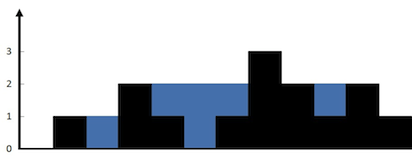
上面是由数组 [0,1,0,2,1,0,1,3,2,1,2,1] 表示的直方图,在这种情况下,可以接 6 个单位的水(蓝色部分表示水)。 感谢 Marcos 贡献此图。
示例:**
输入: [0,1,0,2,1,0,1,3,2,1,2,1]输出: 6
题解1:暴力法
这次代码算是简洁了,但是复杂度上天。具体来讲就是自底向上每行横着刷一遍,看到可以积水的地方就把空间加上。第一种是一行一行刷,第二种优化了一下,按高度的跨度几行几行刷。
class Solution {int[] height;public int trap(int[] ht) {height = ht.clone();int n = height.length, counting, capacity=0, tmp;if(n<3)return 0;Arrays.sort(ht);for(int i=1;i<=ht[n-2];++i){counting=0;tmp=0;for(int j=0;j<n;++j){if(height[j]>=i){counting=1;if(tmp>0){capacity+=tmp;tmp=0;}}else if(counting==1){tmp++;}}}return capacity;}}
class Solution {int[] height;public int trap(int[] ht) {height = ht.clone();int n = height.length, counting, capacity=0, tmp;Arrays.sort(ht);LinkedHashSet<Integer> set=new LinkedHashSet<Integer>();for (int item:ht) {set.add(item);}int former = 0;for (int box:set) {if(box==ht[0]){former=box;}else if(box<=ht[n-2]){counting=0;tmp=0;int increase = box-former;for (int i : height) {if (i >= box) {counting = 1;if (tmp > 0) {capacity += tmp;tmp = 0;}} else if (counting == 1) {tmp += increase;}}former = box;}}return capacity;}}
题解2:动态规划
我觉得不能算是严格意义上的动态规划,只是一种空间换取时间的简单策略,且没有任何代价函数及子问题可言。思路很简单,分别自左自右扫描一遍,看看每一列元素左方与右方的最大值,从而确定该列究竟能装多高的水量。
class Solution {int[] height;public int trap(int[] height) {int n = height.length;int[] leftHeight = new int[n];int[] rightHeight = new int[n];int capacity=0;int maxHeight = 0;for(int i=0;i<n;++i){if(height[i]>maxHeight)maxHeight = height[i];leftHeight[i] = maxHeight;}maxHeight = 0;for(int i=n-1;i>=0;--i){if(height[i]>maxHeight)maxHeight = height[i];rightHeight[i] = maxHeight;}for(int i=0;i<n;++i){capacity+=(Math.min(leftHeight[i], rightHeight[i])-height[i]);}return capacity;}}
题解3:单调栈
class Solution {public int trap(int[] height) {int ans = 0;Deque<Integer> stack = new LinkedList<Integer>();int n = height.length;for (int i = 0; i < n; ++i) {while (!stack.isEmpty() && height[i] > height[stack.peek()]) {int top = stack.pop();if (stack.isEmpty()) {break;}int left = stack.peek();int currWidth = i - left - 1;int currHeight = Math.min(height[left], height[i]) - height[top];ans += currWidth * currHeight;}stack.push(i);}return ans;}}
题解4:双指针
class Solution {public int trap(int[] height) {int ans = 0;int left = 0, right = height.length - 1;int leftMax = 0, rightMax = 0;while (left < right) {leftMax = Math.max(leftMax, height[left]);rightMax = Math.max(rightMax, height[right]);if (height[left] < height[right]) {ans += leftMax - height[left];++left;} else {ans += rightMax - height[right];--right;}}return ans;}}

若有收获,就点个赞吧
0 人点赞


