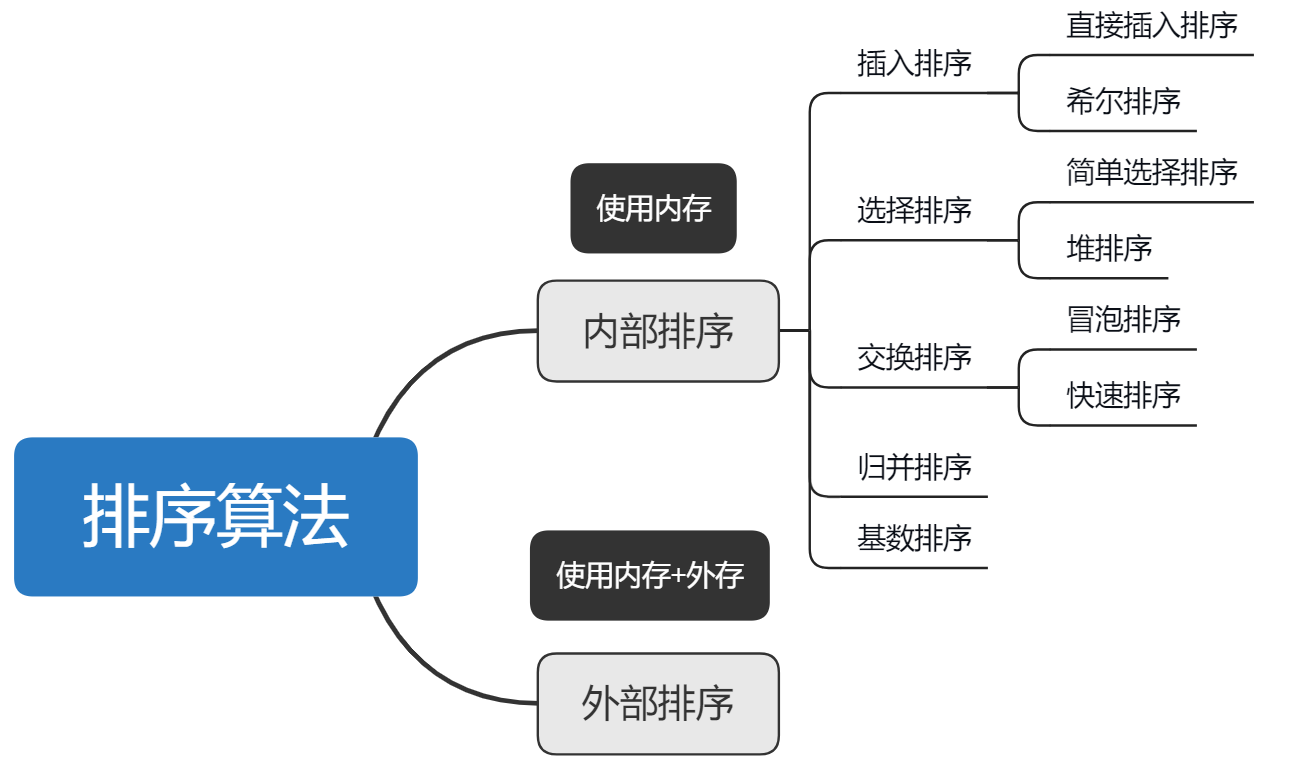
1、常见的排序算法

2、算法的时间复杂度

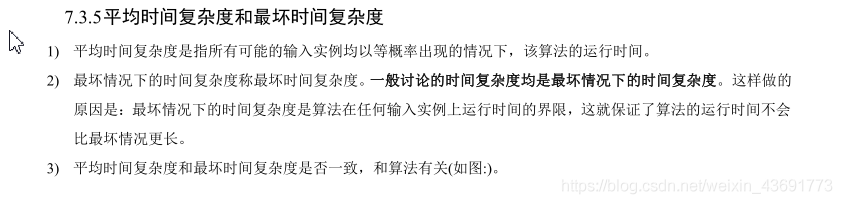
时间频度和时间复杂度
时间频度T(n)
一个算法执行所耗费的时间,从理论上是不能算出来的,必须上机运行测试才能知道。但我们不可能也没有必要对每个算法都上机测试,只需知道哪个算法花费的时间多,哪个算法花费的时间少就可以了。并且一个算法花费的时间与算法中语句的执行次数成正比例,哪个算法中语句执行次数多,它花费时间就多。一个算法中的语句执行次数称为语句频度或时间频度。记为T(n)。
时间复杂度O(n)
一般情况下,算法中基本操作重复执行的次数是问题规模n的某个函数,用T(n)表示,若有某个辅助函数f(n),使得当n趋近于无穷大时,T(n)/f(n)的极限值为不等于零的常数,则称f(n)是T(n)的同数量级函数。记作T(n)=O(f(n)),称O(f(n)) 为算法的渐进时间复杂度,简称时间复杂度。
在T(n)=4n²-2n+2中,就有f(n)=n²,使得T(n)/f(n)的极限值为4,那么O(f(n)),也就是时间复杂度为O(n²)
- 对于不是只有常数的时间复杂度忽略时间频度的系数、低次项、常数
- 对于只有常数的时间复杂度,将常数看为1
常见的时间复杂度
常数阶 O(1)
int i = 1;
i++;
无论代码执行了多少行,只要没有循环等复杂的结构,时间复杂度都是O(1)对数阶O(log2n)
while(i
}
此处i并不是依次递增到n,而是每次都以倍数增长。假设循环了x次后i大于n。则2x = n,x=log2n线性阶O(n)
for(int i = 0; i
}
这其中,循环体中的代码会执行n+1次,时间复杂度为O(n)线性对数阶O(nlog2n)
for(int i = 0; i
while(j
}
}
此处外部为一个循环,循环了n次。内部也是一个循环,但内部f循环的时间复杂度是log2n
所以总体的时间复杂度为线性对数阶O(nlog2n)平方阶O(n2)
for(int i = 0; i
}
}立方阶O(n3)
for(int i = 0; i
}
}
}
可以看出平方阶、立方阶的复杂度主要是否循环嵌套了几层来决定的3、排序算法的时间复杂度
| 排序算法 | 平均时间 | 最差时间 | 稳定性 | 空间复杂度 | 备注 |
|---|---|---|---|---|---|
| 冒泡排序 | O(n2) | O(n2) | 稳定 | O(1) | n较小时好 |
| 交换排序 | O(n2) | O(n2) | 不稳定 | O(1) | n较小时好 |
| 选择排序 | O(n2) | O(n2) | 不稳定 | O(1) | n较小时好 |
| 插入排序 | O(n2) | O(n2) | 稳定 | O(1) | 大部分已有序时好 |
| 基数排序 | O(n*k) | O(n*k) | 稳定 | O(n) | 二维数组(桶)、一维数组(桶中首元素的位置) |
| 希尔排序 | O(nlogn) | O(ns)(1<s<2) | 不稳定 | O(1) | s是所选分组 |
| 快速排序 | O(nlogn) | O(n2) | 不稳定 | O(logn) | n较大时好 |
| 归并排序 | O(nlogn) | O(nlogn) | 稳定 | O(1) | n较大时好 |
| 堆排序 | O(nlogn) | O(nlogn) | 不稳定 | O(1) | n较大时好 |
空间复杂度

4、冒泡排序
算法步骤
- 比较相邻的元素。如果第一个比第二个大,就交换他们两个。
- 对每一对相邻元素作同样的工作,从开始第一对到结尾的最后一对。这步做完后,最后的元素会是最大的数。
- 针对所有的元素重复以上的步骤,除了最后一个。
- 持续每次对越来越少的元素重复上面的步骤,直到没有任何一对数字需要比较。
- 一共进行了数组元素个数-1次大循环,且每次大循环中需要比较的元素越来越少。
- 优化:如果在某次大循环,发现没有发生交换,则证明已经有序。

代码
public class BubbleSort {public static void main(String[] args) {// int arr[] = {3, 9, -1, 10, 20};//// System.out.println("排序前");// System.out.println(Arrays.toString(arr));//为了容量理解,我们把冒泡排序的演变过程,给大家展示//测试一下冒泡排序的速度O(n^2), 给80000个数据,测试//创建要给80000个的随机的数组int[] arr = new int[80000];for(int i =0; i < 80000;i++) {arr[i] = (int)(Math.random() * 8000000); //生成一个[0, 8000000) 数}Date data1 = new Date();SimpleDateFormat simpleDateFormat = new SimpleDateFormat("yyyy-MM-dd HH:mm:ss");String date1Str = simpleDateFormat.format(data1);System.out.println("排序前的时间是=" + date1Str);//测试冒泡排序bubbleSort(arr);Date data2 = new Date();String date2Str = simpleDateFormat.format(data2);System.out.println("排序后的时间是=" + date2Str);}// 将前面额冒泡排序算法,封装成一个方法public static void bubbleSort(int[] arr) {// 冒泡排序 的时间复杂度 O(n^2), 自己写出int temp = 0; // 临时变量boolean flag = false; // 标识变量,表示是否进行过交换for (int i = 0; i < arr.length - 1; i++) {for (int j = 0; j < arr.length - 1 - i; j++) {// 如果前面的数比后面的数大,则交换if (arr[j] > arr[j + 1]) {flag = true;temp = arr[j];arr[j] = arr[j + 1];arr[j + 1] = temp;}}//System.out.println("第" + (i + 1) + "趟排序后的数组");//System.out.println(Arrays.toString(arr));if (!flag) { // 在一趟排序中,一次交换都没有发生过break;} else {flag = false; // 重置flag!!!, 进行下次判断}}}}
5、选择排序

算法步骤
- 遍历整个数组,找到最小(大)的元素,放到数组的起始位置。
- 再遍历剩下的数组,找到剩下元素中的最小(大)元素,放到数组的第二个位置。
- 重复以上步骤,直到排序完成。
- 一共需要遍历数组元素个数-1次,当找到第二大(小)的元素时,可以停止。这时最后一个元素必是最大(小)元素。
 选择排序时间复杂度O(n^2),比冒泡排序快
代码
public class SelectSort {public static void main(String[] args) {int[] arr = {101, 34, 119, 1, -1, 90, 123};selectSort(arr);}public static void selectSort(int[] arr ){for (int i = 0; i < arr.length - 1; i++) {int min = arr[i];int minIndex = i;for (int j = i + 1; j < arr.length ; j++) {if (min > arr[j]){// 说明假定的最小值,并不是最小min = arr[j];//重置最小值minIndex = j;//重置minIndex}}// 将最小值,放在arr[i], 即交换if (minIndex != i){arr[minIndex] = arr[i];arr[i] = min;}}for (int i:arr){System.out.print(i + "\t");}}}
6、插入排序
算法步骤
- 将待排序序列第一个元素看做一个有序序列,把第二个元素到最后一个元素当成是未排序序列。
- 从头到尾依次扫描未排序序列,将扫描到的每个元素插入有序序列的适当位置。(如果待插入的元素与有序序列中的某个元素相等,则将待插入元素插入到相等元素的后面。
时间复杂度O(n^2)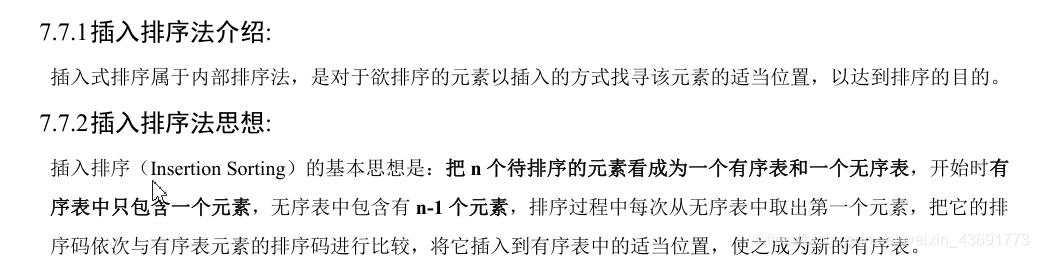

代码
public class InsertSort {public static void main(String[] args) {// int[] arr = {101, 34, 119, 1, -1, 89};// insertSort(arr);int[] arr = new int[80000];for (int i = 0; i < 80000; i++) {arr[i] = (int) (Math.random() * 80000); // 生成一个[0, 8000000) 数}System.out.println("插入排序前");Date data1 = new Date();SimpleDateFormat simpleDateFormat = new SimpleDateFormat("yyyy-MM-dd HH:mm:ss");String date1Str = simpleDateFormat.format(data1);System.out.println("排序前的时间是=" + date1Str);insertSort(arr); //调用插入排序算法Date data2 = new Date();String date2Str = simpleDateFormat.format(data2);System.out.println("排序前的时间是=" + date2Str);}public static void insertSort(int[] arr){int insertVal = 0;int inserIndex = 0;for (int i = 1; i < arr.length; i++) {insertVal = arr[i];//定义待插入的数vinserIndex = i-1;// 即arr[1]的前面这个数的下标// 给insertVal 找到插入的位置// 说明// 1. insertIndex >= 0 保证在给insertVal 找插入位置,不越界// 2. insertVal < arr[insertIndex] 待插入的数,还没有找到插入位置// 3. 就需要将 arr[insertIndex] 后移while (inserIndex >= 0 && insertVal < arr[inserIndex]){arr[inserIndex + 1] = arr[inserIndex];inserIndex--;}// 当退出while循环时,说明插入的位置找到, insertIndex + 1//这里我们判断是否需要赋值if (inserIndex + 1 != i) {arr[inserIndex + 1] = insertVal;}}// for (int i:arr){// System.out.print(i + "\t");// }}
7、希尔排序
回顾:插入排序存在的问题
当最后一个元素为整个数组的最小元素时,需要将前面的有序数组中的每个元素都向后移一位,这样是非常花时间的。
所以有了希尔排序来帮我们将数组从无序变为整体有序再变为有序。
算法步骤
- 选择一个增量序列t1(一般是数组长度/2),t2(一般是一个分组长度/2),……,tk,其中 ti > tj, tk = 1;
- 按增量序列个数 k,对序列进行 k 趟排序;
- 每趟排序,根据对应的增量 ti,将待排序列分割成若干长度为 m 的子序列,分别对各子表进行直接插入排序。仅增量因子为 1 时,整个序列作为一个表来处理,表长度即为整个序列的长度。
示意图

代码
public class ShellSort {public static void main(String[] args) {// int[] arr = { 8, 9, 1, 7, 2, 3, 5, 4, 6, 0};// shellSort(arr);// 创建要给80000个的随机的数组int[] arr = new int[80000];for (int i = 0; i < 80000; i++) {arr[i] = (int) (Math.random() * 80000); // 生成一个[0, 8000000) 数}System.out.println("排序前");Date data1 = new Date();SimpleDateFormat simpleDateFormat = new SimpleDateFormat("yyyy-MM-dd HH:mm:ss");String date1Str = simpleDateFormat.format(data1);System.out.println("排序前的时间是=" + date1Str);//shellSort(arr); //交换式 耗时较长shellSort2(arr);//移位方式 耗时短,更高效Date data2 = new Date();String date2Str = simpleDateFormat.format(data2);System.out.println("排序前的时间是=" + date2Str);}//使用逐步推导的方式来编写希尔排序// 希尔排序时, 对有序序列在插入时采用交换法,// 思路(算法) ===> 代码public static void shellSort(int[] arr ){int temp = 0;for (int gap = arr.length/2; gap > 0; gap/=2) {for (int i = gap; i < arr.length ; i++) {for (int j = i - gap; j >= 0 ; j -= gap) {if (arr[j] > arr[j + gap]){temp = arr[j];arr[j] = arr[j + gap];arr[j + gap] = temp;}}}}// for (int i:arr){// System.out.print(i + "\t");// }}//对交换式的希尔排序进行优化->移位法public static void shellSort2(int[] arr ) {for (int gap = arr.length / 2; gap > 0; gap /= 2) {for (int i = gap; i < arr.length; i++) {int j = i;int temp = arr[j];if (arr[j] < arr[j - gap]){while(j - gap >= 0 && temp < arr[j - gap] ){//移动arr[j] = arr[j - gap];j -= gap;}//当退出while后,就给temp找到插入的位置arr[j] = temp;}}}}}
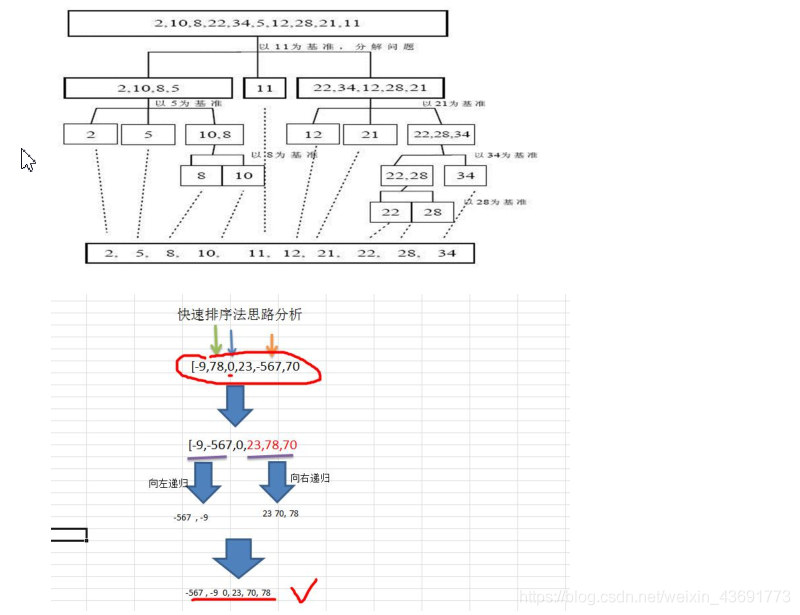
8、快速排序
算法步骤
- 从数列中挑出一个元素,称为 “基准”(pivot);
- 重新排序数列,所有元素比基准值小的摆放在基准前面,所有元素比基准值大的摆在基准的后面(相同的数可以到任一边)。在这个分区退出之后,该基准就处于数列的中间位置。这个称为分区(partition)操作;
- 递归地(recursive)把小于基准值元素的子数列和大于基准值元素的子数列排序;

代码
public class QuickSort {public static void main(String[] args) {// int[] arr = {-9,78,0,23,-567,70, -1,900, 4561};// quickSort(arr,0, arr.length-1);// for (int i:arr){// System.out.print(i + "\t");// }//测试快排的执行速度// 创建要给80000个的随机的数组int[] arr = new int[8000000];for (int i = 0; i < 8000000; i++) {arr[i] = (int) (Math.random() * 80000); // 生成一个[0, 8000000) 数}System.out.println("排序前");Date data1 = new Date();SimpleDateFormat simpleDateFormat = new SimpleDateFormat("yyyy-MM-dd HH:mm:ss");String date1Str = simpleDateFormat.format(data1);System.out.println("排序前的时间是=" + date1Str);quickSort(arr, 0, arr.length-1);Date data2 = new Date();String date2Str = simpleDateFormat.format(data2);System.out.println("排序前的时间是=" + date2Str);//System.out.println("arr=" + Arrays.toString(arr));}public static void quickSort(int[] arr,int left,int right){int l = left;//左下标int r = right;//右下标//pivot 中轴值int pivot = arr[(left + right) / 2];int temp = 0; //临时变量,作为交换时使用//while循环的目的是让比pivot 值小放到左边//比pivot 值大放到右边while (l < r){//在pivot的左边一直找,找到大于等于pivot值,才退出while (arr[l] < pivot){l += 1;}//在pivot的右边一直找,找到小于等于pivot值,才退出while (arr[r] > pivot){r -= 1;}//如果l >= r说明pivot 的左右两的值,已经按照左边全部是//小于等于pivot值,右边全部是大于等于pivot值if (l >= r){break;}//交换temp = arr[l];arr[l] = arr[r];arr[r] = temp;//如果交换完后,发现这个arr[l] == pivot值 相等 r--, 前移if (arr[l] == pivot){r -= 1;}//如果交换完后,发现这个arr[r] == pivot值 相等 l++, 后移if (arr[r] == pivot){l += 1;}}// 如果 l == r, 必须l++, r--, 否则为出现栈溢出if (l == r) {l += 1;r -= 1;}//向左递归if(left < r) {quickSort(arr, left, r);}//向右递归if(right > l) {quickSort(arr, l, right);}}}
9、归并排序
算法步骤
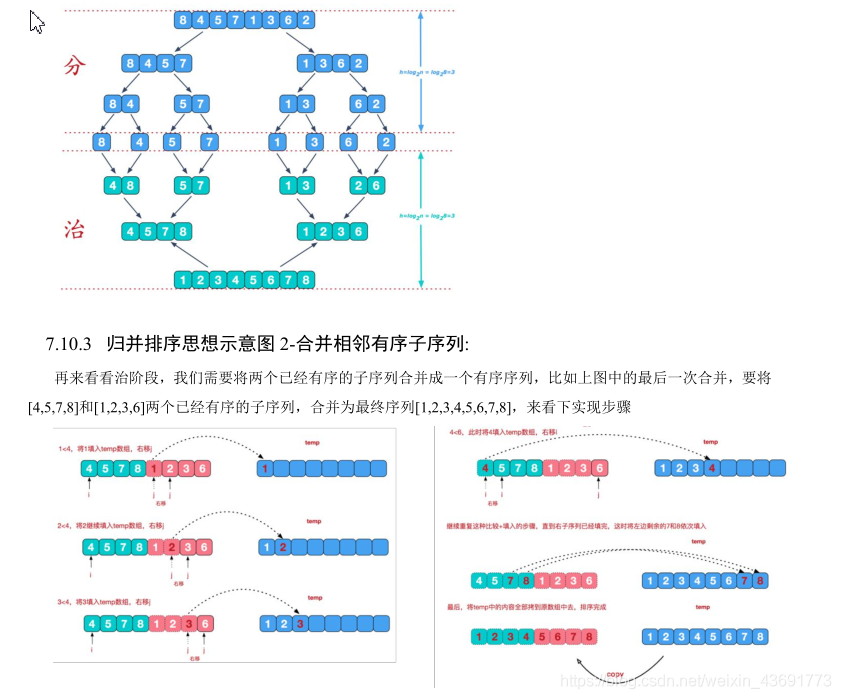
归并排序用到了分而治之的思想,其难点是治
- 申请空间,使其大小为两个已经排序序列之和,该空间用来存放合并后的序列
- 设定两个指针,最初位置分别为两个已经排序序列的起始位置
- 比较两个指针所指向的元素,选择相对小的元素放入到合并空间,并移动指针到下一位置
- 重复上一步 直到某一指针达到序列尾
- 将另一序列剩下的所有元素直接复制到合并序列尾
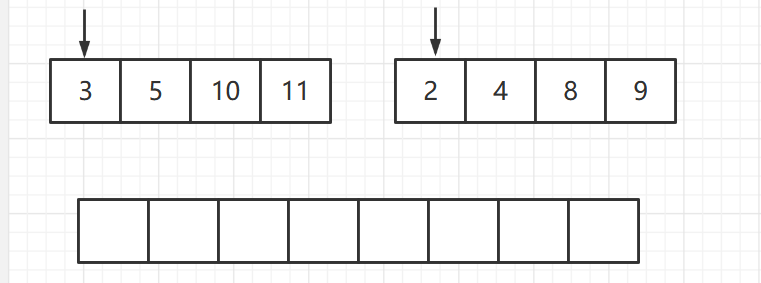
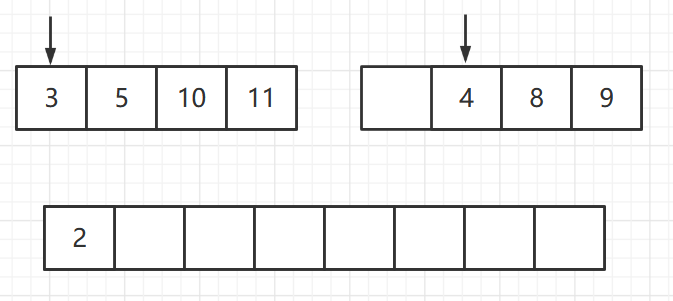
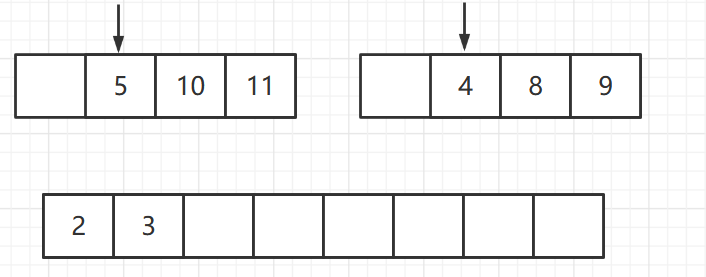
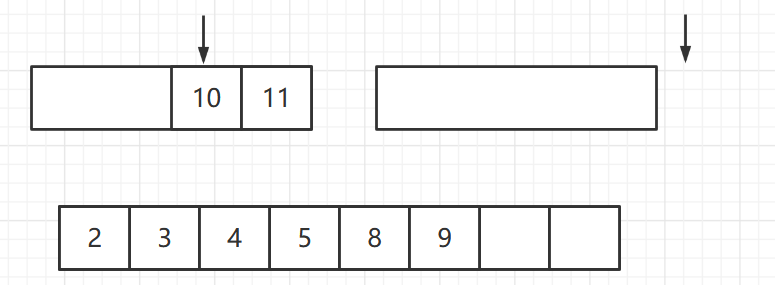
此时第二个序列的指针已经到达末尾,则将第一个序列中剩下的元素全部放入和合并序列末尾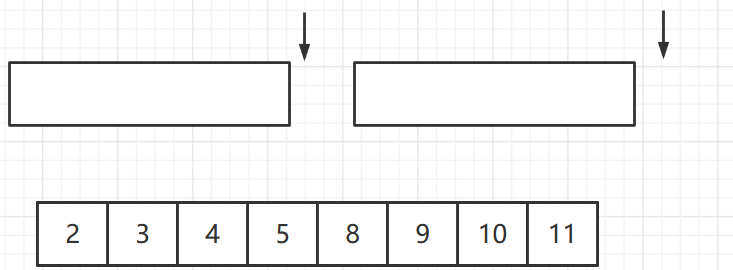

代码
public class MergeSort {public static void main(String[] args) {// int arr[] = { 8, 4, 5, 7, 1, 3, 6, 2 };// int[] temp = new int[arr.length];// mergeSort(arr,0,arr.length-1,temp);// for (int i:arr){// System.out.print(i + "\t");// }//测试快排的执行速度// 创建要给80000个的随机的数组int[] arr = new int[8000000];for (int i = 0; i < 8000000; i++) {arr[i] = (int) (Math.random() * 8000000); // 生成一个[0, 8000000) 数}System.out.println("排序前");Date data1 = new Date();SimpleDateFormat simpleDateFormat = new SimpleDateFormat("yyyy-MM-dd HH:mm:ss");String date1Str = simpleDateFormat.format(data1);System.out.println("排序前的时间是=" + date1Str);int temp[] = new int[arr.length]; //归并排序需要一个额外空间mergeSort(arr, 0, arr.length - 1, temp);Date data2 = new Date();String date2Str = simpleDateFormat.format(data2);System.out.println("排序前的时间是=" + date2Str);}public static void mergeSort(int[] arr,int left,int right,int[] temp){if(left < right){int mid = (left + right) / 2; //中间索引//向左递归进行分解mergeSort(arr,left,mid,temp);//向右递归进行分解mergeSort(arr,mid + 1,right,temp);//合并merge(arr,left,mid,right,temp);}}//合并的方法public static void merge(int[] arr,int left,int mid,int right,int[] temp){int i = left; // 初始化i, 左边有序序列的初始索引int j = mid + 1; //初始化j, 右边有序序列的初始索引int t = 0; // 指向temp数组的当前索引//(一)//先把左右两边(有序)的数据按照规则填充到temp数组//直到左右两边的有序序列,有一边处理完毕为止while(i <= mid && j <= right){//继续//如果左边的有序序列的当前元素,小于等于右边有序序列的当前元素//即将左边的当前元素,填充到 temp数组//然后 t++, i++if(arr[i] <= arr[j]){temp[t] = arr[i];t++;i++;}else {//反之,将右边有序序列的当前元素,填充到temp数组temp[t] = arr[j];t++;j++;}}//(二)//把有剩余数据的一边的数据依次全部填充到tempwhile (i <= mid){//左边的有序序列还有剩余的元素,就全部填充到temptemp[t] = arr[i];t++;i++;}while(j <= right){temp[t] = arr[j];t++;j++;}//(三)//将temp数组的元素拷贝到arr//注意,并不是每次都拷贝所有t = 0;int templeft = left;//第一次合并 tempLeft = 0 , right = 1 // tempLeft = 2 right = 3 // tL=0 ri=3//最后一次 tempLeft = 0 right = 7while(templeft <= right){arr[templeft] = temp[t];t++;templeft++;}}}
10、基数排序
算法步骤
- 将所有待比较数值(正整数)统一为同样的数位长度,数位较短的数前面补零
- 从最低位开始,依次进行一次排序
- 从最低位排序一直到最高位(个位->十位->百位->…->最高位)排序完成以后, 数列就变成一个有序序列
- 需要我们获得最大数的位数
- 可以通过将最大数变为String类型,再求得它的长度即可
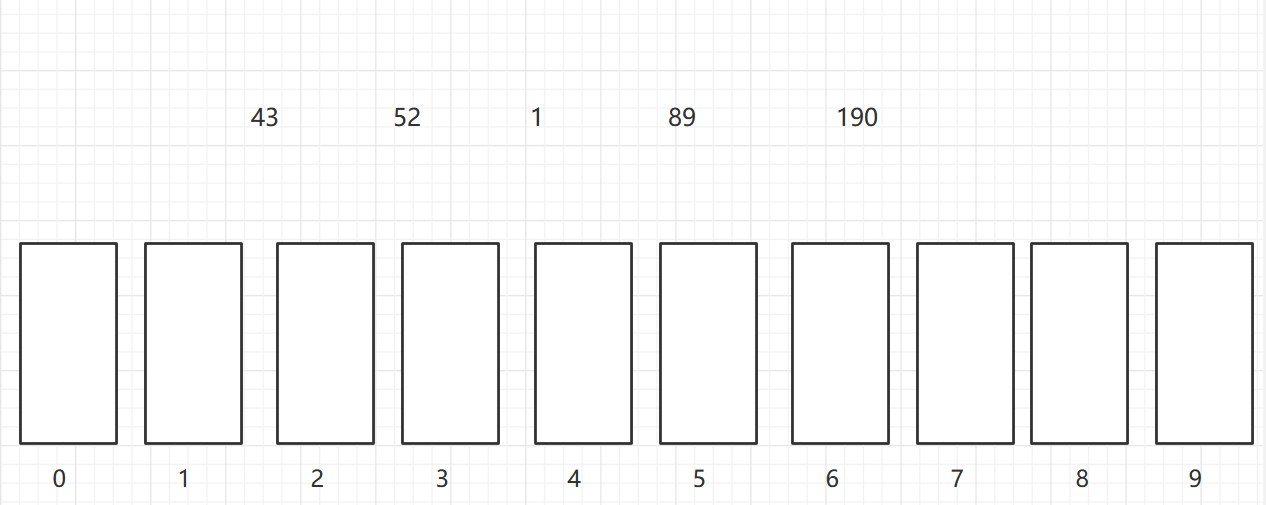
按照个位,放到对应的桶中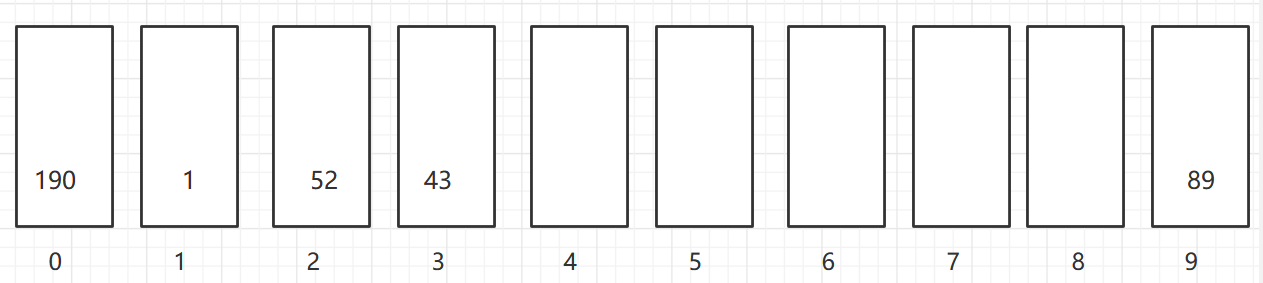
依次取出,同一个桶中有多个元素的,先放入的先取出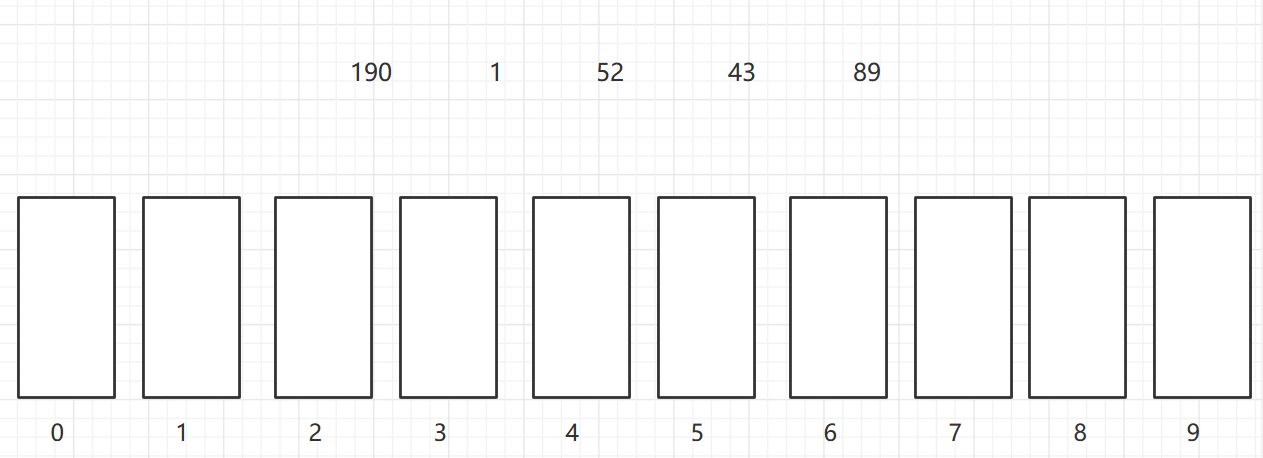
再按照十位,放到对应的桶中,个位数前面补0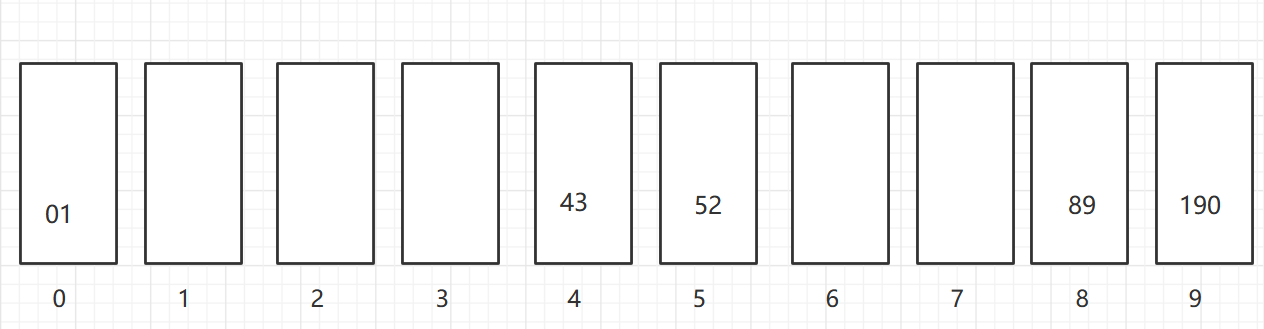
再依次取出桶中元素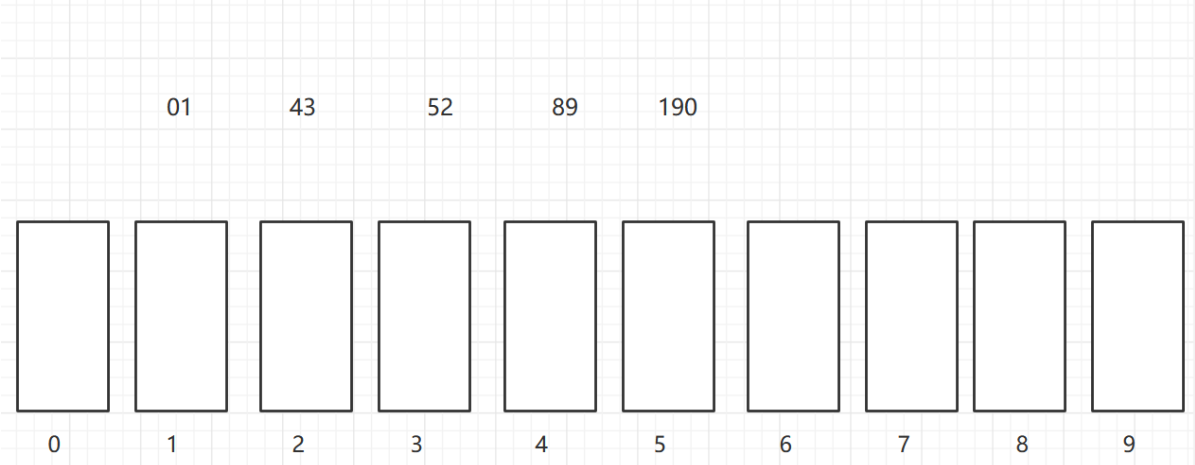
再按照百位,放到对应的桶中,个位数和十位数前面补0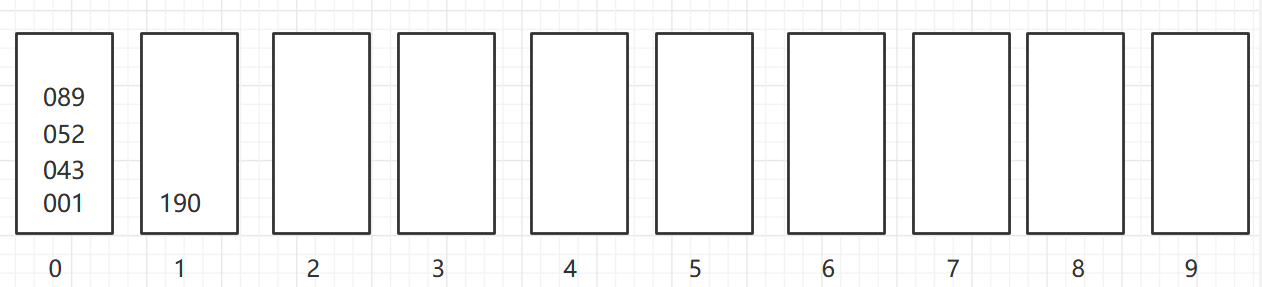
再依次取出桶中元素再按照千位,放到对应的桶中,个位数、十位数和百位数前面补0 当所有的数都在0号桶时,依次取出元素,这时顺序即为排好后的顺序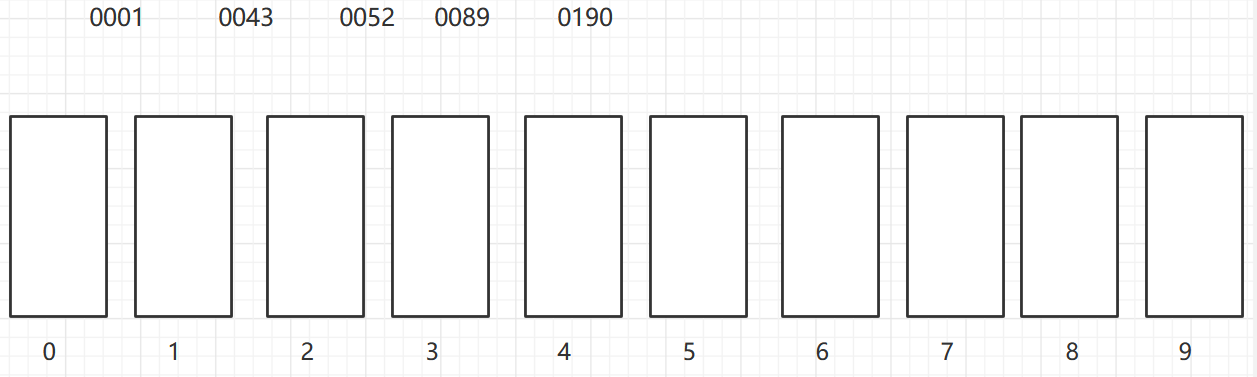

稳定排序 : 如果要排序的数组有两个相同的数字 如a1 =a2 =1 {a1,2,3,a2} 排序后 {a1,a2,2,3} a1还是在a2的前面


代码
public class RadixSort {public static void main(String[] args) {// int arr[] = { 53, 3, 542, 748, 14, 214};// radixSort(arr);// for (int i:arr){// System.out.print(i + "\t");// }// 80000000 * 11 * 4 / 1024 / 1024 / 1024 =3.3Gint[] arr = new int[8000000];for (int i = 0; i < 8000000; i++) {arr[i] = (int) (Math.random() * 8000000); // 生成一个[0, 8000000) 数}System.out.println("排序前");Date data1 = new Date();SimpleDateFormat simpleDateFormat = new SimpleDateFormat("yyyy-MM-dd HH:mm:ss");String date1Str = simpleDateFormat.format(data1);System.out.println("排序前的时间是=" + date1Str);radixSort(arr);Date data2 = new Date();String date2Str = simpleDateFormat.format(data2);System.out.println("排序前的时间是=" + date2Str);//System.out.println("基数排序后 " + Arrays.toString(arr));}public static void radixSort(int[] arr){//1. 得到数组中最大的数的位数int max = arr[0];for (int i = 1; i < arr.length; i++) {if (max < arr[i]){max = arr[i];}}//得到最大数是几位数int maxlength = (max + "").length();//定义一个二维数组,表示10个桶, 每个桶就是一个一维数组//说明//1. 二维数组包含10个一维数组//2. 为了防止在放入数的时候,数据溢出,则每个一维数组(桶),大小定为arr.length//3. 名明确,基数排序是使用空间换时间的经典算法int[][] bucket = new int[10][arr.length];//为了记录每个桶中,实际存放了多少个数据,我们定义一个一维数组来记录各个桶的每次放入的数据个数//可以这里理解//比如:bucketElementCounts[0] , 记录的就是 bucket[0] 桶的放入数据个数int[] bucketElementCounts = new int[10];for (int i = 0, n = 1; i < maxlength; i++,n*=10) {//(针对每个元素的对应位进行排序处理), 第一次是个位,第二次是十位,第三次是百位..for (int j = 0; j < arr.length; j++) {//取出每个元素的对应位的值int digtalOfElement = arr[j] / n % 10;//放入到对应的桶中bucket[digtalOfElement][bucketElementCounts[digtalOfElement]] = arr[j];bucketElementCounts[digtalOfElement]++;}//按照这个桶的顺序(一维数组的下标依次取出数据,放入原来数组)int index = 0;//遍历每一桶,并将桶中是数据,放入到原数组for (int k = 0; k < bucket.length; k++) {//如果桶中,有数据,我们才放入到原数组if (bucketElementCounts[k] != 0){//循环该桶即第k个桶(即第k个一维数组), 放入for (int l = 0; l < bucketElementCounts[k]; l++) {//取出元素放入到arrarr[index] = bucket[k][l];index++;}}//第i+1轮处理后,需要将每个 bucketElementCounts[k] = 0 !!!!bucketElementCounts[k] = 0;}}}}
11、堆排序
基本介绍
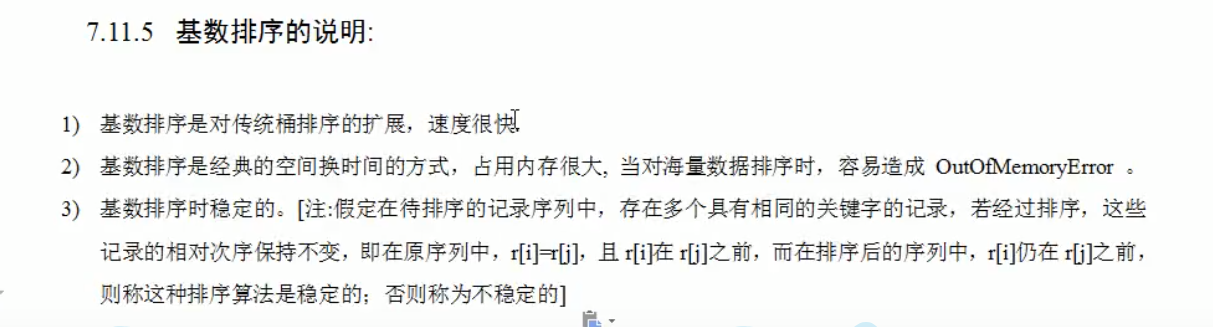
- 堆排序是利用堆这种数据结构而设计的一种排序算法,堆排序是一种选择排序,它的最坏,最好,平均时间复杂度均为 O(nlogn),它也是不稳定排序
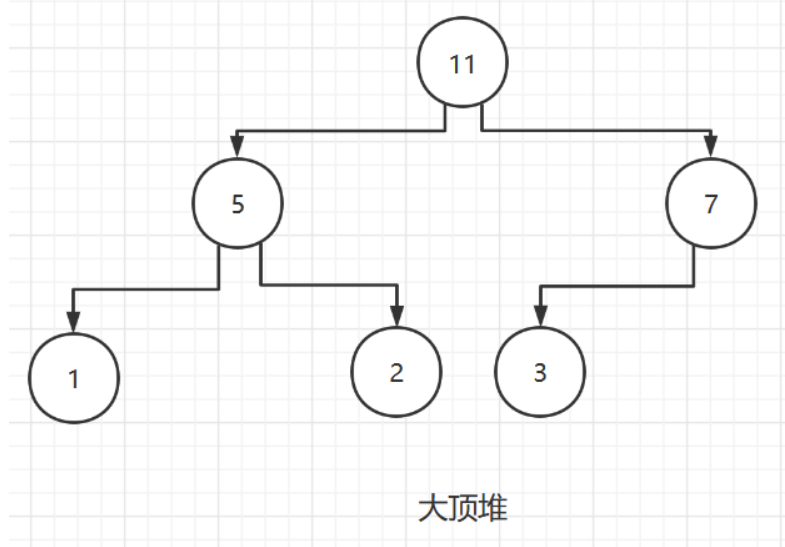
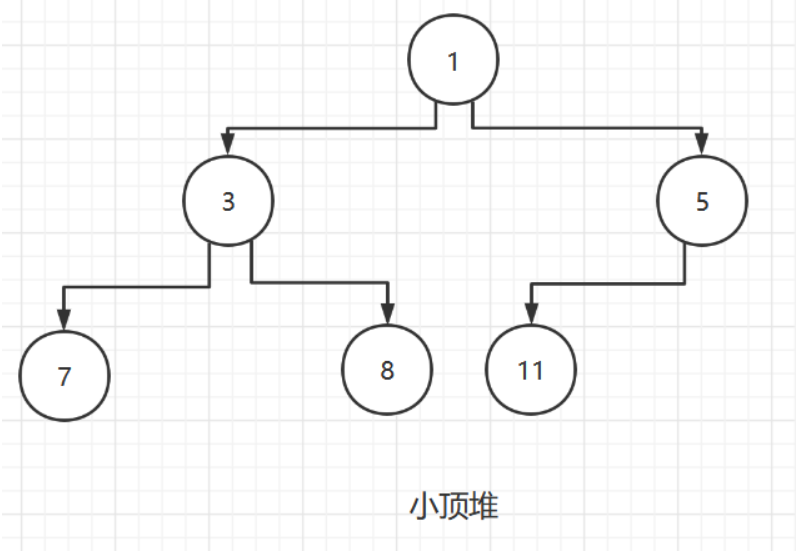
- 堆是具有以下性质的完全二叉树:
- 每个结点的值都大于或等于其左右孩子结点的值,称为大顶堆
- 注意 : 没有要求结点的左孩子的值和右孩子的值的大小关系
- 每个结点的值都小于或等于其左右孩子结点的值,称为小顶堆
- 每个结点的值都大于或等于其左右孩子结点的值,称为大顶堆
- 一般升序排序采用大顶堆,降序排列使用小顶堆
排序思路
- 堆是一种树结构,但是排序中会将堆进行顺序存储(变为数组结构)
- 将无序序列构建成一个堆,根据升序降序需求选择大顶堆或小顶堆
- 将堆顶元素与末尾元素交换,将最大元素”沉”到数组末端
- 重新调整结构,使其满足堆定义,然后继续交换堆顶元素与当前末尾元素,反复执行调整+交换步骤,直到整个序列有序
实现代码
/*** @author Chen Panwen* @data 2020/7/27 16:19*/public class Demo2 {public static void main(String[] args) {int[] arr = {4, 6, 8, 5, 9};//堆排序heapSort(arr);System.out.println("堆排序后结果");System.out.println(Arrays.toString(arr));}/*** 堆排序(升序排序)* @param arr 待排序数组*/public static void heapSort(int[] arr) {for(int i=arr.length-1; i>=0; i--) {//将数组调整为大顶堆,长度为未排序数组的长度for(int j=arr.length/2-1; j>=0; j--) {adjustHeap(arr, j, i+1);}//调整后,数组首元素就为最大值,与为元素交换int temp = arr[i];arr[i] = arr[0];arr[0] = temp;}}/*** 将无序数组进行调整,将其调整为大顶堆* @param arr 待调整的数组* @param index 非叶子节点的索引* @param length 待调整数组的长度*/public static void adjustHeap(int[] arr, int index, int length) {//保存非叶子节点的值,最后需要进行交换操作int temp = arr[index];//进行调整操作//index*2+1代表其左子树for(int i = index*2+1; i<length; i = i*2+1) {//如果存在右子树,且右子树的值大于左子树,就让索引指向其右子树if(i+1<length && arr[i] < arr[i+1]) {i++;}//如果右子树的值大于该节点的值就交换,同时改变索引index的值if(arr[i] > arr[index]) {arr[index] = arr[i];index = i;}else {break;}//调整完成后,将temp放到最终调整后的位置arr[index] = temp;}}}
12、八大排序算法的对比
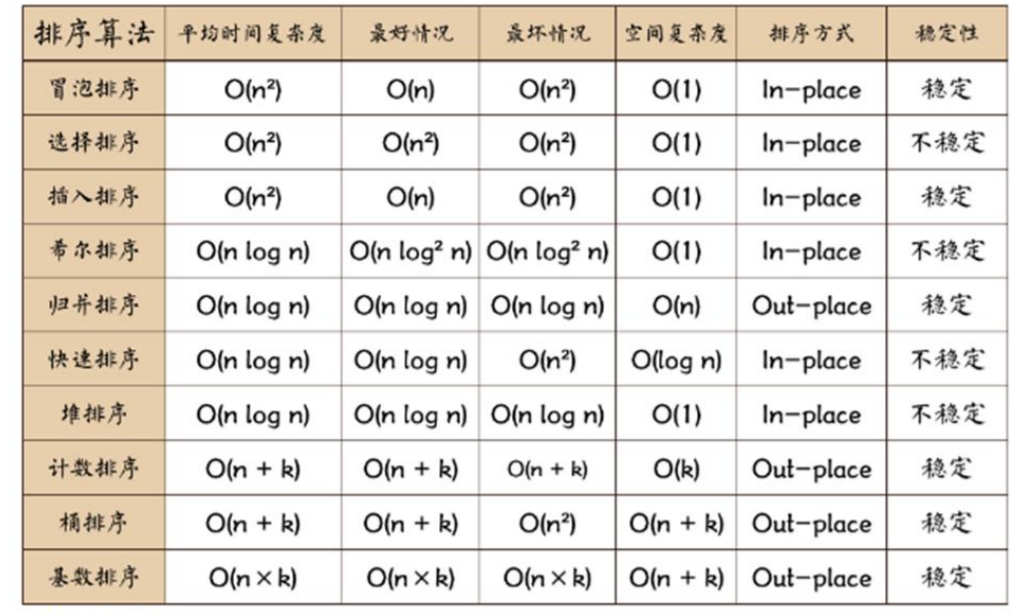


若有收获,就点个赞吧
0 人点赞


