SynchronousQueue是一个没有数据缓冲的BlockingQueue,生产者线程对其的插入操作put必须等待消费者的移除操作take。
SynchronousQueue 最大的不同之处在于,它的容量为 0,所以没有一个地方来暂存元素,导致每次取数据都要先阻塞,直到有数据被放入;同理,每次放数据的时候也会阻塞,直到有消费者来取
SynchronousQueue 的容量不是 1 而是 0,因为 SynchronousQueue 不需要去持有元素,它所做的就是直接传递(direct handoff)。由于每当需要传递的时候,SynchronousQueue 会把元素直接从生产者传给消费者,在此期间并不需要做存储,所以如果运用得当,它的效率是很高的。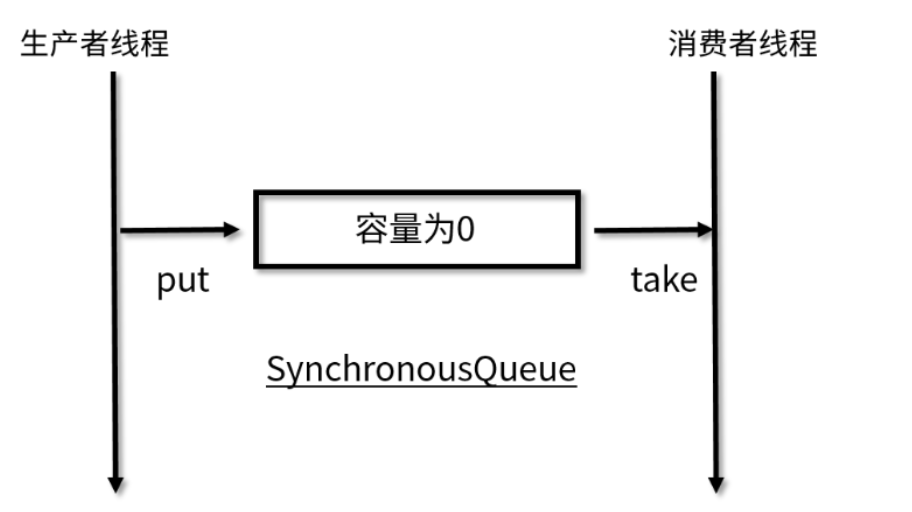
SynchronousQueue使用
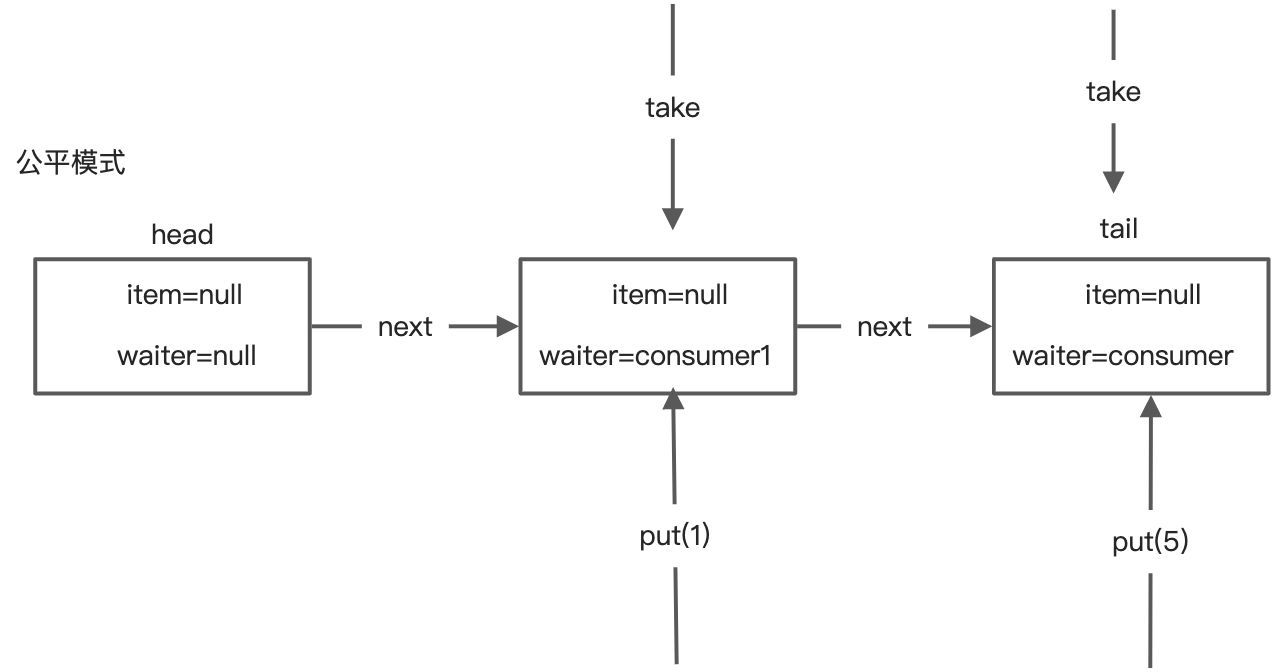
SynchronousQueue有公平和非公平两种模式,公平是用队列,先进先出。非公平用栈结构,先进后出。默认是非公平。
public SynchronousQueue() {this(false);}/*** Creates a {@code SynchronousQueue} with the specified fairness policy.** @param fair if true, waiting threads contend in FIFO order for* access; otherwise the order is unspecified.*/public SynchronousQueue(boolean fair) {transferer = fair ? new TransferQueue<E>() : new TransferStack<E>();}
final static BlockingQueue<Integer> blockingQueue = new SynchronousQueue<>();public static void main(String[] args) throws InterruptedException {//TODO 模拟消费者取数据new Thread(()->{take();},"consumer1").start();// 控制第一个消费者先调用Thread.sleep(10);new Thread(()->{take();},"consumer2").start();Thread.sleep(100);//TODO 模拟生产者写数据new Thread(()->{put(1);},"producer1").start();// 控制第一个生产者先调用Thread.sleep(10);new Thread(()->{put(5);},"producer2").start();}public static void take(){try {Integer item = blockingQueue.take();System.out.println(Thread.currentThread().getName() + " Take: " + item);} catch (InterruptedException e) {e.printStackTrace();}}public static void put(Integer item){try {blockingQueue.put(item);System.out.println(Thread.currentThread().getName() + " Put: " + item);} catch (InterruptedException e) {e.printStackTrace();}}
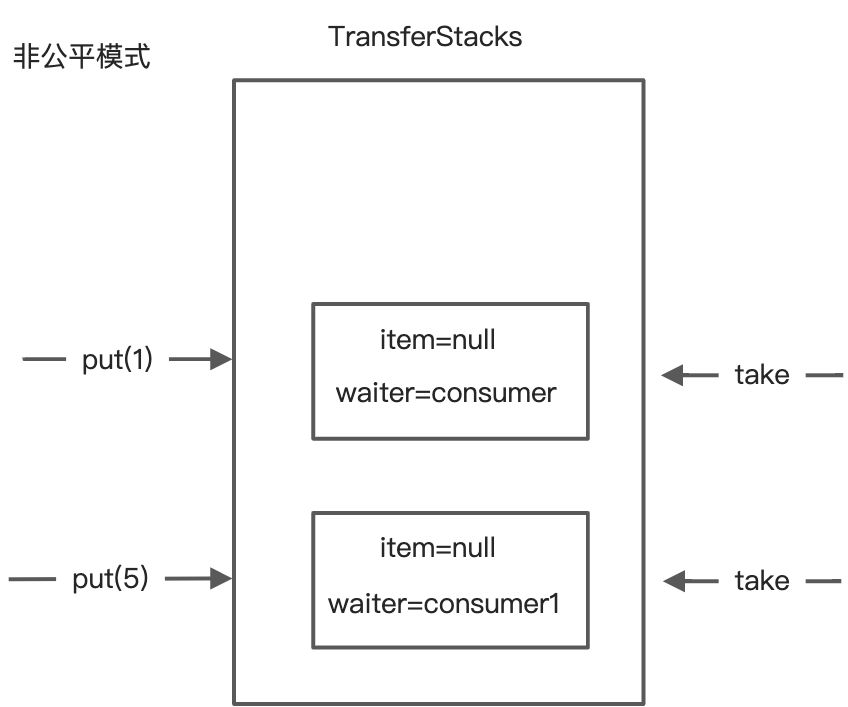
非公平的模式下:
producer�1的任务被consumer2消费了。而producer2的任务被consumer1消费了。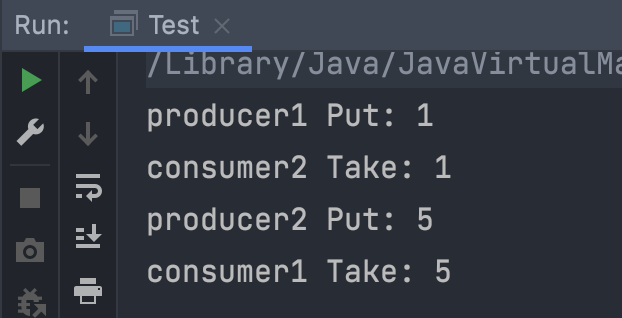
公平模式的情况下:
producer�1的任务被consumer1消费了。而producer2的任务被consumer2消费了。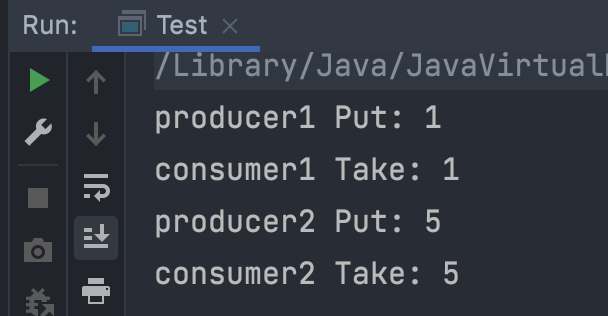
应用场景
- SynchronousQueue非常适合传递性场景做交换工作,生产者的线程和消费者的线程同步传递某些信息、事件或者任务。
- SynchronousQueue的一个使用场景是在线程池里。如果我们不确定来自生产者请求数量,但是这些请求需要很快的处理掉,那么配合SynchronousQueue为每个生产者请求分配一个消费线程是处理效率最高的办法。Executors.newCachedThreadPool()就使用了SynchronousQueue,这个线程池根据需要(新任务到来时)创建新的线程,如果有空闲线程则会重复使用,线程空闲了60秒后会被回收。

若有收获,就点个赞吧
0 人点赞


