深度优先搜索(DFS)和广度优先搜索(BFS)是两种基本的算法思想,其本质分别是栈和队列,在二叉树的遍历中有着重要的应用
DFS
二叉树前序遍历(中序遍历,后续遍历)的递归实现就是DFS,按照根-左-右的顺序进行遍历,
function preorder(root) {const res = []DFS(root)function DFS(root){ // 深度优先搜索// 递归边界if(!root) returnres.push(root.val)// 递归遍历左子树DFS(root.left)// 递归遍历右子树DFS(root.right)}return res}console.log(preorder(root))// [ 'A', 'B', 'D', 'E', 'C', 'F' ]
上面代码表示前序遍历是通过递归实现的,而递归的本质是函数调用栈,最外层的函数先调用(进栈),但最后执行完(出栈),所以说DFS的本质是栈
BFS
二叉树层序遍历
二叉树的层序遍历就是BFS,即一层一层的遍历,每层从左到右的访问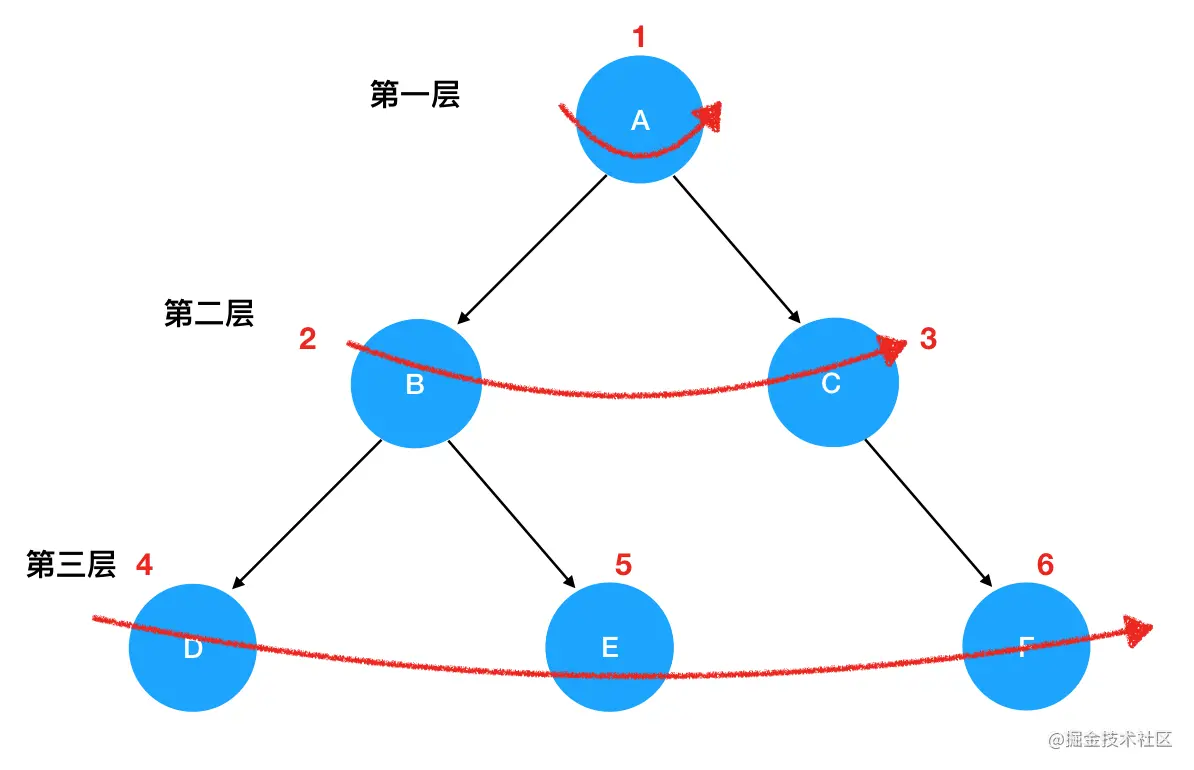
function BFS(root){const queue = []queue.push(root) // 队列进while(queue.length){const top = queue.shift() // 访问完就要出列的元素console.log(top.val)if(top.left){queue.push(top.left)}if(top.right){queue.push(top.right)}}}BFS(root) // ABCDEF
上面可以看出,BFS的本质是一个队列结构
我们在访问一层的时候,把下层的内容放进了队列里面,然后本层访问过的内容出列,直到队列为空结束
层序遍历衍生问题(LeetCode 102)
给你一个二叉树,返回由层序遍历得到数组,其中每层的元素组成一个数组
示例:上面的二叉树返回: [ [ ‘A’ ], [ ‘B’, ‘C’ ], [ ‘D’, ‘E’, ‘F’ ] ]
思路分析:
本质还是BFS + 队列,但是根据队列的长度对结果进行了分组
var levelOrder = function(root) {const res = []if(!root){return res}const queue = [] // 辅助队列queue.push(root)while(queue.length){const level = []const len = queue.length // 每层的元素个数for(let i=0; i<len; i++){const top = queue.shift()level.push(top.val)top.left && queue.push(top.left)top.right && queue.push(top.right)}res.push(level)}return res};

若有收获,就点个赞吧
0 人点赞


