概念解释
队列是一种对存取数据操作都有严格要求的数据结构,只能从尾部进入数据,从头部取出数据,遵循“先进先出”FIFO原则
队列的实现有两种方式,基于数组的实现叫做“顺序队列”,基于链表的实现叫做“链队列”。
顺序队列:<基于数组的实现>
需要两个指针分别标记“队头”和“队尾”,在存入数据时,队头指针保持不变,队尾指针向后移动。实质上队尾指针标记下一次存放数据要放置的位置。在取出数据时,队尾指针保持不变,队头指针每取出一个数据都向后挪动。
也就是说,队头指针指向下一次取出数据的位置,队尾指针指向下一次存入数据要存放的位置。
当队列内的数据都被取出时,队头和队尾的指针都指向某一个相同位置。
public class ArrayQueue {//盛放队列数据的数组int[] arr;//头指针int head;//尾指针int tair;//最大容量int maxCapacity;public ArrayQueue(int maxCapacity){arr = new int[maxCapacity];maxCapacity = maxCapacity;this.head = 0;this.tair = 0;}public boolean isFull(){return tair == maxCapacity;}public void add(int n){if (!isFull()){arr[tair] = n;tair++;}}public int get(){if (isEmpty()){return -1;}int result = arr[head];head++;return result;}//尾部指针为空,当头部指针指向尾部指针即指向空时,则队列为空public boolean isEmpty(){return head == tair;}}
链队列:<基于链表的实现>
JAVA中提供的LinkedList中针对队列数据结构有具体的实现方法
不过注意区别具体方法的实现效果。
添加方法:
add方法添加元素失败时(达到队列最长长度)会抛出异常,offer方法会返回false
取出方法:
取出方法并保留元素:在队列为空时,peek方法会返回null值;element方法取出元素会抛出异常。
取出数据并不保留元素:在队列为空时,取出方法poll会返回null值,remove方法会抛出异常。
Queue<Integer> queue = new LinkedList<>();//添加元素boolean offer = queue.offer(1);boolean add = queue.add(2);//当队列满时,add方法会抛出异常,offer方法会返回false;//取出元素,并保留队列里的元素Integer peek = queue.peek();Integer element = queue.element();//当队列为空时,element会抛出异常,peek会返回null;//取出元素,不保留队列里的元素Integer poll = queue.poll();Integer remove = queue.remove();//当队列为空时,remove方法会抛出异常,poll会返回null;
双端队列:deque double ended queue
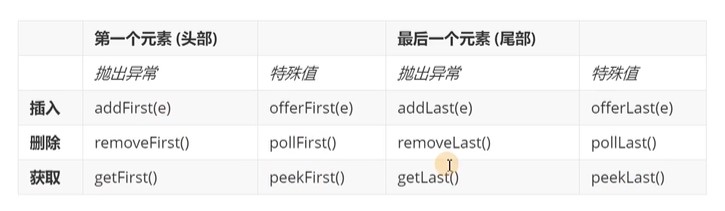
特别队列:
优先级队列:PriorityQueue
元素携带了相关的优先级,优先级更高的元素排在队头
priorityQueue,提供了comparable接口,元素可以实现其方法,改变在队列中的顺序。
阻塞队列:BlockingQueue
当队列满时,等待队列有空余位置再存数据;当队列空时,等待队列中增加了数据再取出。
put( ) 和 take( ) 方法实现了阻塞逻辑。
另外阻塞队列还分为两种情况,一种是无限期地等待,一种是能设定等待时间。
延迟队列:DelayQueue
在指定时间内获取有效元素,头部元素是最接近失效时间的。给定一个接口设置延迟时间,元素会按照有效时间进行排序。
相关算法
一、求取队列中的最大值
定义一个队列,实现函数max_value,可以取出队列中的最大值。要求函数max_value,push_back和pop_front的均摊时间复杂度为O(1)。若队列为空,要求max_value,和pop_front返回值为 -1;
【分析】在进行增删操作时,队列里的最大值都可能发生改变。当我们增加元素时,要比较该元素与队列里的最大值之间关系,更大的值更新为最大值。当我们删除元素时,也要比较删除元素与最大值之间的关系,如果删除元素不是最大值那么不需要变动,如果删除元素是最大值,最大值要更新为剩余元素的最大值。
【实现】使用额外的队列来记录最大值发生的变化。max队列,队头元素是目前队列中的最大值,而其他元素是未来可能成为最大值的候选值
新增元素ele时, ele > max时, 取队列中队尾元素比较,如果满足,进行覆盖并循环比较,直到把所有比它小的值都覆盖为止。ele < max 时,将其存到max队列中。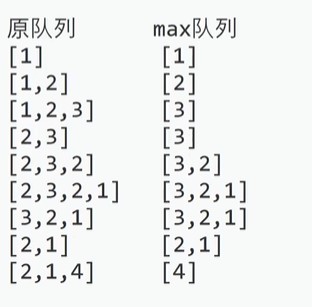
public class MaxQueue {LinkedList<Integer> queue;LinkedList<Integer> max;public MaxQueue(){queue = new LinkedList<Integer>();max = new LinkedList<Integer>();}public int maxValue(){if (max.isEmpty()){return -1;}return max.peekFirst();}public void push_back(int value){queue.offer(value);while (!max.isEmpty() && max.peekLast() < value){max.pollLast();}max.add(value);}public int pop_front(){if (!max.isEmpty() && queue.peekFirst().equals(max.peekFirst())){max.pollFirst();}if (queue.isEmpty()){return -1;}return queue.poll();}}
二、滑动窗口的最大值
【描述】
输入: nums = [1,3,-1,-3,5,3,6,7], 和 k = 3
输出: [3,3,5,5,6,7]
解释:
滑动窗口的位置 最大值
———————- ——-
[1 3 -1] -3 5 3 6 7 3
1 [3 -1 -3] 5 3 6 7 3
1 3 [-1 -3 5] 3 6 7 5
1 3 -1 [-3 5 3] 6 7 5
1 3 -1 -3 [5 3 6] 7 6
1 3 -1 -3 5 [3 6 7] 7
【分析】
数组的长度为 n,窗口的大小为k,那么可形成的窗口数就为 n-k+1。通过队列来记录最大值
窗口未形成的阶段:遍历数组,更新窗口队列;
窗口已形成的阶段:每次窗口移动都是在头部移除元素,尾部增加元素。
在窗口移动过程中,记录其最大值的变化(最大值一直出现在第一位);让队列中新添加的元素与max队列里的最大值作比较,如果已存在的更小,那么覆盖。如果已存在的更大,那么新添加的元素缀在已存在元素之后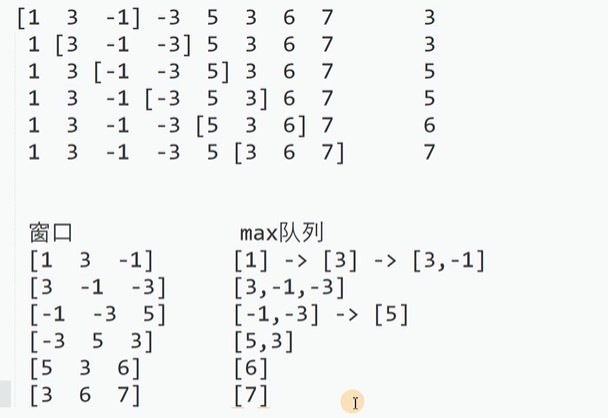
public class SlideWindow {public int[] maxSlidingWindow(int[] nums,int k){//记录每个窗口的最大值,n-k+1为形成的窗口个数int[] result = new int[nums.length - k + 1];//使用队列记录最大值的候选值Deque<Integer> deque = new ArrayDeque<>();//窗口未形成阶段for (int i = 0; i < k; i++) {while (!deque.isEmpty() && deque.peekLast() < nums[i]){deque.pollLast();}deque.offerLast(nums[i]);}result[0] = deque.peekFirst();//窗口已形成阶段for (int i = k; i < nums.length; i++) {//删除了元素nums[i-k],添加了元素nums[i]if (nums[i-k] == deque.peekFirst()){deque.pollFirst();}//新增while (!deque.isEmpty() && deque.peekLast() < nums[i]){deque.pollLast();}deque.offerLast(nums[i]);result[i-k+1] = deque.peekFirst();}return result;}}
三、循环队列的设计与实现
循环队列也被称为“环形缓冲器”是为了解决,在队列存取数据时,空间无法重复利用的问题,通过构造环形结构重复使用。在普通队列里,一旦一个队列满了,我们就不能插入下一个元素,即使队列的前面仍有空间。但是使用循环队列,我们可以利用队列前面的空间重新存储元素。
【实现思路】可以借鉴滑动窗口的模式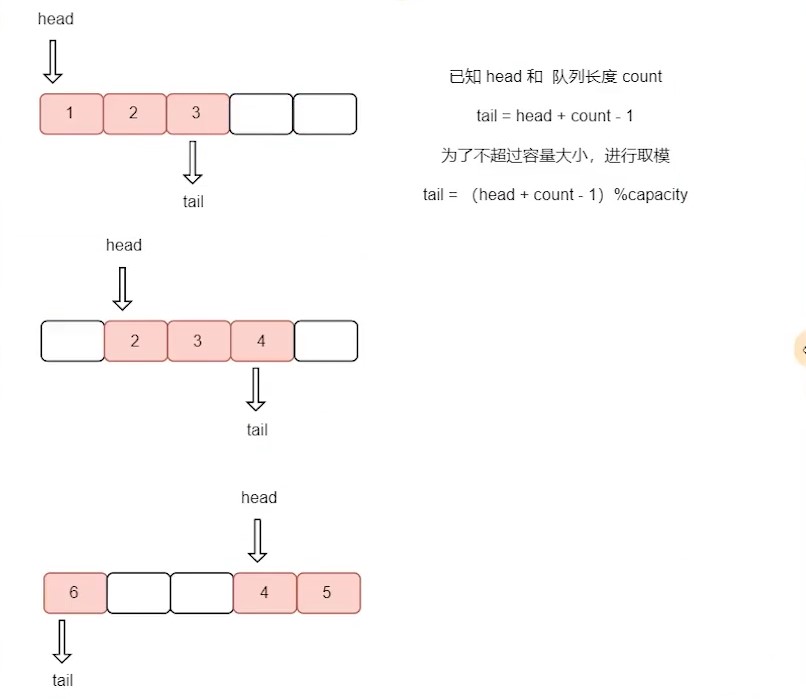
public class MyCircularQueue {//存储元素的数组int[] queue;//能够存储的最大容量int capacity;//头指针int head;//实际队列长度int count;public MyCircularQueue(int k){capacity = k;queue = new int[k];head = 0;count = 0;}public boolean isEmpty(){return count == 0;}public boolean isFull(){return count == capacity;}public boolean enQueue(int value){if (isFull()){return false;}int index = (head + count) % capacity;queue[index] = value;return true;}public boolean deQueue(){if (isEmpty()){return false;}head = (head + 1) % capacity;count--;return true;}public int front(){if (isEmpty()){return -1;}return queue[head];}public int tair(){if (isEmpty()){return -1;}int index = (head + count - 1) % capacity;return queue[index];}}
结语:
推荐一个网站visualgo,图形化地展示数据结构与算法
https://visualgo.net/zh

若有收获,就点个赞吧
0 人点赞


