基本数据类型:
整型:byte、short、int、long -》 默认值是:0;
浮点型:float、double -》 默认值是:0.0;
字符型:char -》默认值是:’\u0000’;
字符串型:stinrg -》默认值是:
布尔型:boolean -》默认值是:false
引用数据类型:数组、类、接口 -》默认值是:null

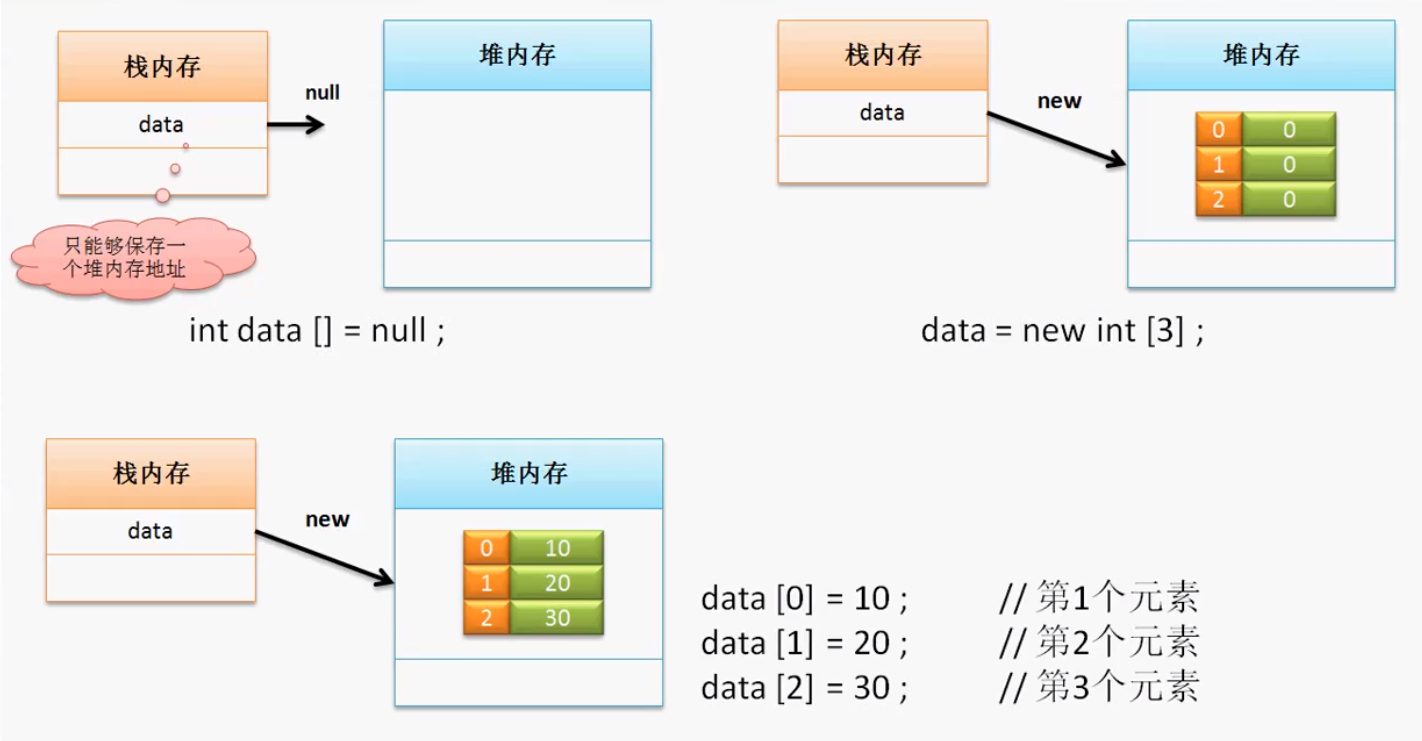
深入了解数组:
1.数据组引用变量只是一个引用,这个引用变量可以指向任何有效的内存,只有当该引用指向有效内存后,才可以通过该数组变量来访问数组元素。
2.实际数组对象是存储在堆(heap)内存中的。如果引用数组的变是局部变量则在栈中(stack);
数组排序:
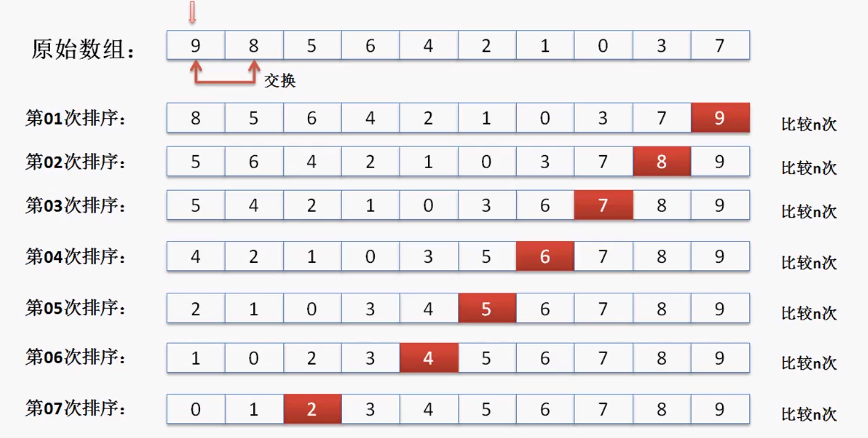
public class TestDemo4{public static void main(String args[]){int data [] = new int [] {9,8,5,6,4,2,1,0,3,7};sort(data);printfArray(data);}public static void sort(int arr[]){//实现数组的升序排序for(int i = 0 ;i < arr.length - 1 ; i++){//控制循环的次数for(int j = 0 ; j < arr.length - i - 1; j++){if(arr[j]>arr[j+1]){int temp = arr[j];arr[j] = arr[j+1];arr[j+1] = temp;}}}}//定义一个专门用于数组输出的方法public static void printfArray(int temp[]){for(int i = 0; i < temp.length; i++){System.out.println(temp[i] + "、");}}}

若有收获,就点个赞吧
0 人点赞


