前言
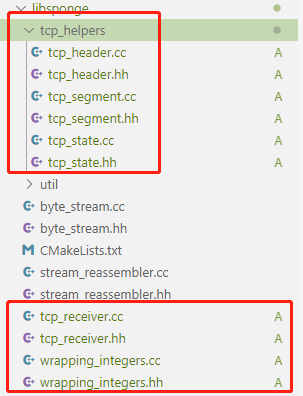
- merge lab2的初始代码,加入了如下文件
-
第零阶段:序号的转换
分析
从绝对序号(uint64_t)转化成TCP序号(uint32_t)比较简单,记为wrap函数
- 设绝对序号为n
- 用static_cast将n转化为uint32_t,就会自动的取模
- 然后加上isn的就是结果,也会自动取模
- 设绝对序号为n
- 从TCP序号(uint32_t)转化成绝对序号(uint64_t)需要思考
- 由于TCP序号是循环的,所以1个TCP序号存在无数个对应的绝对序号
- 因此,我们需要提供1个叫做checkpoint的绝对序号
- 这个checkpoint是最近收到的报文段所携带的TCP序号转化成的绝对序号
- 我们的转化目标,就是转化到离checkpoint最近的绝对序号
- 由于TCP是乱序的,所以当前需要转化的TCP序号对应的绝对序号,可能比checkpoint大,也可能比checkpoint小
- 我们选择差的绝对值最小的那种
- 算法
// Dummy implementation of a 32-bit wrapping integer
// For Lab 2, please replace with a real implementation that passes the
// automated checks run by make check_lab2.
template
using namespace std;
//! Transform an “absolute” 64-bit sequence number (zero-indexed) into a WrappingInt32
//! \param n The input absolute 64-bit sequence number
//! \param isn The initial sequence number
WrappingInt32 wrap(uint64_t n, WrappingInt32 isn) {
// 这个是参考别人的,因为不太熟悉C++的数据类型与转换
return WrappingInt32{static_cast
//! Transform a WrappingInt32 into an “absolute” 64-bit sequence number (zero-indexed)
//! \param n The relative sequence number
//! \param isn The initial sequence number
//! \param checkpoint A recent absolute 64-bit sequence number
//! \returns the 64-bit sequence number that wraps to n and is closest to checkpoint
//!
//! \note Each of the two streams of the TCP connection has its own ISN. One stream
//! runs from the local TCPSender to the remote TCPReceiver and has one ISN,
//! and the other stream runs from the remote TCPSender to the local TCPReceiver and
//! has a different ISN.
uint64_t unwrap(WrappingInt32 n, WrappingInt32 isn, uint64_t checkpoint) {
/ 原理是虽然segment不一定按序到达,但几乎不可能出现相邻到达的两个segment序号差值超过INT32_MAX的情况,
除非延迟以年为单位,或者产生了比特差错(后面的LAB可能涉及)。/
// checkpoint是上一个绝对序号
// 将checkpoint转化为WrappingInt32,记为c
// n的绝对序号可能比c的绝对序号大,也可能是反过来,我们取差的绝对值更小的那种情况
WrappingInt32 c = wrap(checkpoint, isn);
uint32_t offset1 = n.raw_value()-c.raw_value(); // n的绝对序号更大
uint32_t offset2 = c.raw_value()-n.raw_value(); // c的绝对序号更大
if (offset1>offset2&&checkpoint>=offset2) {
return checkpoint-offset2;
} else {
return checkpoint+offset1;
}
}
// uint64_t unwrap(WrappingInt32 n, WrappingInt32 isn, uint64_t checkpoint) { // uint32_t offset = n.raw_value() - isn.raw_value(); // uint64_t t = (checkpoint & 0xFFFFFFFF00000000) + offset; // uint64_t ret = t; // if (abs(int64_t(t + (1ul << 32) - checkpoint)) < abs(int64_t(t - checkpoint))) // ret = t + (1ul << 32); // if (t >= (1ul << 32) && abs(int64_t(t - (1ul << 32) - checkpoint)) < abs(int64_t(ret - checkpoint))) // ret = t - (1ul << 32); // return ret; // }
<a name="bhQlL"></a>## 测试结果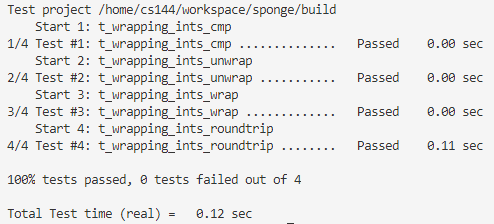<a name="ykyvI"></a># TCPReceiver:第一阶段<a name="u0pRt"></a>## 分析- 首先我删除了StreamReassembler的成员变量_next_index的使用- 用stream_out().bytes_written()来代替- 详细说明见[LAB1实现](https://www.yuque.com/milesgo/mfqmay/isnzhx?view=doc_embed)的第四阶段- 这部分逻辑比较简单,这里就不再赘述了,可以参考代码及注释,以及后面的《问题一》、《问题二》小节- 因为最难的部分,报文段的组装逻辑已经写在了StreamReassembler中- 由于状态转化很简单,所以也没有额外用枚举来表示状态<a name="rZblS"></a>## 代码```cpp#ifndef SPONGE_LIBSPONGE_TCP_RECEIVER_HH#define SPONGE_LIBSPONGE_TCP_RECEIVER_HH#include "byte_stream.hh"#include "stream_reassembler.hh"#include "tcp_segment.hh"#include "wrapping_integers.hh"#include <optional>//! \brief The "receiver" part of a TCP implementation.//! Receives and reassembles segments into a ByteStream, and computes//! the acknowledgment number and window size to advertise back to the//! remote TCPSender.class TCPReceiver {//! Our data structure for re-assembling bytes.StreamReassembler _reassembler;//! The maximum number of bytes we'll store.size_t _capacity;bool _syn_received;bool _fin_received;WrappingInt32 _isn;// uint64_t abs_seqno();public://! \brief Construct a TCP receiver//!//! \param capacity the maximum number of bytes that the receiver will//! store in its buffers at any give time.TCPReceiver(const size_t capacity) : _reassembler(capacity), _capacity(capacity),_syn_received(false), _fin_received(false), _isn(0) {}//! \name Accessors to provide feedback to the remote TCPSender//!@{//! \brief The ackno that should be sent to the peer//! \returns empty if no SYN has been received//!//! This is the beginning of the receiver's window, or in other words, the sequence number//! of the first byte in the stream that the receiver hasn't received.std::optional<WrappingInt32> ackno() const;//! \brief The window size that should be sent to the peer//!//! Operationally: the capacity minus the number of bytes that the//! TCPReceiver is holding in its byte stream (those that have been//! reassembled, but not consumed).//!//! Formally: the difference between (a) the sequence number of//! the first byte that falls after the window (and will not be//! accepted by the receiver) and (b) the sequence number of the//! beginning of the window (the ackno).size_t window_size() const;//!@}//! \brief number of bytes stored but not yet reassembledsize_t unassembled_bytes() const { return _reassembler.unassembled_bytes(); }//! \brief handle an inbound segmentvoid segment_received(const TCPSegment &seg);//! \name "Output" interface for the reader//!@{ByteStream &stream_out() { return _reassembler.stream_out(); }const ByteStream &stream_out() const { return _reassembler.stream_out(); }//!@}};#endif // SPONGE_LIBSPONGE_TCP_RECEIVER_HH#include "tcp_receiver.hh"// Dummy implementation of a TCP receiver// For Lab 2, please replace with a real implementation that passes the// automated checks run by `make check_lab2`.template <typename... Targs>void DUMMY_CODE(Targs &&... /* unused */) {}using namespace std;// uint64_t TCPReceiver::abs_seqno() {// return stream_out().bytes_written()+1;// }void TCPReceiver::segment_received(const TCPSegment &seg) {if (stream_out().input_ended()) { // 如果已经组装全部字节流数据,则直接返回,后面收到的报文段都是没有用的return;}if (!_syn_received) { // 如果还未收到第一个SYNif (seg.header().syn) {_isn=seg.header().seqno; //保存isn_syn_received=true;// 包含SYN的报文,同时也可能包含FIN(文档里说的)if (seg.header().fin) {stream_out().end_input();}return; // SYN报文段不会携带数据} else { // 如果报文段不带SYN,则出现错误stream_out().set_error();return;}} else {if (seg.header().syn) { // 如果报文段带SYN,则出现错误stream_out().set_error();return;}}// 获取数据长度size_t data_length = seg.length_in_sequence_space();if (seg.header().fin) {data_length--;}// 获取第一个字节的字节流序号size_t abs_seqno = unwrap(seg.header().seqno, _isn, stream_out().bytes_written()+1);// 组装数据if (data_length>0) {_reassembler.push_substring(seg.payload().copy(), abs_seqno-1, seg.header().fin);}}optional<WrappingInt32> TCPReceiver::ackno() const {if (!_syn_received) {return std::nullopt;}size_t abs_seqno = stream_out().bytes_written()+1;if (stream_out().input_ended()) {abs_seqno++;}return wrap(abs_seqno, _isn);}size_t TCPReceiver::window_size() const { return stream_out().remaining_capacity(); }
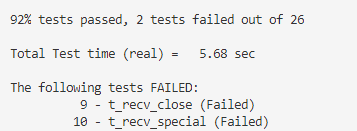
测试结果
问题一
在TCPReceiver::segment_received的最后,我对data_length进行了判断,只有当其长度大于0时,才调用_reassembler.push_substring;这样会有1个问题,如果到达了一个不带数据的FIN,则我们要调用ByteStream的end_input
- 所以这里可以不判断data_length,即使是空串,也调用push_substring,这样就可以让_reassembler帮我们调用end_input
- 也可以在这里加上单独的处理,手动调用end_input
问题二
- 在初始化状态(LISTEN)下,收到非SYN报文如何处理?
- 我目前是set_error
- 但是测试样例说是直接丢弃,仍然保持LISTEN状态
- 在初始化状态(LISTEN)下,收到带数据的SYN报文如何处理?
- 我目前是直接丢弃
- 但是测试样例说是也要算作字节流的一部分
- 在SYN_RECVz状态下,收到SYN报文如何处理?
- 我目前是set_error
- 测试样例没有报错,那么暂且这么认为
SYN报文段、SYN&FIN报文段、FIN报文段都可能携带数据
TCPReceiver: 第二阶段
代码
#ifndef SPONGE_LIBSPONGE_TCP_RECEIVER_HH#define SPONGE_LIBSPONGE_TCP_RECEIVER_HH#include "byte_stream.hh"#include "stream_reassembler.hh"#include "tcp_segment.hh"#include "wrapping_integers.hh"#include <optional>//! \brief The "receiver" part of a TCP implementation.//! Receives and reassembles segments into a ByteStream, and computes//! the acknowledgment number and window size to advertise back to the//! remote TCPSender.class TCPReceiver {//! Our data structure for re-assembling bytes.StreamReassembler _reassembler;//! The maximum number of bytes we'll store.size_t _capacity;bool _syn_received;bool _fin_received;WrappingInt32 _isn;public://! \brief Construct a TCP receiver//!//! \param capacity the maximum number of bytes that the receiver will//! store in its buffers at any give time.TCPReceiver(const size_t capacity) : _reassembler(capacity), _capacity(capacity),_syn_received(false), _fin_received(false), _isn(0) {}//! \name Accessors to provide feedback to the remote TCPSender//!@{//! \brief The ackno that should be sent to the peer//! \returns empty if no SYN has been received//!//! This is the beginning of the receiver's window, or in other words, the sequence number//! of the first byte in the stream that the receiver hasn't received.std::optional<WrappingInt32> ackno() const;//! \brief The window size that should be sent to the peer//!//! Operationally: the capacity minus the number of bytes that the//! TCPReceiver is holding in its byte stream (those that have been//! reassembled, but not consumed).//!//! Formally: the difference between (a) the sequence number of//! the first byte that falls after the window (and will not be//! accepted by the receiver) and (b) the sequence number of the//! beginning of the window (the ackno).size_t window_size() const;//!@}//! \brief number of bytes stored but not yet reassembledsize_t unassembled_bytes() const { return _reassembler.unassembled_bytes(); }//! \brief handle an inbound segmentvoid segment_received(const TCPSegment &seg);//! \name "Output" interface for the reader//!@{ByteStream &stream_out() { return _reassembler.stream_out(); }const ByteStream &stream_out() const { return _reassembler.stream_out(); }//!@}};#endif // SPONGE_LIBSPONGE_TCP_RECEIVER_HH#include "tcp_receiver.hh"#include <iostream>// Dummy implementation of a TCP receiver// For Lab 2, please replace with a real implementation that passes the// automated checks run by `make check_lab2`.template <typename... Targs>void DUMMY_CODE(Targs &&... /* unused */) {}using namespace std;void TCPReceiver::segment_received(const TCPSegment &seg) {if (stream_out().input_ended()) { // 如果已经组装全部字节流数据,则直接返回,后面收到的报文段都是没有用的return;}if (!_syn_received) { // 如果还未收到第一个SYNif (seg.header().syn) {_isn=seg.header().seqno; //保存isn_syn_received=true;} else { // 如果报文段不带SYN,则直接丢弃return;}} else {if (seg.header().syn) { // 如果报文段带SYN,则出现错误stream_out().set_error();return;}}// 获取第一个字节的字节流序号size_t abs_seqno = unwrap(seg.header().seqno, _isn, stream_out().bytes_written()+1);if (seg.header().syn) { // 根据测试样例,SYN报文段也可能携带数据abs_seqno = unwrap(WrappingInt32(seg.header().seqno.raw_value()+1), _isn, stream_out().bytes_written()+1);}// 组装数据// 这里即使数据为空,我们也要push一个空串进去,以让Assembler帮我们调用_output.end_input()// 当然我们在这里调用也行_reassembler.push_substring(seg.payload().copy(), abs_seqno-1, seg.header().fin);}optional<WrappingInt32> TCPReceiver::ackno() const {if (!_syn_received) { // 如果还处于LISTEN状态return std::nullopt;}size_t abs_seqno = stream_out().bytes_written()+1;if (stream_out().input_ended()) { // 如果input_ended()返回true,则说明已经收到FIN,且全部数据提交到流已经成功abs_seqno++;}return wrap(abs_seqno, _isn);}size_t TCPReceiver::window_size() const { return stream_out().remaining_capacity(); }
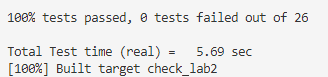
测试结果

若有收获,就点个赞吧
0 人点赞


