基础环境准备:
配置好基本的centos7环境
使用的MySQL为二进制免编译包安装
# 永久生效[root@lnmp ~]# vim /etc/profilePATH=$PATH:/usr/local/mysql/bin#刷新参数[root@lnmp ~]# source /etc/profile
设置密码
# 在知道或者是没有密码的情况下配置密码# 二进制免编译安装的MySQL是没有密码的,首先设置一个密码[root@lnmp ~]# mysqladmin -uroot password '000000'# 重置密码[root@lnmp ~]# vim /etc/my.cnf# 在mysqld下添加skip-grant这一行[mysqld]skip-grant # 忽略用户认证# 重启服务生效[root@lnmp ~]# service mysqld restart# 免密登录[root@lnmp ~]# mysql -urootmysql> use mysqlmysql> select * from user;# 更新密码mysql> update user set password=password('000000') where user='root';Query OK, 4 rows affected (0.00 sec)Rows matched: 4 Changed: 4 Warnings: 0[root@lnmp ~]# vim /etc/my.cnf# 去掉skip-grant字段# 重启生效[root@lnmp ~]# service mysqld restartShutting down MySQL.. SUCCESS!Starting MySQL. SUCCESS!# 使用新密码登录[root@lnmp ~]# mysql -uroot -p000000
链接MySQL
# 直接连接[root@lnmp ~]# mysql -uroot -p000000# 远程连接[root@lnmp ~]# mysql -uroot -p000000 -h ip -P3306# 和直接连接一样[root@lnmp ~]# mysql -uroot -p000000 -S /tmp/mysql.sock# 链接以后进行一些操作[root@lnmp ~]# mysql -uroot -p000000 -e "show databases;"Warning: Using a password on the command line interface can be insecure.+--------------------+| Database |+--------------------+| information_schema || mysql || performance_schema || test |+--------------------+
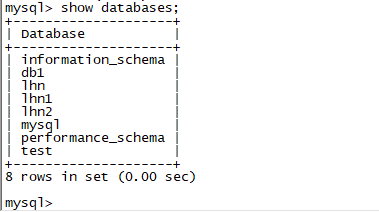
MySQL常用命令
MySQL命令不区分大小写, 注意查看字母最后是否+s
# 查询库mysql> show databases;# 切换库mysql> use mysql;# 查看库里的表mysql> show tables;# 查看表里的字段mysql> desc tb_name;# 查看建表语句mysql> show create table tb_name\G;# 查看当前用户mysql> select user();# 查看当前使用的数据库mysql> select database();# 创建库mysql> create database db1;# 创建表mysql> use db1;create table t1(`id` int(4), `name` char(40));# 删除表mysql> drop table table_name;# 查看当前数据库版本mysql> select version();# 查看数据库状态mysql> show status;# 查看各参数mysql> show variables;# 查看指定参数mysql> show variables like 'max_connect%';# 修改参数mysql> set global max_connect_errors=1000;# 查看队列mysql> show processlist; show full processlist;
MySQL用户管理
root用户为超级管理员,不能让所有的连接都是用root,所以需要授权
创建以一个用户,对某一个库,或者对某一个表授权。
# grant 授权# all 所有权限 增删改查# on 在哪个库 *.* 表示对所有的库,所有的表# to 对哪一个用户, 也可以指定来源IP# identified 认证方式, 密码grant all on *.* to 'user1' identified by 'passwd';# 使用ip才能登陆(单个IP)grant all on *.* to 'user1'@'127.0.0.1' identified by 'passwd';# 使用某个段登录grant all on *.* to 'user1'@'192.168.200.%' identified by 'passwd';# 使用sock登录grant all on *.* to 'user1'@'localhost' identified by 'passwd';grant SELECT,UPDATE,INSERT on db1.* to 'user2'@'192.168.133.1' identified by 'passwd';grant all on db1.* to 'user3'@'%' identified by 'passwd';# 默认查看root的授权show grants;# 查看某个用户的授权show grants for user2@192.168.133.1;# 命令历史文件/root/.mysql_history
MySQL常用命令
如果不是想专业从事DBA可以不用学太细,
查询少使用’* ‘ 影响效率。
要掌握基本的增删改查。
删除数据需要谨慎!
# 查看行数mysql> select count(*) from mysql.user;# 查看mysql数据库db表所有内容mysql> select * from mysql.db;# 查看 db这一个字段mysql> select db from mysql.db;# 查看 db,user这两个字段mysql> select db,user from mysql.db;# 查看 host字段 满足地址为192.168.字段的信息mysql> select * from mysql.db where host like '192.168.%';# 在db1数据库t1表插入数据mysql> insert into db1.t1 values (1, 'abc');# 更新 改mysql> update db1.t1 set name='aaa' where id=1;# 删除一行数据mysql> delete from db1.t1 where id=3;# 清空表,但是保存表结构mysql> truncate table db1.t1;# 删除表mysql> drop table db1.t1;# 删除库mysql> drop database db1;
MySQL备份恢复
mysqldump备份
mysql恢复
恢复过程 删除表,创建表,插入数据
# 备份库mysqldump -uroot -p123456 mysql > /tmp/mysql.sql# 恢复库mysql -uroot -p123456 mysql < /tmp/mysql.sql# 备份表mysqldump -uroot -p123456 mysql user > /tmp/user.sql# 恢复表mysql -uroot -p123456 mysql < /tmp/user.sql# 备份所有库mysqldump -uroot -p123456 -A >/tmp/123.sql# 只备份表结构mysqldump -uroot -p123456 -d mysql > /tmp/mysql.sql

若有收获,就点个赞吧
0 人点赞


