- 328. 奇偶链表">328. 奇偶链表
- 面试题 02.01. 移除重复节点">面试题 02.01. 移除重复节点
- 2. 两数相加">2. 两数相加
- 面试题35. 复杂链表的复制">面试题35. 复杂链表的复制
- 23. 合并K个排序链表">23. 合并K个排序链表
- 203-移除链表元素">203-移除链表元素
- 876. 链表的中间结点">876. 链表的中间结点
- 206. 反转链表">206. 反转链表
- 24. 两两交换链表中的节点">24. 两两交换链表中的节点
- 141. 环形链表">141. 环形链表
- 142. 环形链表 II">142. 环形链表 II
- 25. K 个一组翻转链表">25. K 个一组翻转链表
- 83. 删除排序链表中的重复元素">83. 删除排序链表中的重复元素
328. 奇偶链表
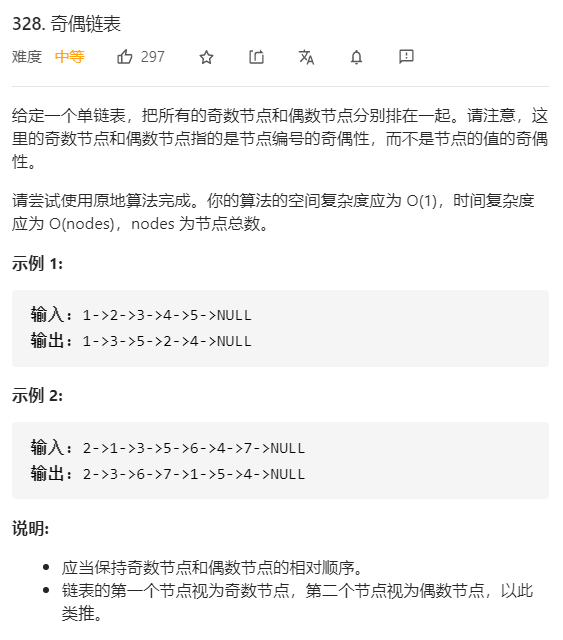
思路2(更好): 使用一个奇指针,一个偶数指针,奇数的吧奇数的都串起来,偶数的吧偶数的都串起来,记录一下偶数的头,最后把奇数的尾巴和偶数的头连接起来就好了。
class Solution {public ListNode oddEvenList(ListNode head) {if(head == null){return head;}ListNode odd = head;ListNode even = head.next;ListNode evenHead = even;while (even!= null && even.next!=null){odd.next = even.next;odd = odd.next;even.next = odd.next;even = even.next;}odd.next = evenHead;return head;}}
思路1: 一个一个节点换过来,需要警惕的就是边界的条件,这个next指针可能会为空。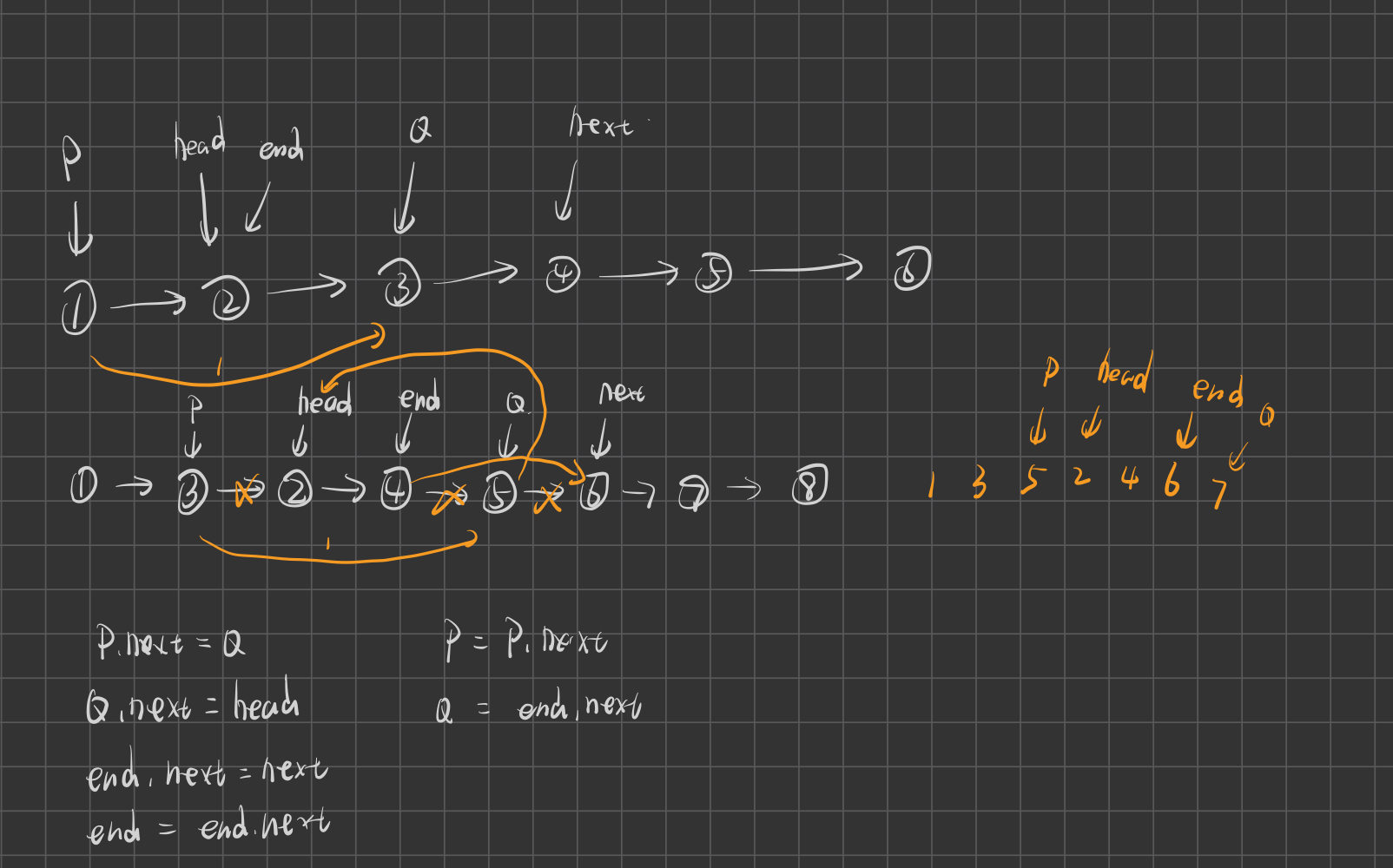
class Solution {public ListNode oddEvenList(ListNode head) {ListNode p = head;if(head == null){return head;}ListNode odd_head = head.next;ListNode odd_end = odd_head;if(odd_end==null||odd_end.next==null){return head;}ListNode q = odd_end.next;while (q!=null){if(q.next!=null){ListNode next = q.next;p.next = q;q.next = odd_head;odd_end.next = next;odd_end = odd_end.next;p = p.next;q = odd_end.next;}else {p.next = q;q.next = odd_head;odd_end.next = null;odd_end = odd_end.next;p = p.next;q = null;}}return head;}}
面试题 02.01. 移除重复节点
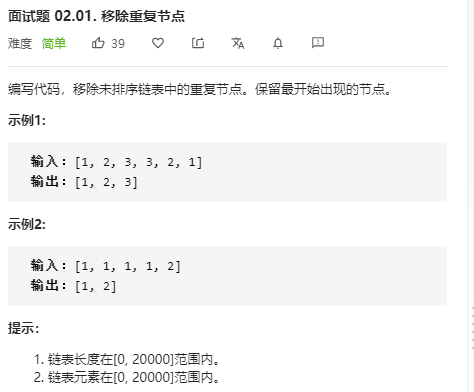
思路一:
使用HashSet来做一个记录,同时记录一下前置的节点和当前的节点。一旦发现有重复的数值,直接修改next 指针,指向下一个元素。
class Solution {public ListNode removeDuplicateNodes(ListNode head) {HashSet<Integer> set = new HashSet<>();ListNode dummyHead = new ListNode(0);dummyHead.next = head;ListNode node = head;ListNode pre = dummyHead;while (node!=null){if(set.contains(node.val)){pre.next = node.next;node = node.next;continue;}set.add(node.val);pre = node;node = node.next;}return dummyHead.next;}}
2. 两数相加
记录一下进位,然后里面的一个小技巧就是
int val1 = l1==null?0:l1.val;
这样就不用把链表哪个先空给考虑进去。
注意链表的位置,什么时候是边界条件,什么时候循环退出?
对于这题来说,只有两个链表都为空的时候才会退出,但边界的时候可以置0跳过,最后需要注意最后一位进位时,已经跳出循环了,需要补充一下。
class Solution {
    public ListNode addTwoNumbers(ListNode l1, ListNode l2) {
        ListNode dummyHead = new ListNode(0);
        ListNode node = dummyHead;
        int carry=0;
        while (l1!=null||l2!=null){
            int val1 = l1==null?0:l1.val;
            int val2 = l2==null?0:l2.val;
            int count = val1+val2+carry;
            carry = count/10;
            count = count%10;
            node.next = new ListNode(count);
            node = node.next;
            if(l1!=null){
                l1 = l1.next;
            }
            if(l2!=null){
                l2 = l2.next;
            }
        }
        if (carry>0){
            node.next = new ListNode(carry);
        }
        return dummyHead.next;
    }
}

class Solution {
    public ListNode addTwoNumbers(ListNode l1, ListNode l2) {
        ListNode dummyHead = new ListNode();
        ListNode res = dummyHead;
        int flag = 0;
        while (l1 != null || l2 != null) {
            int a = l1 == null ? 0 : l1.val;
            int b = l2 == null ? 0 : l2.val;
            int count = a + b + flag;
            flag = count / 10;
            count %= 10;
            res.next = new ListNode(count);
            res = res.next;

            if (l1 != null) {
                l1 = l1.next;
            }
            if (l2 != null) {
                l2 = l2.next;
            }
        }
        if (flag > 0) {
            res.next = new ListNode(flag);
        }
        return dummyHead.next;
    }
}
面试题35. 复杂链表的复制
这道题的链表和以前的不一样,里面有一个回指向任意节点的random节点。
所以我们考虑到分成三部来实现:
- 复制所有的节点,串联在原先的节点后面。
- 把random节点叶复制过来。
将一个链表拆分成为两个链表。
/*
// Definition for a Node.
class Node {
 int val;
 Node next;
 Node random;

 public Node(int val) {
     this.val = val;
     this.next = null;
     this.random = null;
 }
}
*/
class Solution {
public Node copyRandomList(Node head) {
     cloneNode(head);
     cloneRandom(head);
     return reconnectNodes(head);

 }
 // 把一个链表分为两个链表
 private Node reconnectNodes(Node head) {
     Node node = head;
     Node cloneHead = null;
     Node cloneNode = null;
     if(node!=null){
         cloneHead = cloneNode = node.next;
         node.next = cloneNode.next;
         node = node.next;
     }
     while (node!=null){
         cloneNode.next = node.next;
         cloneNode = cloneNode.next;
         node.next =cloneNode.next;
         node = node.next;
     }
     return cloneHead;
 }
 // 对这个链表的random也进行复制
 private void cloneRandom(Node head) {
     Node node = head;
     while (node!=null){
         Node next = node.next;
         if(node.random!=null){
             next.random = node.random.next;
         }
         node = next.next;
     }
 }

 //复制这个链表
 private void cloneNode(Node head) {
     Node node = head;
     while (node!=null){
         Node clone = new Node(node.val);
         clone.next = node.next;
         node.next = clone;
         node = clone.next;
     }
 }
}
23. 合并K个排序链表
使用分治的思路去做这个事情。k个链表,我们其实还是可以两个两个去合并在一起。所以后弦我们吧链表进行一个拆分,对半拆分,然后递归调用。 ```java class Solution { public ListNode mergeKLists(ListNode[] lists) {
 if(lists.length==0)return null;
 if(lists.length==1)return lists[0];
 if(lists.length==2)return mergeTwoLists(lists[0],lists[1]);

 int mid = lists.length/2;
 ListNode[] l1 = new ListNode[mid];
 for(int i=0;i<mid;i++){
     l1[i] = lists[i];
 }

 ListNode[] l2 = new ListNode[lists.length-mid];

 for (int i=mid,j=0;i<lists.length;i++){
     l2[j++] = lists[i];
 }
 return mergeTwoLists(mergeKLists(l1),mergeKLists(l2));
}
private ListNode mergeTwoLists(ListNode l1, ListNode l2) {
 if(l1==null) return l2;
 if(l2==null) return l1;

 ListNode dummyhead = new ListNode(0);
 ListNode head = dummyhead;
    while (l1!=null&&l2!=null){
        if(l1.val>l2.val){
            head.next = l2;
            head = head.next;
            l2 = l2.next;
        }else{
            head.next = l1;
            head = head.next;
            l1 = l1.next;
        }
    }
    if(l1!=null){
        head.next = l1;
    }else if(l2!=null){
        head.next = l2;
    }
    return dummyhead.next;

}
}
第二种方法是我们使用一个最小堆来放这个链表。每次都弹出最小的一个,之后把这个节点的后一个加入到里面去。
```java
/**
 * Definition for singly-linked list.
 * public class ListNode {
 *     int val;
 *     ListNode next;
 *     ListNode(int x) { val = x; }
 * }
 */
class Solution {
public ListNode mergeKLists(ListNode[] lists) {
        if(lists==null)return null;
        if(lists.length==1)return lists[0];

        Queue<ListNode> queue = new PriorityQueue<>(new Comparator<ListNode>() {
            @Override
            public int compare(ListNode listNode, ListNode t1) {
                return listNode.val-t1.val;
            }
        });

        for (int i=0;i<lists.length;i++){
            if(lists[i] ==null){
                continue;
            }
            queue.add(lists[i]);
        }

        ListNode dummyHead = new ListNode(0);
        ListNode head = dummyHead;

        while (!queue.isEmpty()){
            ListNode tmp = queue.poll();
            head.next = tmp;
            head = head.next;
            if(tmp.next!=null){
                queue.add(tmp.next);
            }
        }
        return dummyHead.next;
    }
}
203-移除链表元素
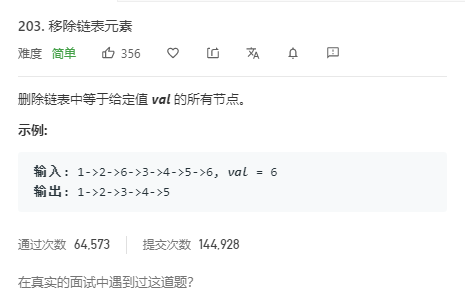
思路1 不带dummyhead:
首先我们考虑一下头节点是目标的情况。 处理之后,判断是否为空。处理剩下的节点。
/**
 * Definition for singly-linked list.
 * public class ListNode {
 *     int val;
 *     ListNode next;
 *     ListNode(int x) { val = x; }
 * }
 */
class Solution {
    public ListNode removeElements(ListNode head, int val) {

        while(head!=null && head.val == val){
            head = head.next;
        }
        if(head == null){
            return null;
        }
        ListNode pre = head;
        while(pre.next!=null){
            if(pre.next.val == val){
                pre.next = pre.next.next;
            }else{
                pre = pre.next;
            }
        }
        return head;

    }
}
思路2:增加哨兵节点,使用一个dummyHead来指向头结点。这样就不用对头结点进行特殊的优化了。
/**
 * Definition for singly-linked list.
 * public class ListNode {
 *     int val;
 *     ListNode next;
 *     ListNode(int x) { val = x; }
 * }
 */
class Solution {
    public ListNode removeElements(ListNode head, int val) {
        ListNode dummyHead = new ListNode(-1);
        dummyHead.next = head;
        ListNode pre = dummyHead;
        while(pre.next!=null){
            if(pre.next.val == val){
                pre.next = pre.next.next;
            }else{
                pre = pre.next;
            }
        }
        return dummyHead.next;

    }
}
递归解法:
/**
 * Definition for singly-linked list.
 * public class ListNode {
 *     int val;
 *     ListNode next;
 *     ListNode(int x) { val = x; }
 * }
 */
class Solution {
    public ListNode removeElements(ListNode head, int val) {
        if(head == null){
            return null;
        }
        head.next = removeElements(head.next,val);
        return val == head.val?head.next:head;

    }
}
876. 链表的中间结点

返回一个中间节点。需要快慢指针。
快的条件是 fast!null&&fast.next!=null
 public ListNode middleNode(ListNode head) {
        ListNode slow = head,fast=head;
        while (fast!=null&&fast.next!=null){
            slow = slow.next;
            fast = fast.next.next;
        }
        return slow;
    }
206. 反转链表
先取得下一个节点,cur开始反转
class Solution {
    public ListNode reverseList(ListNode head) {

        ListNode pre = head;
        ListNode cur = head;
        ListNode reverseNode = null;
        while(pre!=null){
            pre = pre.next;
            cur.next = reverseNode;
            reverseNode = cur;
            cur = pre;

        }
        return reverseNode;


    }
}
24. 两两交换链表中的节点
使用递归来做,递归函数的定义是假设这个节点以后的节点都反转好了。
class Solution {
    public ListNode swapPairs(ListNode head) {
        if(head== null|| head.next ==null){
            return head;
        }
        ListNode next = head.next;
        head.next = swapPairs(next.next);
        next.next = head;
        return next;


    }
}
方法二: 使用循环来做,每次截断两个节点,把这两个节点反转拼合起来。
    public ListNode swapPairs(ListNode head) {
        ListNode dummyHead = new ListNode(0);
        dummyHead.next = head;

        ListNode pre = dummyHead;
        ListNode first = dummyHead;
        ListNode sec = dummyHead;
        ListNode next = null;
        while (sec!=null && sec.next!=null){
            sec = sec.next.next;
            first = first.next;
            if(sec!=null){
                next= sec.next;
                sec.next = null;
                pre.next = sec;
                sec.next = first;
                first.next = next;

                pre = first;
                sec = first;
            }


        }
        return dummyHead.next;
    }
141. 环形链表
快慢指针,如果有环的话一定会追上慢指针。
public class Solution {
    public boolean hasCycle(ListNode head) {
        if(head ==null||head.next ==null) return false;
        ListNode fast = head.next;
        ListNode slow = head;
        while(fast!=slow){
            if(fast == null|| fast.next == null){
                return false;
            }
            fast = fast.next.next;
            slow = slow.next;

        }
        return true;

    }
}
142. 环形链表 II
判断有没有之后需要计算一下环里面的个数。一个指针不动,一个往前走。 之后从头开始出发,先走k步,最后会在入口相遇。
public class Solution {
    public ListNode detectCycle(ListNode head) {
        if(head==null||head.next ==null) return null;
        ListNode fast = head.next;
        ListNode slow = head;

        while(fast!= slow){
            if(fast == null|| fast.next == null){
                return null;
            }
            fast = fast.next.next;
            slow = slow.next;
        }

        int num = 1;
        fast = fast.next;
        while(fast!=slow){
            fast = fast.next;
            num++;
        }
        fast = head;
        slow = head;
        for(int i=0;i<num;i++){
            fast = fast.next;
        }

        while(fast!=slow){
            fast = fast.next;
            slow = slow.next;
        }
        return slow;


    }
}
25. K 个一组翻转链表
/**
 * Definition for singly-linked list.
 * public class ListNode {
 *     int val;
 *     ListNode next;
 *     ListNode(int x) { val = x; }
 * }
 */
class Solution {
    public ListNode reverseKGroup(ListNode head, int k) {
      ListNode dummyHead = new ListNode(-1);
         dummyHead.next = head;

         ListNode pre = dummyHead;
         ListNode end = dummyHead;

         while (end.next!=null){
             for(int i=0;i<k&&end!=null;i++) end = end.next;
             if(end == null) break;
             ListNode next = end.next;
             ListNode start = pre.next;
             end.next = null;
             pre.next = reverse(start);
             start.next = next;
             pre = start;
             end = pre;
         }
         return  dummyHead.next;

    }

    private ListNode reverse(ListNode start) {
         ListNode pre = null;
         ListNode curr = start;
         while (curr!=null){
             ListNode next = curr.next;
             curr.next = pre;
             pre = curr;
             curr = next;
         }
         return pre;
    }
}
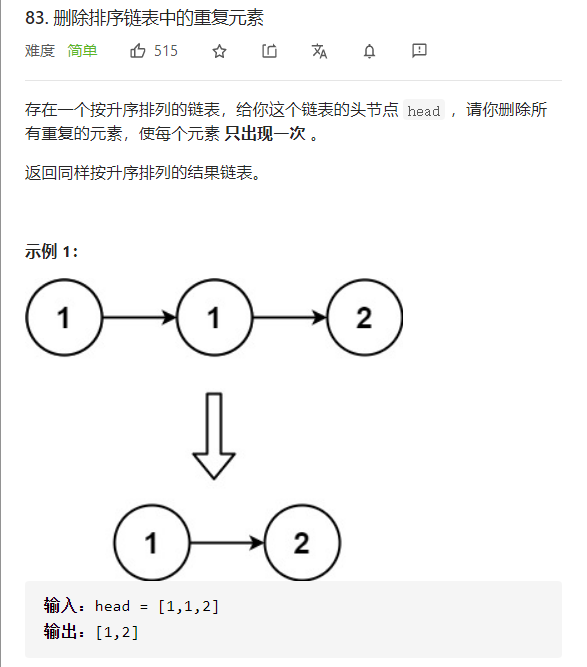
83. 删除排序链表中的重复元素
思路:
使用两个指针,一个在前一个在后,遇到相同的数值的时候,快指针就往前走一个。需要注意的是边界条件,while的结束条件是什么? fast指针不为空,判断两个节点数值的一样时候的边界条件是什么? fast同样不能为null。
class Solution {
    public ListNode deleteDuplicates(ListNode head) {
        ListNode dummyHead = new ListNode();
        dummyHead.next = head;
        ListNode fast = head;
        ListNode slow = head;
        if(head == null){
            return head;
        }
        fast = fast.next;
        while(fast!=null){
            while(fast != null && fast.val == slow.val){
                slow.next = fast.next;
                fast = fast.next;
            }
            slow = slow.next;
        }
        return dummyHead.next;
    }
}
优化的思路:
其实我们可以只使用的一个变量来完成整个操作。cur自己的数值和cur.next的数值进行比较,如果是一样的,可以直接调整cur的next指针指向的位置。这里的边界条件是 cur.next!=null
class Solution {
    public ListNode deleteDuplicates(ListNode head) {
        if(head== null || head.next == null){
            return head;
        }

        ListNode cur = head;
        while(cur.next!=null){
            if(cur.val == cur.next.val){
                cur.next = cur.next.next;
            }else{
                cur = cur.next;
            }
        }
        return head;
    }
}

若有收获,就点个赞吧
0 人点赞


