TODOLISTs 还不知道怎么用
头文件位于: sys/queue.h
该库函数全是宏定义,只需要头文件就能工作。该库不是 posix 标准的,源于 BSD
可以通过 man queue 查看详细的说明和用法指引
list 的定义
支持的操作:
- 插入:在头部插入;在任意一个元素的后面插入
- 删除:删除任意一个元素
- 遍历:顺序遍历
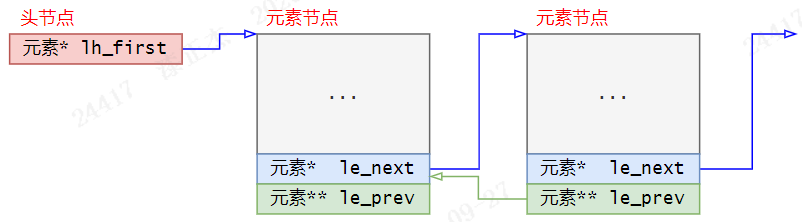
链表结构的示意图:
- 当前链表的结构是单向链表,
le_prev的存在方便删除节点
创建相关的操作:
// 创建一个头节点#define LIST_HEAD(name, type) \struct name { \struct type *lh_first; \}// 初始化链表(头)#define LIST_INIT(head) do { \(head)->lh_first = NULL; \} while (/*CONSTCOND*/0)// 创建一个链表元素#define LIST_ENTRY(type) \struct { \struct type *le_next; \struct type **le_prev; \}
list 的使用
// 链表节点的类型struct entry {...LIST_ENTRY(entry) entries; /* List. */...}// 创建一个头节点LIST_HEAD(listhead, entry) head;// 注:可以通过这种方式来引用头节点struct listhead *headp; /* List head. */// 创建链表节点struct entry *n1, *n2, *np;// 初始化链表(头)LIST_INIT(&head); /* Initialize the list. */// 在头部插入节点n1 = malloc(sizeof(struct entry)); /* Insert at the head. */LIST_INSERT_HEAD(&head, n1, entries);// 在任意位置插入节点n2 = malloc(sizeof(struct entry)); /* Insert after. */LIST_INSERT_AFTER(n1, n2, entries);// 遍历for (np = head.lh_first; np != NULL; np = np->entries.le_next)np-> ...// 删除元素while (head.lh_first != NULL) /* Delete. */LIST_REMOVE(head.lh_first, entries);

若有收获,就点个赞吧
0 人点赞


