1.值得思考的问题
子类是否可以直接访问父类的私有成员?
根据面向对象理论:
子类拥有父类一切属性和行为—->子类能够直接访问父类的私有成员
根据c++语法:
外界不能直接访问类的private成员—->子类不能直接访问父类的私有成员
#include <iostream>#include <string>using namespace std;class Parent{int mv;public:Parent(){mv = 100;}int Value(){return mv;}};class Child : public Parent{public:int addValue(int v){mv += v; //how to interview the parent class's private member}};int main(){return 0;}
2.继承中的访问级别
—-面向对象的访问级别不只是public和private
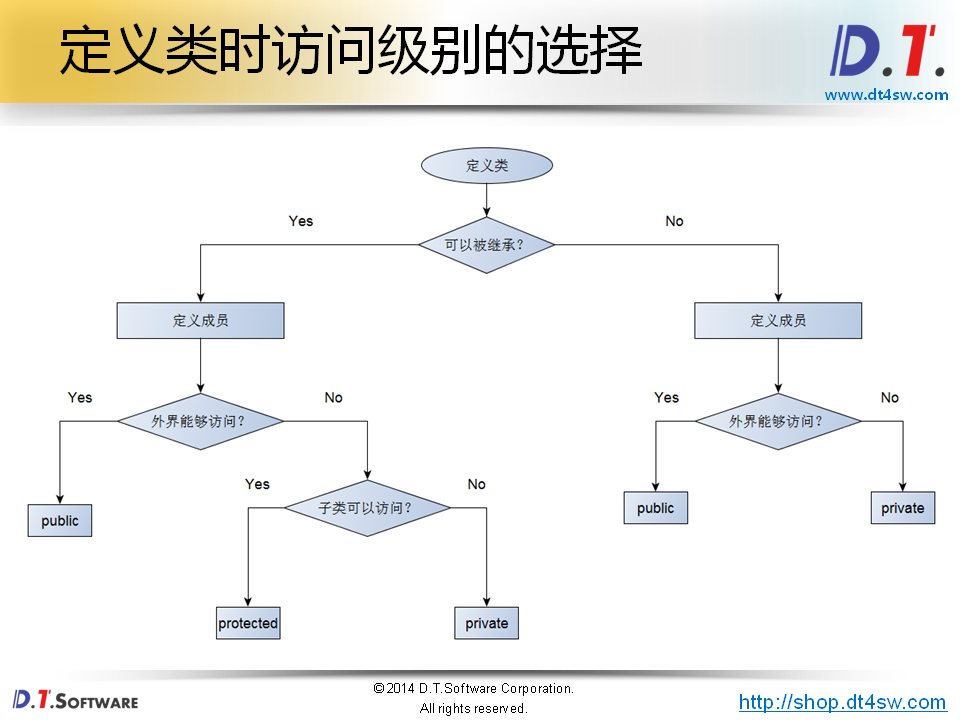
—-可以定义protected访问级别
—-关键字protected的意义
被protected修饰的成员不能被外界直接访问,但是可以被子类访问
#include <iostream>#include <string>using namespace std;class Parent{protected:int mv;public:Parent(){mv = 100;}int Value(){return mv;}};class Child : public Parent{public:int addValue(int v){mv += v; //how to interview the parent class's private member}};int main(){Parent p;Child c;cout << "p.mv = " << p.Value() << endl;//p.mv = 1000; //errorcout << "c.mv = " << c.Value() << endl;c.addValue(50);cout << "c.mv = " << c.Value() << endl;//c.mv = 10000; //errorreturn 0;}
3.为什么面向对象中需要protected?
保护私有信息
4.定义类时访问级别的选择
5.组合与继承的实例分析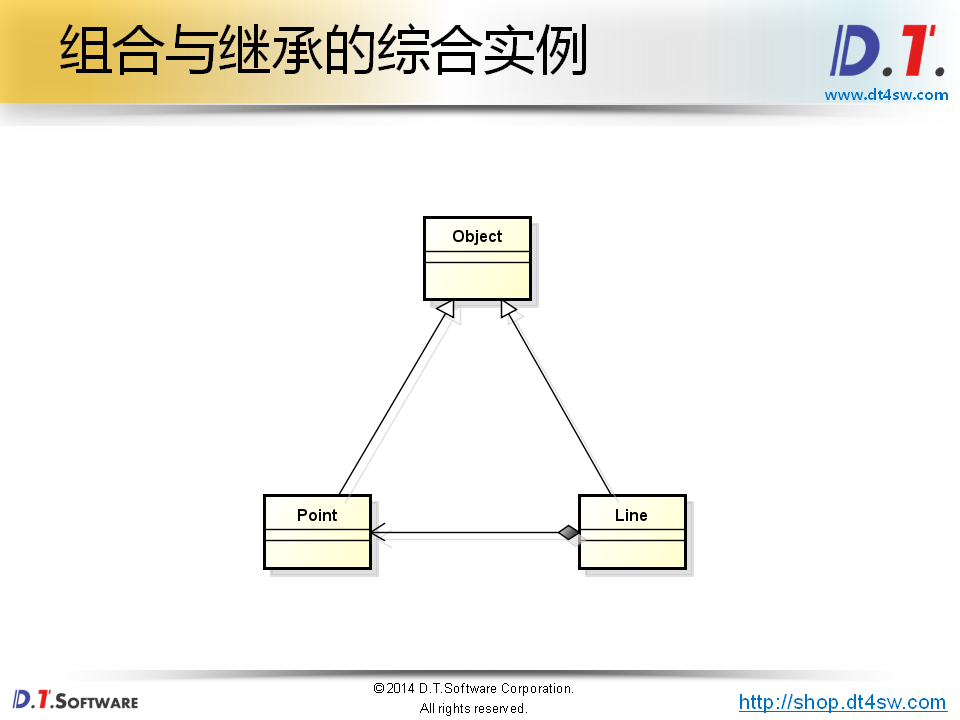
#include <iostream>#include <string>#include<sstream>using namespace std;class Object{protected:string mName;string mInfo;public:Object(){mName = "Object";mInfo = "";}string name(){return mName;}string info(){return mInfo;}};class Point :public Object{private:int mx;int my;public:Point(int x = 0, int y = 0){ostringstream s;mx = x;my = y;mName = "Point";mInfo = "";s << "P(" << mx <<","<< my << ")";mInfo = s.str();}int x(){return mx;}int y(){return my;}};class Line : public Object{private:Point mP1;Point mP2;public:Line(Point p1, Point p2){ostringstream s;mP1 = p1;mP2 = p2;mName = "Line";s << "Line from " << mP1.info() << "to" << mP2.info();mInfo = s.str();}};int main(){Object o;Point p(1, 2);Point pn(5, 6);Line l(p, pn);cout << o.name() << endl;cout << o.info() << endl;cout << p.name() << endl;cout << p.info() << endl;cout << l.name() << endl;cout << l.info() << endl;return 0;}
小结
1.面向对象中的访问级别不只是public和private
2.protected修饰的成员不能被外界所访问
3.protected使得子类能够访问父类的成员
4.protected关键字是为了继承而专门设计的
5.没有protected就无法完成真正意义上的代码复用

若有收获,就点个赞吧
0 人点赞


